How to Remove Rust Stains from Toilet: Safe Steps

The rust ring around the waterline of a toilet bowl announces itself. You spot it from the doorway of a guest bath in Fairhope, scrub it away on a Saturday, and find the same orange arc back three weeks later, a little wider. That return visit is the part worth solving. A light surface mark can lift within minutes once the right remover is on it, while a set-in stain needs hours of dwell time before you touch a brush. Working out why the ring keeps coming back is the difference between a clean bowl and a cleaning loop that never ends.
Those rings usually trace back to iron dissolved in the water supply, aging plumbing that sheds rust into the lines, or a bowl that sits unused long enough for the stain to settle in. Sweet Home Cleaning Service cleans bathrooms across Fairhope, Daphne, Spanish Fort, Gulf Shores and Orange Beach. The sequence that works is short: identify the stain, choose a product that suits the porcelain, follow the safety rules without shortcuts, then investigate the cause when the mark returns.
Table of Contents
- Identify the Stain Before You Clean It
- Choose a Rust Remover That Fits Your Porcelain
- Safety Rules and Step-by-Step Removal
- Why Rust Stains Come Back and What to Check
- Decide Whether to Clean It Yourself or Book Help
Identify the Stain Before You Clean It
An orange ring inside the bowl, cleaned off once and back a month later, is one of the most common rust complaints in coastal Alabama homes. The mark itself tells you where it came from, and reading it correctly keeps you from buying the wrong product twice.
| Stain appearance | Likely source | First action |
|---|---|---|
| Orange-red or red-brown on porcelain | Dissolved iron in the water supply | Treat the surface with an iron-specific remover, then test water if the stain returns |
| Brownish-black marks | Manganese in the water | Test water for manganese before repeated cleaning |
| Slimy film or tinted water in the tank | Iron bacteria | Test the water and inspect the tank before more chemical treatment |
| Rust-colored tank bolts or flaking metal parts | Corroding tank hardware | Inspect and replace the hardware before cleaning the bowl again |
Here is what that ring looks like in practice, with the mark sitting just under the rim on glazed porcelain.
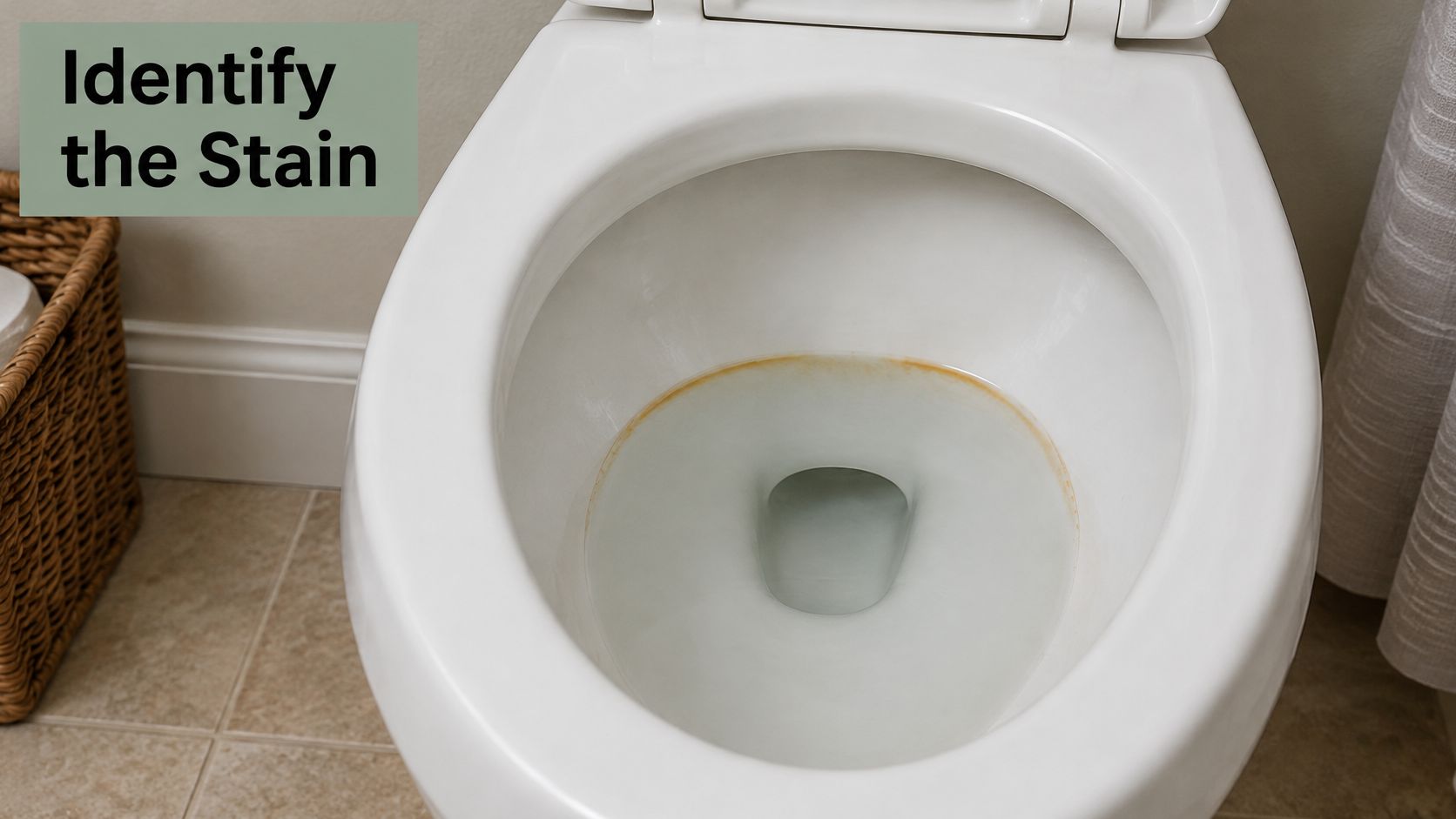
Color is the first clue to work from. Connecticut Department of Public Health guidance on iron explains that when oxygen mixes with dissolved iron, the iron turns into white, yellow and eventually red-brown solid particles, which settle out and stain porcelain, toilets included. The same document separates manganese, which usually leaves brownish-black marks, from iron's reddish-brown. Rust-colored particles can also come from corroding iron pipes and settle wherever water stands still.
The cloth test
Wipe the mark with a damp white cloth before you reach for a bottle. If color lifts onto the cloth and the porcelain underneath looks clean, you're dealing with a loose surface deposit from sediment or a corroding part. If the cloth comes away stained while the bowl still shows a ring, the iron has bonded to the glaze and needs chemical treatment; extra brush pressure only polishes the mark.
Run the same check inside the tank. A tinted water line, a slick film on the walls, or rusty bolts where the flapper mounts mean the problem starts inside the fixture, and bowl scrubbing alone will hold only until standing water leaves the next deposit. When a ring returns after a proper treatment, stop changing cleaners and check the water supply and tank hardware first.
Choose a Rust Remover That Fits Your Porcelain
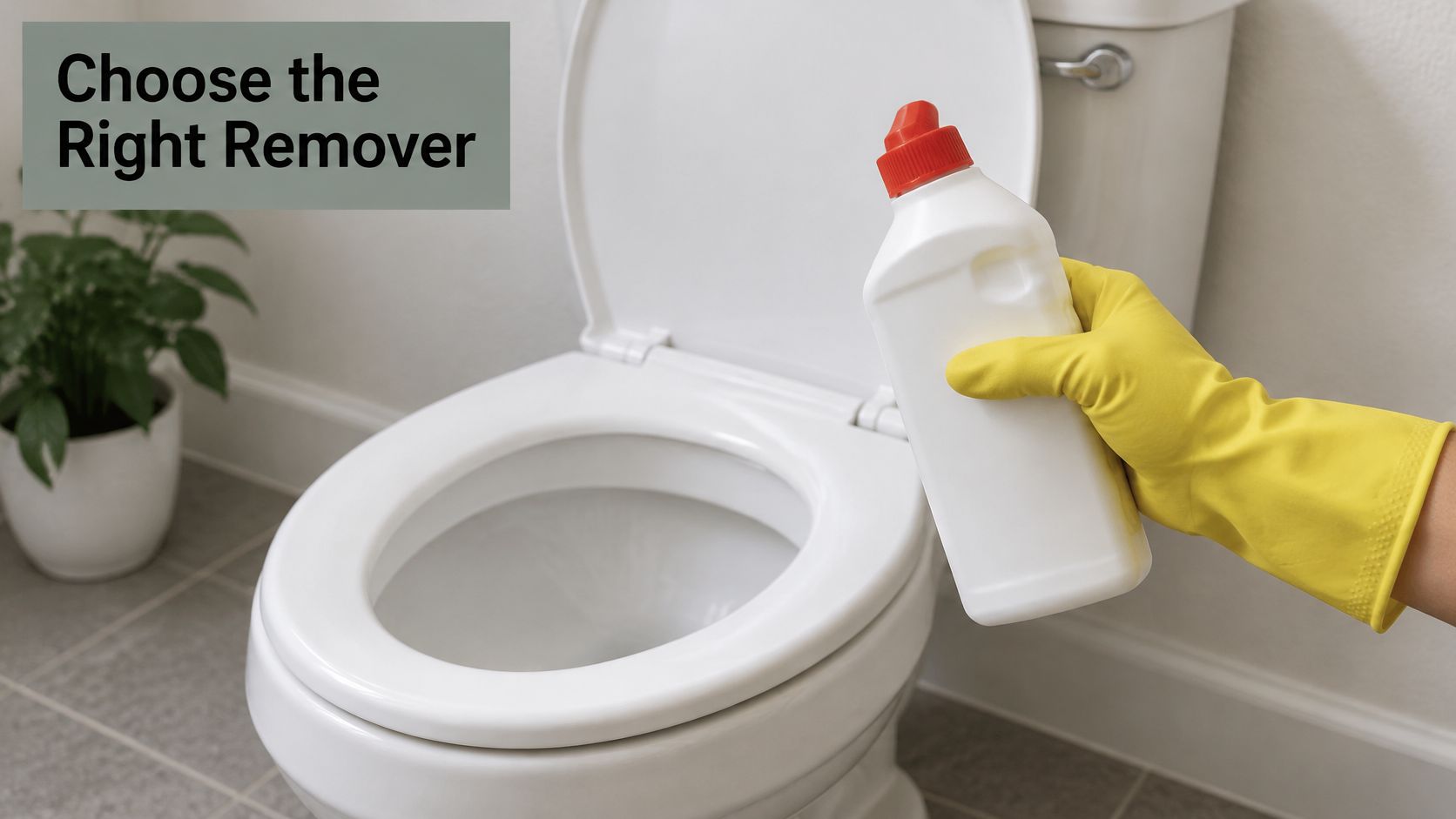
The right product depends on how much iron you're fighting and what the bowl is made of. Dwell times below come from product labels, not from a universal timetable, so the bottle in your hand always wins.
| Option | Dwell time | Best for | Caution |
|---|---|---|---|
| Citric-acid powder treatment | 2-3 hours | Heavy, set-in iron staining on glazed porcelain | Follow the label and never mix with bleach or other cleaners |
| Oxalic or iron-specific liquid remover | About 5 minutes, per label | Light to moderate staining | Confirm porcelain compatibility on the label |
| Vinegar | No label dwell time; spot-test first | Light film, after a hidden-spot test | Acidic; never combine with bleach |
| Toilet-grade wet pumice | Short passes, checked every 10-15 seconds | Last step on uncoated porcelain or vitreous china | Avoid colored, coated or acrylic surfaces |
| Bleach | At least 1 minute contact for disinfecting | Disinfecting only, not rust removal | Never combine with any acidic product |
A concentrated citric-acid powder is the workhorse for the stubborn ring that has been there since the house changed hands. Citric acid chelates iron ions, pulling deposited iron compounds into a form you can rinse away, which is why a multi-hour dwell does more than a five-minute spray ever will.
Oxalic and other iron-specific liquids are the faster option for a light film. They work on contact, so use them when the mark is recent and you're maintaining rather than restoring.
Vinegar gets asked about constantly because it's already in the cabinet. It is acidic and will soften a thin film, but it carries no label dwell time, it won't touch heavy deposits, and it must never meet bleach. Test it on a spot under the rim first, where a dulled patch won't show.
Wet pumice belongs at the very end, and only on uncoated standard porcelain or vitreous china. Guidance on pumice use for rust stains on toilets and tubs is clear that dry rubbing, metal scrapers, steel wool and aggressive scouring can scratch or dull the glaze, and those microscopic defects trap minerals and make the next stain stick harder. Pumice is unsuitable or higher-risk on colored, coated or acrylic surfaces, where the manufacturer's instructions take precedence.
Odd as it sounds, the same rust shows up on tubs and shower walls fed by the same water, so it's worth knowing how to clean bathtubs and showers once you've sorted the bowl. Start with the mildest option the label supports, and move up only when the previous step leaves staining behind.
Safety Rules and Step-by-Step Removal
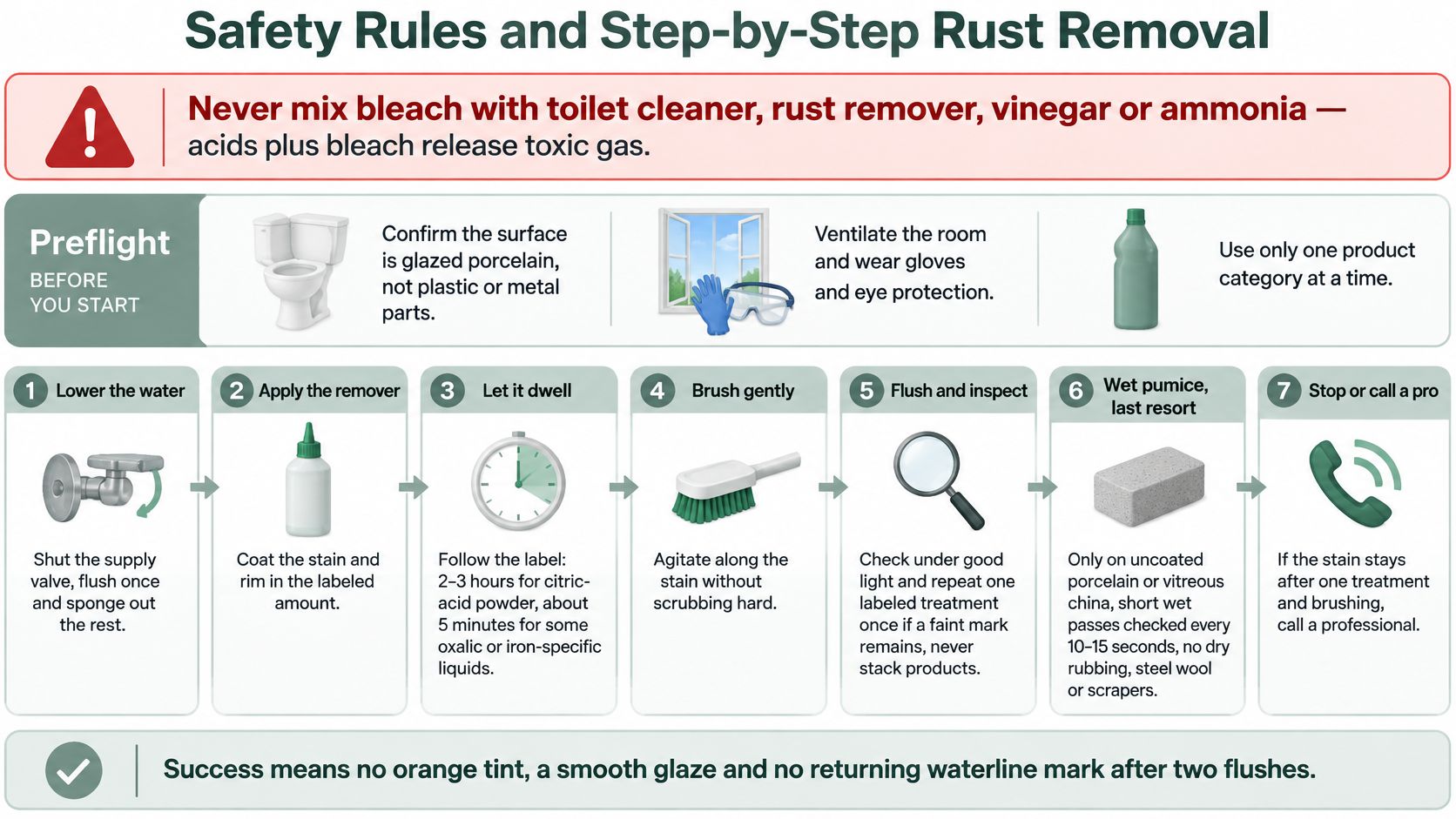
A bathroom full of chlorine gas is the worst outcome in this job, and it takes one wrong pour to get there. U.S. EPA guidance on household chemical safety warns that toilet cleaners may contain hydrochloric acid and bleach contains sodium hypochlorite, and that mixing bleach with toilet cleaners, rust removers, acids, ammonia or other household chemicals can release poisonous gases and cause severe breathing problems or death. EPA product labels also note that prolonged contact with metal causes pitting and discoloration, and that corrosive toilet cleaners can cause irreversible eye damage and skin burns.
The rule that overrides every other step: one product at a time, fully rinsed, before anything else touches the bowl.
Before You Open a Bottle
- Confirm the surface. Glazed porcelain and vitreous china tolerate iron-specific removers. Plastic seats, metal hinges, supply fittings and decorative trim need a different approach or none at all, so keep the product off them.
- Ventilate and cover up. Open a window, run the exhaust fan, and wear nitrile gloves and eye protection. A small, sealed bathroom fills with fumes fast.
- Commit to one category. Cleaning, rust removal and disinfecting are three separate tasks. Finish and rinse one before starting another.
The Removal Sequence
- Shut off the supply and lower the water. Close the valve behind the bowl, flush once, then sponge out what's left. A low water line exposes the stained ring instead of diluting your product, and it stops the remover from draining away before it works.
- Apply the remover to the stain and the rim. Use the label amount. Some powders want a damp surface first, so read that line before you pour.
- Time the dwell from the label, not your patience. Citric-acid powders typically sit for two to three hours, while some oxalic or iron-specific liquids work in about five minutes. Contact time is the whole job. Scrubbing early just wastes product.
- Brush gently with a soft nylon brush. Work along the stain rather than in hard circles. The chemistry lifts the iron; the brush only helps it along.
- Flush and inspect under good light. A phone flashlight beats bathroom lighting for spotting the faint shadow that tells you whether the treatment finished the job.
- Repeat one labeled treatment once if a faint mark remains. One repeat, then stop. Stacking products is how people end up mixing an acid with something they didn't read the label on.
- Try wet pumice only as a controlled last step. Soak both the stone and the bowl, use light pressure in short passes, rinse or inspect every 10 to 15 seconds, and stop the moment the stain lifts. Only on uncoated porcelain or vitreous china.
- Never dry rub, and never reach for steel wool, a metal scraper or scouring powder. Each one dulls the glaze, and a dulled glaze stains faster next time.
- If the stain survives one treatment and gentle brushing, call a professional. More force and more chemicals at that point add risk without adding results.
Where Bleach Belongs and Where It Doesn't
Bleach is a disinfectant. It doesn't dissolve iron oxide, and it's the ingredient most likely to create a dangerous reaction if it meets an acidic rust remover, vinegar or ammonia. When the bowl does need disinfecting, mix bleach at the dilution printed on its own label, use room-temperature water, and keep the room ventilated the whole time.
Run it as a separate step, after the rust work is finished and rinsed. If you're weighing whether an acid like vinegar has any disinfecting role at all, this explanation of whether vinegar disinfects surfaces settles it quickly.
Success looks specific: no orange tint anywhere on the porcelain, a glaze that feels smooth under a fingertip, and no returning waterline mark after two flushes. A mark that comes back after a correct treatment is a water or hardware question, not a reason to reach for a stronger chemical.
Why Rust Stains Come Back and What to Check
A bowl can stain even when the water looks perfectly clear at the tap. The U.S. EPA secondary drinking water standard for iron sits at 0.3 milligrams per liter, or 0.3 parts per million, and it's an aesthetic guideline rather than a health-based limit. EPA historical guidance notes that visible color and fixture staining may begin at concentrations as low as 0.05 mg/L, so discoloration can develop well below the commonly quoted number.
Dissolved ferrous iron leaves the tap clear and only turns into visible deposit after it meets air, which is exactly what happens in a toilet bowl. That's why a one-time surface mark and a recurring water problem look identical on porcelain.
Three checks that separate them
- Multiple fixtures stained. Orange marks in the sink, tub, shower or laundry mean the water is carrying iron, not that the toilet is faulty. The U.S. Geological Survey notes that dissolved iron in groundwater stains laundry, sinks, bathtubs and toilets brownish red.
- Stains returning after the bowl sits unused. Water standing in the pipes and tank has had time to oxidize and settle. A bowl that stains faster after a vacation points at the supply line.
- Rust-colored bolts, flaking parts or sediment in the tank. Look inside with a flashlight. Corroding hardware leaves deposits with every fill, and that's a parts problem, not a cleaning problem.
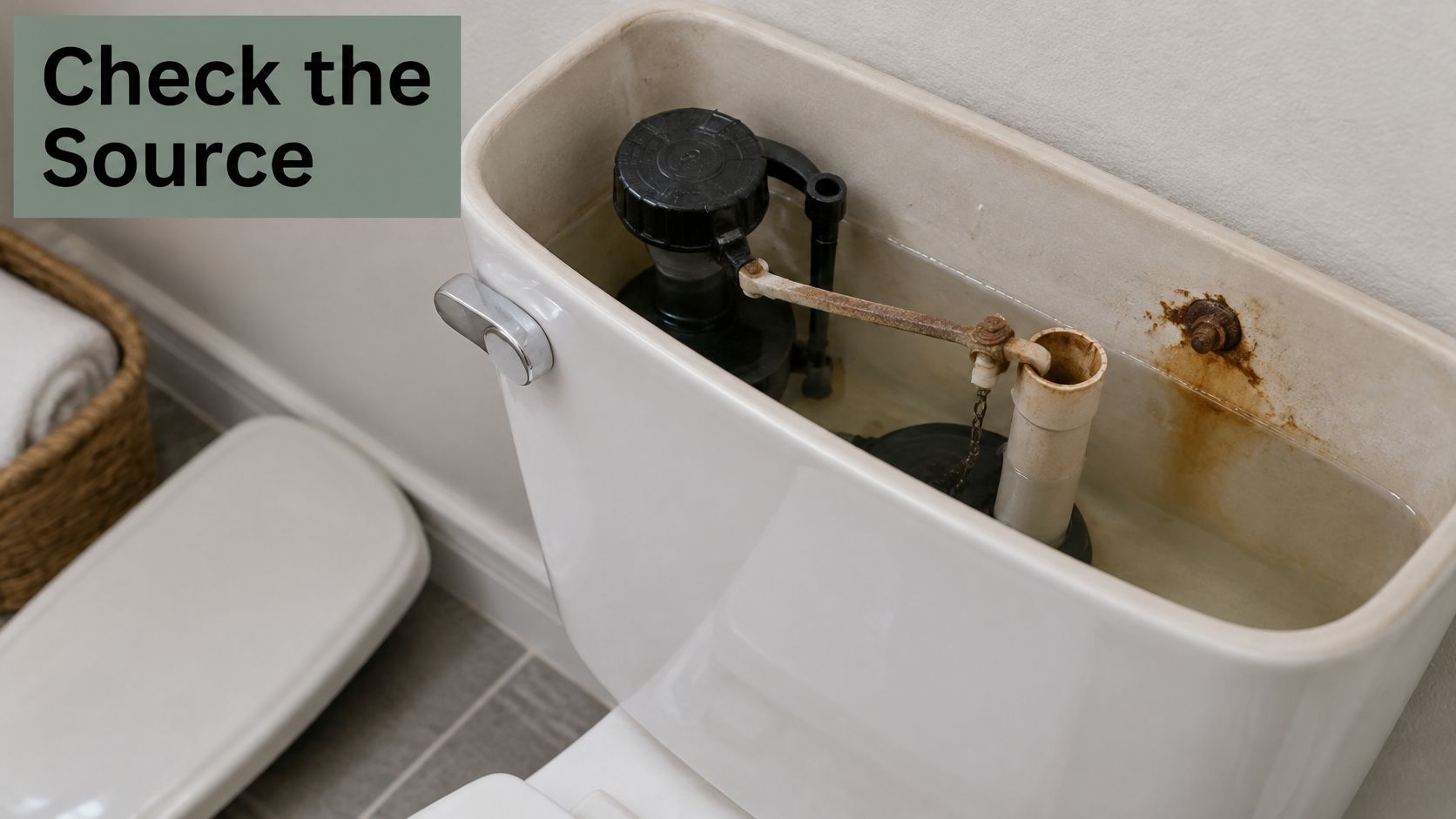
When two or more of those checks line up, test the water for iron, manganese and iron bacteria before you buy another bottle of remover. A plumber is the right call for corroding tank parts or a suspect supply line. If a test does come back high, comparing best whole-house iron filter options is a more useful next step than another round of scrubbing.
Homes along the Gulf Coast deal with one extra factor. Salt air and year-round humidity speed corrosion on metal fittings, so older Eastern Shore houses and well-fed properties deserve a closer look at the tank than a newer build would.
None of this gets solved by repeating a stronger chemical on the same stain. That just adds exposure in a small room and leaves the source running.
Decide Whether to Clean It Yourself or Book Help
The decision rule stays short. Clean it yourself when the mark sits on one fixture, lifts after a single labeled treatment, and the tank hardware checks out. Bring in help when the stain returns after two cleanings, shows up on several fixtures at once, or survives one escalation to a stronger product. All three signals point back to water or hardware, and neither responds to another round of scrubbing.
For a Fairhope or Daphne household, the maintenance version of this is simple. Sweet Home Cleaning Service offers recurring cleaning on a weekly, biweekly, or every-3-weeks schedule, and our regular bathroom service covers cleaning and sanitizing sinks, tubs, showers, and toilets, plus mirrors and floors. A deep clean resets a bathroom that has gone a season without attention. If you want specific products used on your fixtures, let us know in advance or leave them on the kitchen counter with a note for the cleaning techs.
Keep the scopes separate, though. Rust removal beyond a routine sanitize, water testing, and plumbing repair all sit outside a standard visit. When a corroding fill valve or a rusted flange is the real culprit, handyman services for property managers or a licensed plumber get to the source faster, and our team can take on the deep clean that follows. You can see exactly what a visit covers when a deep clean targets buildup and neglected areas rather than surface upkeep.
A rust ring is a small thing that eats a Saturday every few weeks. Hand off the upkeep and get the time back.
Sweet Home Cleaning Service handles bathroom upkeep for homeowners and renters across Fairhope, Daphne, Spanish Fort, Gulf Shores, and Orange Beach, with recurring visits, deep cleaning, and move-in or move-out service that keeps every fixture in the same shape between appointments. If rust rings keep returning to your toilets, tubs, or shower walls, book a visit with Sweet Home Cleaning Service and let a local team handle the cleaning while you sort out the water.

Let us handle the cleaning. Enjoy your home.


Sweet Home Cleaning Service
19940 State HWY 181, Suite E Fairhope, AL 36532
Phone: (251) 586-4081
sales@sweethomecleaningservice.com