Post Construction Cleaning Rates: What Drives Your Quote


Why can two houses of the same size on the same street in Fairhope get post construction cleaning quotes that differ by several hundred dollars? Because square footage only sets a starting point. The phase being priced, the labor hours the job will take, and the condition the trades leave behind all move the number, and what the quote states as included decides the rest. A cheap figure usually means a narrower scope, which leaves dust in the cabinets and film on the window glass.
Sweet Home Cleaning Service is a residential and commercial cleaning company based in Fairhope, Alabama, serving Daphne, Spanish Fort, Gulf Shores, Orange Beach, and neighboring Eastern Shore communities. Its services cover standard and recurring cleaning, deep cleaning, move-in/move-out cleaning, post-construction cleanup, office and commercial cleaning, and home organization. Post-construction work is its own job with its own arithmetic: every plan is priced individually, and the office builds the quote around the site, the phase, and the special requests you name.
Local conditions matter too. Gulf Coast humidity keeps fine dust stuck to new drywall, spring pollen coats fresh paint and window glass, beach sand rides in on work boots, and hurricane season cleanup is a different scope from renovation cleanup.
Table of Contents
- Typical Post Construction Cleaning Rates at a Glance
- Choose the Right Clean Phase Before You Compare Quotes
- How a Per-Square-Foot Rate Gets Built
- Why Labor Hours and Site Access Drive the Bill
- Debris Hauling and Disposal Costs
- When Silica, Lead or Mold Changes the Scope
- Confirm the Scope and Request Your Free Quote
Typical Post Construction Cleaning Rates at a Glance
Post construction cleaning is the finish pass after a remodel or a new build: the dust, film, adhesive and debris left once the trades pack up. Rates are usually structured around project size, cleaning phase, debris volume, and whether hazardous or specialized work is involved. The ranges below come from published industry cost guides, so treat them as a way to read a quote rather than a substitute for one.
| Cost item | Typical range | Notes |
|---|---|---|
| Per square foot, typical | $0.20 to $0.75 | Average near $0.50 per square foot |
| 3,000 sq ft project, implied | $600 to $2,250 | Before unusual surcharges |
| Smaller jobs, average | $390 | Observed totals from $247 to $527 |
| Residential post-construction | $274 to $707 | Average $477; totals can reach $1,300 |
| Interior scope | $400 to $1,500 | Dust, floors, ceilings, walls and windows |
| Exterior scope | $400 to $2,000 | Glass cleaning, pressure washing, magnetic sweeping |
| Non-hazardous debris removal | $150 to $800 | Ordinary construction debris |
| Hazardous-material work | $450 to $1,000 | Asbestos, lead, silica dust or mold |
Read the table in two passes. First find the band your square footage puts you in. Then mark which scope rows apply, because they do not stack onto the per-foot figure automatically. Interior dust removal, exterior glass and pressure washing, debris hauling, and regulated-material work are four separate jobs with four separate cost structures. A quote that rolls them into one blended number makes it impossible to see which one you are buying.
That separation is also where square footage stops predicting much of anything. A per-foot rate assumes average leftover conditions: light dust, trades that bagged their own offcuts, no adhesive on the new floors. A house where the drywall crew sanded without containment and the painters left overspray on the windows takes more labor hours than the floor plan suggests, and labor hours are what a cleaning company sells. When two estimates on the same job come in far apart, the gap sits in assumed hours and stated inclusions, not in the unit rate.
Ask for each applicable row as its own line before you compare totals.
How to use this table: find your square-footage band, then mark every scope row that applies to your job. Anything beyond ordinary non-hazardous cleaning on a project in Fairhope, Daphne or Spanish Fort needs a specialist and a separate line on the quote.
Choose the Right Clean Phase Before You Compare Quotes
The phase being priced drives the widest gap between two quotes on the same house, wider than any difference in unit rate. "Clean the house after construction" can mean five very different deliverables, and dust-producing work follows a controlled sequence rather than a single wipe-down. The order is what makes it work:
- HEPA vacuum every exposed surface. Walls, ceilings, floors and objects, before anything gets wet.
- Wet clean the dusty areas. Cloths or mops with a general-purpose cleaner, not a dry rag that pushes dust around.
- Remove containment carefully. Sealed, no shaking, no dragging through finished rooms.
- Vacuum the surfaces again. The first pass lifts dust that settles back within minutes.
- Inspect, then re-clean what still shows dust. The job ends at the inspection, not at the last wipe.
Floors still need HEPA vacuuming even when they were protected by plastic sheeting, and the work area is cleaned until no dust, debris or residue remains. That standard is what separates a real final clean from a maintenance clean with extra vacuuming.
Square footage predicts very little of this on its own. The same footprint takes a fraction of the labor hours after trades who protect surfaces and sweep as they go that it takes after a crew that leaves mud, adhesive and haze behind. Phase and site condition set the labor before area ever enters the math.
| Phase | What it covers | What the quote should state |
|---|---|---|
| Rough clean | Debris and heavy dust after framing, drywall or demolition | Whether debris removal is included and which dust areas are covered |
| Light or final clean | HEPA vacuuming, wet wiping, residue removal and inspection before move-in | The acceptance standard and whether a re-clean is included |
| Post-trade touch-up | Adhesive, grout haze and paint overspray left after trades finish | Return visit scope and its separate price |
| Final plus detail | Windows, high surfaces, appliance interiors and stairs | Itemized add-ons for each detail area |
Dust control choices also eat crew time. OSHA advises against dry sweeping or dry brushing where those methods could raise respirable silica, favoring wet sweeping or HEPA-filtered vacuuming instead (OSHA silica training materials). Compressed air is off the table unless the system captures the dust, and used vacuum bags go into a closed, sealed container (OSHA silica workbook). Every one of those choices adds passes, equipment or disposal, and each should be visible in the quote rather than assumed.
Timing decides phase more often than budget does. Book a final clean in Daphne before the painter and flooring crew finish, and you'll pay for the same rooms twice. In Gulf Shores and Orange Beach, a rental coming back online after a renovation has a fixed deadline, the next guest, which pushes the work toward a final-plus-detail scope with window tracks, screens and appliance interiors included. If your build is a custom luxury home renovations project with specialty finishes, get the clean-out phase written into the schedule early. A room-by-room walkthrough of the residential post-construction cleaning process shows what each phase looks like in practice.
Write the phase and the acceptance standard into the quote before you compare a single number.
How a Per-Square-Foot Rate Gets Built
A defensible per-square-foot rate starts as arithmetic. The estimating model is simple: labor hours equal project area divided by the production rate for the phase being priced, and total price equals direct labor, payroll burden, consumables, travel, overhead and profit. Square footage supplies the denominator. The crew, phase and site condition decide whether that denominator means anything.
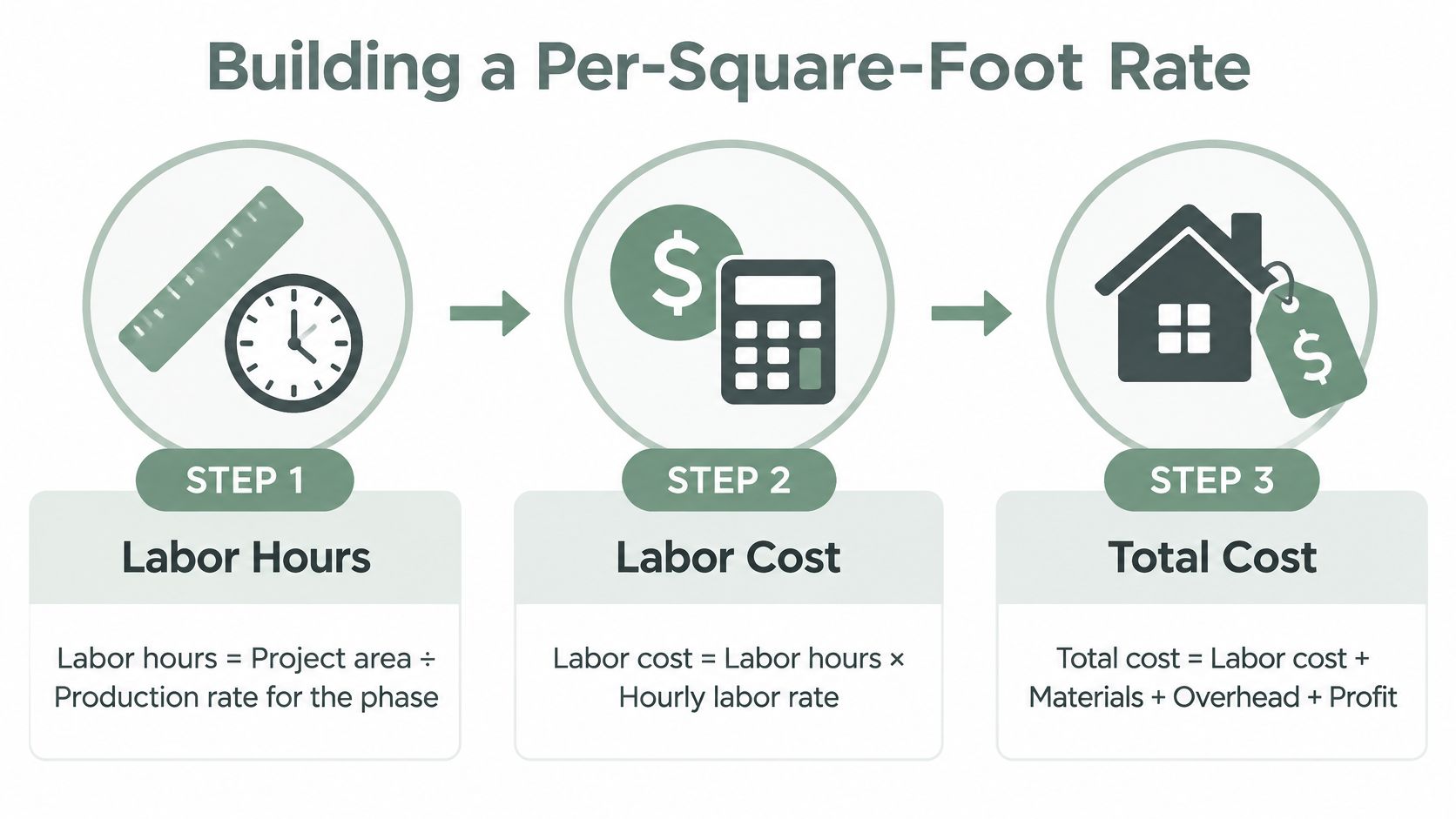
Here is the same math worked through on a typical final clean, with the production rate used only as an easy illustration:
- Measure the area and note the stage. Say 2,500 square feet, final clean, no trades left on site.
- Pick the production rate for that phase. For the arithmetic, plug in 180 square feet per labor-hour as a placeholder.
- Divide. 2,500 ÷ 180 = about 14 labor hours in this illustration.
- Price the labor. Apply the hourly wage plus payroll burden to those 14 hours.
- Add the rest. Supplies, travel, overhead and profit bring the illustration to about $637, or $0.25 per square foot.
That last figure is the one people quote out of context. A grocery receipt works the same way: the total divided by the number of items gives an average for that basket, and the average changes when the basket changes. Heavy glass, adhesive and grout haze pull the rate upward. An empty hallway of drywall dust pulls it downward.
So rebuild the rate for each property. On every Eastern Shore project, record the square footage, construction stage, soil conditions, crew size, labor hours and any rework, then calculate separate production rates for rough clean, light or final clean, and post-trade touch-up. After a dozen jobs, the company has its own production rates and can stop borrowing averages.
The practical quote is usually blended: a per-square-foot price for the predictable scope, plus hourly or itemized charges for conditions nobody can forecast from a floor plan. Padding every quote with contingency punishes the customer whose house is straightforward.
Why Labor Hours and Site Access Drive the Bill
Two 2,000-square-foot homes in Fairhope and Spanish Fort can produce quotes that look like different trades. One is vacant, swept, and empty of trades. The other is furnished, has a wall of windows, and the electrician is coming back Thursday. Square footage is identical. Labor isn't.
A 2026 national cost guide reports that labor represents about 90% of the bill and that access and layout affect how long a crew takes. The same guide estimates roughly one cleaning hour per 100 to 200 square feet, which means a full-size home can need 8 to 12 hours for a two-to-four-person crew.
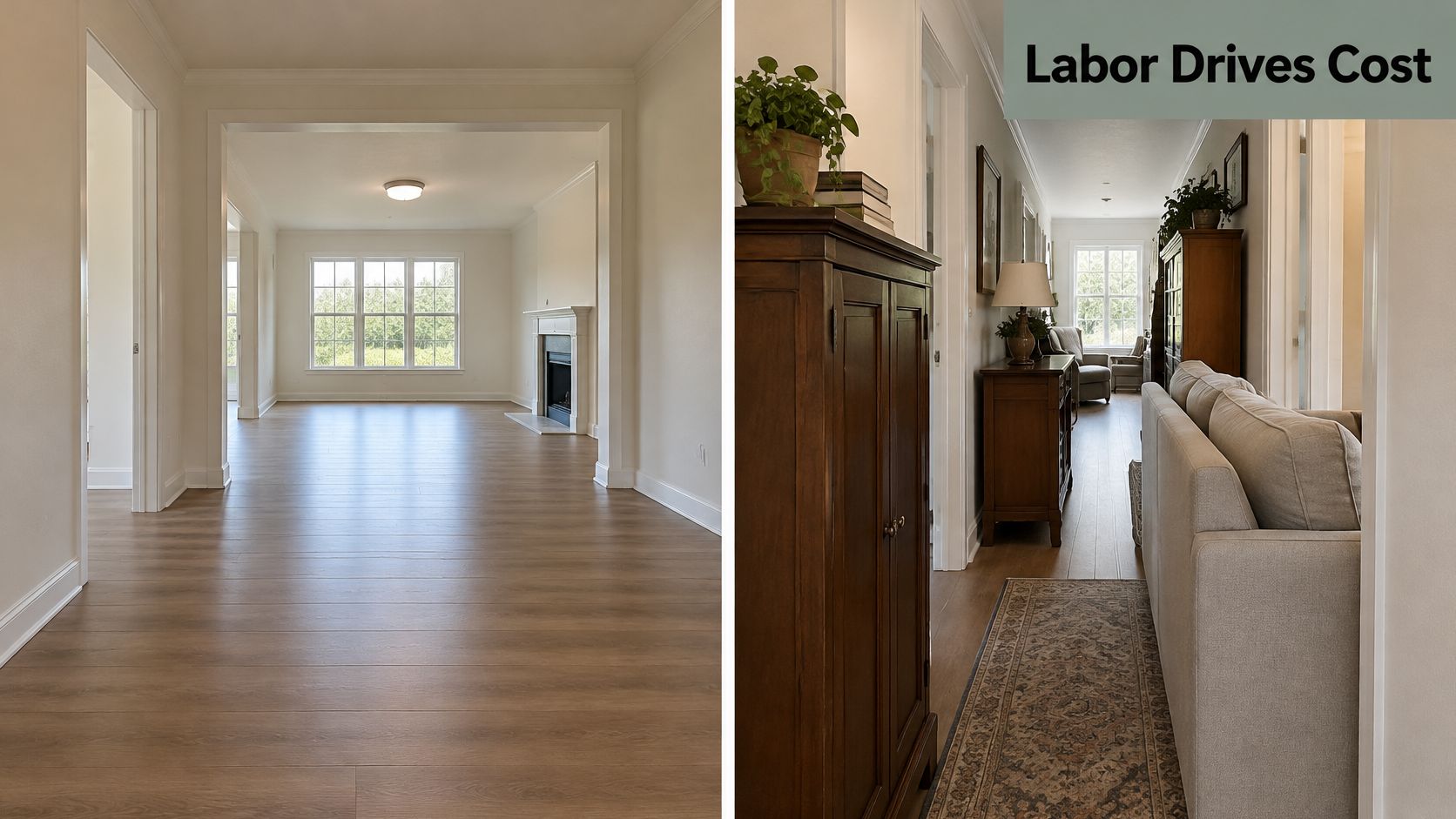
The variables that push a job toward the slow end of that range:
- Stairs and high ceilings. Every level change costs a trip with equipment, and tall foyer glass is a ladder job, not a step-stool job.
- Occupied rooms. Furniture has to be protected, moved and put back, and dust has to be kept out of living space while you work.
- Window count. Glass, tracks, screens and frames are detail work, and a house with 30 windows is a different day than one with 12.
- Adhesive, paint and grout residue. These need the right solvent and a light hand so the finish survives the removal.
- Appliance interiors and cabinet exteriors. Factory stickers, sawdust inside drawers, fingerprints on stainless.
- Unfinished punch-list work. If the painter returns, so does the dust, and the clean gets billed again.
A low per-square-foot figure usually isn't a discount. It's a scope that excludes extra passes, window tracks, high dusting or hauling. Look at what's missing before you look at what's saved.
The honest predictor of price isn't floor area. It's how many hours the house will take, and that number is set by what the contractors left behind.
For a sense of how hourly billing compares to flat-rate quotes on unpredictable sites, our breakdown of what cleaners charge per hour covers both models. Ask for a site-specific estimate with inclusions listed, every time.
Debris Hauling and Disposal Costs
Sweeping up and hauling off are different line items, and mixing them is how budgets slip. Bulk debris means drywall scraps, cut lumber, packaging, flooring offcuts, tile, empty buckets and broken fixtures. Residue means the fine dust and film a crew vacuums and wipes. A crew can clear the second in an afternoon. The first needs a truck, a dumpster or a disposal run.
Haul-away gets priced on four things: whether the crew loads the debris or it's already staged, whether a dumpster or a truck is needed, how many trips the project takes, and whether disposal fees pass through to you. Ask before you compare numbers:
- Is debris removal in the quote at all? If it isn't listed, it isn't included, whatever the walkthrough conversation implied.
- Who separates construction materials from household trash? Mixed loads get sorted or rejected, and either outcome costs time.
- Does the estimate include the trip to the disposal facility? Loading is one job, transport and tipping fees are another.
- Is storm debris priced separately? After hurricane season, cleanup in Daphne, Gulf Shores or Orange Beach involves fencing, shingles and soaked materials, not renovation scraps. Those are two different scopes and should carry two different lines.
A quote with a pleasant cleaning rate and no debris line hasn't removed the cost. It has moved it to a later invoice, usually at the worst possible moment, when the movers are already scheduled. Request separate lines for cleaning and for debris removal so you can compare each one against other bids and see exactly where the difference sits.
When Silica, Lead or Mold Changes the Scope
Some construction dust is ordinary household dust. The rest carries a regulated scope that changes the crew, the method and the price. Federal renovation guidance describes lead-producing activities such as sanding, cutting and demolition that require special cleanup methods: HEPA vacuuming followed by wet wiping and wet mopping, with the area cleaned again if dust, paint chips or debris remain. That sequence is a documented protocol, and it bills like one.
Older housing stock on the Eastern Shore makes this practical rather than theoretical. Homes built before lead paint was phased out, plus the usual round of trim replacement and sanding, put paint dust into the scope. So do concrete, brick, mortar, stone and tile, since cutting, sawing, grinding, drilling and crushing them generates respirable crystalline silica (OSHA crystalline silica overview). If you're weighing DIY versus professional paint stripping on trim and doors, settle that decision before the final clean is booked, because the dust it leaves behind is a separate cleanup problem.
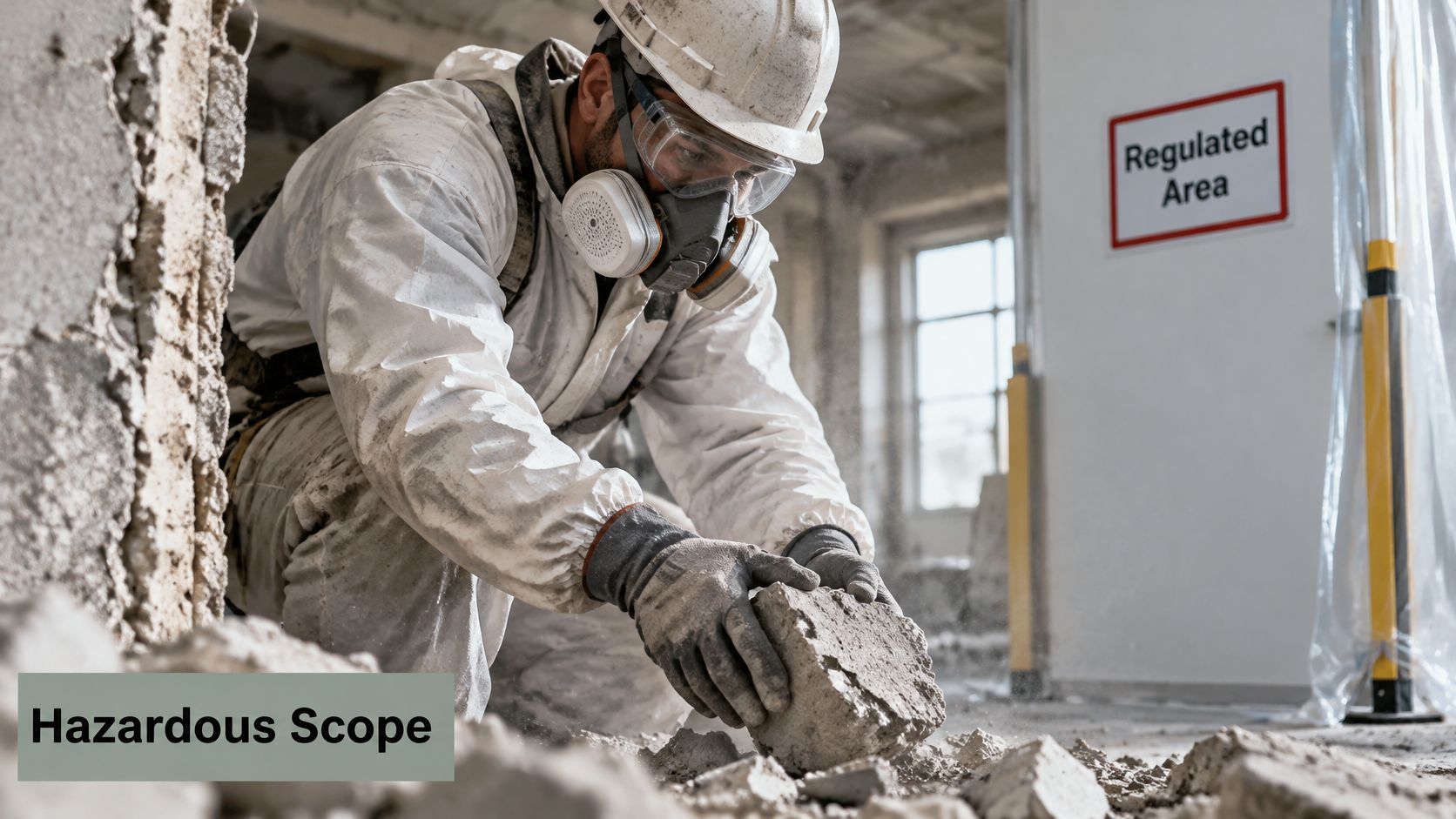
The exposure thresholds explain why some jobs cost more than the square footage suggests. OSHA sets an action level of 25 micrograms of respirable crystalline silica per cubic meter of air as an 8-hour time-weighted average and a permissible exposure limit of 50 micrograms per cubic meter (OSHA silica standard interpretation). Disturbing the wrong material trips those limits. A single bathroom of cut tile can require the same controls as a whole-house clean, which is why the materials involved matter more than the floor plan.
The question to ask any cleaner: does your standard rate include lead dust, asbestos, mold or silica work? If the answer is vague, assume it doesn't.
Routine post-construction service covers ordinary dust, debris and residue. Asbestos work, regulated lead-renovation cleaning, mold remediation and heavy silica exposure call for qualified specialists and a written exposure-control plan that names the tasks and protective methods before work starts. That scope gets priced individually rather than pulled from a rate card. The lowest number on a job involving these materials usually reflects a scope that ignores them, and the correction arrives later as a change order or a second crew.
Confirm the Scope and Request Your Free Quote
The fastest way to get an accurate number is to send the details that affect it. Square footage alone tells a cleaner very little; the phase, the condition the trades left behind, and the stated inclusions decide what the job really costs. Before you ask for pricing, collect:
- Approximate square footage of the areas being cleaned.
- The construction stage: rough, final or touch-up, and whether trades are finished.
- Which rooms are affected, and whether dust has spread into HVAC or adjacent living space.
- Whether the home is occupied or vacant, since protection and access change the plan.
- Whether concrete, masonry, older paint or visible mold is involved.
- Whether debris hauling is needed, and whether it's already staged.
- The date the space must be ready, especially for a rental turnover.
Renters should confirm with the property owner or manager before ordering work in a unit. Realtors and property managers usually coordinate the final clean alongside the trades, and getting that schedule in one place saves a return visit. Our post-construction clean-up checklist names the room-by-room details worth putting in the request, so nothing falls outside the scope.
If the renovation also added concrete flatwork, such as a driveway, patio slab or walkway, the pour schedule and the final clean have to line up, and you can request a concrete project quote to pin down the day that crew clears the site.
Special requests, including deep cleaning and post-construction cleanup, are included in the customer's quote, and custom plans are priced individually through the office rather than through a posted rate. Homeowners and renters in Fairhope, Daphne, Spanish Fort, Gulf Shores and Orange Beach can contact Sweet Home Cleaning Service to request a quote, and we will confirm which services fit your project and which parts need a specialist. Ask for the inclusions to be stated before you compare numbers, because the scope is what you're paying for.
Post-construction cleanup is a finish trade, and Sweet Home Cleaning Service treats it that way: dust, debris and residue removed from cabinets, walls, baseboards, doors, vents, glass, fixtures and floors so a renovated home in Fairhope, Daphne, Spanish Fort, Gulf Shores or Orange Beach is ready to live in. If you're weighing a one-time clean against recurring cleaning once the dust settles, the office will price the plan around your household. Call or contact Sweet Home Cleaning Service and we'll tell you exactly what your project's scope includes.

Let us handle the cleaning. Enjoy your home.



Sweet Home Cleaning Service
19940 State HWY 181, Suite E Fairhope, AL 36532
Phone: (251) 586-4081
sales@sweethomecleaningservice.com