What Does a Deep Clean Include? a Room-by-Room Checklist

A deep clean is a top-to-bottom reset of every room that reaches the high, hidden, and neglected surfaces a standard clean skips, on top of the routine work. If your counters look fine, why does the house still feel dusty, sticky, or stale a day later? Sweet Home Cleaning Service hears that question in Fairhope because most buildup hides where routine visits don't go.
Table of Contents
What a Deep Clean Covers and Who Needs One
A deep clean is a top-to-bottom reset of every room that reaches the high, hidden, and neglected surfaces a standard visit passes over, on top of the routine work. That's the practical answer to what does a deep clean include, and the kitchen shows the difference clearly.
A standard clean wipes counters and the stovetop and washes the floor. A deep clean also degreases cabinet fronts, the range hood, the backsplash, and the top of the refrigerator, where cooking film settles and turns tacky.
Three signals you need one
- It's been a while: Months without detailed attention leave baseboards, blinds, and grout visibly dingy.
- A season left its mark: Spring pollen along the Eastern Shore coats sills, blinds, and vents, then drifts onto floors.
- The home is changing hands: A move-in, move-out, or sale calls for empty cabinets, closets, and appliances to be cleaned before the next person arrives.
This guide is for homeowners and renters in Fairhope, Daphne, Spanish Fort, Gulf Shores, and Orange Beach. Sweet Home Cleaning Service is a Fairhope-based house cleaning and maid service that offers deep cleaning alongside recurring maid service, and setting out the scope plainly helps you compare any quote. If you're vetting providers, a buyer's checklist for cleaning services is a useful companion for checking what a company promises before you book. The sections below walk the rooms, the work order, disinfecting, coastal conditions, timing, and preparation.
Room-by-Room Deep Clean Checklist
Read the checklist across each row: the area, the core tasks, and the spots crews most often find missed.
| Area | Deep clean tasks | Often missed |
|---|---|---|
| Kitchen | Clean cabinet fronts inside and out, tops of cabinets, range hood and filter, microwave inside and out, outside of refrigerator and dishwasher, sink and faucet base, backsplash | Cabinet tops, range hood filter, fridge door seals, base of the sink |
| Bathrooms | Scrub tubs and showers, clean tile and grout, shower door tracks, toilets including base, vanity and faucets, exhaust fan cover, mirrors, light fixtures | Shower door tracks, caulk lines, toilet base, exhaust fan grille |
| Living areas | Dust ceiling fans, vents, blinds, and wall hangings; wipe baseboards, door frames, switch plates, window sills, and glass doors; vacuum upholstery | Ceiling corners, blind slats, switch plates, under and between cushions |
| Bedrooms | Vacuum under beds where accessible, clean closet interiors, wipe headboards and nightstands, dust high furniture tops | Closet shelves and corners, under-bed floor, headboard backs |
| Floors | Vacuum carpets and rugs, wash hard floors, clean the edges along walls and under toe kicks | Carpet edges, grout lines, areas under furniture and rugs |
| Hard-to-reach spots | Remove cobwebs from corners and ceilings, dust high ledges and door frame tops, clean window tracks | High ledges, vent covers, window tracks, tops of cabinets |
Kitchens and bathrooms carry the heaviest buildup
Kitchen grease doesn't stay on the stove. It lands on cabinet fronts, the range hood filter, and cabinet tops, then holds dust in place. That's why those surfaces get hand washing rather than a quick pass with a dry cloth. The microwave gets cleaned inside and out, appliance exteriors get wiped, and the sink and faucet base get scrubbed where water spots and soap film collect.
Bathrooms need scrubbing, not just wiping. Tubs, showers, tile, and grout hold soap scum that a spray alone won't lift. Shower door tracks, caulk lines, and the base of the toilet are small areas that make a room look unfinished when they're skipped. The exhaust fan cover matters too, because a clogged grille can't move moist air out well.
Living areas, bedrooms, and floors
In living areas, the work runs high to low. Ceiling fans, vents, blinds, and wall hangings collect settled dust, while baseboards, door frames, and switch plates collect fingerprints and scuffs. Upholstery gets vacuumed, including under and between cushions where crumbs and pet hair settle.
Bedrooms get attention under beds where accessible, inside closets, and on headboards and nightstands. Floors tie it together, with carpets and rugs vacuumed to the edges and hard floors washed along walls and under toe kicks. The gaps are common. In Frontdoor's survey of 984 homeowners conducted in December 2024, 41% of surveyed U.S. homeowners said they failed to deep-clean their carpets, while 38% neglected baseboard cleaning.
Before you book: Walk room to room with this checklist and mark what actually needs attention in your home, so the quoted scope matches your rooms instead of a generic list.
High-touch shared spaces benefit from the same discipline, and WipesBlog's gym disinfection guide offers a helpful parallel on why frequently touched surfaces deserve their own routine. Compare the checklist to your home first, then name your priority rooms when you request a quote.
The Order of Work for Dust and Floors
Start high and work down, because dust you knock loose falls onto whatever sits below it. Clean floors first and you'll clean them twice. I would always protect the floor work by finishing it last.
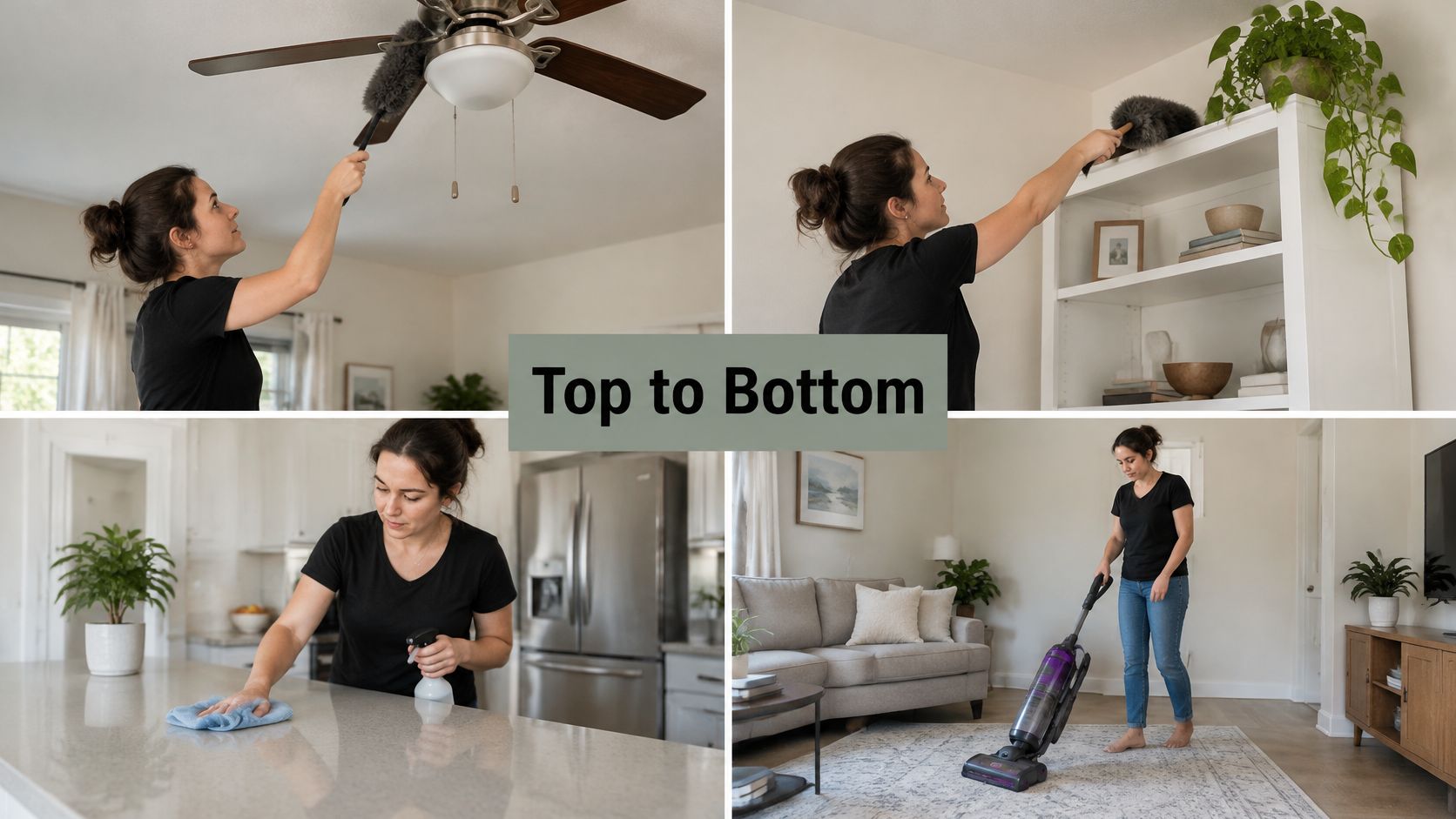
Five steps in order
- Clear clutter and surfaces: Counters, floors, and furniture tops need to be reachable, or the crew cleans around objects instead of the surface itself.
- Remove cobwebs and high dust: Ceilings, vents, ceiling fans, blinds, and high ledges come first, since they're common reservoirs for settled particles. If vents look loaded beyond the cover, a homeowner's guide to cleaner vents helps you sort surface dust from duct concerns.
- Damp-wipe surfaces: Horizontal and vertical surfaces, baseboards, door frames, and switch plates get a damp cloth instead of dry dusting, and our step-by-step guide to dusting a home shows the cloth technique in detail.
- Vacuum thoroughly: Carpets, rugs, upholstery, stairs, edges, and under-furniture zones get detailed passes, using a HEPA-filtered vacuum where available.
- Damp mop hard floors last: Mopping at the end picks up what settled during the work above instead of leaving it on a finished floor.
Why damp beats dry
Dry dusting, sweeping, and ordinary vacuuming can stir settled particles back into the air. The U.S. Environmental Protection Agency guidance on indoor particulate matter recommends damp dusting because moisture helps trap particles such as pollen, pet dander, and fine debris, and recommends considering HEPA-filtered equipment because it reduces dust exhausted back into the room.
Feather dusters mostly relocate dust, so skip them. Anyone with asthma or allergies should step out of the immediate vacuuming area, since cleaning can temporarily stir dust into the air.
Say a rental near the beach has sand ground into the carpet edges. The entryway and hallway get vacuumed twice, once for loose grit and once slowly along the edges, before hard floors are mopped. That second pass is the difference between looking clean and feeling clean under bare feet.
Kitchen and Bathroom Work and When to Disinfect
A greasy pan has to be washed before a sanitizer can work on it, because soil blocks the product from reaching the surface. Counters, sinks, and tubs follow the same logic. Spraying disinfectant over visible grime wastes product and leaves the grime in place.
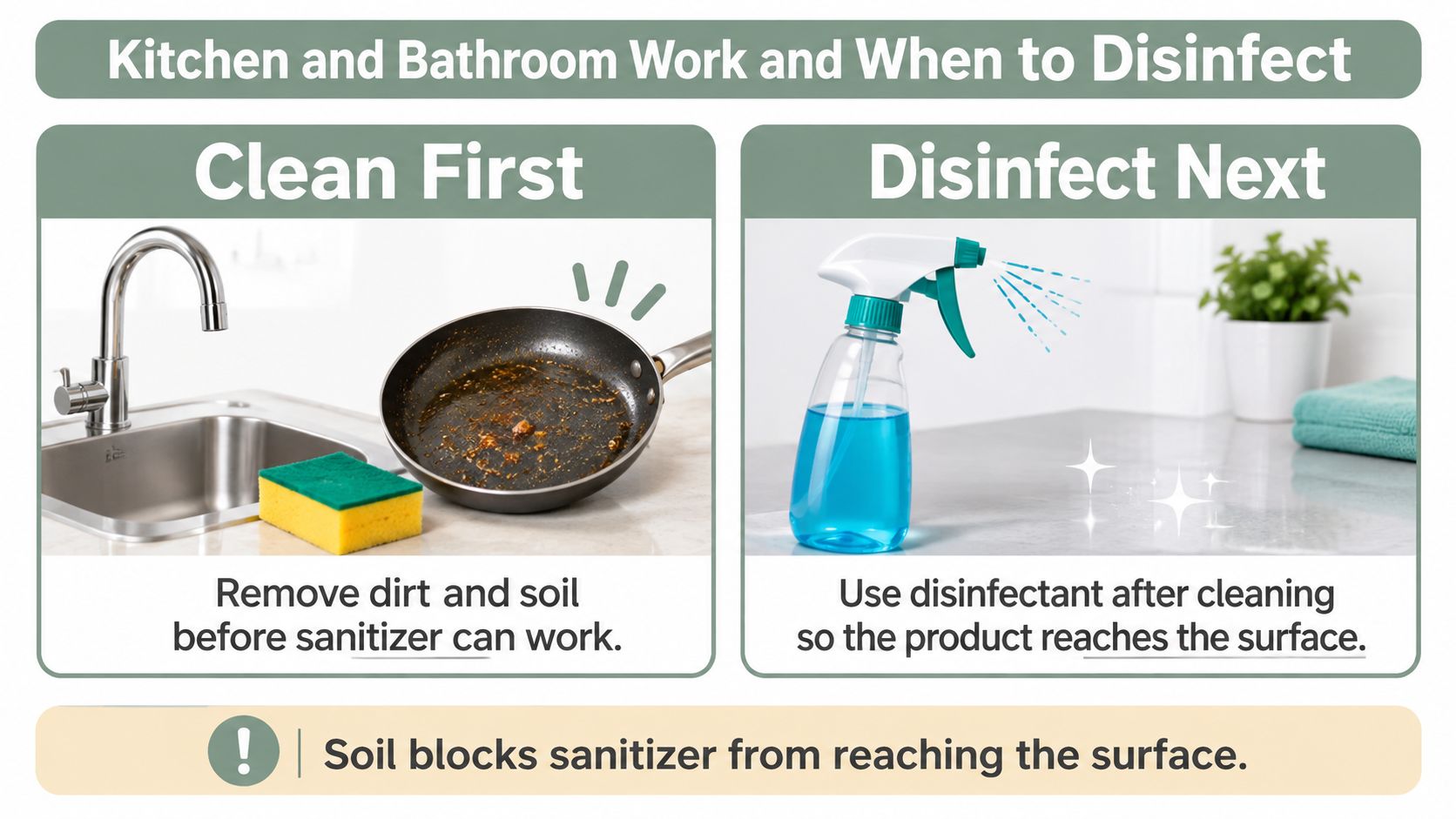
Cleaning first, disinfecting second
The CDC guidance on cleaning and disinfecting your home distinguishes the two steps: cleaning removes dirt and impurities with soap, detergent, or water, while disinfecting uses an appropriate antimicrobial product after cleaning. In most homes, cleaning with soap and water removes most germs, and dirt can reduce the effectiveness of disinfecting chemicals.
Kitchen and bathroom priorities are the surfaces people touch and splash most. That means sinks, toilets, faucets, and countertops, plus doorknobs, handles, and light switches. Our detailed kitchen deep cleaning checklist breaks the kitchen sequence down task by task if you want the full room order.
If disinfecting is part of the visit
- Clean visible dirt first: Wash with soap and water so the product can reach the surface.
- Rinse and let it dry: Residue and puddles dilute the next step.
- Choose the right product: Use an EPA-registered product that's suited to that surface.
- Keep it wet for the full contact time: Wiping dry early cuts the process short, so follow the label timing.
- Ventilate and never mix products: Open a window or run the fan, and keep chemicals separate.
Disinfecting makes sense when someone in the home is sick, a sick visitor recently came over, or a resident has a weakened immune system. It isn't the default for every surface.
A deep clean shouldn't mean disinfectant everywhere by default. Thorough soil removal does most of the work, with targeted disinfection based on your household's circumstances. Stronger chemicals indoors call for ventilation and careful label reading, every time.
Coastal Conditions That Change Deep Clean Priorities
Humid Gulf Coast air, sand carried in from beach trips, spring pollen, and storm cleanup all change where a deep clean should focus on the Eastern Shore. Treating every room identically misses the point here.
The U.S. Environmental Protection Agency brief guide to mold and moisture recommends keeping indoor relative humidity below 60%, ideally between 30% and 50%, because excess humidity increases the likelihood of mold growth. A humidity gauge, commonly available for about $10–$50, helps homeowners in Fairhope, Daphne, and Spanish Fort track conditions in closets and bathrooms.
| Local condition | Where it shows up | What the deep clean adds |
|---|---|---|
| Humidity and mildew | Closet corners, bathroom tile, window areas, upholstered furniture | Wipes damp surfaces and flags persistent moisture for repair |
| Beach sand | Entryways, rugs, stair edges, under sofas, tile grout lines | Extra vacuuming at entries, edge work on stairs, grout line cleaning |
| Storm cleanup | Floors, baseboards, lower cabinets, closets after water intrusion | Separates dirt from water-damaged materials and dries and airs out spaces before any finish work |
| Vacation rental turnover | Kitchens, bathrooms, linens, high-traffic living areas | Full reset of kitchens and bathrooms between guests, with fixture and surface checks |
Sand, rentals, and storms
Beach sand is abrasive and persistent. It collects in entryways, rugs, and stair edges, so those spots get extra vacuuming and grout attention. Vacation rental turnovers in Gulf Shores and Orange Beach need a consistent reset between guests, with kitchens, bathrooms, and linens handled the same way every stay. Spring pollen is handled by damp dusting windows, blinds, and vents before floors are vacuumed.
Storm cleanup is different work. FEMA guidance on mold problems after flooding advises drying a water-affected home as quickly as possible, preferably within 24–48 hours, and items that stay wet may need removal. A deep clean should separate ordinary dirt from water-damaged materials and should never cover mold with paint or caulk.
A cleaning visit can't replace repairs for leaks or chronic condensation. What it can do is remove surface soil and reveal damp trim, staining, or musty closet corners early, so you can raise them with a contractor or property manager.
What Drives Deep Clean Time and Quotes
Deep clean quotes are built around your home rather than one fixed rate, and visit length follows the same factors. Two homes with identical square footage can take very different amounts of time.
| Factor | How it changes time | How it affects the quote |
|---|---|---|
| Home size and room count | More rooms and square footage add hours | Larger homes raise the scope and the quote |
| Time since last clean | Heavy buildup in kitchens, baths, and floors adds scrubbing time | Heavier buildup usually means a more detailed scope |
| Pets and pet hair | More vacuuming, hair removal from upholstery and corners, extra floor work | Adds scope for floors and furniture |
| Carpet and upholstery | Extraction and detailed vacuuming take longer than hard floors | Carpet and upholstery work is usually quoted as added scope |
| Occupied or empty home | Furniture and personal items slow the work when present | Clear access can shorten the visit |
| Add-ons like inside oven or blinds | Each add-on adds a defined block of time | Named in advance so the quote matches the visit |
Add-ons change the scope, so name them early
Common requests include inside the oven, inside the refrigerator, window tracks and blinds, interior cabinets, light fixture cleaning, spot cleaning of walls, and detailed baseboard work in heavy-traffic halls. Each one adds a defined block of work. Naming them in advance keeps the visit from running long or leaving a priority undone.
Vacant move-out homes often need extra attention to cabinets and appliances, since every interior surface is exposed and expected to be ready for the next resident. Occupied homes trade that for working around furniture and personal items.
For an accurate estimate: Share your square footage, number of bathrooms, pets, and months since the last clean, plus any priority rooms, and ask for the expected visit length alongside the scope.
If you're comparing how companies structure their pricing, our breakdown of what cleaners charge per hour explains how time and scope connect. I'd rather quote a detailed scope than promise a fast visit that skips the edges.
Prepare Your Home and Request a Free Quote
A little preparation lets the crew spend the visit cleaning instead of moving your belongings. Deep Cleaning is recommended for homes that need a complete refresh or have not been cleaned in a while, so clearing access matters even more than usual.
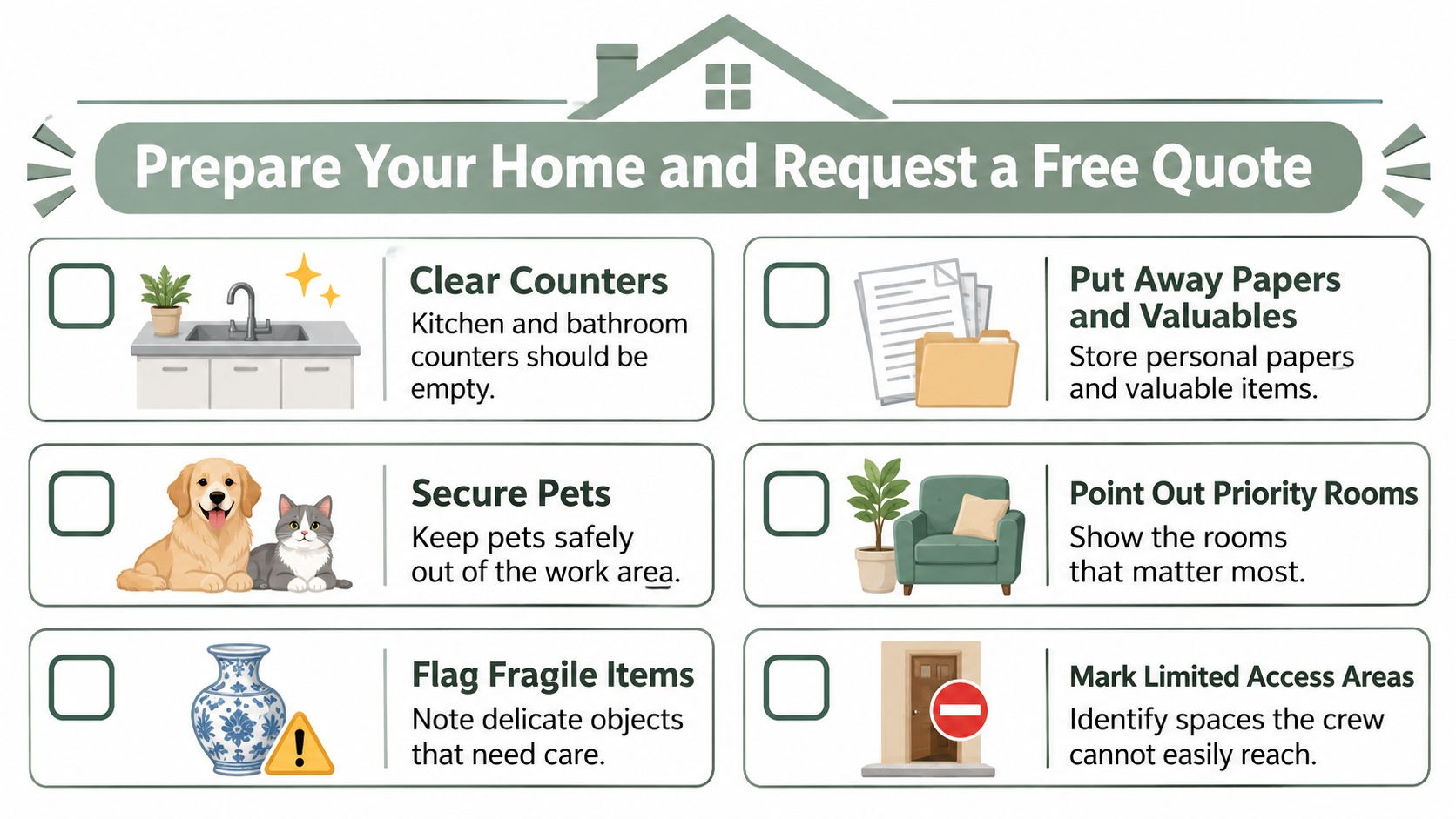
Before the crew arrives
- Clear counters: Empty kitchen and bathroom counters so surfaces can be washed fully.
- Put away papers and valuables: Store personal papers, jewelry, and fragile items.
- Secure pets: Keep them safely out of the work area.
- Point out priorities: Name the rooms that matter most and flag areas with limited access.
Special requests, such as an inside-oven add-on, are included in your quote before the visit so the scope is settled in advance. Our cleaning team is fully trained, background-checked, and insured.
After the work is done
Walk through the home and check the work against the agreed checklist: cabinet fronts, baseboards, switch plates, floor edges, and your priority rooms. Note anything cleaning can't fix, such as persistent moisture, staining, or water damage, and raise those items with a contractor or property manager.
Between deep cleans, recurring maid service on a weekly, biweekly, or monthly schedule helps keep the reset from fading. Sweet Home Cleaning Service, a Fairhope-based house cleaning and maid service, can walk through your home and build a scope that matches it. Homeowners and renters in Fairhope, Daphne, Spanish Fort, Gulf Shores, Orange Beach, and the surrounding Eastern Shore and Gulf Coast area are invited to book or request a free quote from Sweet Home Cleaning Service today.
If your home needs the kind of top-to-bottom reset covered here, Sweet Home Cleaning Service offers deep cleaning, standard house cleaning, move-in and move-out cleaning, vacation rental cleaning, and recurring maid service across Fairhope and the Eastern Shore. Tell us your priority rooms and any add-ons, and we'll build a scope that fits your home. Visit Sweet Home Cleaning Service to request your free quote.

Let us handle the cleaning. Enjoy your home.
Sweet Home Cleaning Service
19940 State HWY 181, Suite E Fairhope, AL 36532
Phone: (251) 586-4081
sales@sweethomecleaningservice.com