Move Out Cleaning Checklist for Tenants: Room by Room

The moving truck is booked, boxes are stacked by the door, and your landlord's final walkthrough is coming up fast. Then you open the oven, notice sand in the sliding-door track, and realize the empty house needs more than a quick mop. Those details can become points of disagreement when it's time to settle the deposit.
Sweet Home Cleaning Service is based in Fairhope, AL, serving families across the Eastern Shore and Gulf Coast. For tenants in Fairhope, Daphne, Spanish Fort, Gulf Shores, and Orange Beach, a useful move out cleaning checklist for tenants needs to account for humidity, bathroom mildew, spring pollen, and beach sand, not just visible clutter.
Before you start, separate the work into practical categories:
- Clean: Remove grease, crumbs, soap residue, dust, sand, and belongings.
- Document: Photograph existing stains, worn finishes, damaged screens, and cracked caulk.
- Clarify: Check the lease before patching walls, disconnecting appliances, or arranging specialty cleaning.
A thorough clean supports your handover record, but it doesn't guarantee a full deposit refund. Resources such as these California security deposit refund rules concern another jurisdiction, so Baldwin County tenants should check their lease and applicable Alabama requirements rather than borrow another state's deadlines.
Gather microfiber cloths, dish soap, a soft brush, a vacuum with attachments, a mop, gloves, and surface-compatible cleaners. Remove your belongings first, keep utilities available through the cleaning, and leave time to photograph the finished home.
Table of Contents
1. Kitchen Appliances and Built-In Surfaces
Start with the oven, refrigerator, and range hood because baked-on food and grease need more attention than an empty countertop. A clean kitchen floor won't compensate for crumbs in refrigerator drawers or sticky cabinet handles when the landlord opens them.
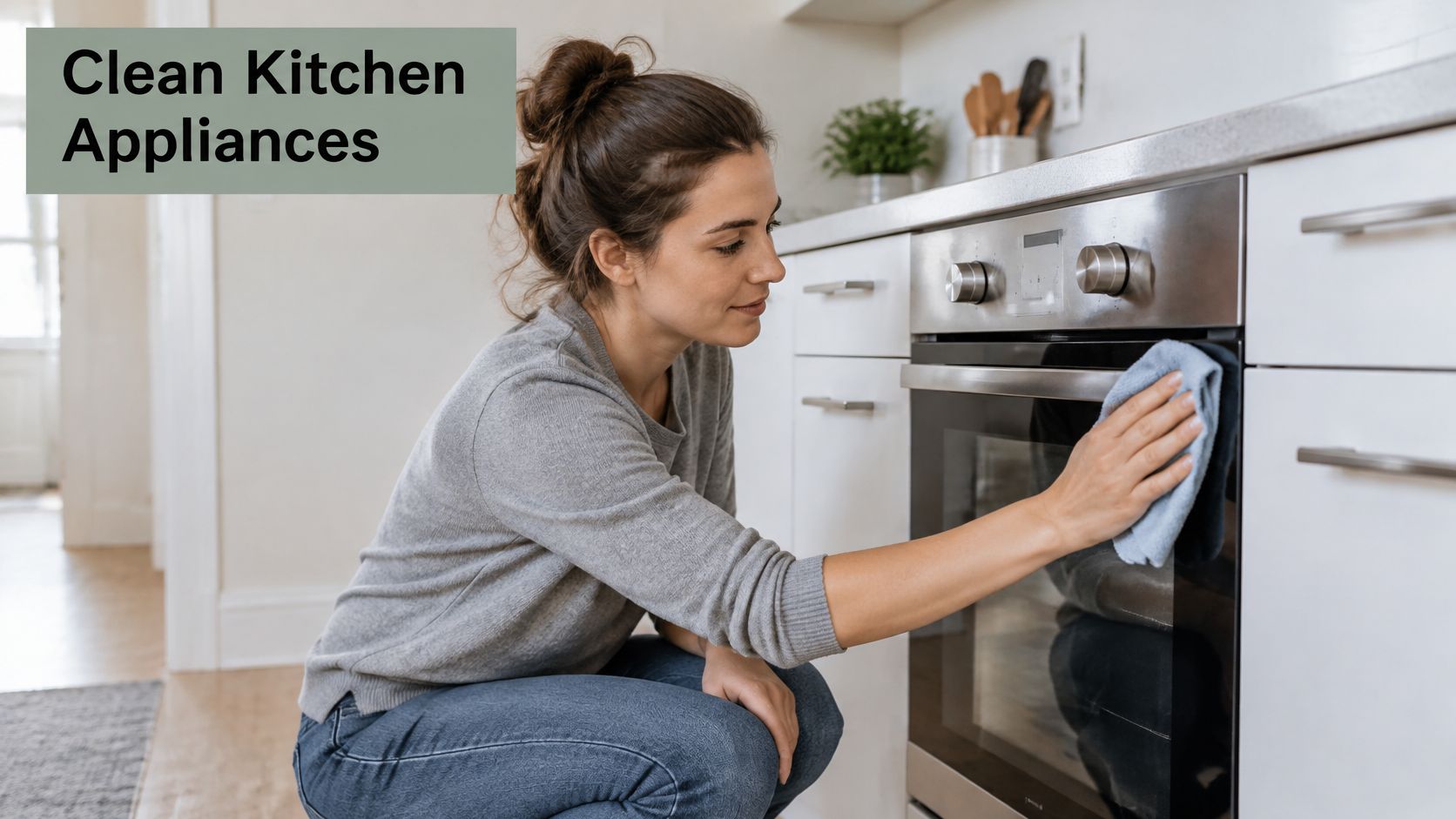
Work through the appliances before finishing surrounding surfaces:
- Oven and stovetop: Remove cooled racks and soak them in warm, soapy water if their finish permits. Use an oven-compatible cleaner, keeping it away from heating elements and seals.
- Refrigerator and freezer: Remove food, wash drawers and shelves, wipe seals, and dry the interior. Let cold glass shelves warm before washing them.
- Dishwasher and microwave: Clean accessible filters, door edges, seals, and food splashes according to the appliance instructions.
- Range hood and cabinets: Degrease washable filters, cabinet fronts, handles, cabinet tops, and the backsplash.
Give Hardened Grease Time to Loosen
In an older Fairhope or Daphne rental, repeated cooking can leave sticky buildup above the stove. Apply a finish-safe degreaser to a cloth, allow the recommended contact time, and wipe gently rather than attacking painted cabinets with an abrasive pad.
For example, a departing tenant can soak compatible oven racks while cleaning the refrigerator. That uses waiting time productively without relying on aggressive scrubbing.
Finish stainless surfaces using our guide to cleaning stainless steel appliances without streaks. Clean behind appliances only when they can be moved safely and the landlord permits it, particularly around gas connections.
Deposit record: Photograph appliance interiors and empty cabinets. Don't unplug the refrigerator or leave its doors open without confirming the landlord's handover instructions.
2. Bathrooms, Grout, and Mildew Control
In Fairhope and across Baldwin County, landlords often check the shower corners, caulk lines, and toilet base first. Humid bathrooms can hold moisture in grout and around seals, so rinse away cleaner and leave the room ventilated to dry.
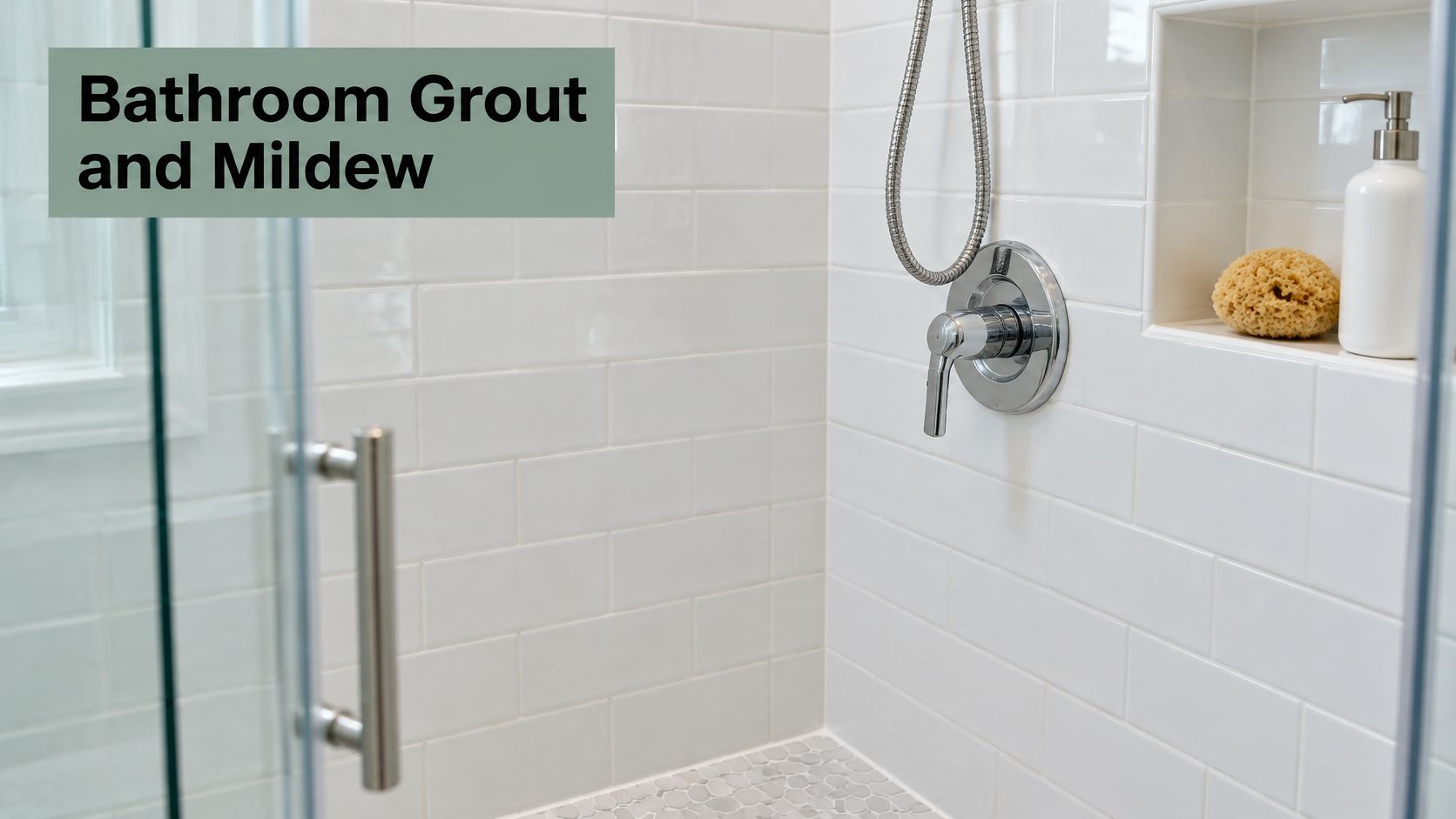
Clean the toilet bowl, seat hinges, tank exterior, base, and accessible floor behind it. Wash the vanity, faucet, mirror, shower niche, tub rim, and drain surround. Check inside the cabinet beneath the sink for spills or signs of moisture.
Separate Surface Buildup From Failed Materials
Use a nylon grout brush with a tile-compatible bathroom cleaner. Scrub sound grout gently; forceful brushing can loosen deteriorated joints or damage soft caulk. Our guide to cleaning bathtubs and showers covers surface-focused cleaning, and Fillaree's bathroom cleaner guide offers product-selection context.
For a Spanish Fort rental, a crack beside a stained shower corner calls for documentation as well as cleaning. Photograph it, gently clean the surrounding surface, and report the damage to the landlord rather than applying fresh caulk to conceal it.
Practical rule: Remove ordinary surface buildup. Document loose grout, failed caulk, recurring moisture, and damaged finishes instead of scrubbing them as though they were dirt.
Never mix bleach with ammonia, acids, or other cleaners. Ventilate while using products and follow label directions for contact time when disinfecting.
Deposit record: Keep before-and-after photos of stained grout or damaged caulk. Report persistent growth, leaks, or deterioration to the landlord rather than treating them as routine cleaning.
3. Floors, Carpets, and Sand Removal
Dry grit comes out before the mop comes in. In Gulf Shores and Orange Beach homes, wetting a sandy floor first spreads grit into seams and leaves a gritty film after drying.
Empty rooms also expose carpet edges, furniture outlines, and dust behind doors. Vacuum these areas deliberately instead of making a quick pass through the center.
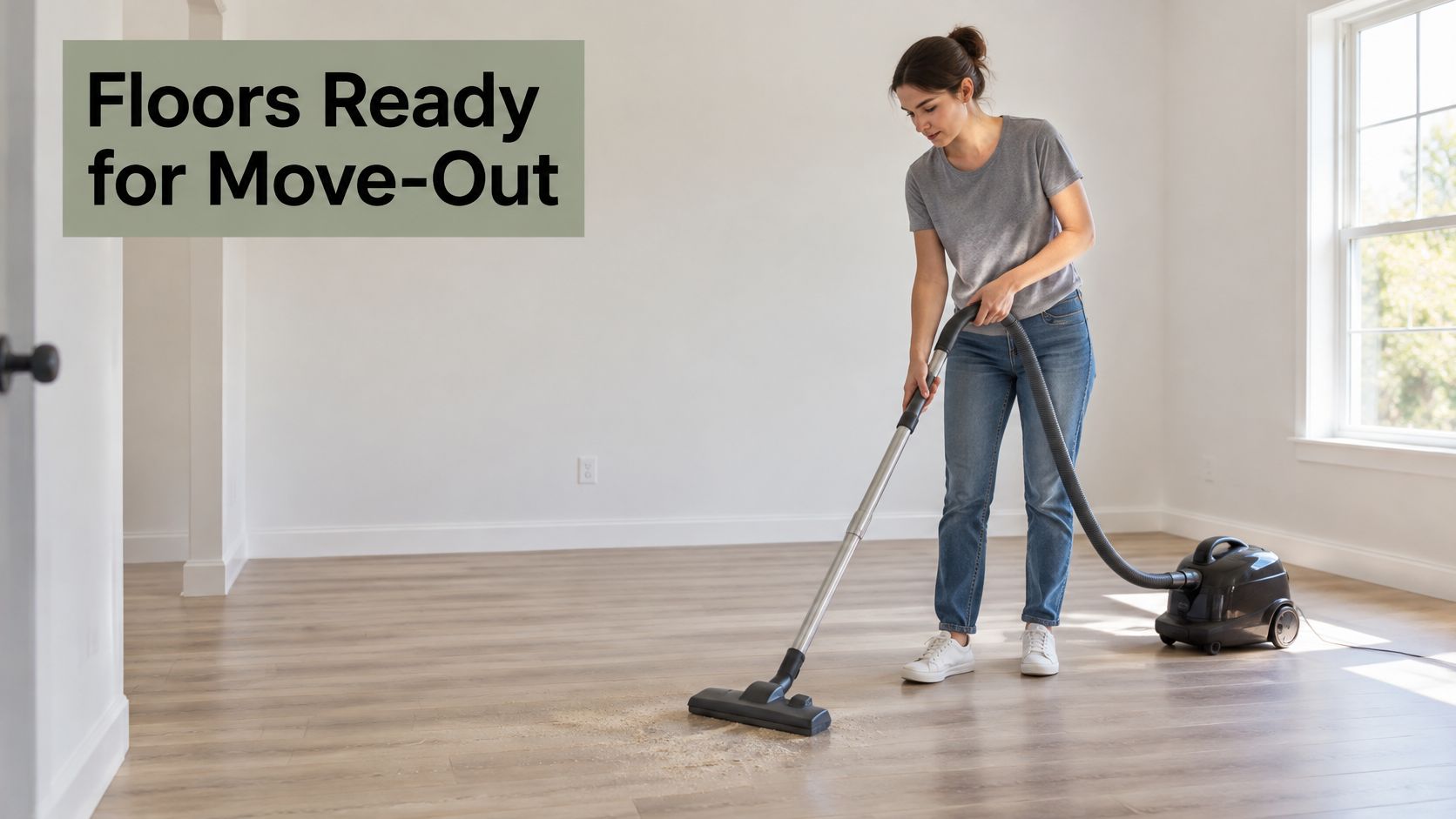
- Prepare the vacuum: Empty the canister or replace a full bag, then check the brush and attachments.
- Work the edges: Use the crevice tool along baseboards, closet corners, thresholds, and accessible appliance edges.
- Match the floor: Use a compatible cleaner and a lightly damp mop on wood or laminate. Avoid flooding seams.
- Plan carpet treatment: Check written requirements before booking a local carpet cleaner, and allow drying time before inspection.
The EPA's indoor-air guidance recommends damp dusting and discusses HEPA-filter vacuuming to limit dust escaping back into the room. That's useful when settled dust would otherwise land on surfaces you've already wiped.
Finish Floors After Overhead Work
Although floors appear early in this checklist, save their final cleaning until fans, shelves, and blinds are done. Our guide to cleaning the kitchen floor provides additional help for that high-residue area.
Say a Daphne family has moved out after regular beach trips. Vacuuming entry grout and closet edges before mopping removes hidden sand, but it won't reverse existing scratches.
Deposit record: Photograph persistent stains and worn areas after cleaning, and compare them with move-in photographs rather than repeatedly soaking or scrubbing the finish.
4. Walls, Doors, Switch Plates, and Scuff Marks
A fingerprint near a light switch is a cleaning task. A torn patch of drywall from an adhesive hook is a repair question, and treating both with a scrub pad can make the damage worse.
Start with door tops and frames, then work down handles, painted surfaces, and baseboards. Use a soft cloth with a mild soap solution, wrung nearly dry, and test an inconspicuous area before cleaning visible paint.
Use the Least Aggressive Method First
Flat and matte finishes can lose color or develop shiny patches when rubbed. Stop if paint transfers to the cloth, and avoid melamine foam on delicate finishes unless the manufacturer permits it.
- Doors and trim: Remove fingerprints and loose grime without soaking joints or unfinished edges.
- Switch plates: Wipe with a barely damp cloth. Never spray directly into switches or outlets.
- Handles: Clean first, then use a compatible disinfectant if appropriate, observing its contact time.
- Holes and chips: List them for the landlord and obtain approval before patching or touching up paint.
For example, a Fairhope renter can remove hallway fingerprints successfully but still leave a conspicuous mismatch by touching up paint with the wrong sheen. Written repair instructions are more useful than a hurried cosmetic fix.
Ordinary wear isn't the same thing as removable dirt, and neither should be confused with tenant-caused damage.
The California Attorney General's security-deposit guidance distinguishes ordinary wear and pre-existing damage from allowable deductions and ties cleaning to move-in cleanliness. That illustrates the value of condition comparison, but Alabama tenants must check their own governing requirements.
Deposit record: Take wide wall photographs and close-ups of existing chips, patched areas, or unresolved damage. Record what you cleaned separately from what needs repair.
5. Windows, Blinds, Tracks, and Screens
Open the sliding door before declaring the living room finished. Sand, dead insects, and spring pollen can remain packed into the track even when the glass looks clear.
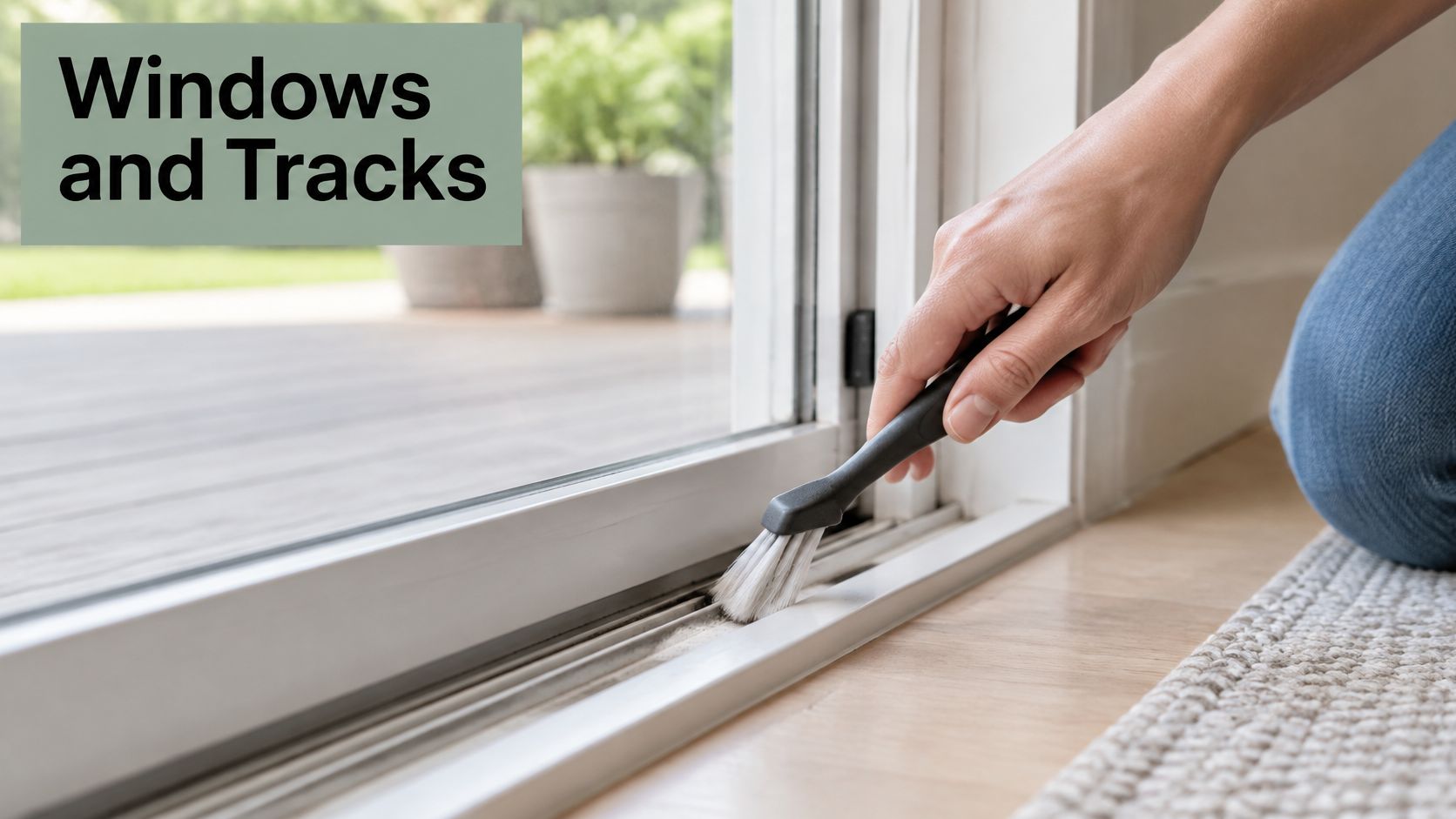
Loosen dry debris with a soft detail brush, vacuum it out, and wipe the track with a damp cloth. Keep drainage openings clear, avoid flooding the channel, and dry accessible surfaces afterward.
For glass, use a clean microfiber cloth and a compatible glass cleaner in shade where possible. Direct sun can dry the solution before you finish wiping.
Clean Coverings Without Creating Repairs
Tilt blind slats to reach both faces, supporting fragile slats with your hand. Fabric shades need their manufacturer's cleaning method, not a soaking or an all-purpose spray.
- Screens: Remove only when the design allows safe removal, and support the frame while gently brushing or washing.
- Sills and frames: Lift pollen and dirt without saturating wood or damaged paint.
- Exterior glass: Clean only where safely accessible and within your responsibilities.
- Damaged parts: Photograph torn mesh, cracked panes, broken cords, and sticking hardware.
A tenant leaving an Orange Beach rental might find packed grit beneath the patio-door rollers. Removing accessible debris is sensible; dismantling the door or forcing a sticking panel isn't.
For stubborn residue or fragile mesh, review how to troubleshoot window screen cleaning problems before applying more pressure.
Deposit record: Photograph cleaned tracks and any damaged screens. Confirm which exterior windows or screens the lease makes your responsibility, rather than risking a fall or a repair bill to exceed the agreed scope.
6. Closets, Cabinets, Drawers, and Storage Spaces
Empty storage reveals what packing misses: a charging cable behind a drawer, sticky shelf liner, crumbs beneath a cabinet organizer. Open every storage space yourself instead of assuming another family member cleared it.
A Spanish Fort renter, for example, might empty the visible closet shelves but overlook the high shelf above the door. Use a flashlight and work systematically from the highest shelf to the floor.
Check the Hidden Surfaces
- Closets: Wipe rods, shelves, door edges, and baseboards, then vacuum corners.
- Drawers: Remove belongings and loose debris before wiping the interior and accessible runners.
- Shelf liners: Check the lease before removing landlord-installed liners. Lift personal liners carefully and remove adhesive without damaging the finish.
- Under-sink cabinets: Clean spills, dry the base, and report swelling, leaks, or deteriorated material.
- Laundry storage: Remove detergent, wipe shelving and appliance exteriors, and clean the dryer lint screen.
Don't pull out a heavy washer or disconnect hoses just to reach dust. Clean safely accessible areas and record anything that needs landlord access or maintenance.
In humid months, inspect closet back walls and corners along exterior walls. If you find moisture damage, widespread suspected growth, or pest droppings, photograph the condition and notify the landlord before proceeding with ordinary wiping or vacuuming.
The New York Attorney General's tenant guide advises tenants to leave the apartment clean and remove belongings and trash before vacating. The practical takeaway is straightforward: cleaning around abandoned property isn't a completed handover.
Deposit record: Photograph open closets, drawers, and under-sink areas. Once everything is dry, leave doors positioned so the landlord can inspect the interiors easily.
7. Light Fixtures, Ceiling Fans, Vents, and Air Filters
Turn on a room's light and look upward before you pack the step stool. Dust on fan-blade edges and vent grilles is easy to overlook from floor level, especially while furniture and boxes fill the room.
Do this work before the final floor clean. Otherwise, the dust you remove will settle on newly mopped surfaces.
Work Safely Above Eye Level
Switch off fixtures and let bulbs cool. Turn off the relevant breaker before cleaning where electrical components could be exposed, and use a stable step stool rather than a chair.
Slide a pillowcase over each ceiling-fan blade and draw it back gently to contain loose dust. Follow with a lightly damp cloth if the blade finish allows it, supporting the blade without bending it.
- Light covers: Remove only accessible covers you can handle safely, and reinstall them completely dry.
- Bulbs and housings: Dust cooled, accessible surfaces without spraying sockets or wiring.
- Vent grilles: Vacuum accessible faces and wipe surface dust. Don't push tools into ductwork.
- HVAC filters: Check the lease and equipment instructions, then record the correct size and type before replacing a tenant-maintained filter.
For a Gulf Shores tenant, a filter photograph can document the installed size and condition. Don't substitute a more restrictive filter because its packaging sounds better; use the type specified for the system.
Know the boundary: Wiping a return grille isn't duct cleaning, and cleaning a dryer lint screen isn't dryer-vent servicing.
Deposit record: Photograph damaged blades, loose fixtures, stained grilles, and the installed filter where relevant. Report maintenance concerns instead of dismantling equipment, and tell the landlord if an inaccessible fixture remains unfinished.
8. Entryways, Garage, Patio, and Exterior Final Walkthrough
In Baldwin County, sand, pollen, and storm-blown leaves collect at doors and along patios. Leave the route out until last. Movers and final supply runs can track debris back inside.
Sweep the garage and clear your shelves, patio, balcony, and assigned storage areas of personal belongings. Clean landlord-owned outdoor furniture or a grill only if your lease or handover instructions assign that task to you.
Finish the Handover, Not Just the Cleaning
- Exterior debris: Remove loose leaves, sand, and ordinary debris from areas assigned to you. Report large storm debris, unstable branches, or damaged structures rather than attempting hazardous cleanup.
- Doors and access: Wipe thresholds and handles, check accessible locks, and clear your assigned mailbox.
- Final photographs: Photograph each room and any unresolved defects. Capture the condition of areas still in your possession before handing them over.
- Keys and devices: Return keys, garage remotes, and access cards, and request written confirmation.
- Meter records: Record readings if required, without opening utility equipment.
An Orange Beach tenant can photograph each empty room before returning the keys and keep the images with the lease and inspection notes. Clear, well-lit photos provide a useful record of the home's condition.
BreakingAC's rental-inspection guidance recommends comparing move-in and move-out conditions with photographs and documenting unresolved defects. Ask the landlord in writing whether a pre-move-out walkthrough is available, since timing and procedures depend on your lease and local practice.
Sweet Home Cleaning Service offers move-in/move-out cleaning in Fairhope and surrounding communities. Whatever cleaning route you choose, document the final inspection and key return.
Move-Out Cleaning Areas at a Glance
| Area | Key Tasks | Common Deposit Risks | Extra Attention on the Gulf Coast |
|---|---|---|---|
| Kitchen Appliances and Built-In Surfaces | Clean oven, refrigerator, dishwasher, range hood, microwave, cabinets, and backsplash | Baked-on grease, lingering odors, or appliance damage | Older homes may have hardened grease; humidity can contribute to refrigerator mildew odors |
| Bathrooms, Grout, and Mildew Control | Clean toilet, shower, grout, caulk, vanity, fixtures, and exhaust fan | Mildew staining or failing caulk and grout may require repair | Humidity encourages mildew in grout, caulk, and fan housings |
| Floors, Carpets, and Sand Removal | Vacuum carpets; sweep and mop floors, edges, corners, and entryways | Deep carpet stains, pet odors, or damage from unsuitable cleaners | Remove beach sand, pollen, and grit that can scratch floors and wear carpet |
| Walls, Doors, Switch Plates, and Scuff Marks | Gently wipe walls, doors, handles, switches, outlet covers, and trim | Holes, large stains, peeling paint, or paint damage from harsh scrubbing | Use gentle cleaning methods and distinguish ordinary wear from damage |
| Windows, Blinds, Tracks, and Screens | Clean glass, sills, tracks, screens, blinds, and sliding-door tracks | Torn screens, cracked glass, or damage to sliding-door rollers | Clear coastal sand and grit; remove spring pollen and coastal dust |
| Closets, Cabinets, Drawers, and Storage Spaces | Empty and wipe closets, shelves, drawers, pantries, and under-sink cabinets | Forgotten belongings, sticky residue, or stained shelf liners | Check for moisture and mildew, especially in closets along exterior walls |
| Light Fixtures, Ceiling Fans, Vents, and Air Filters | Dust fans and fixtures; clean vents; check or replace HVAC filter | Fragile or broken fixtures, burned-out bulbs, or damaged fans | Dust can accumulate quickly; check the filter and leave the system ready for the next occupant |
| Entryways, Garage, Patio, and Exterior Final Walkthrough | Sweep garage and outdoor areas; check doors and locks; photograph each room | Left-behind debris, incomplete handover, or undocumented condition | Clear sand, leaves, and storm debris; weather may affect outdoor cleaning |
Hand Over the Keys With Confidence
A final walkthrough goes more smoothly when the home is clean, dry, and documented. Finish overhead and moving-related work before vacuuming, mopping, and cleaning the entryway. If possible, leave time before the inspection for surfaces to dry and for any missed spots to be addressed.
Use the lease and move-in record to judge the handover condition. Removable sand in a closet corner is different from worn carpet, failing caulk, or damaged paint, which should be compared with the original condition.
Keep a Complete Deposit Record
Keep paperwork and photographs somewhere accessible after the move. Save copies before packing or resetting your devices.
- Before cleaning: Preserve move-in photographs, inspection notes, maintenance requests, and current damage photographs.
- After cleaning: Save clear room views and close-ups of appliance interiors, bathroom fixtures, floors, windows, and storage.
- At handover: Retain the completed checklist, inspection report, receipts, forwarding address, and written confirmation that access devices were returned.
- If deductions arise: Request an itemized explanation and compare each charge with the lease, photographs, and applicable Alabama requirements.
Rules and deadlines vary by jurisdiction. California Courts' security-deposit guidance says California landlords have 21 days to return a deposit or provide an itemized deduction statement. That is not an Alabama deadline. Check the rules that apply to your property before deciding whether a response is overdue or how to challenge a charge.
Keep any dispute factual. Identify the specific charge, explain what your records show, and attach relevant photographs or written maintenance notices.
Choose Help Around Your Actual Workload
Moving week can leave little time for a thorough clean. In Fairhope, Daphne, and Spanish Fort, packing, school schedules, work, and utility arrangements compete for attention. Renters in Gulf Shores and Orange Beach may also need to account for sandy storage areas and humid bathrooms that require careful drying.
Sweet Home Cleaning Service offers move-in/move-out cleaning, including scrubbing corners and sanitizing bathrooms. The team brings the necessary supplies and equipment. Include special instructions when booking, such as appliance-interior needs, access arrangements, delicate finishes, or written landlord requirements.
A clean, documented handover gives you a clear record of the home's condition. Photograph the finished rooms, keep your paperwork, and return the keys with your records in order.
Sweet Home Cleaning Service provides move-in/move-out cleaning in Fairhope, Daphne, Spanish Fort, Gulf Shores, and Orange Beach. Visit Sweet Home Cleaning Service to book your cleaning or request a quote. Include your move-out date and landlord's checklist so the work can be planned around your final walkthrough.

Let us handle the cleaning. Enjoy your home.
Sweet Home Cleaning Service
19940 State HWY 181, Suite E Fairhope, AL 36532
Phone: (251) 586-4081
sales@sweethomecleaningservice.com