
How to Clean Stainless Steel Appliances Without Streaks


You wiped the fridge after a grocery run in Fairhope, stepped back, and the door looked worse than before. That's the Gulf Coast version of stainless steel trouble, fingerprints, beach dust, and a cloudy film that shows up fast in humid air. The fix isn't a fancier spray. Sweet Home Cleaning Service uses a residue-first routine that works in Daphne, Spanish Fort, Gulf Shores, and Orange Beach homes because it treats streaks like a cleanup problem, not a polish problem.
Table of Contents
Why Your Stainless Steel Keeps Streaking
Many homeowners assume the refrigerator is still dirty when they see those hazy bands after wiping. Most of the time, the surface is clean enough, but it carries a thin film of soap, minerals, or cleaner that dried on top of the metal. On the Gulf Coast, that film lingers longer because damp air slows evaporation, which gives residue more time to show itself.
Streaks are usually residue, not missed dirt
ASTM's stainless-steel cleaning guidance lines up with what we see in real kitchens, cleaner or hard-water minerals left behind as a surface dries can create the cloudy lines people call streaks, and the standard's residual-pattern and water-break concepts point to the same fix, controlled moisture, rinsing away residue, and a dry finish instead of letting film evaporate on the door. That's why a refrigerator can look clean, then turn blotchy five minutes later after air-drying in a Fairhope kitchen. The problem isn't always the wipe, it's what stayed behind after the wipe.
Practical rule: if the panel looks hazy under side light, you're usually seeing residue, not new dirt.
The grain matters too. Stainless steel isn't smooth in the visual sense, it has a direction, and wiping across it makes any leftover film easier to see. Beach sand, spring pollen, and cooking grease all make the issue worse, because they mix with moisture and smear instead of lifting cleanly.
In homes around Daphne and Orange Beach, I see the same pattern after busy weekends and vacation turnovers. Someone sprays too much cleaner, wipes once, and walks away before the panel is fully dry. A better result starts with less liquid, less product, and more attention to the finish itself.
The Right Supplies and the Ones to Avoid
The kit that works is smaller than most people expect. Warm water, a little mild dish soap, a couple of clean microfiber cloths, and a manufacturer-approved cleaner for a coated finish usually cover routine appliance care. Anything heavier should earn its place, not just sit under the sink because it smells strong or promises shine.
What to keep nearby and what to leave out
A 2025 evaluation of stainless-steel cleaners flagged two major hazard categories, bleach or ammonia can corrode the finish and contribute to rusting, while abrasive scrubbers such as steel wool and stiff-bristled brushes can scratch stainless steel, so the “stronger is better” idea backfires fast on appliances. Powdered cleaners are another bad fit because appliance surfaces can't be rinsed under running water the way cookware can, which leaves particles behind in the texture. For a side-by-side read on product types, compare deep clean cleaning products with care, then check the manufacturer tag before using anything new.
| Product or Tool | Safe or Avoid |
|---|---|
| Mild dish soap | Safe |
| Warm water | Safe |
| Clean microfiber cloths | Safe |
| Manufacturer-approved cleaner for coated finishes | Safe |
| Bleach | Avoid |
| Ammonia | Avoid |
| Chlorine cleaners | Avoid |
| Steel wool | Avoid |
| Stiff-bristled brushes | Avoid |
| Gritty powders | Avoid |
This laminate counter cleaning guide follows the same basic idea, use the gentlest tool that removes the soil without leaving a film behind. That's the core pattern across kitchen surfaces, not just stainless steel.
The root causes of streaks stay the same from one house to the next, too much product, residue left on the panel, water evaporating in humid air, and wiping against the grain. Once you see that pattern, the solution stops looking like a product hunt and starts looking like a process.
The Two-Cloth Method for a Streak-Free Finish
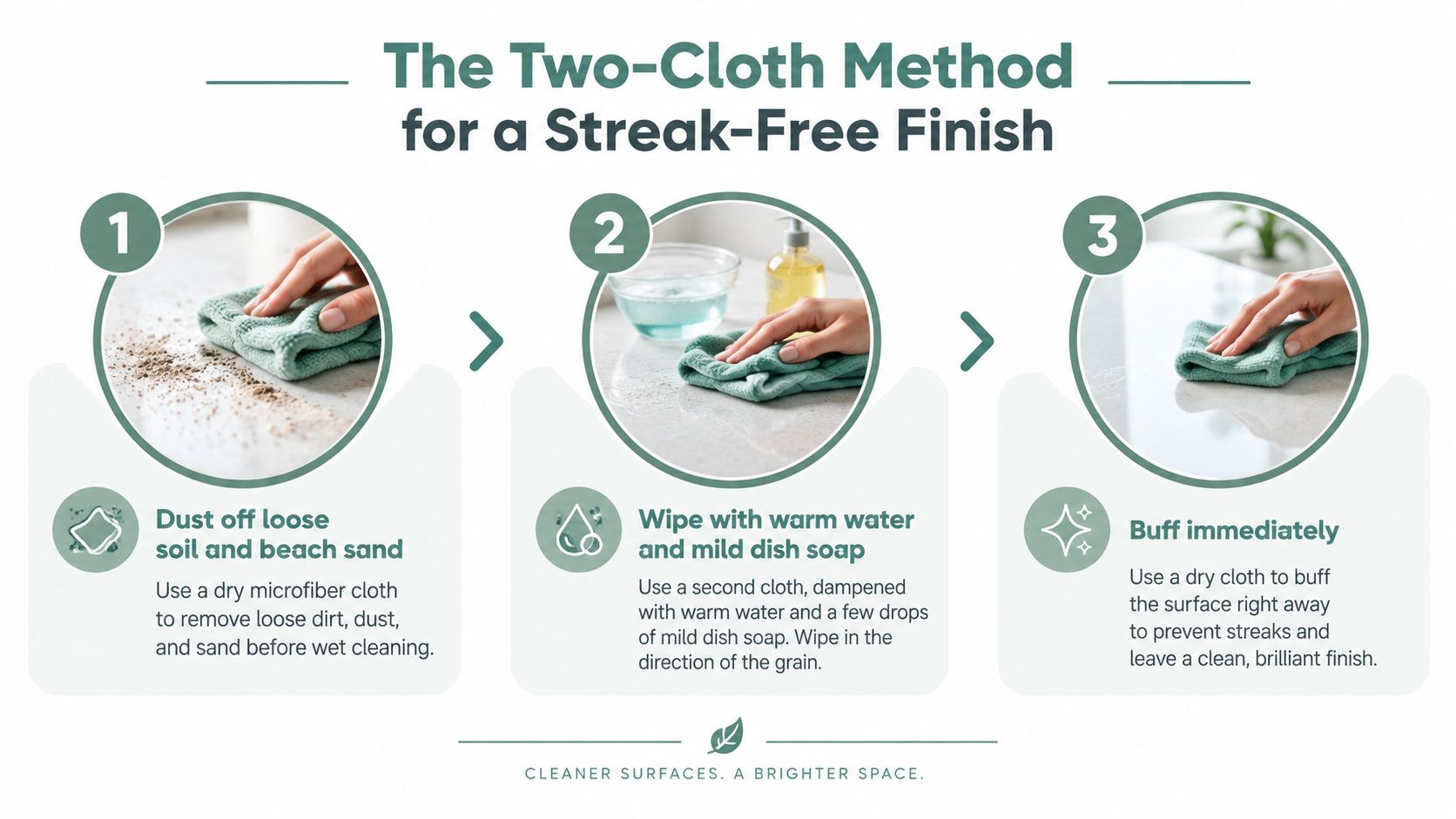
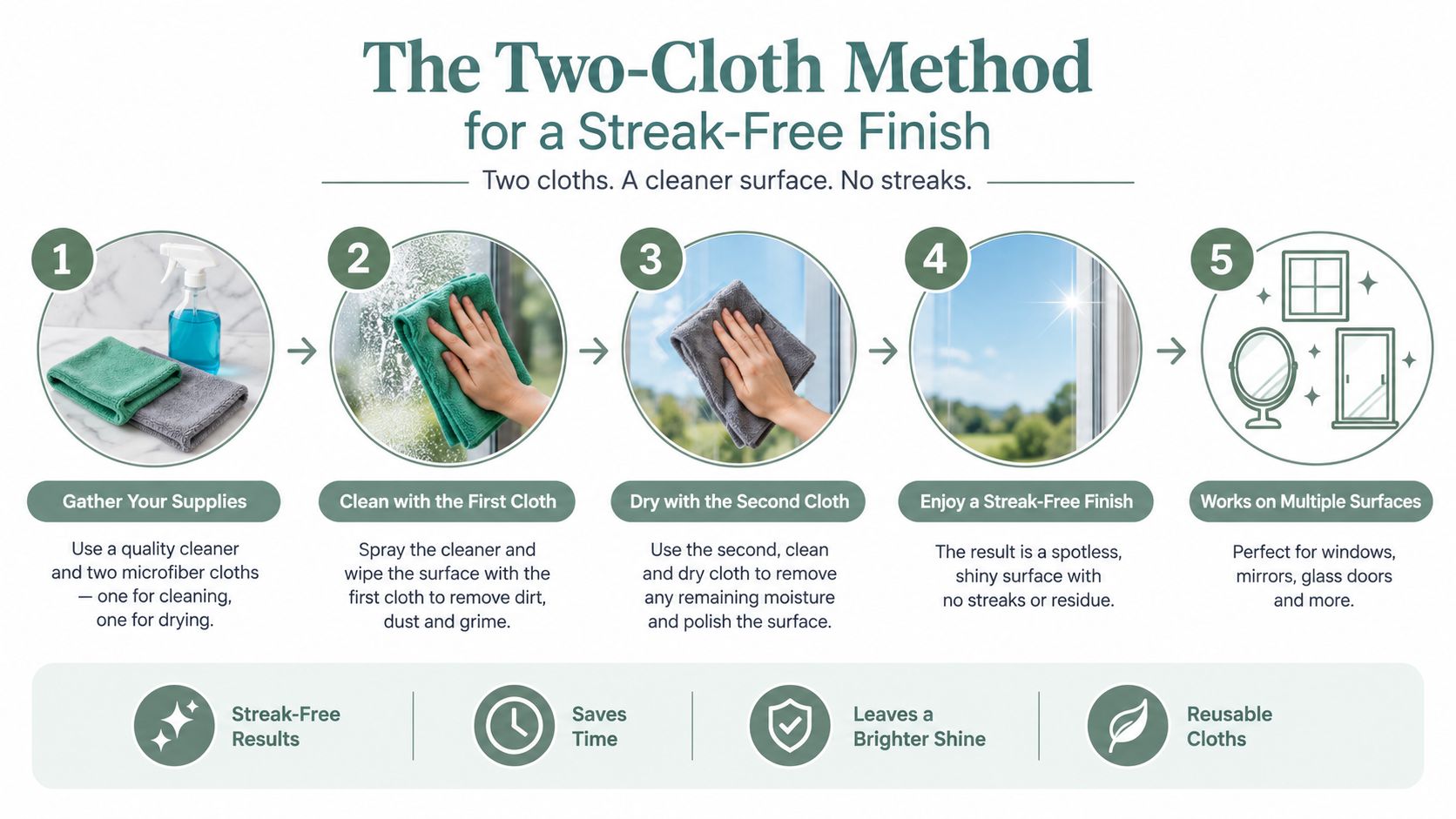
The routine that works in Fairhope kitchens is simple enough to repeat on a weekday night, but strict enough to prevent the usual haze. First, knock off loose dust and any beach sand with a dry microfiber cloth so you're not dragging grit across the finish. Then switch to a second cloth, barely damp, with just a drop or two of dish soap in warm water, and wipe in the grain direction from the top down.
Why the rinse pass matters
Manufacturer guidance recommends wiping from the top downward in the grain direction with a clean, damp microfiber cloth, rinsing thoroughly to remove surfactant residue, and finishing with a separate dry microfiber towel, a new clean cloth for the final pass, because the most common process failures are using a dirty cloth, leaving soap behind, allowing cleaner to dry, and wiping across the grain. That rinse pass is the part many people skip, and it's the reason they end up with a cloudy fridge door after they thought the job was done.
Core takeaway: clean in the grain, remove the soap film, then dry immediately before the surface air-dries.
The dry buff is the last step that changes the look. Use a fresh microfiber towel and move in the same grain direction so the panel dries evenly instead of leaving bands. On large refrigerator and dishwasher doors, I like to rinse the residue cloth often so soap doesn't get spread back across the metal.
Compared with bleach, ammonia, steel wool, or gritty powders, this method is calmer and safer for everyday appliance care. It also fits the way kitchens really work in Spanish Fort and Gulf Shores, where one wet cloth and one dry cloth are easier to keep track of than a cabinet full of specialty sprays.
Handling Stubborn Smudges and Water Deposits
Some marks need more than the basic soap-and-dry routine. Grease near a cooktop, fingerprints around handles, and dried water spots usually respond better to staged cleanup than to more polish. The trick is to remove the residue in layers, not scrub harder and hope the stain gives up.

When a little acid helps, and when it doesn't
For fingerprints on an uncoated finish, lightly apply white vinegar diluted with water to the cloth or a small section and wipe it away before it dries, then follow with a clean-water wipe and dry microfiber buff. Don't flood the panel, and don't reach for oil-based polishing as a default, because excess residue attracts dust and leaves uneven glare. Sink stain remedies for homeowners often rely on the same idea, targeted residue removal instead of heavy product layers.
The big caution is finish type. If the appliance is coated, skip vinegar and polish unless the owner's manual allows them. Use a small hidden-area test first when you're trying a product you don't normally keep on hand.
This deep cleaning kitchen checklist is a useful companion when the whole kitchen needs a reset, especially after holiday cooking or a busy vacation turnover. It keeps you from treating a stubborn panel like a one-off problem when the underlying issue may be buildup around handles, seams, and nearby surfaces.
After the panel dries, check it from more than one angle under angled light. If you still see a band, clean only that band with minimal liquid instead of re-wetting the whole door. That saves time and keeps the next wipe from creating a new streak line.
When Vinegar and Scrubbing Make Things Worse
Not every stainless finish wants the same treatment. Fingerprint-resistant coatings often need nothing more than warm water, mild soap, and microfiber, while polish, abrasive pads, window sprays, and scouring products can damage that coating. The owner's manual matters more than internet shortcuts, especially when a finish looks different from the standard brushed metal people expect.
Renovation dust changes the rules
That issue comes up a lot after remodeling in Spanish Fort or Orange Beach, when fine construction dust clings to appliances and tempts people to scrub hard. Research on AISI 316L stainless steel found that acidic detergent produced the greatest corrosive effect in the investigated failure, chloride-rich acidic solutions were considered unacceptable, and concentrated acetic acid caused severe pitting; it also found that abraded or impact-damaged steel was one log order more difficult to decontaminate than undamaged material. Once a surface is scratched or pitted, ordinary cleaning gets harder, not easier.
That's why aggressive scrubbing is a bad move for move-out cleans and rental turnovers. A rough pad can turn a small blemish into something more visible, and a rusty tool or dirty scrubber can add contamination right back onto the door you're trying to fix. In those cases, the job isn't “clean harder,” it's “stop damaging the finish.”
The safest habit is to match the product to the finish, then stop as soon as the soil lifts. If fingerprints remain on an uncoated appliance, a little diluted vinegar can help. If the panel is coated, or if the surface has been scraped or heat-marked, the better choice is a manufacturer-approved product and a gentler pass with the grain.
A Simple Maintenance Routine for Busy Eastern Shore Homes
Most streaks never get a chance to settle in when the appliances get a quick wipe before the house gets busy. In Fairhope, Daphne, and Gulf Shores homes, the easiest time to clean is usually in the morning, before humidity climbs and before the day fills the kitchen with cooking, groceries, and wet hands. Beach sand should be dusted off first, because once grit meets moisture, it starts smearing.

The habit that keeps stainless easy to manage
Maytag explains that incomplete drying can cause discoloration because water may contain iron that initiates discoloration, while GE recommends drying with a soft cloth and wiping with the grain to reduce visible marks and streaks. That's why the routine matters more than the product aisle. Once drying becomes nonnegotiable, stainless stays calmer between deeper cleans.
- Quick weekly wipe-down: handle it after groceries are put away, before the fridge gets crowded with new fingerprints.
- Morning cleaning: work while surfaces dry faster, not in the damp afternoon.
- Dedicated microfiber cloths: keep appliance cloths separate so grease and grit don't migrate.
- Immediate spill cleanup: stop residue before it sets and dries into haze.
Recurring house cleaning services make the routine easier for families who don't want to keep relearning the same wipe pattern every week. That helps during spring pollen season, after hurricane prep, and between vacation rental turnovers in Gulf Shores and Orange Beach, when kitchens get handled hard and cleaned fast.
Sweet Home Cleaning Service can fold stainless care into standard house cleaning, recurring maid service, deep cleaning, move-in/move-out cleaning, or vacation rental cleaning, so the appliances stay consistent without turning every reset into a project.
Enjoying Streak-Free Appliances Year-Round
Stainless steel stays clean when you treat residue, water, and drying like one system. The two-cloth method, grain-direction wiping, and immediate drying make more difference than a cabinet full of shiny bottles, even in Fairhope's humid air. Once the routine clicks, the fridge stops fighting back.
If you're in Fairhope, Daphne, Spanish Fort, Gulf Shores, or Orange Beach and want stainless steel that doesn't haze up again five minutes later, Sweet Home Cleaning Service can help with standard house cleaning, recurring maid service, deep cleaning, move-in/move-out cleaning, and vacation rental cleaning. Visit Sweet Home Cleaning Service to request a free quote and get a local team that understands the details coastal homes need.

Let us handle the cleaning. Enjoy your home.


Sweet Home Cleaning Service
19940 State HWY 181, Suite E Fairhope, AL 36532
Phone: (251) 586-4081
sales@sweethomecleaningservice.com