
Deep Cleaning Apartment Checklist: 8 Room-by-Room Tasks

You're getting ready for a lease inspection in Fairhope when you notice sand in the sliding door track, a dark line along the bathroom grout, and sticky grease beneath the range hood. The counters are clear and the laundry is put away, but those overlooked spots need more than your usual weekly tidy.
A useful deep cleaning apartment checklist follows the rooms you live in, not just the surfaces you can see from the doorway. Sweet Home Cleaning Service, a house cleaning and maid service based in Fairhope, takes a room-by-room approach to detail work across the Eastern Shore and Gulf Coast. For renters and homeowners in Daphne, Spanish Fort, Gulf Shores, and Orange Beach, that means paying attention to humidity, spring pollen, and the sand that comes home with beach bags.
Before starting, clear counters, gather microfiber cloths, and check your lease for cleaning responsibilities. Photograph existing damage so you don't confuse a maintenance problem with something you're expected to scrub away.
- Prepare your supplies. Gather gloves, mild dish soap, a soft brush, a vacuum with attachments, and cleaners suited to your finishes.
- Clear access. Move lightweight belongings away from walls, windows, and closet floors.
- Strip bedding early. If you're planning to refresh your bedroom for spring, wash removable bedding while you tackle the rest of the apartment.
Table of Contents
- 1. Kitchen Appliance Interiors and Hidden Surfaces
- 2. Bathroom Mildew, Grout, and Exhaust Fan Deep Clean
- 3. Baseboards, Walls, and Door Frames
- 4. Windows, Sliding Doors, and Tracks
- 5. Ceiling Fans, Light Fixtures, Vents, and Air Filters
- 6. Upholstery, Mattresses, and Area Rugs
- 7. Hard Floors, Grout, and Under-Furniture Sand Removal
- 8. Closets, Cabinets, and Drawers Interior Reset
- How the Eight Deep Cleaning Tasks Compare by Focus Area and Common Caution
- Ready to Reset Your Apartment? Request a Free Quote
1. Kitchen Appliance Interiors and Hidden Surfaces
Start with grease, not polish. A clean countertop won't compensate for cooking residue on the hood, cabinet tops, and oven door. In an older Fairhope or Spanish Fort apartment, check finishes carefully before applying a strong degreaser.
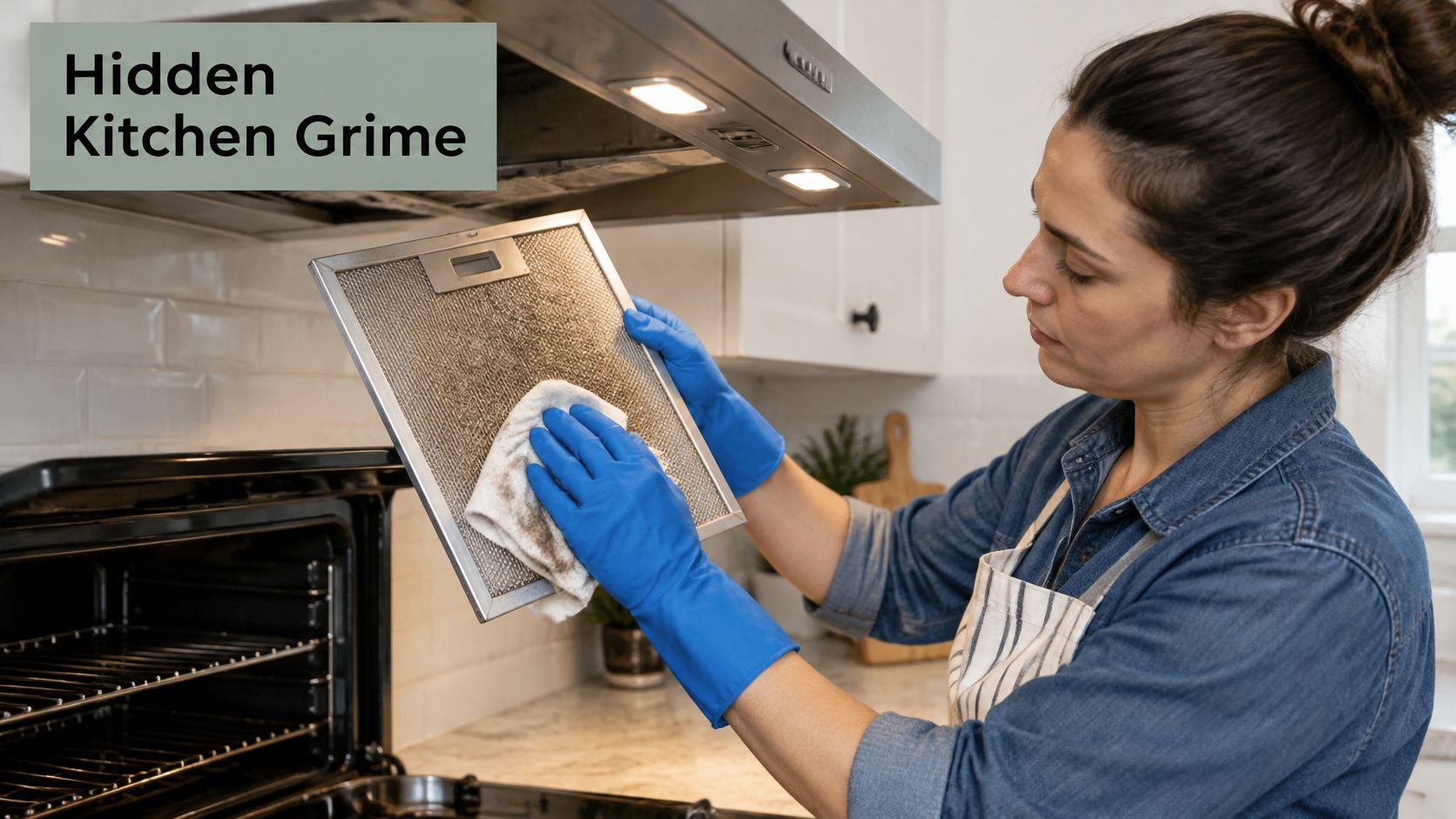
Work from cabinet tops and the range hood down toward counters and appliance fronts. Protect nearby surfaces while grease loosens, and keep food, dishes, and utensils out of the work area.
- Range hood and filter. Remove a washable metal filter and soak it in hot water with dish soap if the manual permits. Charcoal filters usually need replacement rather than washing.
- Oven interior. Remove loose crumbs, then use the method approved for your model. Don't combine oven cleaner with a self-clean cycle unless the manufacturer explicitly permits it.
- Refrigerator. Wipe shelves and door seals, then vacuum accessible coils with a soft brush attachment after disconnecting power. Don't drag out a connected appliance or remove service panels.
- Dishwasher filter. Remove and rinse a user-serviceable filter according to the manual. Wipe the door edges and gasket where food residue collects.
- Cabinets. Wipe tops, door fronts, handles, and the narrow edges beside appliances. Use a lightly damp cloth on wood rather than soaking it.
Make the inspection details count
Say you're preparing a Spanish Fort rental for inspection. Prioritize the oven glass, hood underside, refrigerator shelves, and cabinet handles, then finish the sink and counters after the greasy work is complete.
The detailed kitchen deep-cleaning checklist helps you separate appliance interiors from everyday wiping. Never mix bleach with ammonia, vinegar, or other cleaners, and don't assume a stronger product is safer for an older finish.
2. Bathroom Mildew, Grout, and Exhaust Fan Deep Clean
A bathroom can look clean around the sink while dampness remains along the tub seam or behind the vanity. In Gulf Shores, Orange Beach, and Fairhope, check those hidden areas before treating every dark mark as ordinary grime.
The EPA's mold-prevention guidance recommends keeping indoor relative humidity below 60%, ideally between 30% and 50%. Cleaning belongs alongside moisture control, not in place of it.
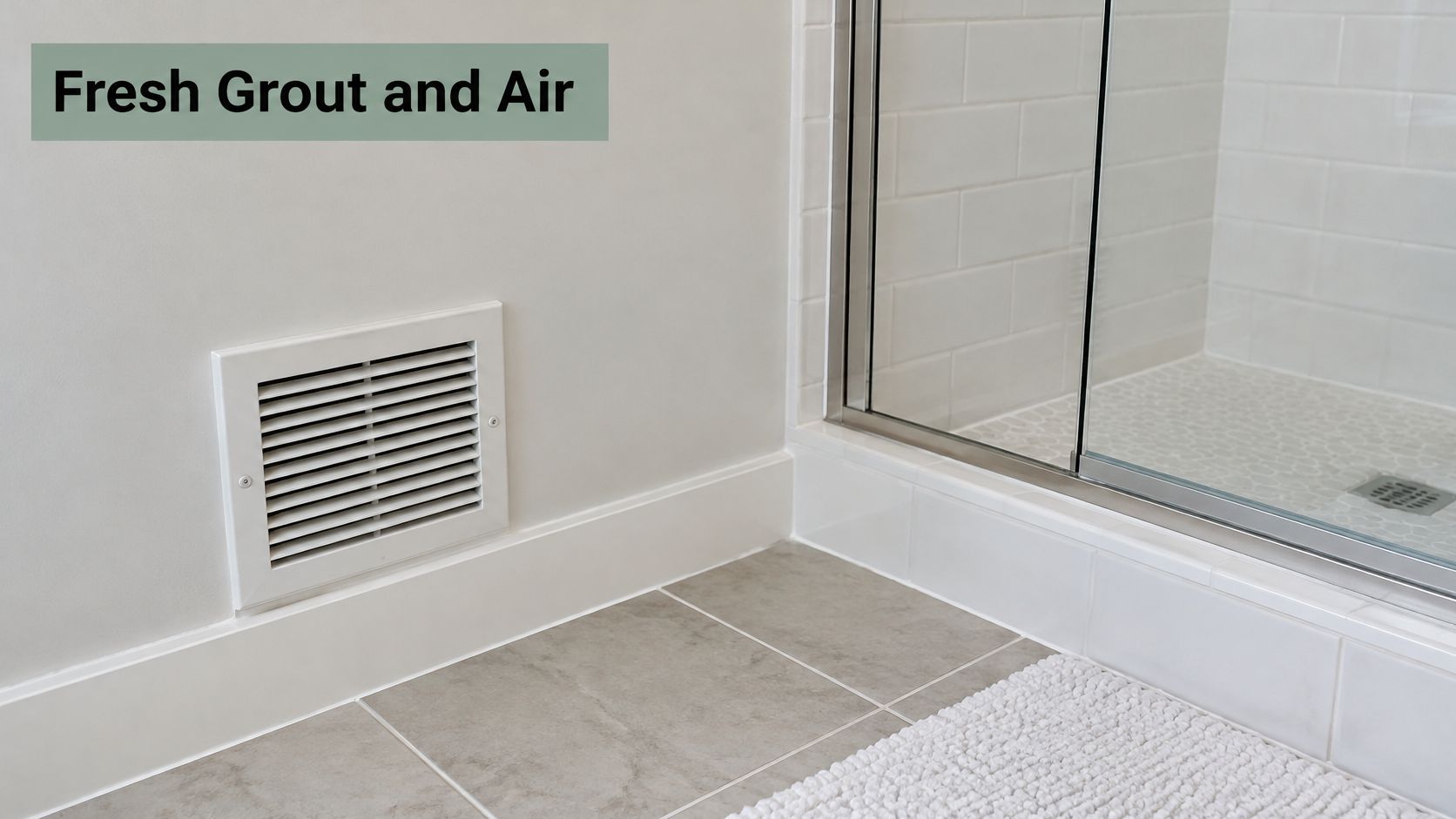
Work from the ceiling to the toilet base
Switch off power before removing a user-removable exhaust cover. Vacuum loose dust, wash the cover if its instructions allow, and dry it fully before reinstalling it. Don't spray cleaner into the fan housing.
- Grout and shower seams. Remove soap film with a surface-compatible cleaner and soft brush. Test a hidden spot first, especially around natural stone.
- Toilet and vanity. Clean hinges, the toilet base, plumbing-adjacent corners, cabinet edges, and the floor behind accessible fixtures.
- Shower glass and walls. Rinse away cleaner and use a squeegee to remove remaining water.
- Ventilation. Run the exhaust fan during cleaning and afterward until wet surfaces have dried.
For material-specific technique, use this guide to cleaning grout lines. If you're considering Living Air purifier cleaning supplies, check the intended application rather than assuming a specialty solution belongs on grout or caulk.
Moisture check: A seam that stays dark beneath the caulk needs inspection, not harder scrubbing.
For example, an Orange Beach condo owner might discover failed caulk after removing surface buildup. A renter should photograph that condition and report it rather than covering it with fresh caulk or repeatedly applying stronger chemicals.
3. Baseboards, Walls, and Door Frames
Before a move-out inspection, empty rooms make every dusty trim edge and hallway scuff easier to see. Clean gently before deciding a surface needs paint, especially in apartments where the original finish may be thin or difficult to match.
Start with cobwebs and the tops of door frames. Vacuum loose grit from baseboard ledges, then wipe painted trim with a microfiber cloth dampened with mild dish-soap solution.
Match your method to the finish
Flat wall paint can mark or lose color when scrubbed. Glossy trim may tolerate a little more cleaning, but abrasive pads can still dull it. Test behind a door or another inconspicuous area before working across a visible wall.
- Walls. Spot-clean fingerprints with a barely damp cloth. Don't wash an entire wall unless the paint is washable.
- Baseboards. Clean the top lip, front face, and corners, then dry them before moisture collects against the floor.
- Door frames and doors. Focus on latch-side edges, handles, and the areas children and pets touch.
- Switch plates. Apply cleaner to the cloth, not the switch, and avoid getting moisture into openings.
Routine cleaning and disinfection aren't interchangeable. The CDC's household cleaning guidance says to clean high-touch surfaces regularly and remove dirt before sanitizing or disinfecting; ordinary household conditions generally don't require disinfection unless circumstances justify it.
For a Gulf Shores renter, the practical priority is removing hallway grit and fingerprints without damaging the paint. If a scuff remains after gentle cleaning, document it and check with property management before touching up the finish.
Keep matching paint only when it's approved for the property. An almost-matching patch can be more noticeable than the original mark, especially under strong window light.
4. Windows, Sliding Doors, and Tracks
Vacuum sand before adding water. After a trip to Gulf Shores or Orange Beach, gritty sliding-door channels need dry debris removal first. A wet cloth pushed through loose sand leaves muddy residue in the corners.
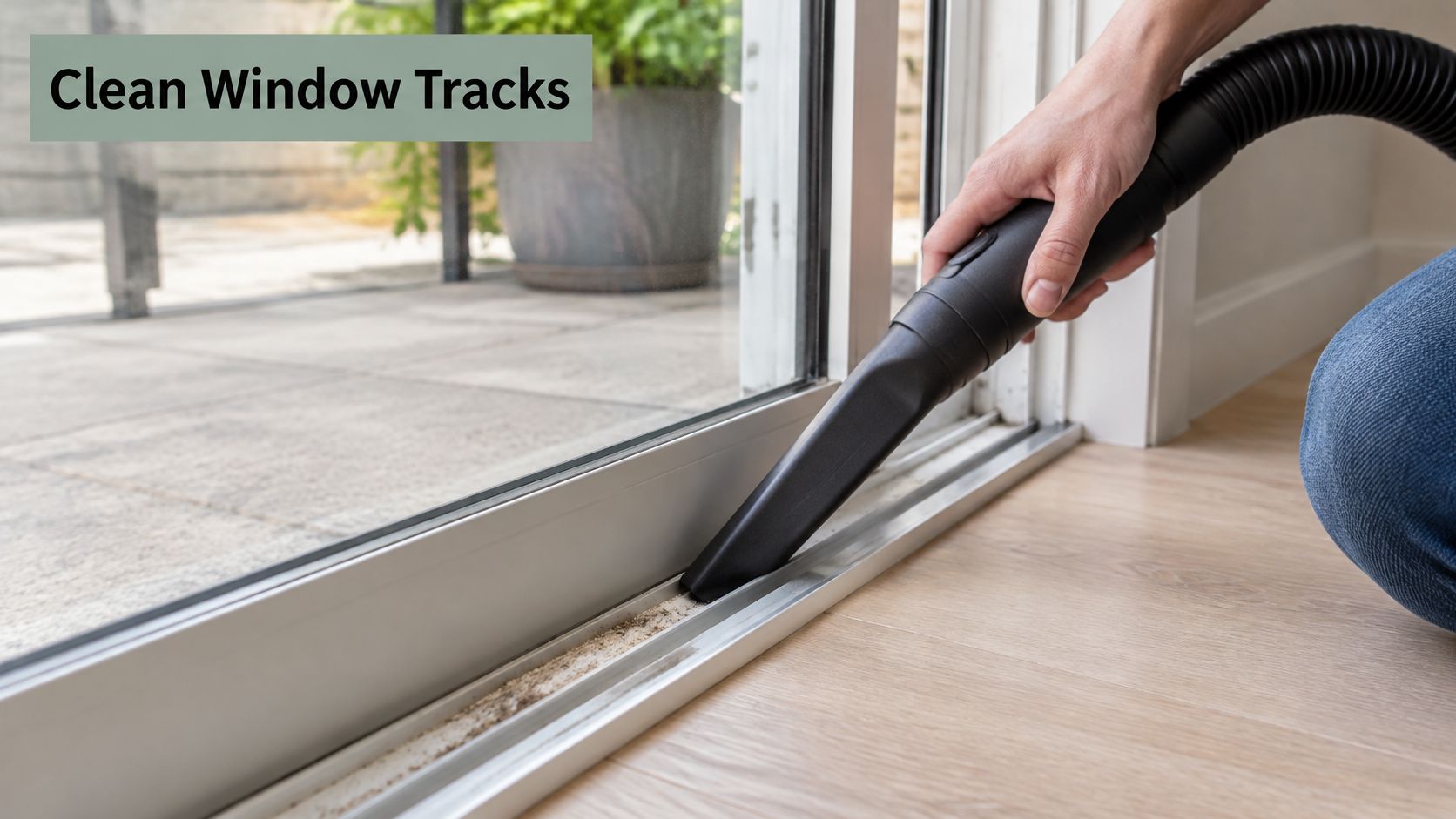
Use the crevice attachment along the track, then loosen stubborn debris with a soft brush. Pick out remaining grit with a cloth or cotton swab rather than forcing it into drainage openings.
- Tracks. Apply a small amount of mild cleaner to the brush or cloth. Avoid flooding the channel.
- Frames and sills. Wipe edges, corners, and the underside of accessible handles.
- Glass. Clean on a cloudy day or when the pane is shaded so the solution doesn't dry before you wipe it.
- Screens. Remove them only if they're designed for easy removal, then brush or wash gently according to their care instructions.
- Exterior access. Clean only what you can safely reach. Upper-floor exterior glass needs a separate, suitable access plan.
Separate storm debris from water damage
An Orange Beach condo owner might vacuum the patio-door track after beach outings, while a Spanish Fort household may focus on spring pollen along screens and sills. In either case, inspect seals and nearby flooring before wiping away evidence of a leak.
After flooding, ordinary window detailing isn't the first priority. FEMA advises drying a home and its contents within 24 to 48 hours when possible, with electrical safety confirmed before operating fans or dehumidifiers.
A clean track won't repair a leaking frame. Photograph water intrusion and notify property management before treating it as routine dirt.
Don't remove sliding-door panels yourself. If the door still sticks after loose grit is gone, the rollers or hardware may need maintenance.
5. Ceiling Fans, Light Fixtures, Vents, and Air Filters
Look above the bed before putting on clean sheets. Fan blades, fixture rims, and ceiling grilles are easy to miss during a quick tidy, and cleaning them afterward creates unnecessary rework.
Dust isn't just a cosmetic issue. The EPA's guidance on indoor particulate matter explains that settled dust can become airborne again during household activity and recommends damp dusting and considering a vacuum with a HEPA filter to limit dust escaping back into the room.
Catch dust instead of scattering it
Switch off fans and lights, let bulbs cool, and use a stable step ladder. Don't stand on a bed, rolling chair, or sofa cushion to reach a fixture.
- Fan blades. Slide a pillowcase over each blade to collect loose dust, then wipe with a lightly damp microfiber cloth. Support the blade without pulling it downward.
- Light fixtures. Wipe accessible exterior surfaces. Remove glass shades only when the fixture instructions allow it.
- Vent covers. Vacuum loose buildup and wipe the grille without spraying into the opening.
- Air filter. Check its condition and follow the system's specified size, airflow direction, and replacement guidance.
For a Fairhope family preparing for spring pollen, a useful reset is checking the filter, cleaning fan blades, and wiping window-adjacent dust before finishing bedrooms. A Gulf Shores renter preparing for inspection should also check who is responsible for filter replacement under the lease.
A dirty grille doesn't automatically mean the ducts need cleaning. Surface dust is a cleaning task; recurring dampness, damaged duct insulation, or unusual buildup inside the system needs property-management or HVAC attention.
Ventilate when outdoor conditions permit, but don't open windows just because you're cleaning. If outdoor air is damp or pollen is blowing inside, keep the apartment's moisture-control needs in mind.
6. Upholstery, Mattresses, and Area Rugs
Say you return from the beach, drop a tote beside the sofa, and sit down before changing. The visible sand is easy to vacuum, but more may settle between cushions, beneath the seat deck, and along rug edges.
Vacuum before spot-treating. Adding cleaner to dusty fabric can leave a larger mark and makes it harder to judge whether you've removed the original stain.
- Sofas and chairs. Remove loose cushions where permitted. Vacuum seams, arm creases, cushion undersides, and accessible areas beneath the furniture.
- Mattresses. Strip bedding and use a clean upholstery attachment across the surface, seams, and edges. Avoid soaking the mattress.
- Area rugs. Vacuum the face and, if the construction allows, the reverse. Clean the floor beneath before putting the rug back.
- Removable covers. Follow the actual washing and drying instructions rather than assuming every zippered cover is machine-washable.
Let the care tag make the decision
Check upholstery codes before applying liquid. A water-cleanable fabric and a solvent-only fabric need different treatments, while vacuum-only materials shouldn't receive a homemade spray.
Test any approved cleaner in a hidden area, blot rather than scrub, and use as little moisture as possible. Rotate cushions or the mattress only when the manufacturer allows it, since some mattresses aren't designed to be flipped.
Fabric-care rule: Don't remake the bed or replace damp cushions until the material is completely dry.
For a Daphne renter, careful crevice vacuuming after beach visits may be enough between deeper resets. A heavily soiled Spanish Fort area rug may need a carpet or rug cleaner with equipment suited to its fibers and backing.
Don't rent an extraction machine just because the fabric looks sturdy. On the Gulf Coast, a saturated cushion or rug that can't dry properly creates a problem that surface cleaning alone won't solve.
7. Hard Floors, Grout, and Under-Furniture Sand Removal
Save the final floor clean until overhead dusting, trim work, and furniture cleaning are finished. Otherwise, you'll mop twice and still find grit along the room's edges.
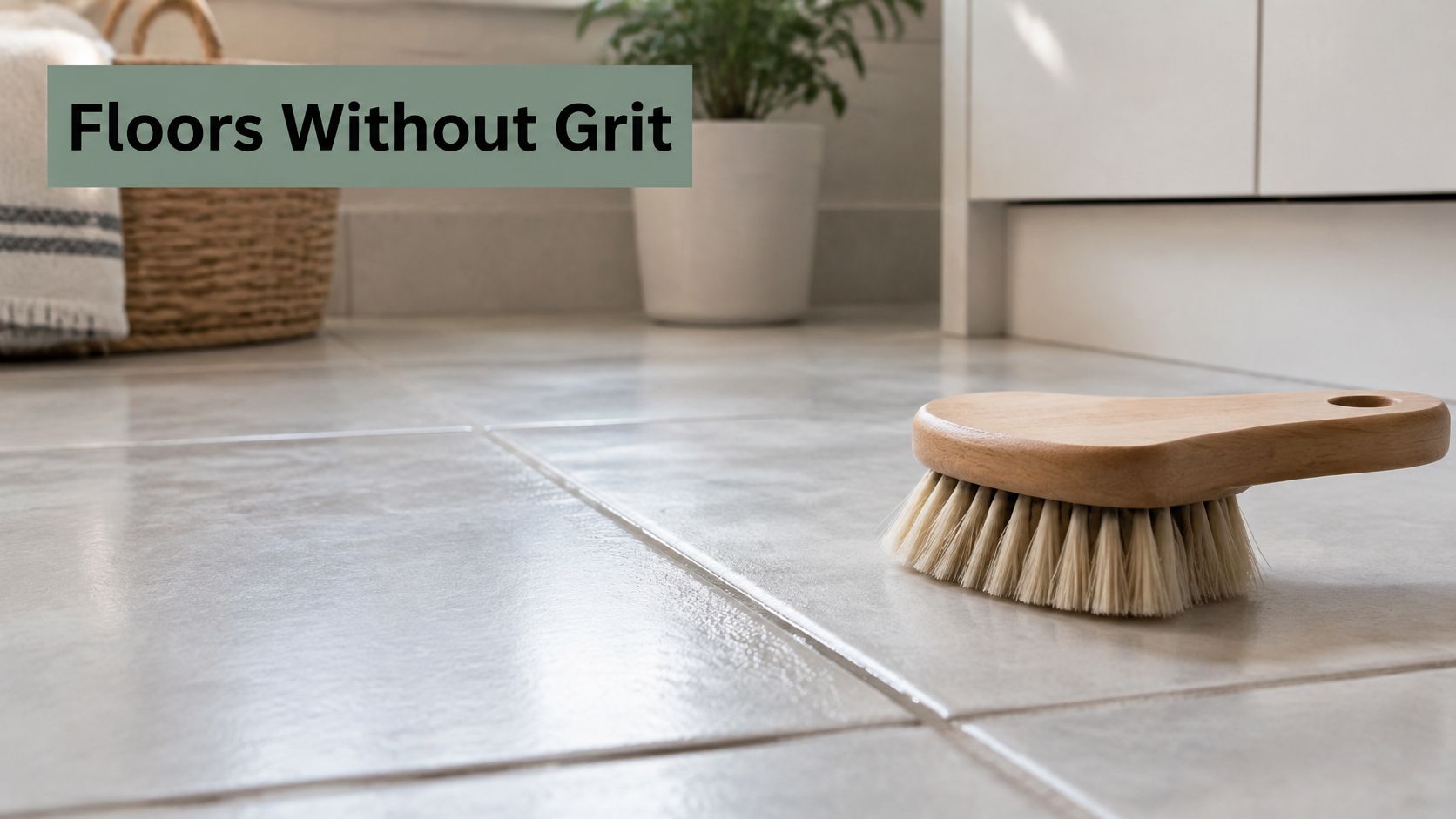
Move only furniture you can handle safely without damaging the floor. Use furniture sliders where appropriate, and leave heavy beds, connected appliances, and unstable pieces in place unless proper help is available.
Remove the grit before washing
- Edges and corners. Vacuum along baseboards, around furniture feet, behind doors, and beneath accessible beds and sofas.
- Tile and grout. Apply a compatible cleaner, agitate grout with a soft-bristled brush, and remove dirty solution rather than letting it dry.
- Hardwood and laminate. Use the approved cleaner with a barely damp mop. Don't allow water to collect along seams.
- Vinyl. Choose a finish-compatible product and avoid abrasive pads or unapproved steam.
- Final pass. Change dirty mop water and wash reusable pads before they start spreading residue.
A Fairhope renter might find that the kitchen sink area needs focused grout cleaning while the living room mainly needs hidden sand removal. Treat those as different jobs rather than applying the same strong cleaner everywhere.
Don't reseal grout on a calendar alone. The grout type, existing sealer, and manufacturer's guidance determine whether sealing is appropriate, and renters should get permission before applying a coating.
Finish by cleaning doormats and creating a place for sandy shoes and beach bags near the entrance. In an Orange Beach apartment, keeping grit at the doorway is more practical than repeatedly scrubbing it from the full floor.
Let floors dry before replacing rugs or allowing heavy traffic. A clean floor shouldn't be left slippery with water or detergent residue.
8. Closets, Cabinets, and Drawers Interior Reset
A closed closet can hide dust, damp towels, and the first signs of a leak. Empty enough of the space to inspect the back corners, not just the shelf edge you see when opening the door.
Work through a manageable storage area before opening another. That keeps a small apartment usable and prevents clean belongings from ending up on a dirty floor.
- Sort belongings. Separate what you'll keep, donate, and discard. Remove food packaging and items that don't belong in the space.
- Clean interiors. Vacuum crumbs and dust, then wipe shelves, drawer bottoms, rods, and handles with a lightly damp cloth.
- Inspect corners. Look for staining, swollen shelf material, pest evidence, condensation, and damp clothing.
- Dry thoroughly. Leave the space open until the shelves are completely dry before returning belongings.
- Refill deliberately. Keep frequently used items accessible and leave room to inspect walls and corners.
Don't hide a moisture problem with storage bins
For a Daphne homeowner, separating seasonal clothing can make shelf cleaning easier. For a Gulf Shores renter, a musty closet should also prompt a check of nearby plumbing, exterior walls, and stored beach gear.
Photograph recurring dampness or suspicious growth before disturbing it. Report leaks, damaged materials, or persistent odor to property management rather than painting over stains or packing belongings against them.
Sealed bins help keep dust off dry seasonal items, but they aren't a remedy for a damp closet. Never seal away wet towels, clothing, or beach equipment.
These home organization ideas for small spaces can help you arrange the cleaned space without buying a large storage system. Start with what you own, label bins clearly, and avoid filling every shelf so tightly that you can't wipe it again.
How the Eight Deep Cleaning Tasks Compare by Focus Area and Common Caution
| Item | Key Focus | Main Caution | Local Concern |
|---|---|---|---|
| Kitchen Appliance Interiors and Hidden Surfaces | Clean appliance interiors, filters, coils, and cabinet surfaces | Follow appliance instructions; self-clean cycles can produce heat and smoke | Grease, dust, and odors build up in heavily used kitchens |
| Bathroom Mildew, Grout, and Exhaust Fan Deep Clean | Clean grout, caulk, vents, and hard-to-reach bathroom surfaces | Use ventilation; some stains need repair or re-caulking | Gulf Coast humidity encourages mildew |
| Baseboards, Walls, and Door Frames | Remove dust, scuffs, and fingerprints from walls and trim | Aggressive scrubbing can damage paint | Sand and grit collect near floors and entryways |
| Windows, Sliding Doors, and Tracks | Clean glass, frames, screens, sills, and tracks | Upper-floor exterior glass may require professional help | Coastal sand and seasonal pollen collect in tracks |
| Ceiling Fans, Light Fixtures, Vents, and Air Filters | Remove dust from high fixtures, vents, and HVAC filters | Turn off power; high fixtures require safe ladder use | Heavy pollen seasons increase dust buildup |
| Upholstery, Mattresses, and Area Rugs | Vacuum and spot-clean furniture, bedding, and rugs | Moisture can stain or shrink some fabrics | Beach sand settles deep in fabric and rug fibers |
| Hard Floors, Grout, and Under-Furniture Sand Removal | Remove grit and scrub grout, including under furniture | Excess water can damage hardwood and laminate | Coastal sand and humidity make regular floor care important |
| Closets, Cabinets, and Drawers Interior Reset | Declutter and clean storage interiors; check for moisture | Mold or water damage may need repair | Humidity can cause musty odors in storage areas |
Ready to Reset Your Apartment? Request a Free Quote
Use this deep cleaning apartment checklist to identify what your apartment needs, then start with the rooms holding the most grease, damp buildup, and sand. Keep the top-to-bottom order within each room, and leave the final floor wash until the dusty work is finished.
For a lease inspection, check the property's written expectations before spending time on cosmetic details. Oven residue, dirty cabinet interiors, gritty tracks, and neglected bathroom corners deserve attention, but cleaning won't repair failed caulk, damaged paint, swollen shelving, or leaking windows.
- Before an inspection. Photograph existing damage, clear access to the areas you're responsible for, and distinguish cleaning tasks from maintenance requests.
- Before moving. Empty drawers, cabinets, and closets so hidden surfaces are accessible. Keep essential supplies separate from packed boxes.
- Before a busy season. Make room for beach bags, clean entry mats, and inspect damp storage areas before they become harder to manage.
Don't measure success only by how the apartment looks from the front door. Check the back of the toilet, the underside of the hood, the sliding-door corners, and the floor beneath accessible furniture. Those small details help distinguish a thorough reset from a quick tidy.
A practical maintenance routine should fit how your household lives. A busy family in Spanish Fort may need frequent attention at the entryway and kitchen, while an Orange Beach household may spend more effort controlling sand around upholstery and patio doors. Rotate less-used storage areas instead of waiting until every closet needs emptying at once.
Make the appointment priorities clear
If you'd rather hand off the detailed work, Sweet Home Cleaning Service offers deep cleaning, move-in/move-out cleaning, standard house cleaning, recurring maid service, and vacation rental cleaning for homes and apartments across Fairhope, Daphne, Spanish Fort, Gulf Shores, and Orange Beach. We can customize cleaning plans around high-traffic areas or detailed cleaning priorities.
Our team is trained, background-checked, and insured, and confirmed appointments are served by cleaning professionals who arrive on time. When booking, include your address, access details, and special instructions so we understand what matters most in your apartment.
Explain whether you're preparing for a lease inspection, settling into a new place, or catching up after a busy stretch. Mention delicate finishes, inaccessible furniture, and maintenance issues separately so the cleaning priorities stay clear. Book online, by phone, or by email, or request a free quote from Sweet Home Cleaning Service.
Sweet Home Cleaning Service offers apartment deep cleaning that addresses overlooked buildup, accessible under-furniture dust, trim, and other detailed surfaces. If you're in Fairhope or the surrounding Eastern Shore and Gulf Coast communities, visit Sweet Home Cleaning Service to book or request a free quote and share your apartment's priorities.

Let us handle the cleaning. Enjoy your home.



Sweet Home Cleaning Service
19940 State HWY 181, Suite E Fairhope, AL 36532
Phone: (251) 586-4081
sales@sweethomecleaningservice.com
Customer Service Hours:
Monday – Friday
7:30 AM – 4:30 PM
Saturday & Sunday
9:00 AM – 3:00 PM