
Deep Cleaning Bedroom Checklist: 8 Steps for Fairhope Homes

Saturday morning in Fairhope often starts the same way. The bed is stripped, the vacuum is out, and the ceiling fan gets a flick on the way past. A minute later a grey film settles across the comforter you just washed. Nothing went wrong. The room was cleaned from the middle outward instead of from the top down.
Sweet Home Cleaning Service sees this in Eastern Shore homes often enough that it's become a standing rule on our deep cleans: dust falls, so start at the ceiling and finish at the floor. Every surface you touch on the way down catches what the step above it knocked loose. Get the order right and you clean the room once.
That's the logic behind this deep cleaning bedroom checklist. Eight steps, top to bottom, with the Baldwin County details that change the job: humid closets, spring pollen on blinds, sand tracked in from Gulf Shores and Orange Beach. In 2025, 23.4% of people aged 15 and older did interior cleaning on an average day, according to the U.S. Bureau of Labor Statistics' American Time Use Survey. The hour you save by working in sequence is the hour you don't spend re-dusting.
Table of Contents
- 1. Top-to-Bottom Dusting of Ceiling Fans, Light Fixtures, and High Surfaces
- 2. Deep Cleaning the Mattress and Bedding
- 3. Cleaning Windows, Blinds, and Window Sills
- 4. Wiping Down Walls, Baseboards, and Door Frames
- 5. Clearing and Cleaning Under the Bed, Behind Furniture, and in the Closet Floor
- 6. Cleaning Upholstered Furniture, Headboards, and Area Rugs
- 7. Wiping and Polishing Nightstands, Dressers, and Hard Surfaces
- 8. Final Floor Cleaning, Sand Removal, and Walk-Through Check
- How each bedroom deep-cleaning step compares in focus, supplies, and drawbacks
- Give Your Bedroom a Full Reset and Your Weekends Back
1. Top-to-Bottom Dusting of Ceiling Fans, Light Fixtures, and High Surfaces
The fan goes first. Blades hold a mat of dust that loosens as soon as air moves, and everything below it, the headboard, the dresser, the pillows, takes the fallout. Along the Gulf Coast, that dust often carries a little moisture, so it clings instead of lifting cleanly.
Turn the fan off at the switch and let it stop completely. Wipe each blade on both sides in one pass from the base outward with a dry or barely damp microfiber cloth. Skip the furniture spray up there. A dry cloth grabs dust instead of smearing it, and a damp cloth should be only lightly moist, or the film turns to mud.
Work down from the fan to light fixtures, the tops of wardrobes, door frames, and picture frames. Order matters more than effort. Anything above shoulder height comes before anything below it. Spring pollen on blinds and window trim belongs in this upper pass, before the bed and floor get cleaned. For cloth technique and which surfaces want damp versus dry, our guide to dusting a room properly walks through it.
Practical rule: Put an old sheet or drop cloth on the floor before you start. It catches what falls and saves a second vacuum.
Cleaning for health reasons has become mainstream. In 2025, 34% of Americans reported changing their cleaning habits to improve health, according to an American Cleaning Institute survey conducted by Wakefield Research. High surfaces are where that intention meets reality, because that is where the load sits. In bedrooms near Gulf Shores and Orange Beach, the same pass also catches the fine sand that settles on high ledges after a beach day.
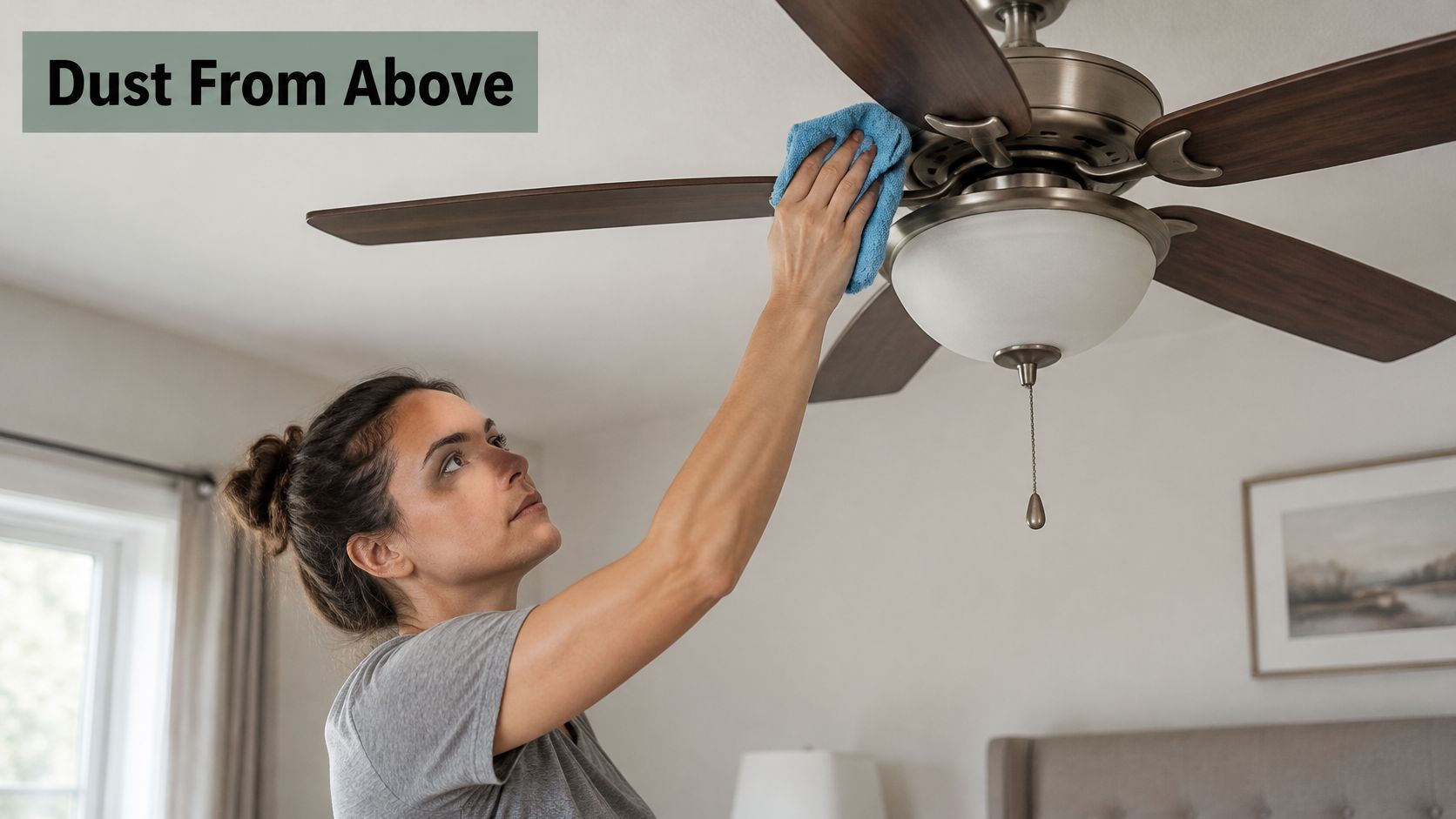
A deep clean includes hand washing ceiling fans and wiping light fixtures, which is why this step sits at the top of the room. The trade-off is simple: a slower first pass means fewer repeats later. Finish the upper surfaces before the mattress, bedding, and floors, so the clean lower layers stay clean.
2. Deep Cleaning the Mattress and Bedding
Strip the bed completely and start the wash before you touch anything else. The machine runs while you work, and the bedding is dry by the time the room is finished.
Wash sheets, blankets, pillowcases, and bedcovers at least once a week in water heated to 130°F (54.4°C) or higher, which Mayo Clinic notes kills dust mites and removes allergens. If a comforter can't take that heat, tumble it dry for at least 15 minutes above 130°F first, then wash and dry normally. Read the care label on every item before it goes in.
What the Mattress Itself Needs
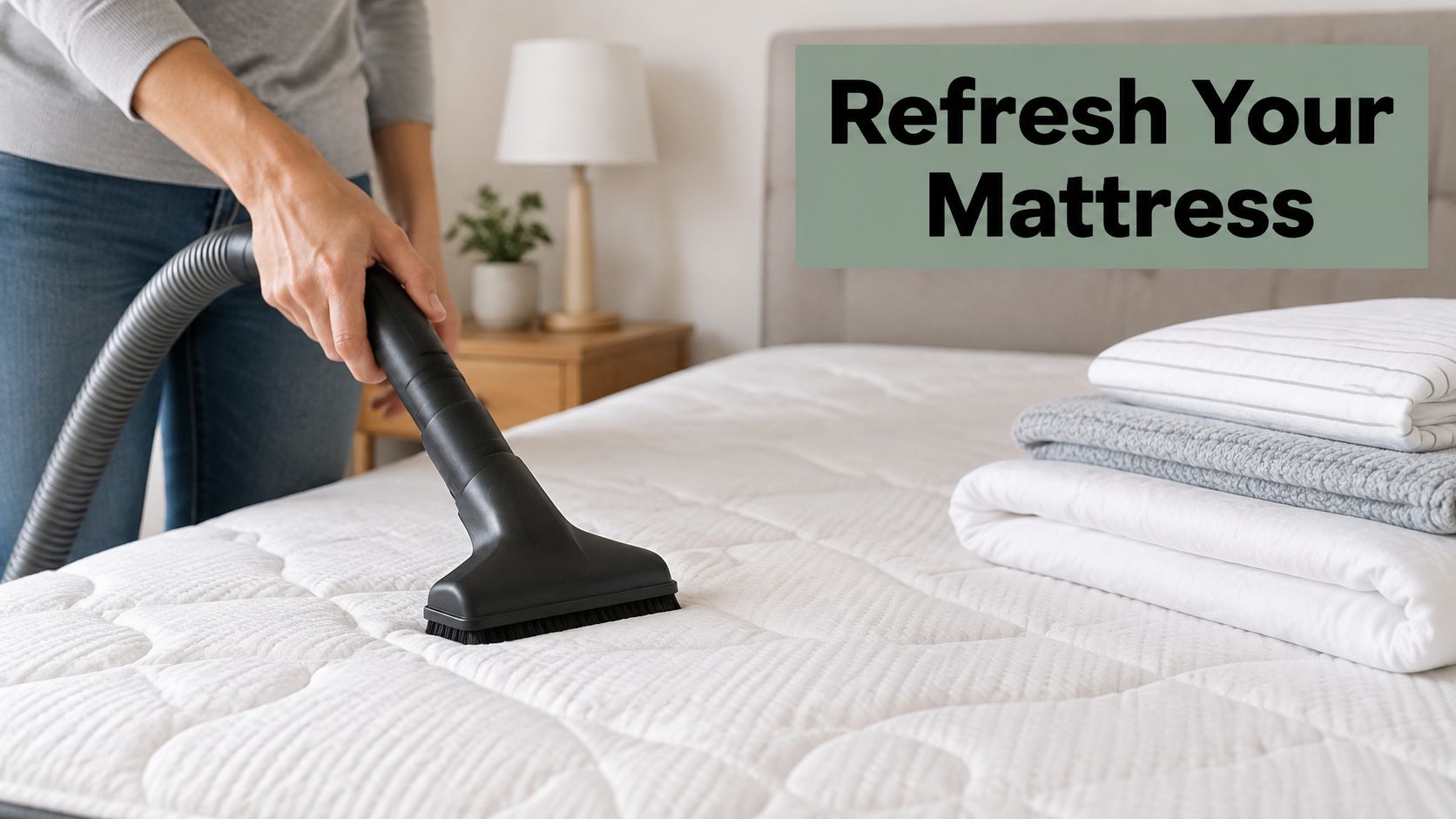
Vacuum the mattress top and seams with the upholstery attachment, spot clean stains with a mild detergent solution, and let it air out with a fan or open windows for several hours. Flip or rotate it if the manufacturer allows. A machine-washable protector kept in rotation means you always have a clean one ready to go back on.
Encasements for the mattress, pillows, and box spring are worth the spend in a humid climate, and Mayo Clinic recommends them alongside weekly hot washing. Check that zips are closed and the fabric is free of tears every time you strip the bed.
The payoff isn't only hygiene. A National Sleep Foundation poll of 1,500 adults aged 25 to 55 found that more than 75% valued soft sheets and bedding, and over 70% said fresh-smelling sheets improved comfort, Reuters reported.
3. Cleaning Windows, Blinds, and Window Sills
Blinds take the longest of any surface in the room and get skipped the most. Spring pollen settles on horizontal slats and sticks there, so a dry swipe just pushes it around. Clean one slat at a time with a damp cloth or a blind-cleaning tool, wiping in both directions and finishing in one direction to avoid streaks.
Vacuum the window tracks with a brush attachment before you wipe them. Grit and dead insects collect there, and a wet cloth dragged through dry grit scratches the sill. Then clean the glass and wipe the sill edges and corners.
Watch the Corners for Mildew
In Fairhope and Daphne, the corners of frames and the base of sills are the first places condensation shows up. The EPA's mold course chapter treats indoor relative humidity above 60% as a warning threshold because it produces condensation that can lead to mold growth. If you find a dark ring in a corner, clean it, dry the area fully, and note it. A corner that returns every month is telling you something about airflow, not about your cleaning.
Fabric drapes are a different job. Check the care label, and for lined, wool, or delicate panels, hand them to a professional rather than risking shrinkage. A quick weekly pass with a vacuum brush keeps the dust load down between launderings.
4. Wiping Down Walls, Baseboards, and Door Frames
Walls collect what the room throws at them: hairspray near the dresser, fingerprints by the switch, scuffs at hip height from furniture and laundry baskets. Work from the top of the wall downward in small sections with a soft cloth and a mild cleaner, drying each section before moving on. Small sections matter. A whole wall wiped wet in one go dries unevenly and leaves streaks.
Older Eastern Shore homes deserve a test patch first. Paint from earlier decades, and older baseboards in particular, can soften or chalk under a cleaner that modern finishes shrug off. Test in a hidden spot behind a door and wait for it to dry before committing.
Door frames, light switch plates, and the edges of doors get hand oils that dusting never removes. Wipe them with a damp cloth, and use a dry cloth on switch plates so you don't push moisture toward the wiring.
Moisture Is a Repair Problem, Not a Cleaning Problem
The EPA's guide to indoor air quality recommends keeping indoor relative humidity between 30% and 50% and suggests checking window corners, exterior walls, behind furniture, and closet floors for condensation, musty odor, or damp materials. Cleaning visible mildew without correcting the moisture just schedules the next appearance.
Trade-off worth naming: a cleaner can remove dust, surface residue, and light mildew film. Recurring damp patches, water staining, or suspected mold inside a wall needs a building repair or a remediation professional, and no amount of scrubbing substitutes for that.
5. Clearing and Cleaning Under the Bed, Behind Furniture, and in the Closet Floor
This is the step that separates a deep clean from a tidy-up. Under the bed, behind the dresser, and along the closet floor are where dust, pet hair, stray socks, and shoes collect for months without anyone seeing them.
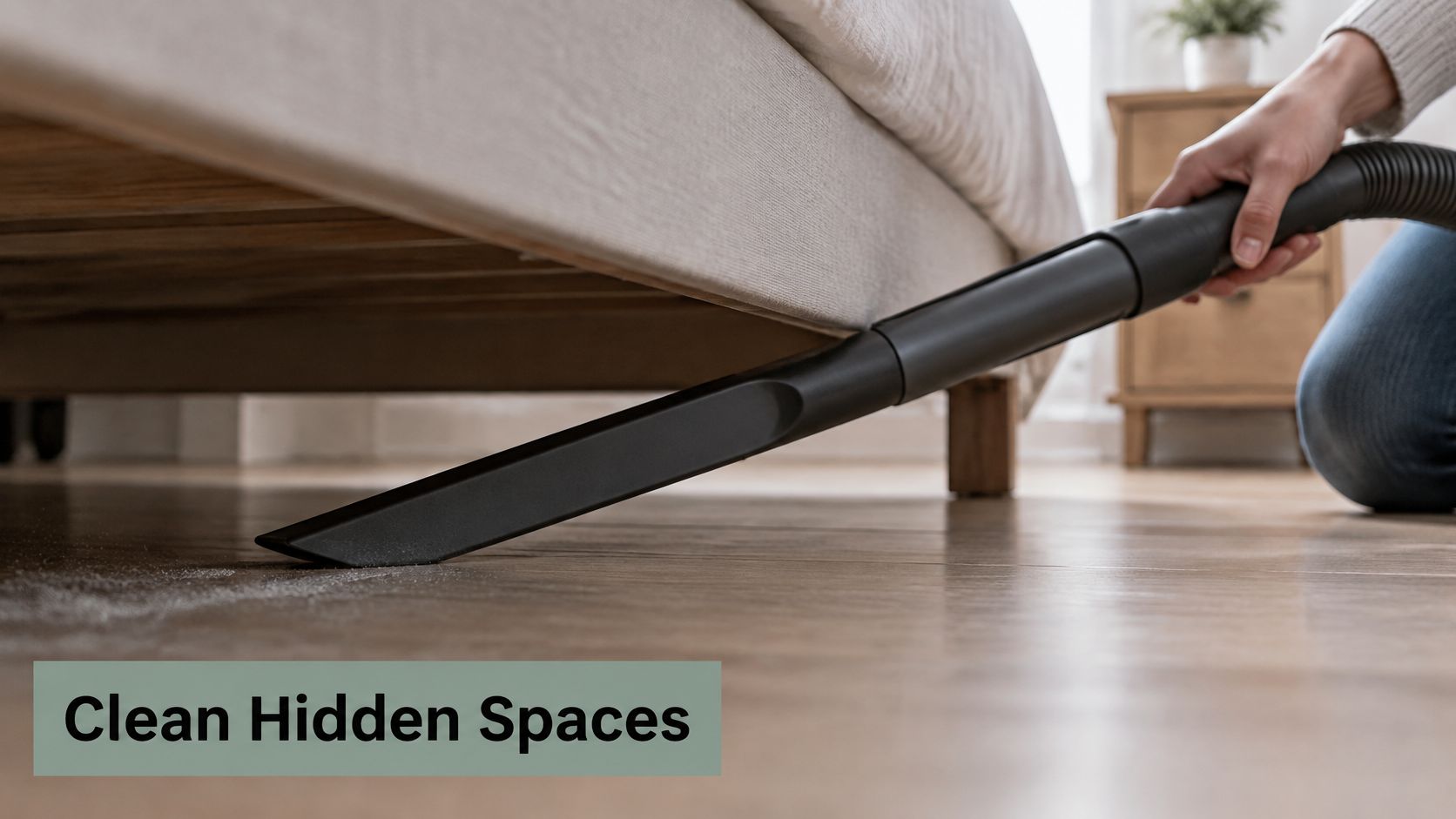
Move what you can. Furniture sliders let you shift a heavy dresser without scratching the floor, and a crevice tool gets along baseboards and under the frame where a wide floor head won't reach. Wipe the underside of the bed frame and the legs while you're down there. In Baldwin County humidity, closet floors are the worst offender, because shoes and clothing piled on them trap moisture against the floor and the wall behind.
Clutter and Sleep Are Linked in the Data
Clutter is not just a visual problem. In 2024, 39% of surveyed UK residents gave their bedrooms a clutter score of 7 to 10 on a 10-point scale, according to a Bensons for Beds study reported by Yorkshire Times. And in IKEA's global sleep report based on 55,221 participants across 57 markets, 66% said a tidy room improves their sleep (IKEA).
Keep shoes off the closet floor on a rack or in breathable bins, and leave a gap between stored items and the exterior wall so air can move. That single habit does more for a humid closet than any product.
6. Cleaning Upholstered Furniture, Headboards, and Area Rugs
Fabric holds what hard surfaces release. Upholstered headboards, bedroom chairs, benches, and area rugs trap dust, pet dander, and odors, and they sit right next to where you breathe for eight hours.
Vacuum upholstery with the attachment, working in overlapping passes, then check the care label before applying anything liquid. Cleaning codes matter: a "W" fabric tolerates water-based cleaner, an "S" fabric needs a solvent, and "WS" takes either. Test any product on a hidden spot and let it dry completely before you judge the result, because some fabrics darken temporarily and then dry clear.
Damp Wipe, Don't Dry Dust
The EPA's indoor air quality house tour identifies dust mites as asthma and allergy triggers and notes that vacuuming can temporarily increase airborne mite allergens and other biological contaminants. That has two practical consequences. Damp-wipe soft furnishings and hard edges rather than dry-dusting them, and ventilate the room before anyone sensitive comes back in.
Area rugs should be vacuumed on both sides when you can move them. Large wool rugs, heavily soiled carpets, and delicate upholstery require a different kind of work, and a local carpet cleaner earns their fee on that job. Most homeowners in Spanish Fort and Gulf Shores are better off booking that deep extraction once a year than renting a machine and guessing at dilution ratios.
What works: vacuum slowly, twice, in two directions. Speed is what leaves grit behind in carpet fibers.
7. Wiping and Polishing Nightstands, Dressers, and Hard Surfaces
By this point the room's air has settled and the dust has landed. Now you clear and wipe the surfaces people touch most: nightstands, dresser tops, drawer fronts, handles, lamp bases, and the shelf inside the closet.
Empty each surface first rather than wiping around objects. Lotions, water rings, and hand oils build up at the edges of things, and a cloth can't reach under a lamp base. Match the cleaner to the finish. Wood wants a pH-neutral product and a dry buff, glass wants a dedicated glass cleaner sprayed onto the cloth rather than the surface, and laminate is forgiving until someone leaves an ammonia-based product sitting on it.
Handles and drawer edges get cleaned every time. They're the highest-touch points in the room and the least visible part of the job.
Electronics need a dry microfiber cloth, never a spray. Screens, clocks, and charging stations collect dust and shouldn't take liquid near the ports. Wipe the cable run behind the nightstand while you're back there.
A consistent routine on these surfaces is what makes recurring maid service easy to maintain between deep cleans. In Daphne and Spanish Fort, homeowners who wipe hard surfaces weekly tend to find that the quarterly or seasonal reset takes noticeably less time.
A Worked Example
Say a nightstand holds a lamp, a phone charger, a glass of water, and three paperbacks. Lift the lamp, wipe the ring, clean the base and the bulb shade, clear the books, wipe the top edge to edge, then clean the drawer pull and the front panel. Four minutes, and the piece looks different from across the room.
8. Final Floor Cleaning, Sand Removal, and Walk-Through Check
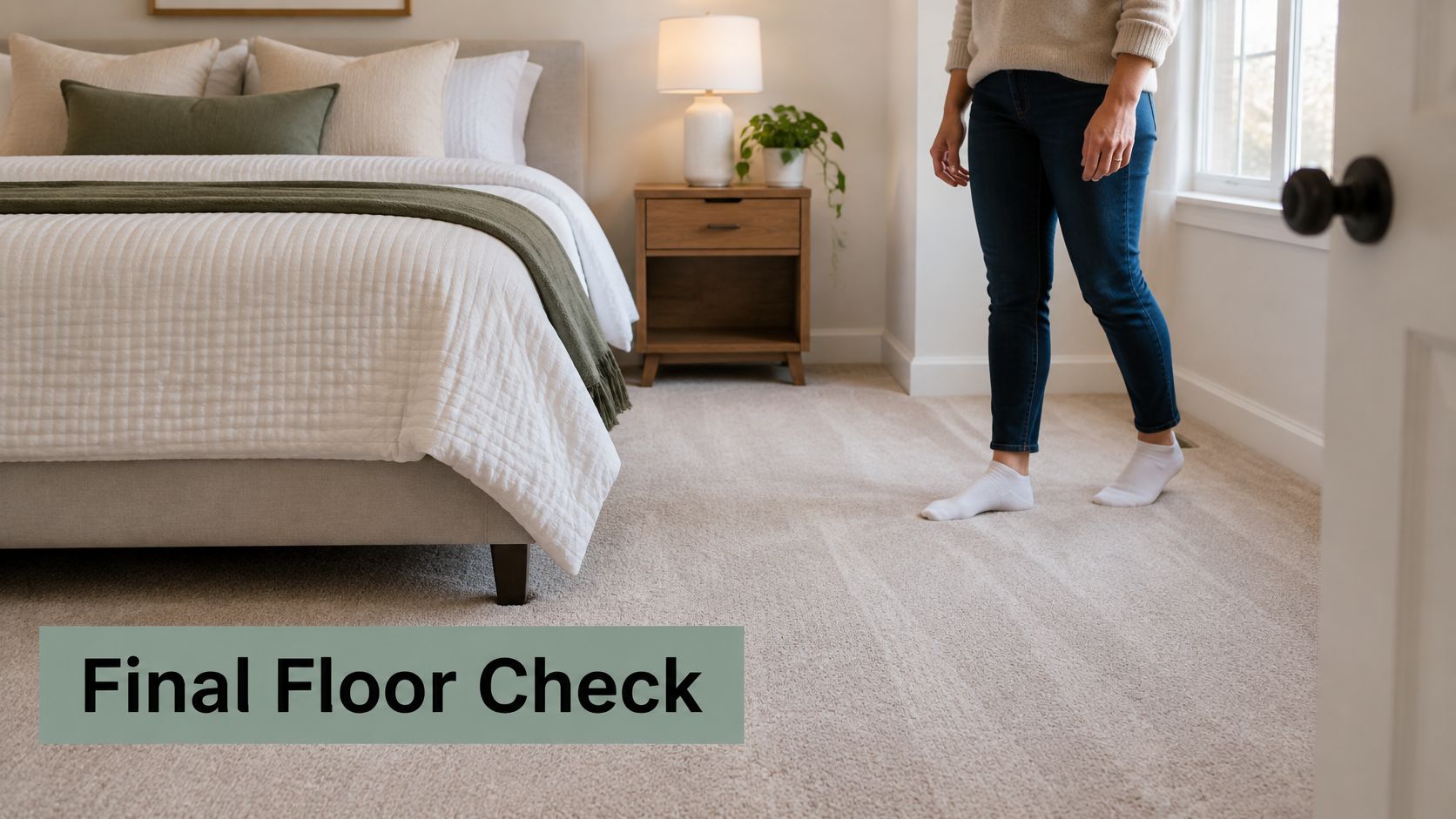
Floors come last because everything above them has already fallen. Vacuum the carpet twice in different directions so the fibers stand up and release grit, then run the crevice tool along the wall edges and under the bed frame you just cleaned.
Beach sand is its own problem. Sand tracked in from Gulf Shores and Orange Beach works into carpet backing and settles along hard floor edges, and a single fast pass won't lift it. Vacuum slowly, empty the canister halfway if the room is bad, and use a damp mop rather than a soaking one on wood or laminate so you don't drive moisture into seams.
Protect the Air While You Work
The CDC's home assessment checklist recommends vacuum cleaners with HEPA filtration to reduce airborne particles and allergen burdens, and notes that people with asthma may need to stay out of rooms while vacuuming, sweeping, or dusting, or have someone else do the work. If anyone in the house has asthma or a dust-mite allergy, run the vacuum while they're out and give the room twenty minutes to settle before they return.
Once the floors are dry, walk the room with fresh eyes. Check for missed dust on the headboard, streaks on glass, and bedding that needs to go back on the bed. Keep the walk-through short and the same every time, and you'll catch the misses that a tired eye skips.
If you want to see how these bedroom steps sit inside a whole-house job, our breakdown of what a deep clean includes shows the full room-by-room scope.
How each bedroom deep-cleaning step compares in focus, supplies, and drawbacks
| Item | Main Focus | Key Supplies | Main Drawback |
|---|---|---|---|
| Top-to-Bottom Dusting of Ceiling Fans, Light Fixtures, and High Surfaces | Dusting high surfaces first | Microfiber cloth, step stool or extension tool, drop cloth | Can be tiring; fan must be fully stopped |
| Deep Cleaning the Mattress and Bedding | Washing bedding and cleaning the mattress | Laundry supplies, upholstery vacuum attachment, fabric-safe cleaner | Mattress may take hours to dry |
| Cleaning Windows, Blinds, and Window Sills | Removing dust, pollen, and grime from windows | Damp cloth or blind-cleaning tool, vacuum brush, suitable cleaner | Cleaning blinds slat by slat takes time |
| Wiping Down Walls, Baseboards, and Door Frames | Removing scuffs, dust, and fingerprints | Soft cloth, mild cleaner, dry cloth | Harsh cleaners can dull paint |
| Clearing and Cleaning Under the Bed, Behind Furniture, and in the Closet Floor | Cleaning hidden spaces and closet floors | Vacuum with crevice tool, furniture sliders, storage racks or bins | Heavy furniture can be difficult to move |
| Cleaning Upholstered Furniture, Headboards, and Area Rugs | Removing dust and stains from soft surfaces | Upholstery vacuum attachment, fabric-safe cleaner | Improper cleaning can damage fabric |
| Wiping and Polishing Nightstands, Dressers, and Hard Surfaces | Cleaning furniture, mirrors, and other hard surfaces | Finish-appropriate cleaner, microfiber cloth | Some products can damage finishes |
| Final Floor Cleaning, Sand Removal, and Walk-Through Check | Cleaning floors and checking for missed spots | Vacuum, suitable mop and floor cleaner, checklist | Floors need drying time; carpet may need repeated vacuuming |
Give Your Bedroom a Full Reset and Your Weekends Back
A bedroom deep clean is the task many people intend to do and least often finish. The work is real: stripping bedding, working a fan and a closet and a mattress in the right order, and doing the floors last so nothing lands on them twice. Done properly, it takes a solid block of a Saturday.
You're in good company if it's been a while. In 2025, 58% of U.S. adults reported deep-cleaning their homes during spring, while 17% said their homes had not been deep-cleaned during the previous year, according to the American Cleaning Institute.
Here on the Gulf Coast, the checklist runs longer than in most places. Humidity settles into closets and feeds mildew on shoes and stored linens. Spring pollen films every blind slat. Beach sand tracked home from Gulf Shores and Orange Beach works its way into carpet fibers and scratches hardwood if it sits. Skipping the top-to-bottom order means dusting twice, because everything you knock loose from the fan lands on a floor you already mopped.
That is the trade-off at the heart of this section. Doing it yourself costs you a day, but costs nothing else. Handing it off costs money and gives the day back.
Sweet Home Cleaning Service works with homeowners and renters in Fairhope, Daphne, Spanish Fort, Gulf Shores, and Orange Beach, AL, and a bedroom deep clean is one of the most useful tasks to hand off when time is short. Deep cleaning suits homes that need a complete refresh or haven't been cleaned in a while, covering ceiling fans, baseboards, window sills, and the space under accessible beds. The booking form asks for contact details, the property address, and any special instructions so the team knows which areas matter most to you. Pair a deep clean with recurring service, weekly, biweekly, or every three weeks, to keep the room in shape between visits. Special requests like deep cleaning are included in your quote.
If your bedroom hasn't had a proper top-to-bottom reset in a year, reach out to Sweet Home Cleaning Service to book a visit or request a free quote at Sweet Home Cleaning Service. Move-in/move-out cleaning is also available across the Eastern Shore for homes changing hands. Let a local team work the checklist from the ceiling down. Your weekend is worth more than a fan blade.

Let us handle the cleaning. Enjoy your home.


Sweet Home Cleaning Service
19940 State HWY 181, Suite E Fairhope, AL 36532
Phone: (251) 586-4081
sales@sweethomecleaningservice.com
Customer Service Hours:
Monday – Friday
7:30 AM – 4:30 PM
Saturday & Sunday
9:00 AM – 3:00 PM