8 Home Organization Ideas for Small Spaces in 2026

You're trying to put dinner together in a compact Fairhope kitchen, but the spatula is buried beneath measuring cups and takeout menus. Across the hall, beach bags cover the closet floor. There's room somewhere, yet putting anything away means moving something else first.
Small homes can have genuine storage limits. But usable space also gets lost above cabinets, behind doors, and inside deep drawers where you can't see what you own. Buying another basket won't help if it blocks the vacuum or becomes a hiding place for damp towels.
Sweet Home Cleaning Service is a house cleaning and maid service based in Fairhope, AL, serving Fairhope, Daphne, Spanish Fort, Gulf Shores, and Orange Beach. For homeowners and renters across these communities, practical organization needs to make daily life easier without creating more cleaning work.
The most useful home organization ideas for small spaces account for Gulf Coast humidity, spring pollen, and sand tracked indoors. They also leave room to wipe shelves, inspect corners, and clean floors without dismantling the entire system.
For furniture placement, compact room planning with Lott's Furniture offers a useful companion to storage planning. Start with the space you can comfortably use, then choose organizers that fit. These ideas apply that approach to closets, kitchens, bathrooms, bedrooms, and rooms that serve several purposes.
Table of Contents
1. Vertical Wall Storage
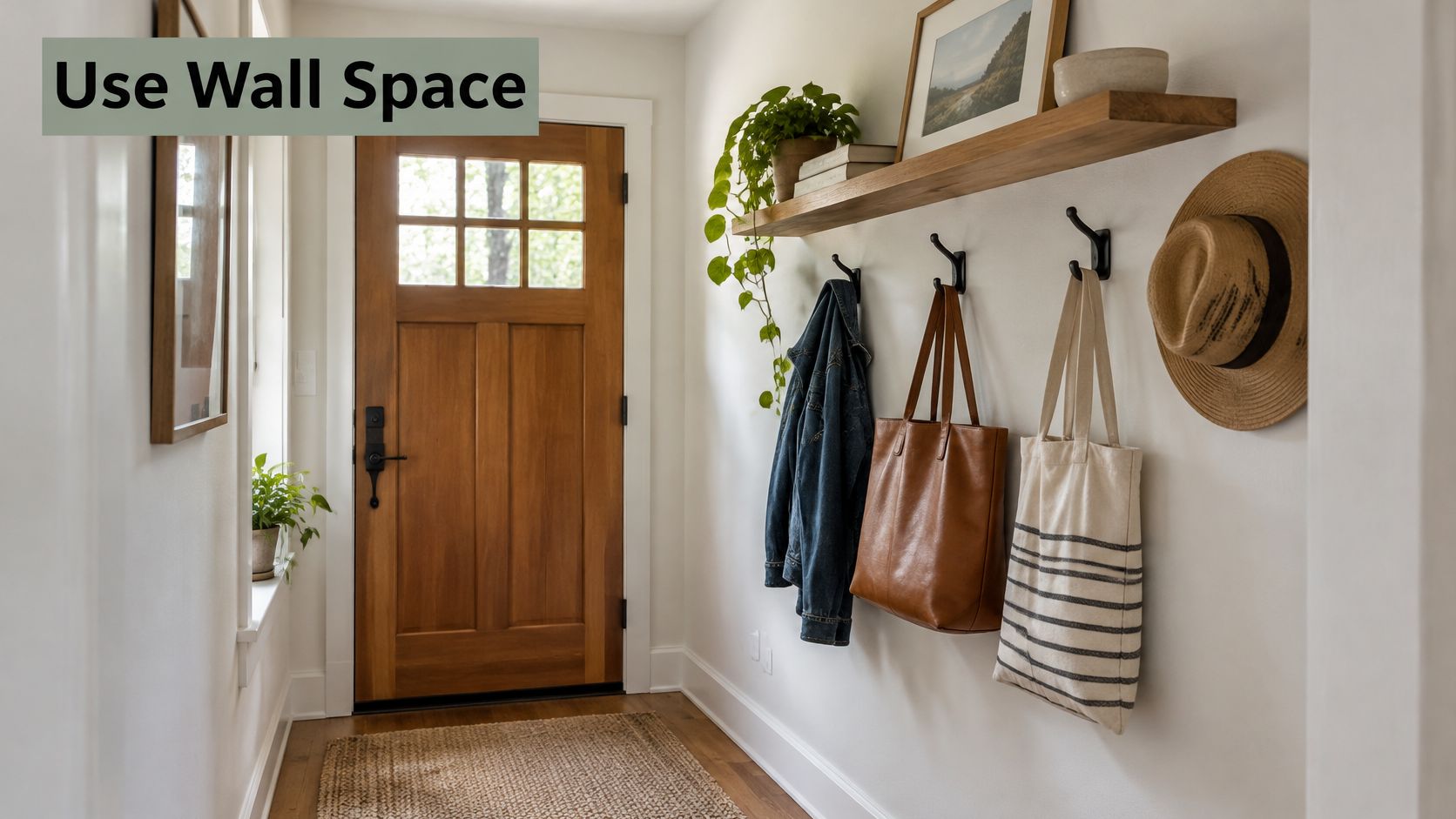
Use wall height before adding another floor-standing cabinet. Shelves, hook rails, and pegboards can hold everyday belongings while leaving the floor accessible for sweeping and mopping. The catch is depth: a shelf that projects into a narrow hallway can be more troublesome than the clutter it replaces.
In an older Fairhope home, a shallow shelf above a hook rail can give keys, bags, and dog leashes a defined home. In a Gulf Shores condo, a pegboard inside the hall closet can separate small tools from dry beach accessories. Keep sandy or damp gear out until it has been shaken off and dried.
Mount for access and cleaning
Locate studs before installing shelves or rails. Where studs aren't available, select anchors rated for the wall material and the combined weight of the organizer and its contents. Renters should get permission before drilling rather than assuming removable adhesive can carry the same load.
- Keep the floor reachable. Position the lowest shelf above the path of your mop and vacuum head.
- Limit exposed storage. Use washable, lidded bins for small accessories that otherwise collect spring pollen and dust.
- Put daily items within reach. Reserve higher shelves for lightweight belongings you don't need frequently.
Open shelving works best when you can lift its contents away easily. A crowded display of loose objects adds dusting work, especially near frequently opened exterior doors.
Cleaning test: If clearing a shelf takes longer than wiping it, simplify what you keep on it.
Leave enough room behind hanging bags to inspect the wall. Keeping belongings off the floor improves access, but tightly packed hooks can still conceal dust and dampness.
2. Under-Bed Storage
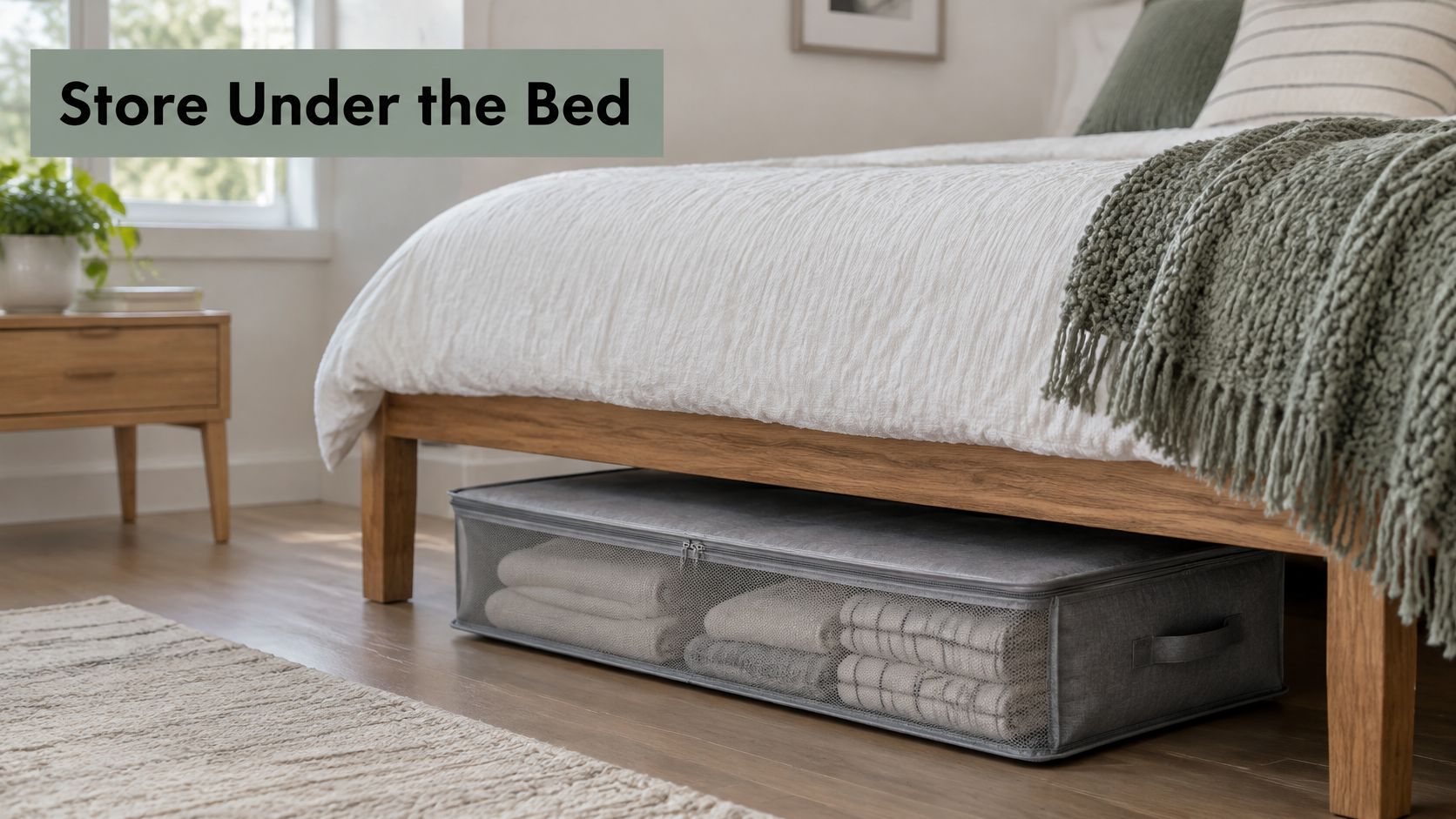
A Daphne bedroom doesn't necessarily need another dresser for winter bedding. Low rolling drawers beneath the bed can hold seasonal linens without adding furniture to the walking area. In a Spanish Fort guest room, the same setup can keep spare sheets accessible without filling the guest closet.
Measure the lowest clearance beneath the frame, including center supports. Then check whether the container can slide out without hitting a nightstand, rug edge, or nearby wall. A bin that fits underneath but can't be retrieved comfortably isn't useful storage.
Choose airflow over maximum packing
Breathable zippered bags suit clean, dry bedding in a dry room. Smooth rolling drawers are easier to wipe, while fabric containers require more attention to dust. Neither option fixes a damp bedroom.
The EPA's guide to mold and moisture recommends indoor relative humidity below 60%, ideally between 30% and 50%, which makes moisture control part of storage planning rather than an afterthought.
- Store fully dry textiles. Let freshly laundered towels and bedding dry completely before packing.
- Leave breathing room. Don't wedge bags tightly against walls or fill every available gap.
- Make removal easy. Choose handles and wheels that let you pull containers out for floor cleaning.
Compare container shapes using these home organization products, and use bedroom storage tips for New Jersey homes for additional layout ideas. Apply those layouts with local moisture conditions in mind.
During routine cleaning, pull the containers out and vacuum underneath. Check seams, corners, and the contents for dampness before sliding them back.
3. Over-the-Door Organizers
A door organizer is useful only if the door still works properly. Before filling the pockets, close the door, open it fully, and check for rubbing at the frame. Make sure the organizer doesn't strike the wall, interfere with the latch, or cover a towel hook you still need.
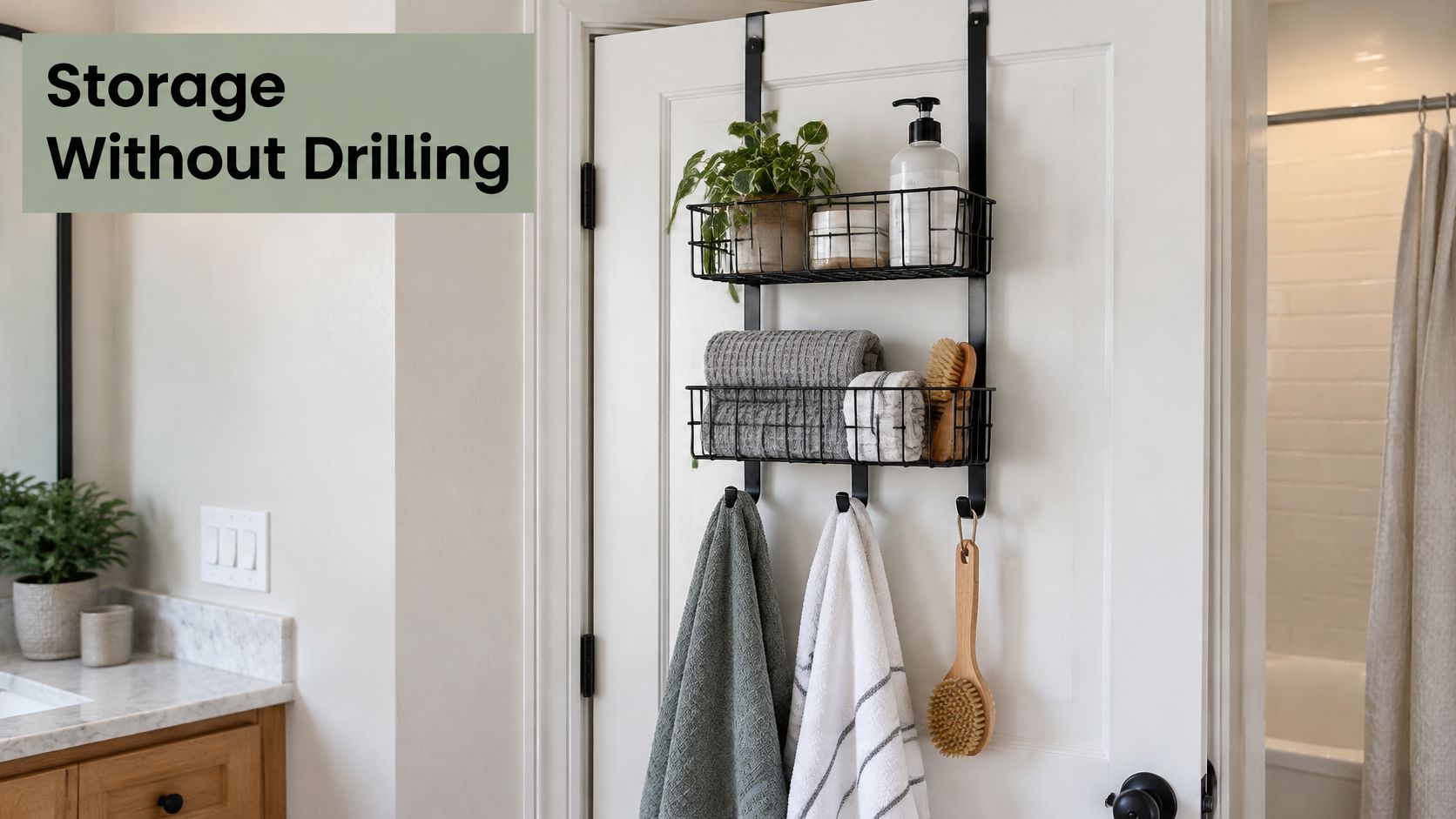
For renters, an over-the-door rack can add storage without drilling. A Fairhope bathroom might use clear pockets for combs, unopened toiletries, and cooled hair tools. An Orange Beach rental could use a washable organizer inside the entry closet for dry sandals and water shoes.
Match the material to the room
Smooth plastic pockets wipe clean easily, but they can hold moisture at the bottom. Mesh drains and dries more readily, though sand can fall through onto the floor. Fabric looks softer in a bedroom but isn't the first choice beside a steamy shower.
Don't put wet beach shoes into a pocket and close the closet. Rinse off the sand, let the shoes dry, then store them.
Keep heavier items in lower pockets while staying within the organizer's load rating. Avoid glass bottles, unsecured chemicals, or sharp accessories where children can reach them. Hot styling tools need to cool completely before storage.
For maintenance, empty the pockets instead of wiping around their contents. Vacuum loose grit from seams, clean the material according to its care instructions, and let it dry fully before refilling.
In vacation rentals, label pockets by category rather than by guest. Clear, simple placement makes it easier to notice forgotten belongings and restore the arrangement during vacation rental cleaning.
4. Drawer Dividers and Vertical Folding
The utensil drawer usually needs fewer overlapping categories, not a more elaborate insert. Start by removing everything, wiping the drawer, and separating cooking tools from baking tools, serving pieces, and items that belong elsewhere. Don't buy dividers until you've decided what stays.
Storage frustration isn't always a container problem. In a YouGov survey of U.S. adults, 46% cited insufficient storage space as an organization obstacle, while 41% cited owning too many belongings.
Divide by how you actually put things away
Measure the interior drawer width, depth, and usable height. Adjustable dividers work well for changing categories; removable trays are easier to carry to the sink for cleaning. Avoid intricate inserts with tiny compartments unless the contents need them.
In a Fairhope kitchen, give spatulas and whisks long compartments that accommodate their handles without jamming the drawer. Tall-sided slots can keep tools separated, but they must clear the drawer opening. Keep rarely used gadgets somewhere other than the prime cooking drawer.
- Fold soft clothing upright. Stand shirts and shorts on edge so you can see each item without lifting a stack.
- Keep children's categories broad. A Daphne family may find shirts, shorts, and pajamas easier to maintain than detailed subdivisions.
- Leave room to return items. A drawer packed tightly enough to require careful rearranging won't stay orderly.
The practical approach in this home organization guide can help connect individual drawers to a whole-room system.
For Gulf Coast upkeep, removable inserts beat permanent liners that hide spills underneath. During deep cleaning, lift the dividers, vacuum crumbs and grit, and wipe the bare drawer. Dry it before replacing clothing, utensils, or toiletries.
5. Multi-Functional Furniture
A storage ottoman earns its place when it replaces another piece, not when it becomes an extra obstacle. In a Spanish Fort home office, it might provide seating and hold printer paper. If the lid can't open without moving the desk chair and a side table, choose something smaller.
A Gulf Shores vacation rental may benefit from a sofa bed, but the closed footprint tells only part of the story. Check the sleeping configuration, access to outlets, and the route to the door before buying.
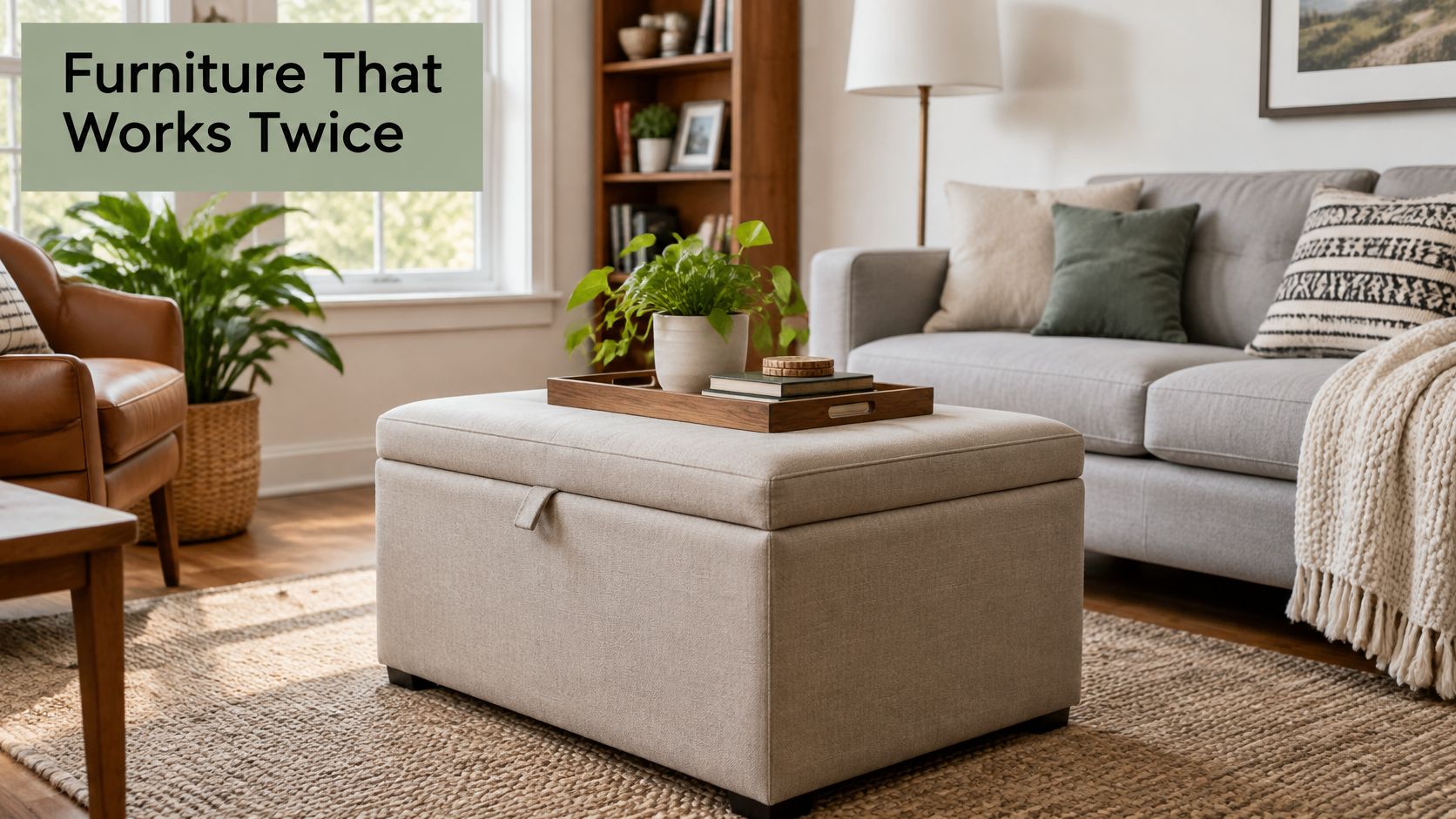
A compact-dwelling design study proposed clear circulation widths of approximately 85–90 centimeters. Treat that as a planning reference, not a local building-code requirement, and test the actual walking route with furniture fully open.
Check the hidden cleaning work
Lift-top tables, Murphy beds, and nesting tables can suit multi-use rooms. They also introduce hinges, tracks, and concealed surfaces that need attention. Choose mechanisms you can operate comfortably and follow the manufacturer's installation and anchoring requirements.
- Keep contents light and accessible. Store blankets or office supplies, not a heavy jumble that strains the lid or drawer.
- Inspect underneath. Check whether the vacuum can reach below the furniture or whether you can safely move it.
- Choose maintainable finishes. Washable covers and smooth interior surfaces are easier to manage around sand and crumbs.
Don't store damp beach towels inside upholstered furniture. Empty enclosed compartments periodically, vacuum seams, and wipe the interior with a material-appropriate cleaner.
The best multi-use piece simplifies the room even when you're cleaning it. Extra capacity isn't worth losing access to the floor or creating a difficult lifting job.
6. Lazy Susans and Pull-Out Cabinet Systems
Deep cabinets often contain useful space that nobody wants to reach. A lazy Susan brings small items forward by rotating them; a pull-out shelf brings the cabinet contents toward you. Choose according to what you're storing, not just which mechanism fits.
In a Fairhope corner cabinet, a turntable can keep oils and frequently used seasonings visible. A Daphne pantry might work better with pull-out baskets for snacks and packaged foods. Put cans on a sturdy lower shelf rather than loading them into a lightly built hanging basket.
Storage deserves deliberate planning. A 2022 survey of homeowners with household incomes above $50,000 found that 75% had taken action to increase storage, including 52% who purchased prefabricated solutions.
Measure around the hardware
Check cabinet depth, opening width, hinges, and any center stile before ordering. A tray can fit inside the cabinet yet fail to pass through its opening. Pull-out units also need room to extend without striking an adjacent appliance or handle.
- Contain drips. Put oil bottles on a removable, washable tray rather than directly over slide hardware.
- Keep weight low. Follow the mechanism's load rating and place heavier goods on lower levels.
- Make small packages stable. Use a shallow bin inside wire baskets so packets don't fall through.
For broader placement ideas, use these small-space home organization strategies to group food preparation, cooking, and cleanup supplies.
Clear crumbs from tracks before wiping them. Remove accessible trays for cleaning, dry them thoroughly, and avoid soaking slide mechanisms or spraying cleaner into bearings.
Closed cabinets offer protection from airborne dust and pollen, but spills still need prompt attention. An organizer should let you inspect the cabinet bottom, not cover it permanently.
7. Double-Hang Closet Systems
For a narrow Eastern Shore closet filled mostly with shirts and folded trousers, a lower hanging rod can make better use of the existing height. Keep a separate full-height section for dresses, robes, and long coats. Adding rods everywhere can create more frustration if garments drag across the lower rail.
A Fairhope family could use separate hanging sections for school clothes and adult clothing. In a Gulf Shores rental, a low rod can hold clean, dry folded towels while leaving the upper section available for guests' clothing. Avoid packing the closet so tightly that visitors can't see what's available.
Add capacity without trapping dampness
The EPA's mold house tour identifies bedroom closets among the places where high humidity can allow mold to grow on clothing and furnishings. A lower rod adds hanging capacity, but it doesn't improve the closet if you fill every gap with garments.
Measure the longest clothing in each category before positioning rods. Use a system rated for the intended load, secure permanent supports properly, and check adjustable hanging rods for compatibility with the existing rail.
- Leave garments separated. Clothes should slide along the rod without needing a hard shove.
- Protect floor access. Keep shoes in a removable tray or shallow rack rather than loose piles.
- Store only dry laundry. Don't hide damp towels or partially dried clothing behind clean garments.
Capacity rule: Added hanging space is useful only while you can still retrieve clothing and inspect the surfaces around it.
Vacuum the floor and wipe accessible shelves during routine cleaning. Rotate seasonal clothing out of prime positions, but don't move unwanted belongings into bins merely to postpone a decision.
For busy families, simple divisions usually hold up better than detailed labels. Separate by person or garment type, then leave enough room for an ordinary laundry day.
8. Magnetic Wall Strips and Hanging Rails
A Spanish Fort kitchen with limited drawers can use a magnetic knife strip to free space for dish towels and small gadgets. In a Fairhope galley kitchen, a securely mounted rail can hold frequently used pans and cutting boards. Keep only the tools you use often on display.
Unlike general wall shelving, these systems keep working tools close to food preparation areas. That convenience comes with a cleaning trade-off: exposed utensils and cookware collect cooking residue, dust, and pollen. Items you rarely use are usually better inside a cabinet.
Mount for the load, not the appearance
Choose a knife strip with a secure grip and install it where children can't reach sharp edges. Keep blades away from doorways, crowded walkways, and places where someone could knock them while reaching for something else. Follow the manufacturer's mounting instructions and check each knife's hold carefully.
Cast iron needs a rail and fasteners rated for substantial weight. Don't trust an adhesive strip with heavy pans or sharp tools, even if it seems secure at first. For lightweight accessories on adhesive mounts, allow the specified curing time and monitor the attachment before adding the intended load.
- Hang boards fully dry. Leave space between them so moisture isn't trapped against the wall.
- Keep hooks stable. Choose hooks that won't lift off the rail whenever you remove a pan.
- Clean behind the system. Take tools down before wiping the strip, hooks, and backsplash.
Hanging rails should never crowd an exit or become a place to suspend emergency supplies behind cookware. Ready.gov's hurricane guidance advises maintaining emergency supplies and clearing drains and gutters, a reminder to preserve access rather than treat every open area as storage.
Wipe exposed rails during routine kitchen cleaning. During deep cleaning, remove grease behind the hardware and dry metal components thoroughly.
How each small-space organization idea compares by room, installation, and trade-off
| Item | Best Room | Installation Needed | Main Trade-Off |
|---|---|---|---|
| Vertical Wall Storage | Entryway, laundry room, garage, or bathroom | Drilling; mount into studs or use rated anchors | Frees floor space but requires careful mounting and regular dusting |
| Under-Bed Storage | Bedroom | None; optional bed risers or storage bed | Adds hidden storage but can limit airflow and be hard to access |
| Over-the-Door Organizers | Bathroom, pantry, closet, or entryway | None; hangs over the door | Easy to move but has limited capacity and may interfere with closing |
| Drawer Dividers and Vertical Folding | Kitchen, bathroom, or bedroom | None; fit dividers inside drawers | Makes items easier to find but requires maintaining the system |
| Multi-Functional Furniture | Living room, guest room, or home office | Usually none; wall beds may need professional installation | Combines uses in one footprint but can cost more or be less comfortable |
| Lazy Susans and Pull-Out Cabinet Systems | Kitchen or pantry | May require cabinet modifications | Makes deep storage accessible but can be costly and needs track upkeep |
| Double-Hang Closet Systems | Bedroom closet | Rod installation; check studs and wall support | Increases hanging space but lower rods may be hard to reach |
| Magnetic Wall Strips and Hanging Rails | Kitchen | Adhesive or screw-in mounting | Clears counters but only suits compatible items and needs regular cleaning |
Make Your Small Space Work Every Day
The best organization system is the one you can maintain when dinner runs late, laundry piles up, and someone brings sand through the back door. It doesn't depend on perfect folding or matching containers. It gives belongings a sensible home and leaves the surrounding surfaces reachable.
Start with the area that interrupts your day most often. That may be a crowded Fairhope utensil drawer, a Daphne bathroom counter, or a Spanish Fort closet floor. Remove what doesn't belong, clean the empty space, and test a simple arrangement before buying more equipment.
Keep the system easy to reset
Store upward where wall space is available. Use door backs and under-bed areas without blocking airflow or access. Choose furniture that serves more than one purpose, but only when it reduces the number of pieces you need.
- Keep counters practical. Leave out daily essentials and put occasional-use items away.
- Protect cleaning access. Make bins, trays, and drawer inserts easy to remove.
- Plan for coastal conditions. Dry beach gear before storage, inspect enclosed spaces, and remove pollen and sand rather than hiding them.
- Review what stays. Let go of belongings you no longer use before expanding the storage system.
External storage can make sense for selected belongings, but it shouldn't become the automatic destination for every unresolved pile. The affordable options from MG Self Storage offer additional ideas to consider. Compare those approaches with how often you need the items and whether they're worth keeping.
A system that works for a homeowner may need adjustment for a renter or vacation property. Renters need removable solutions and permission for permanent changes. Gulf Shores and Orange Beach hosts need clear storage locations that guests can understand and cleaners can inspect during turnovers.
Connect organization with regular cleaning
Sweet Home Cleaning Service, a house cleaning and maid service based in Fairhope, AL, can pair organization with recurring maid service, deep cleaning, or move-in/move-out cleaning. Starting with cleared drawers, accessible shelves, and open floor space helps make that cleaning attention more useful.
Weekly, biweekly, or monthly recurring maid service can support the household routine after the initial reset. Between visits, return items to their assigned places and deal with damp or sandy belongings before putting them away. That keeps the system manageable and gives families more of their time back.
Sweet Home Cleaning Service offers standard house cleaning, recurring maid service, deep cleaning, move-in/move-out cleaning, and vacation rental cleaning to support easier upkeep in small spaces. Homeowners and renters in Fairhope, Daphne, Spanish Fort, Gulf Shores, Orange Beach, and the surrounding Eastern Shore and Gulf Coast area can visit Sweet Home Cleaning Service to book or request a free quote and discuss the rooms that need attention.

Let us handle the cleaning. Enjoy your home.



Sweet Home Cleaning Service
19940 State HWY 181, Suite E Fairhope, AL 36532
Phone: (251) 586-4081
sales@sweethomecleaningservice.com