What Is Post Construction Cleaning After a Remodel


Post-construction cleaning is the multi-stage removal of debris, fine dust, and trade residue after building or remodeling so a home is ready to occupy, not a routine house clean.
Your Fairhope bathroom might have its new vanity, working lights, and freshly painted trim, yet leave a pale streak on your sleeve when you lean against the doorway. Open a drawer and there's drill dust; look behind the faucet and there's grout residue. Sweet Home Cleaning Service helps local homeowners think through that transition from finished construction to everyday living, including what needs attention before ordinary housekeeping can take over.
Table of Contents
- Rough cleaning makes room for the remaining work
- Finish cleaning follows the last dusty task
- Detail cleaning prepares the handoff
- A Fairhope family finishes an older bathroom
- A coastal rental needs to be guest-ready
- A repair leaves wet materials behind
What Post Construction Cleaning Actually Does
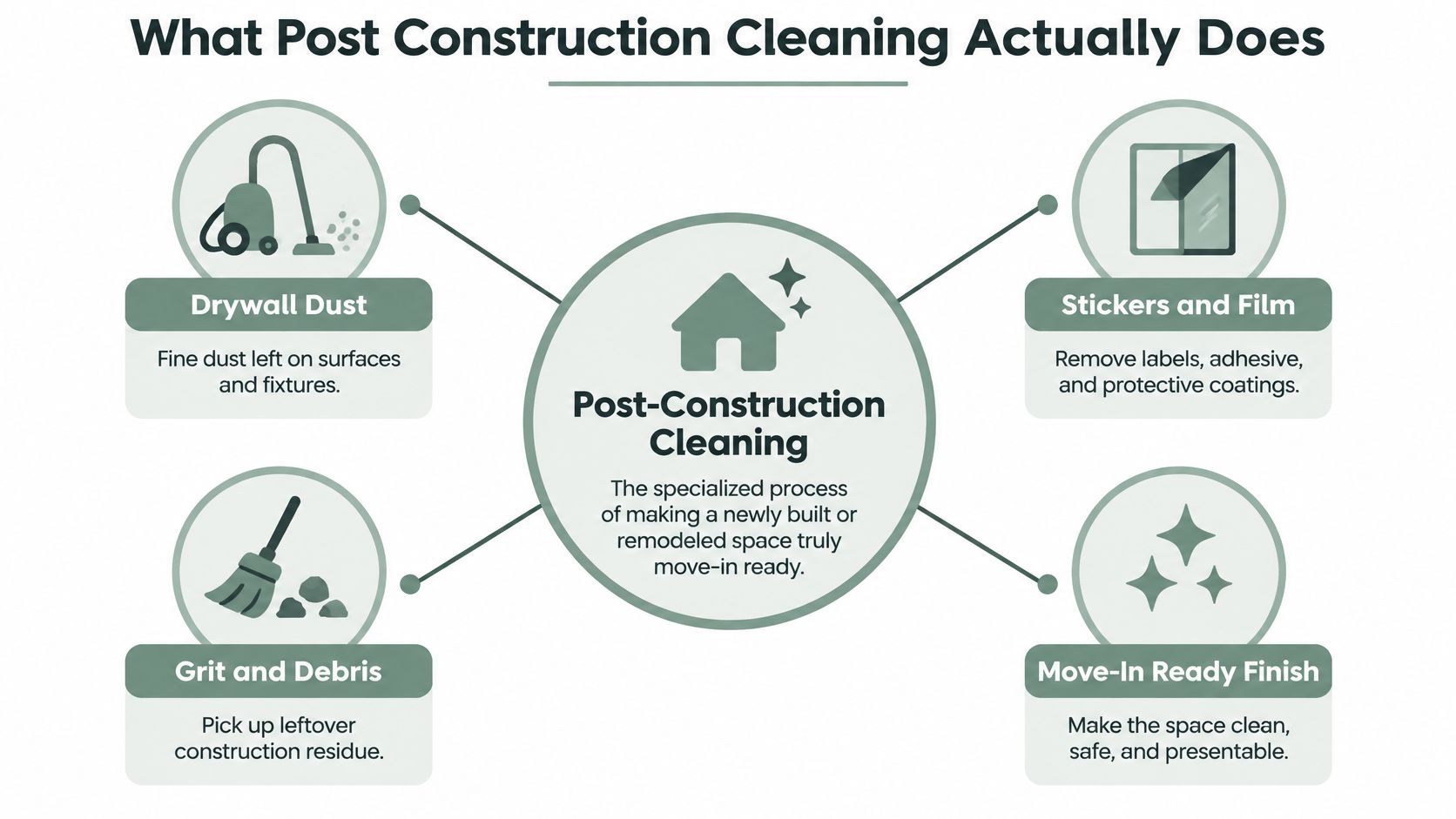
Post-construction cleaning is the specialized cleanup that makes a newly built or remodeled space usable and presentation-ready after the trades finish. It addresses construction residue throughout the room, not just the dirt visible on the floor.
Say your Fairhope kitchen renovation is complete. The contractor has removed the tools, but protective film remains on an appliance, sawdust sits inside a cabinet, and drywall dust coats the tops of the door casings. The room looks finished from the hallway. It isn't ready for you to unpack groceries.
A careful cleanup separates those different jobs. Packaging and scraps need removal. Fine dust needs capture. Adhesive, paint flecks, and grout residue need surface-specific treatment that won't damage the finishes you just paid to install.
Why an ordinary house clean isn't enough
Standard house cleaning maintains a home people already live in. A recurring maid service handles familiar household soils, such as kitchen splashes, bathroom buildup, tracked-in dirt, and dust on accessible surfaces.
Construction changes the starting condition. Cleaners may find grit beneath protective coverings, particles inside unused drawers, and residue bonded to glass or flooring. Think of a body shop: this is the wash after sanding and painting, not the wash after a grocery run.
The U.S. Environmental Protection Agency's construction and demolition materials guidance distinguishes materials that can be recovered or reused from materials requiring disposal. At home, that means cleanup shouldn't begin by treating every leftover object as ordinary trash. Ask the contractor which spare tiles, trim pieces, and labeled finish materials you should keep.
Small remodels still need a defined finish
A bathroom in Daphne or a laundry-room update in Spanish Fort can spread dust beyond the work area. Shoes, tools, and open doorways give particles a route into adjoining rooms.
Before work begins, agree on what the contractor will remove and what the final cleaning will cover. That prevents a familiar misunderstanding: the builder considers the job complete because the scraps are gone, while the homeowner expects clean cabinet interiors and usable floors.
The practical sequence is rough cleaning, finish cleaning, and detail cleaning. Each addresses a different condition of the space.
Dust Safety and the Right Equipment
Some construction particles are much smaller than the sand you sweep out after a beach trip. OSHA's construction silica guidance describes respirable crystalline silica particles as at least 100 times smaller than ordinary beach or playground sand, and sets a construction exposure limit of 50 micrograms per cubic meter of air as an eight-hour time-weighted average.
That's an occupational exposure standard, not a homeowner's visual test for a finished room. A clear-looking floor doesn't establish what's in the air.
Identify the dust before disturbing it
Ordinary household dust and construction residue shouldn't automatically get the same treatment. Cutting or grinding concrete, brick, mortar, stone, tile, or masonry can create dust requiring silica-aware controls.
Ask the contractor what materials were disturbed and where cutting happened. Also ask whether dust escaped the work zone, entered adjacent closets, or reached ventilation openings. Those answers help establish the cleaning scope.
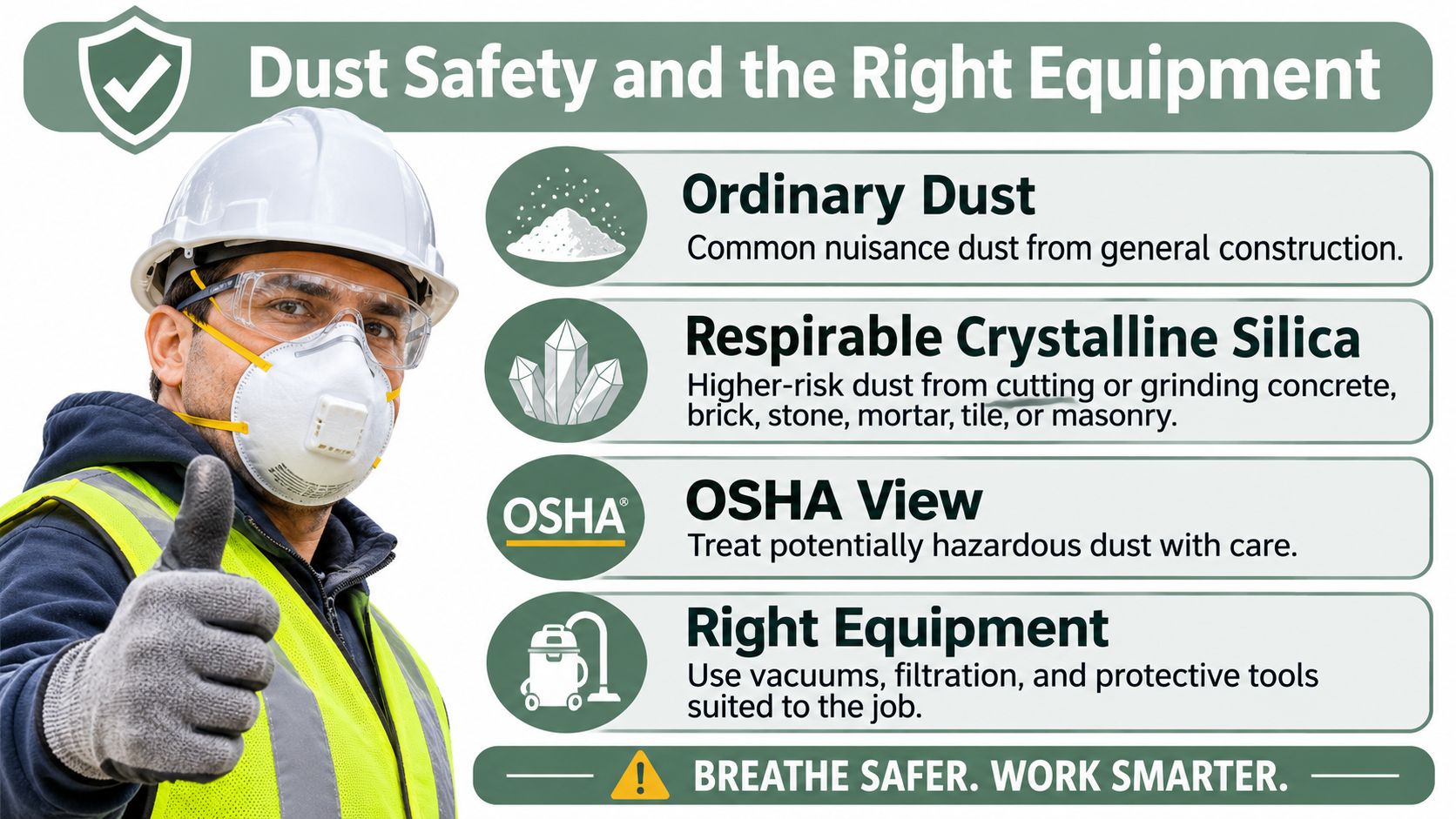
Don't dry-sweep potentially silica-containing dust when a feasible lower-dust method is available. OSHA's construction silica information restricts dry sweeping and brushing in those circumstances and also restricts uncontrolled compressed-air cleaning.
The reason is straightforward: a broom or air blast can send settled particles back into the room. Moving dust out of sight isn't the same as collecting it.
Match the equipment to the job
A useful setup includes tools chosen for capture and controlled removal:
- HEPA-filtered vacuum equipment: Use equipment suited to fine construction dust, with intact filters, seals, and collection components.
- Microfiber cloths and damp-cleaning supplies: Lift remaining residue from compatible surfaces without soaking wood, unfinished edges, or electrical components.
- Containment materials: Keep contractor-installed barriers in place until the appropriate cleaning and removal steps are complete.
- Closable waste containers: Contain collected residue rather than leaving dusty bags open in the hallway.
- Appropriate protective equipment: Eye and breathing protection must suit the assessed task. A casual face covering isn't a substitute for a contractor's exposure-control procedures.
For practical household planning, this guide to handling dust from construction can help you identify questions to raise before the crew arrives.
A visibly clean room isn't an air-quality clearance. If the project involved potentially hazardous dust, ask the contractor what verification or specialist assessment is appropriate.
The most useful question for any cleaning crew is simple: How will you capture fine dust instead of sweeping it around?
Rough Finish and Detail Cleaning Stages
| Stage | When it happens | Main goal | Core tasks |
|---|---|---|---|
| Rough clean | While debris is still present and before finishes are fully protected | Remove bulk waste and make the space workable | Haul scraps and packaging, collect coarse debris with suitable methods, protect floors and fixtures |
| Finish clean | After sanding, cutting, painting, and installation are complete | Remove settled dust and trade residue | HEPA-vacuum top to bottom, damp-wipe, clean windows and floors, clear registers before HVAC use |
| Detail clean | After airborne dust settles and before furniture or occupancy | Catch what a first pass misses | Labels and film, grout haze, cabinet interiors, vents, edges, hardware, final walk-through |
These stages form a sequence, not a menu of interchangeable packages. Removing packaging doesn't finish a room, and polishing a faucet while someone is sanding nearby creates avoidable rework.
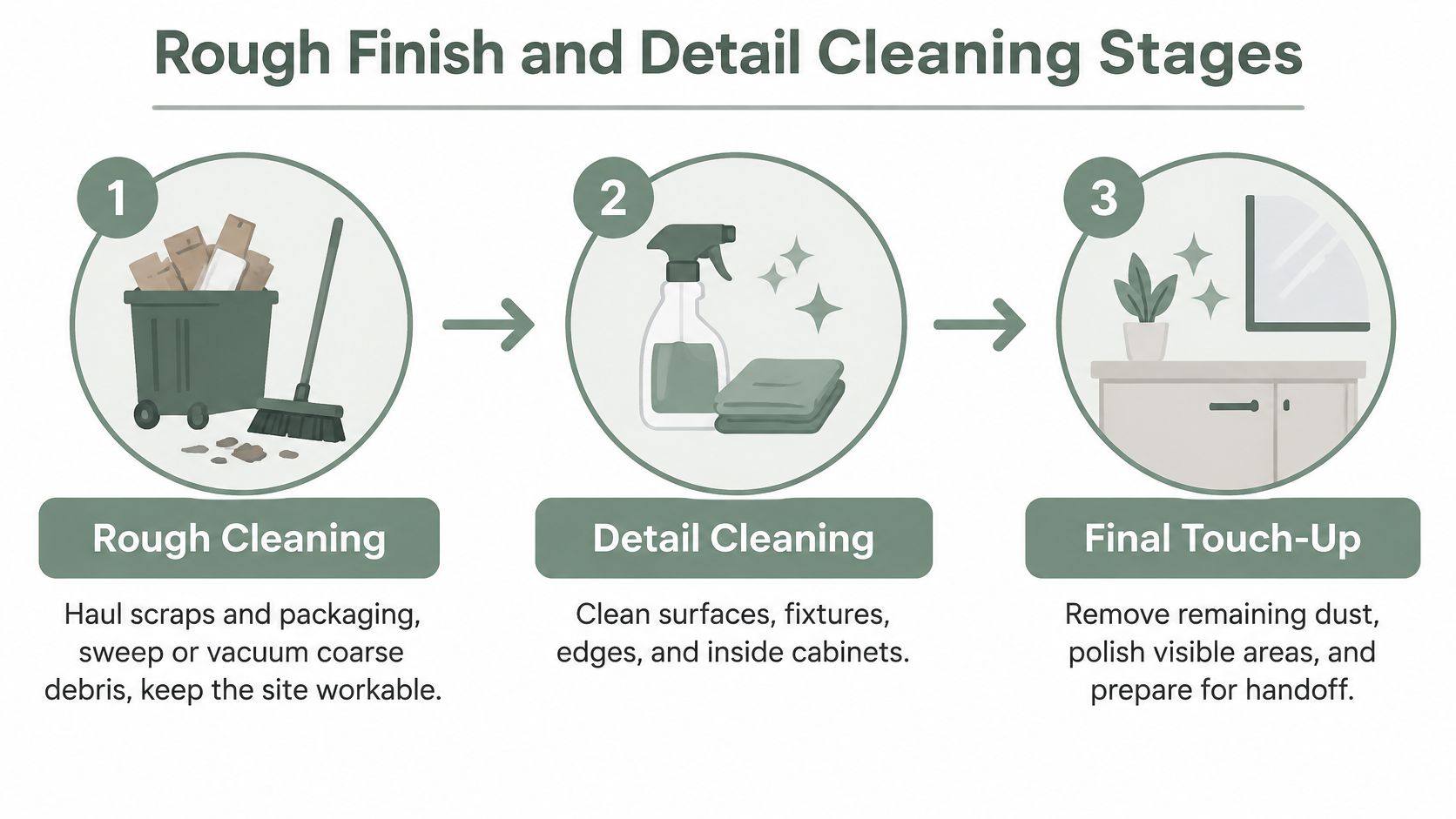
Rough cleaning makes room for the remaining work
The rough clean clears bulky leftovers and accessible debris. The contractor should identify who handles heavy waste, sharp scraps, and materials that require special disposal.
Finished surfaces still need protection during this stage. Don't drag bags across new flooring or stack discarded hardware on a fresh countertop. Where fine dust may be present, use the controlled collection methods appropriate to that dust rather than defaulting to a broom.
The result is a workable site. It's not an occupancy handoff.
Finish cleaning follows the last dusty task
Once the trades finish, work from higher surfaces toward the floor. Capture loose residue before damp wiping so you don't turn a powdery film into streaks.
The EPA's indoor-air guidance for remodeling recommends isolating work areas, covering supply and return registers, keeping HVAC serving the work area off until dust has been removed, and using HEPA-equipped vacuum equipment when exhaust returns indoors. These controls help prevent the cleaning process from redistributing pollutants through the home.
Coordinate HVAC decisions with the contractor rather than switching systems off or removing covers without a plan. Cleaning accessible grilles also isn't the same as inspecting or cleaning the inside of ductwork.
A sensible working order is:
- Clear the space: Remove bulky waste and identify materials being saved.
- Capture loose dust: Address overhead surfaces, walls where suitable, fixtures, cabinetry, and floors.
- Wipe compatible surfaces: Use clean cloths and controlled moisture.
- Inspect the edges: Check recesses, hardware, tracks, and other collection points.
Detail cleaning prepares the handoff
The detail pass addresses residue revealed after the main cleanup, including dust that settles onto previously cleaned surfaces. It should happen before furniture blocks access and before belongings fill cabinets.
A deep clean differs from regular cleaning, but construction cleanup has an additional requirement: removing trade residue without damaging new materials. Don't assume the words “deep clean” automatically include that scope.
Use the table as a contractor handoff checklist. Confirm what's complete, what still needs curing, and whether any punch-list repair will create fresh dust.
Residues Each Trade Leaves Behind
Construction residue tells you which work happened nearby. Drywall sanding leaves a pale film across trim and closet shelves; cabinet installation leaves drill dust inside boxes that have never held a dish.
The cleaning method should follow both the residue and the surface. A technique that works on uncoated glass may damage a finished cabinet door or specialty window coating.
| Surface | Typical residue | Careful clean |
|---|---|---|
| Trim, ceilings, and closet interiors | Fine drywall sanding film | HEPA vacuum first, then damp-wipe suitable tops and edges |
| Glass and window tracks | Paint specks, plaster dust, grit | Vacuum tracks, then clean glass after the dusty wipe |
| Floors | Adhesive spots and protective film | Release residue gently with an approved method, then HEPA vacuum and damp-wipe |
| Cabinets and drill holes | Stickers, shelf film, drill dust | Vacuum inside boxes and peel labels without scratching |
| Tile and stone | Grout haze | Clean after cure time, following the installer's instructions |
| Vents and returns | Dust that can return to rooms | Keep protected through dusty work, then vacuum accessible grilles during the final pass |
Protect the finish while removing the residue
Paint flecks aren't an invitation to reach for a razor blade. On coated glass, stone, painted hardware, and resilient flooring, aggressive scraping can leave damage that cleaning won't reverse. Start with the manufacturer's approved method, test an inconspicuous spot, and refer stubborn contamination back to the installer.
Grout haze requires careful attention. Don't use an acidic haze remover on stone just because it worked on ceramic tile elsewhere. Confirm the material, grout product, cure requirements, and compatible cleaner first.
In older Fairhope and Daphne homes, detailed trim and original window assemblies offer plenty of ledges and gaps. Vacuum those recesses before wiping the visible face; otherwise, a cloth may pull grit across the finish.
Inspect with a flashlight, not just the ceiling lights
Beach sand in a Gulf Shores home is a separate soil from fine renovation dust. Remove the grit without grinding it underfoot, then address the film on nearby surfaces. In a humid room, use barely damp cloths and dry sensitive edges promptly rather than repeatedly wetting them.
Before cleaning, photograph paint hits, persistent grout haze, scratches, and damaged finishes with the contractor. That record helps distinguish removable residue from installation defects.
Walk the room with a flashlight held at a low angle:
- Open storage: Check drawer corners, shelf-pin holes, cabinet hinges, and closet shelves.
- Look above eye level: Inspect door casings, light fittings, and the tops of trim.
- Check transitions: Examine floor edges, thresholds, window tracks, and fixture bases.
- Record unresolved spots: Ask the installer to identify the material before anyone tries a stronger chemical or tool.
Timelines and What Changes the Job
| Project | Start the clean | Time shape | What stretches it |
|---|---|---|---|
| Bathroom remodel | After tile, paint, and fixtures are done | Main visit followed by a settle check | Grout haze, small wet areas, tight cure requirements |
| Kitchen remodel | After counters, appliances, and cabinets are installed | Extended visit or staged appointments | Stickers, cabinet boxes, stone or tile cutting |
| Whole-home renovation | After every dusty trade has finished | Room-by-room work across scheduled visits | HVAC concerns, many rooms, debris still on site |
| New build before move-in | After the builder punch list and before furniture | Staged cleaning and final handoff | Window film, labels, unprotected finishes |
| Rental refresh before guests | After trades leave and before the next check-in | A compressed scheduling window | Construction dust plus beach sand and listing photos |
Reserve the cleaning window early, but confirm the start against actual site conditions. A contractor's expected finish date is useful for planning; it isn't proof that sanding, touch-up painting, or floor work has ended.
Compare the work, not just the room count
A small kitchen with dusty cabinet interiors and adhesive on new flooring can require more detailed work than a larger room with contained dust. Square footage matters, but it doesn't describe the entire job.
The scope also changes with:
- Dust-producing work: Drywall sanding and stone or tile cutting affect collection needs.
- Surface access: Windows, cabinet interiors, high ledges, and tight recesses take individual attention.
- Waste removal: Remaining packaging and scraps delay surface cleaning.
- Dust migration: Hallways, closets, and adjoining rooms may need inclusion.
- Return access: Covered floors or unfinished punch-list work can require another appointment.
These are quote factors, not reasons to promise a fixed completion time without seeing the space. A builder's broom sweep should never be mistaken for the finish clean.
Allow for containment, ventilation, and curing
Containment and ventilation belong in the construction schedule, not as last-minute cleaning decisions. OSHA's silica construction training resources provide contractor-facing context for planning dust controls and work practices.
For an occupied Spanish Fort or Fairhope home, ask where exhaust air will go and how adjoining rooms will remain separated. Opening every door isn't automatically a useful plan, especially when outdoor humidity complicates drying and indoor conditions.
Paint, grout, sealants, and floors may still need curing even after the installer leaves. Ask for product-specific cleaning restrictions in writing, including when damp wiping is permitted and which cleaners to avoid.
Planning rule: Clean after the dust stops being made, not merely when the dumpster is gone.
Before confirming the appointment, settle who hauls bulky debris, who removes floor protection, and when the site will be free of trades. That short conversation can save a busy family from rearranging the same room repeatedly.
Eastern Shore Remodel and Rental Examples
A Fairhope family finishes an older bathroom
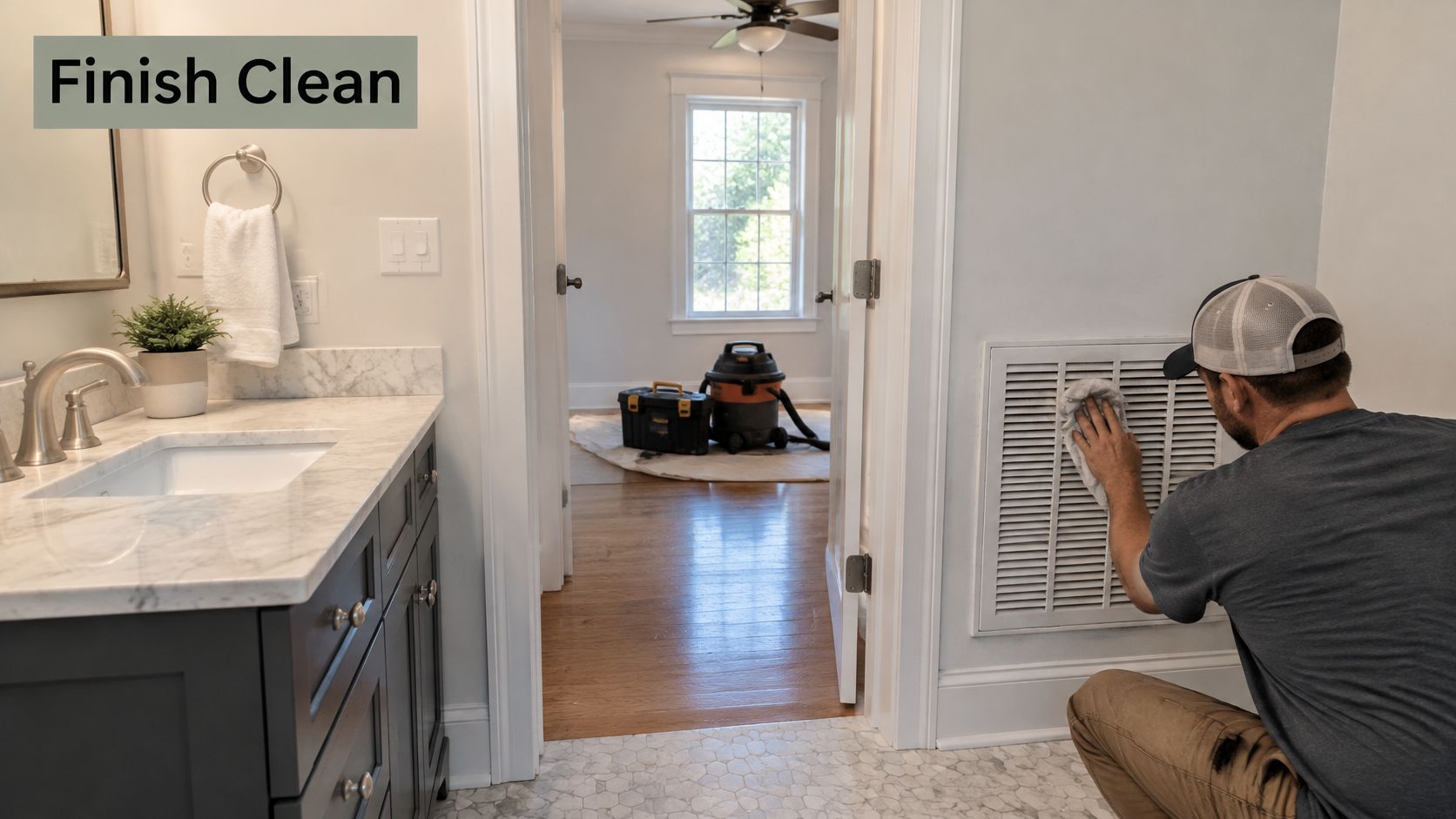
Say a family has replaced a vanity and retiled a bathroom in an older home. The visible fixtures look ready, but dust remains on detailed door trim and the accessible return grille nearby.
Their decision is to arrange the finish work and a later detail check before returning toiletries and towels. Recurring maid service can maintain the bathroom afterward; it shouldn't be expected to absorb unresolved installation residue into a normal appointment.
Homeowners comparing detail-oriented house cleaning and maid service in Fairhope should describe the renovation explicitly rather than booking it as routine upkeep.
A coastal rental needs to be guest-ready
An Orange Beach or Gulf Shores rental gets new cabinets between guest stays. Beach sand remains near the entrance, while installation dust sits behind drawer boxes and protective film covers appliance fronts.
The owner should give the property manager a ready date based on completed cleaning, not the installer's departure. Vacation rental cleaning handles a normal turnover; a property that trades have just left needs its construction residue addressed before beds, towels, photographs, and guest preparations are finalized.
The decision is whether the booking window allows the actual work. A tight check-in deadline doesn't make the cabinet dust disappear.
A repair leaves wet materials behind
A plumbing or roof repair in Daphne or Spanish Fort presents a different problem when walls, flooring, or insulation remain wet. The homeowner needs the leak corrected and the drying or material-removal decision resolved before treating the space as a normal cleaning job.
- Resolve moisture first: Ask the repair contractor which materials can be dried and which require removal.
- Separate scopes: Visible mold or damaged building materials may require remediation beyond house cleaning.
- Schedule the surface reset afterward: Remove remaining accessible dust and residue once the repair and drying work are complete.
OSHA's general-industry silica guidance concerns dust exposure controls, not moisture clearance; neither a dust inspection nor a surface wipe establishes that wet building materials are ready to enclose.
During hurricane season, storm-related repairs follow the same drying-first rule, with final cleaning scheduled after repair crews leave. Match your project to the right decision: finished-room detailing, guest-ready coordination, or moisture resolution before cleaning.
Book a Post Construction Clean on the Eastern Shore
A clear booking starts with a clear scope. Before scheduling, confirm when dusty work will be finished, which rooms and surfaces need attention, who will remove bulky debris, and whether the cleaner can use products suited to the new finishes. Also agree on how a final check will be handled if punch-list work creates fresh dust, and how cleaning fits around furniture delivery or key handover.
Get the scope onto the paperwork
Homeowners and renters in Fairhope, Daphne, Spanish Fort, Gulf Shores, and Orange Beach can ask for a written room list and clear exclusions. These make it easier to understand what “complete cleanup” covers. If you're coordinating a one-off job, GetBill's billing templates for one-off cleans can help organize invoice details. The cleaning scope should still specify the rooms, tasks, and any separate return visit.
Share the ready date with the contractor, mover, realtor, or property manager. Renters should confirm authorization and responsibility with their landlord before arranging cleaning related to repairs.
Match the service to the home's condition
A lived-in home with household buildup may need deep cleaning. An empty home changing occupants may suit move-in/move-out cleaning. Either way, make sure unresolved construction residue is included in the agreed scope.
After the renovation cleanup, standard cleaning or recurring maintenance can help keep the home tidy on a weekly, biweekly, or every-three-weeks schedule. Before booking, note the rooms involved, which trades have finished, and when the space will be ready for cleaning.
Sweet Home Cleaning Service offers standard cleaning, deep cleaning, move-in/move-out cleaning, and recurring maintenance. Homeowners and renters in Fairhope and nearby Eastern Shore and South Baldwin County communities can visit Sweet Home Cleaning Service to describe the remodel and confirm the appropriate cleaning scope and timing.

Let us handle the cleaning. Enjoy your home.



Sweet Home Cleaning Service
19940 State HWY 181, Suite E Fairhope, AL 36532
Phone: (251) 586-4081
sales@sweethomecleaningservice.com