How to Declutter Your Home Fast in 30 Minutes

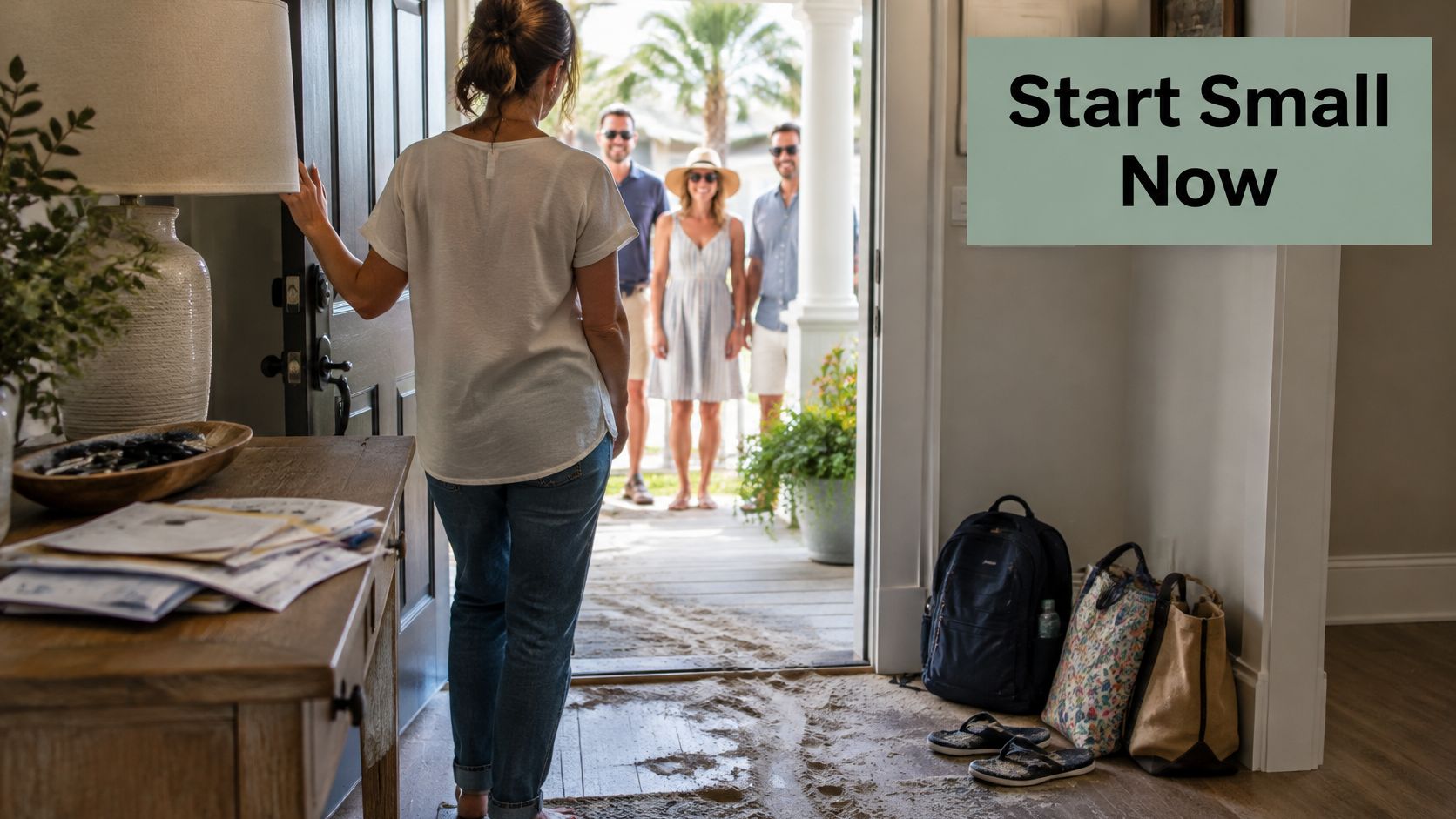
It's a humid Fairhope afternoon, guests are coming, and the front door barely clears the school bags. Sand from a Gulf Shores weekend is scattered across the entry, while yesterday's mail has taken over the kitchen counter. Sweet Home Cleaning Service's practical starting point is simple: make the house easier to move through before trying to make every cupboard look organized.
If you're figuring out how to declutter your home fast, don't empty the whole room. Choose a small area, make the easy decisions, and leave yourself enough time to finish.
Table of Contents
- A Short Sprint Instead of a Whole-House Purge
- Room Sprints You Can Finish Today
- Keep Only What Earns Its Spot
- Clear Walkways and Damp Corners First
- Hold the Space With a Nightly Close
- Book a Reset When the Timer Keeps Losing
A Short Sprint Instead of a Whole-House Purge
The tempting move is to open every closet and start pulling things out. But with company on the way, that turns manageable clutter into a floor full of unfinished decisions.
A fast reset means restoring safe movement and usable surfaces, not judging everything you own. In a 2025 Good Housekeeping UK reader-panel survey, 29% felt overwhelmed or apprehensive beforehand, 34% felt exhausted afterward, 10% regretted decisions, and 67% decluttered only when they had to. Those are reader-panel responses, not a prediction for your household, but they're a useful reason to keep today's job manageable.
Speed comes from fewer decisions, not from forcing yourself to decide the future of every possession.
For busy households in Daphne and Spanish Fort, the immediate deadline might be guests, a move, or getting ready to leave for a vacation-rental turnover. Sweet Home Cleaning Service's approach is to separate that immediate need from a larger household overhaul.
Define a finish you can reach
Set a 20 to 30 minute timer, choose a single zone, and stop when it rings. Leave photographs, detailed paperwork, and sentimental storage boxes for a dated session when nobody's waiting at the door.
If a move is driving the deadline, Container Self Store's decluttering tips for home movers offer a separate planning resource. Don't let move-wide planning consume the time you've reserved for clearing the entry today.
A clear doorway is a useful finish, even with an untouched closet beside it.
Room Sprints You Can Finish Today
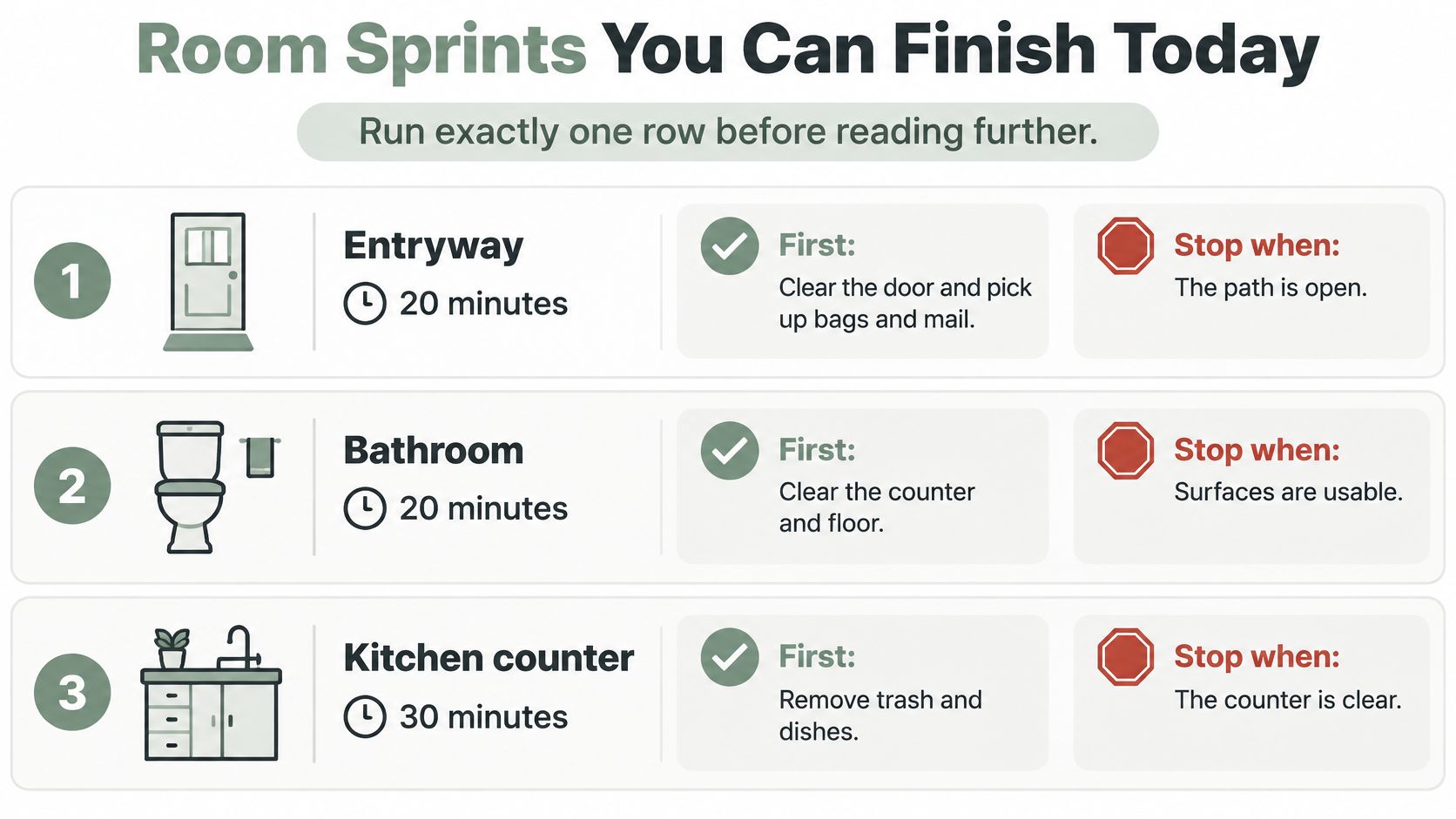
Choose exactly one row and run it before reading further. These are suggested working limits, not promises that every room can be finished on that schedule.
30-minute room sprints and stop rules
| Zone | Time box | Do first | Stop rule |
|---|---|---|---|
| Entry, stairs, and halls | 20 minutes | Clear shoes, bags, mail, and anything on the floor that blocks walking | Stop when the walkway is clear |
| Kitchen counters and sink | 20 minutes | Remove food trash, load dishes, and set aside basket items that belong in other rooms | Stop at the timer even if cabinets are untouched |
| Bathroom counters and tub edge | 20 minutes | Toss obvious trash, set duplicates aside, and clear items blocking vents | Leave drawers and the linen closet for later |
| Living-room tables and floor | 20 minutes | Clear remotes, paper, and toys from one surface and the floor around seating | Do not open closed cabinets |
| One category: clothes, toys, or pantry | 30 minutes | Dump that category unsorted and choose only what you would keep today | Bag donations and take them to the car |
Start with the highest-friction spot. After a Gulf Shores or Orange Beach weekend, that may be the sandy entry crowded with beach bags. In a Fairhope kitchen, it might be the counter where lunch boxes and groceries compete for meal-preparation space.
Before the clock starts, arrange your exits:
- Trash bag: Keep it open while working, then seal it before carrying it to the bin.
- Donation bag: Label it so nobody mistakes its contents for belongings awaiting storage.
- Relocation basket: Collect objects that belong elsewhere without walking away after every find.
Anything staying in the zone can remain in place. You don't need a holding container for a lamp that already belongs on its table.
Finish the zone without starting another
Putting things away is a household task in its own right: Stacker's reporting on Bureau of Labor Statistics time-use figures describes approximately 22 minutes spent putting away interior household items among people who performed that activity. That measure isn't a decluttering-session benchmark, so use your timer as a boundary rather than a performance target.
Carry full bags to the car or bin before sitting down. Deliver the relocation basket's contents without reorganizing their destination rooms. A second sprint is optional, not the price of calling the first one successful.
For cramped storage, use these home organization ideas for small spaces after the immediate obstruction is gone. If you're managing a household transition, DIYAuctions' guidance on sorting belongings before an estate sale belongs in a separate planning session, not the middle of a quick counter reset.
Use the visual reminder below to keep the scope small.
Keep Only What Earns Its Spot
A neat display isn't always the best starting point for reducing possessions. It can encourage you to compare similar objects and find a reason to save each one.
Across nine studies, a 2021 Journal of Consumer Research paper found that people retained fewer possessions when selecting what to keep from a disordered set rather than rejecting items from an orderly set. The effect depended on factors including waste aversion and comparison habits, so treat this as a useful decision method, not a universal guarantee.
Make the decision before the arrangement
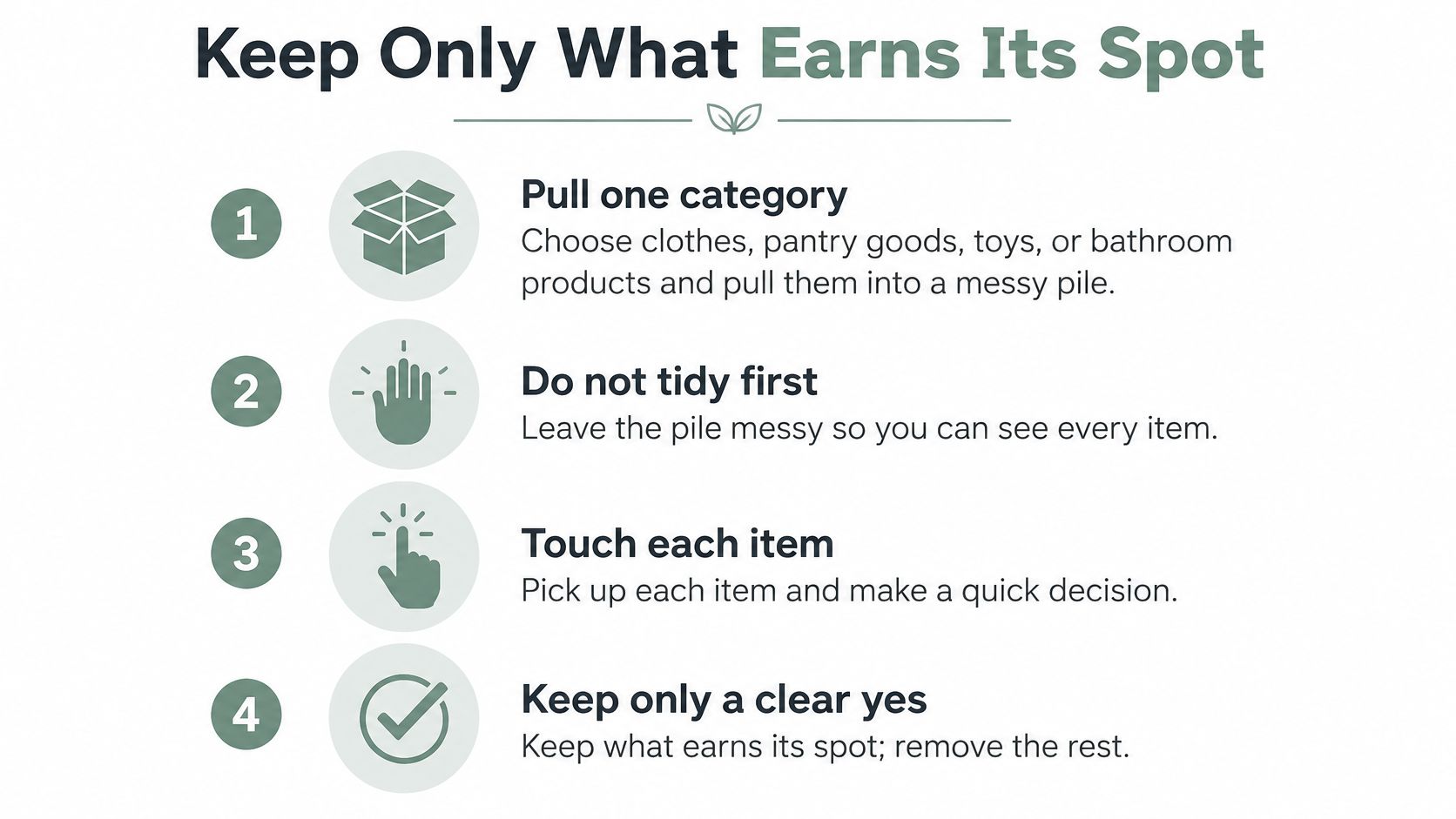
Pull a manageable category into an unsorted pile. Choose bathroom products, children's tops, or a small shelf of pantry goods. Don't empty every storage tub in the garage. The category must fit the working area without obstructing the exit.
Handle each item and decide whether you'd choose it today. Keep what's used, necessary, or valued. A quick decision is appropriate for an obvious duplicate, but not for someone else's belongings or an unfamiliar document.
Use labeled destinations. Set out keep, donate, relocate, and discard or recycle containers when working through a category pile. The labels prevent the pile from becoming another loose collection you'll have to sort again.
The useful distinction is between choosing keepers and finding storage for everything. Don't fold unwanted shirts into perfect stacks before deciding whether they belong in your home.
Protect against rushed decisions
Use a replacement screen only for low-stakes extras. As an optional working rule, consider releasing an unused duplicate if you could replace it for about $20 within about 20 minutes. Both conditions should be realistic for your budget and location. This isn't permission to discard essential tools, documents, medicine, sentimental pieces, or cables before checking what they connect to.
Give uncertainty a deadline. Put difficult decisions in a box marked with a 30-day review date. That's a suggested boundary, not an instruction to discard the contents automatically. Photograph a keepsake only if the photograph preserves what you value about it.
Remove the outgoing items. Carry donation and trash bags out of the room before reaching for cleaning supplies. Keep recycling separate where your collection arrangements require it, and don't donate broken or unsuitable items just to avoid disposal decisions.
Clean the space that remains. Vacuum the exposed floor, then wipe the cleared surface with a product suitable for its material. You'll spend your effort on the room you're keeping rather than objects already marked to leave.
Temporary storage can make sense during a genuine transition, but it needs a purpose and an end point. Standby Self Storage's example of storage between two Worthing homes offers a moving-specific comparison, not a reason to rent space for an indefinite maybe pile.
Decision safeguard: Fast decisions belong with replaceable extras. Important records and meaningful possessions deserve an unhurried appointment.
Clear Walkways and Damp Corners First
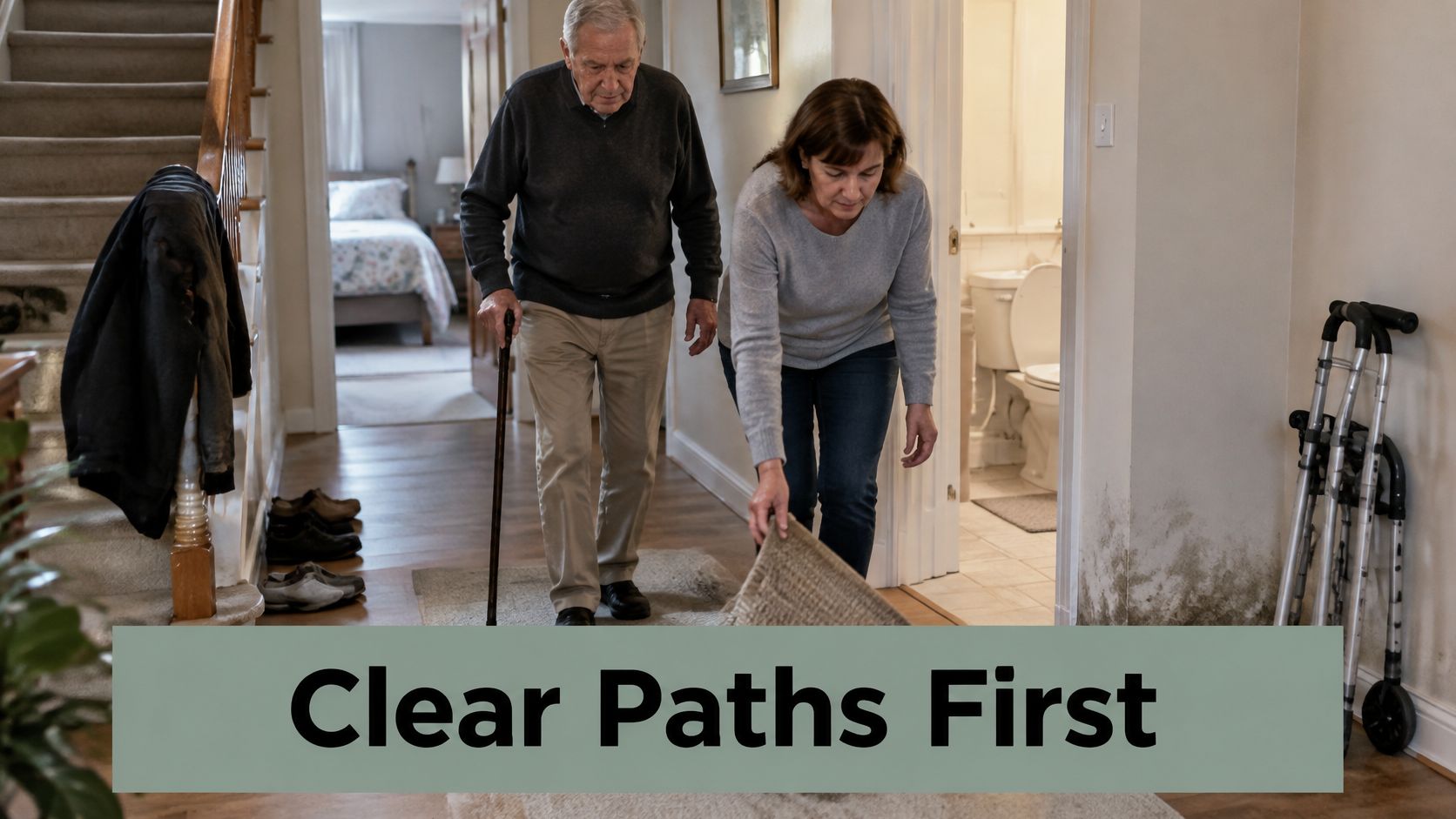
When someone uses a cane, walker, or wheelchair, the route through the house matters more than the appearance of a shelf. The same priority applies when an older household member needs clear, predictable access between rooms.
The CDC's fall-prevention guidance identifies clutter and objects on floors or stairs as trip hazards. Start with stairs, halls, entrances, the bedroom-to-bathroom route, and the floor around frequently used chairs.
Clear the route without moving the hazard
Move shoes and baskets into stable storage, not against the opposite wall where they still narrow the passage. Keep daily-use objects within comfortable reach so someone doesn't need to lean across a pile to retrieve them.
Treat a loose rug or unstable stack as a separate problem. Sliding it a short distance doesn't resolve it, and placing the relocation basket beside a walker creates a new obstruction.
- Check door movement: Make sure doors open without pushing against bags or stored goods.
- Check seating access: Leave room to approach and leave the chair normally.
- Check the return trip: Walk the route in both directions rather than judging it from the doorway.
Check moisture after access
For Gulf Coast homes, blocked airflow and hidden dampness deserve attention before a decorative shelf. The U.S. Environmental Protection Agency's mold course recommends indoor relative humidity below 60%, ideally between 30% and 50%, because higher humidity increases the likelihood of mold.
Use a small humidity meter rather than guessing from how the room feels. Run air-conditioning as needed, consider dehumidification when conditions call for it, and arrange repairs for leaks. Decluttering can expose dampness, but it doesn't repair the source.
In Fairhope bathrooms, laundry corners, and along exterior walls, move stored goods away from vents and inspect the space they concealed. After beach time in Gulf Shores or Orange Beach, shake sand from entry mats outside before vacuuming indoors.
For hurricane-season preparation, keep this sprint focused on access: remove stored bins from drainage paths, group patio belongings so they're easier to bring inside, and keep exterior equipment reachable. Leave gutter work for appropriate equipment and safe conditions.
Cabinets can stay imperfect. Clear passageways and accessible, dry storage areas are the more useful finish.
Hold the Space With a Nightly Close
Leave deliberate empty space in storage. A drawer packed to its edges gives the next grocery purchase, school paper, or charging cable nowhere to go except the counter.
I recommend aiming for about 15 to 20 percent free capacity as a practical storage allowance, not a research-established threshold. Count the keepers and measure the shelf before buying a basket, drawer divider, or label. Buying containers first can leave you storing the same excess more neatly.
Give the household an easy landing place
Put the everyday items where people reach for them: school bags near their departure point, remotes near seating, and incoming mail beside a clearly defined processing spot. Don't build a system that requires opening several lids to put away something used constantly.
Evidence supports reducing visual clutter without promising a particular personal outcome. A ScienceDaily report on a study of 501 adults describes an association between cluttered homes and lower well-being and life satisfaction; competing visual stimuli can also make attention harder to direct. A usable counter is a sensible target, without turning decluttering into a health claim.
Maintenance test: The best storage system is one the household can use when everyone is tired.
Keep the daily habit small
Try a 10-minute nightly close as your household routine:
- Return misplaced objects: Empty the relocation basket instead of letting it become permanent storage.
- Clear a horizontal surface: Restore the kitchen preparation area or the table needed for tomorrow's breakfast.
- Process incoming paper and packages: Open them, separate packaging, and place action items in their designated spot.
Put the donation bag in the car the same day, then assign its drop-off to an actual errand. Keep the dated decision box visible enough to review, rather than burying it in the garage. For difficult keepsakes, a small representative collection may suit your space better than keeping every related object.
Use a realistic house cleaning schedule to separate surface upkeep from possession decisions. Weekly or biweekly cleaning can maintain floors and bathrooms after the item volume drops, while the nightly close keeps those areas accessible between visits.
Only schedule another larger reduction when a zone loses its working margin. An ordinary evening's untidiness doesn't require another whole-house purge.
Book a Reset When the Timer Keeps Losing
If several sprints end with the same rooms unusable, the issue may be scope rather than effort. Guests, a move, or a seasonal handoff can leave too little time to sort belongings and handle the cleaning afterward.
Sweet Home Cleaning Service is based in Fairhope and works at your pace and comfort level, without judgment. You keep control of every ownership decision. Help should give you structure without pressuring you to release belongings you are not ready to part with.
Match the help to the unfinished work
Our professional home organization services suit busy families short on time, people overwhelmed by belongings, home-based workers, and households preparing for a new baby, downsizing, or moving. Organization can be combined with cleaning for a full reset.
Choose the cleaning around the actual need:
- Standard house cleaning: Routine kitchens, bathrooms, and floors once clutter is cleared.
- Deep cleaning: A fuller refresh for overlooked areas and buildup.
- Recurring cleaning: Weekly, biweekly, or monthly upkeep.
- Move-in/move-out cleaning: Cleaning for an occupancy change or handover.
Family homes in Daphne and Spanish Fort face the same trade-off: limited time has to cover both belongings and cleaning. Name the rooms that stopped your sprint so the work can be planned around them.
Sweet Home Cleaning Service offers organization support and cleaning to turn a stalled decluttering effort into usable rooms and a manageable routine. Homeowners and renters in Fairhope and the surrounding Eastern Shore and Gulf Coast can visit Sweet Home Cleaning Service for service options, then call Sweet Home Cleaning Service to get help deciding whether Home Organization is right for you, naming the entry, kitchen, bathroom, or other rooms that still need attention.

Let us handle the cleaning. Enjoy your home.

Sweet Home Cleaning Service
19940 State HWY 181, Suite E Fairhope, AL 36532
Phone: (251) 586-4081
sales@sweethomecleaningservice.com