How to Get Rid of Mildew Smell in House: A Gulf Coast Guide


A mildew smell stops coming back when indoor relative humidity stays below 60%, ideally between 30% and 50%, and anything that got wet dries within 24 to 48 hours. Those two numbers decide whether the odor is a one-week nuisance or a permanent tenant, and no amount of fragrance changes either one.
You know the moment. You open a Fairhope cottage that's been shut up since June, or you walk into a Gulf Shores rental twenty minutes before guests arrive, and the air hits you: damp, sour, faintly like the inside of a cooler left in the garage. Nothing in the room looks dirty. That's what makes it maddening.
Sweet Home Cleaning Service works these homes every week from Fairhope through Daphne, Spanish Fort, Gulf Shores, and Orange Beach, and the pattern repeats. The smell isn't a cleaning failure. It's a moisture reading your nose picked up before your eyes did.
Table of Contents
- What That Mildew Smell Is Telling You
- Match the Fix to Where You Smell It
- How to Get Rid of Mildew Smell Step by Step
- When to Stop Cleaning and Call a Professional
- Keep the Mildew Smell from Coming Back
- Book Your Mildew-Smell Reset in Fairhope
What That Mildew Smell Is Telling You
Picture a 1970s cottage off the Eastern Shore, closed for three weeks in August with the thermostat pushed to 80 to save power. The furniture is fine. The floors are clean. And the moment the door swings open, the whole house smells like a wet towel left in a gym bag. That odor is biology, not dust: mold, mildew, and odor-producing bacteria digesting damp organic material and releasing gases as they go. Stop the moisture and the biology stops. Spray a candle and it keeps eating.
The EPA's mold and moisture guidance frames it the same way. Moisture control is the foundational step, because cleaning alone never addresses the conditions that let mold and mildew return. The agency's target is specific: keep indoor relative humidity below 60%, with an ideal range of 30% to 50%, and check it with a humidity gauge rather than trusting your nose. A cheap digital hygrometer from a hardware store gives you a number in seconds. Put one in the bathroom, one in the laundry room, and one in whichever room smells worst.
Here are the five numbers and rules that decide the outcome:
| Target | Number or rule | Why it matters |
|---|---|---|
| Indoor humidity | Below 60%, ideally 30-50% | Mold and mildew thrive above 60%; a hygrometer confirms the reading |
| Drying window | 24-48 hours | Materials dried inside this window rarely develop a lasting odor |
| Hard-surface bleach mix (optional) | Max 1 cup bleach per 1 gallon water | Stronger is not better and it must never be mixed with ammonia |
| Porous items | Discard if not fully dry within 48 hours | Carpet padding, ceiling tile and upholstery hold odor reservoirs |
| Recheck | 24-48 hours after cleaning, room closed overnight | A returning smell means a moisture source is still active |
Water has to be stopped at the source too. Plumbing leaks, condensation on cold pipes, roof leaks, and materials that stayed wet all keep feeding the smell no matter how often you scrub. The EPA advises drying wet areas quickly, ideally within 24 to 48 hours, using fans or a dehumidifier to speed it up. On the Gulf Coast that window matters more than it does inland, because outdoor air in July is often wetter than the air inside your house. Opening windows can raise the reading instead of lowering it. If you want to go deeper on ventilation and filtration, this collection of indoor air quality articles covers the equipment side well.
If you can smell mildew, moisture is still present. The smell is the receipt, not the problem.
What follows is the room-by-room source map, the full removal protocol, the habits that hold the result, and the point where DIY stops being safe.
Match the Fix to Where You Smell It
Start with location. Most mildew smells in coastal homes trace back to one of seven places, and each has a different first move.
| Where you smell it | Likely source | First fix | Call a professional if |
|---|---|---|---|
| Bathroom | Wet grout, shower curtain, under-sink leak | Run the exhaust fan 20 minutes after showers, wash hard surfaces, fix drips | Odor persists or the ceiling drywall stains spread |
| Bedroom closets | Exterior-wall condensation, stored damp clothes | Air the closet out, wash fabrics, add a hygrometer | Smell returns within a week of cleaning |
| Living-room carpet | Spills, pet accidents, damp padding | Extract and dry within 48 hours | Padding or subfloor still smells after the surface dries |
| HVAC vents | Moldy ducts, dirty drain pan, clogged condensate line | Replace the filter and stop using the system until checked | Musty air comes from every vent when the AC runs |
| Laundry room | Wet towels left damp, dryer not venting outside | Dry loads fully and confirm the dryer exhausts outdoors | Wall or floor stays damp with no visible leak |
| Whole house after a storm | Roof leak, flood water, soaked insulation | Dry within 24-48 hours and discard soaked porous items | Sewage backup, widespread staining, or smell across several rooms |
| Vacation rental between guests | AC switched off between bookings, damp linens | Run the AC or dehumidifier continuously and dry linens fully | Guests report musty odor despite turnover cleaning |
Hard, nonporous surfaces are the forgiving category. The CDC allows cleaning mildew with household products, soap and water, or a diluted bleach solution of no more than 1 cup of household laundry bleach per 1 gallon of water, per its mold cleanup guidance. Open windows and doors while you work, follow the label, and never mix bleach with ammonia or any other cleaner, because the combination can produce poisonous gas.
Two questions sort every row on that table. Is the material hard and nonporous, or porous and still damp? Hard surfaces get cleaned; porous ones that stayed wet get planned for disposal. And did the smell come back after the last cleaning? If yes, the source is still active and no product will out-run it. If you're working through the bathroom row, this walkthrough on how to clean bathtubs and showers covers the grout and curtain detail that keeps a shower from re-seeding the odor.
One row deserves its own note: a storm that pushes water in through a floor drain or a backed-up basement leaves a smell that returns every time it rains. Understanding what causes basement drain backups and how to fix them is worth ten minutes if your lower level has ever taken on water.
How to Get Rid of Mildew Smell Step by Step
A room can smell clean right after scrubbing and turn musty again by morning. Treat the odor as a moisture check: find where water is coming from, dry materials promptly, then see whether the smell returns.

1. Find the source. Close the doors and check rooms one at a time. Look under sinks, around toilet bases, along window sills, behind washer hoses, inside the AC drain pan, and along the exterior wall of a musty closet. Use a hygrometer in the room with the strongest odor and record the reading. Done check: you can identify the room, the likely material, and its humidity reading.
2. Stop the water. Tighten a supply fitting, patch a roof leak, clear a condensate line, or address a failed dryer vent before cleaning. Moisture control is the starting point in the EPA's mold guidance, which recommends drying wet materials within 24 to 48 hours. Done check: a paper towel pressed against the repaired spot stays dry. If it becomes damp again, the source is not fixed.
3. Protect the work area. Wear protective gear suited to the cleanup, keep other people out of the work zone, and avoid carrying damp or contaminated items through clean rooms. Close doors between the affected room and areas already cleaned. If the vents smell musty, switch off the HVAC system while addressing the source. Done check: the work area is contained and the system is not moving the odor through the house.
4. Dry the room and track humidity. Use a dehumidifier and, where appropriate, fans to move air across wet surfaces. Open windows only when outdoor air is dry enough to help. In humid Eastern Shore weather, an open window can add moisture instead of removing it, so check the hygrometer rather than relying on how the room feels. EPA guidance recommends keeping indoor humidity below 60%, ideally between 30% and 50%. Done check: the surface feels dry and the room's reading is below 60%.
5. Clean hard, nonporous surfaces. Wash residue with detergent and warm water, scrub, and rinse. Bleach is not required for routine cleanup, and the EPA does not recommend biocides such as bleach as the routine answer to mold. Follow any product label and ventilate the area; never mix bleach with ammonia or other cleaners. If considering vinegar, understand where vinegar's disinfecting power stops before relying on it. Done check: the surface dries without a film and smells neutral up close.
6. Assess porous items. Carpet padding, ceiling tile, damp drywall, upholstered furniture, mattresses, and paper can hold moisture and odor. If they stayed wet and cannot be thoroughly dried and cleaned, removal may be needed rather than deodorizing. Closets can trap damp fabrics and restrict airflow; this guide to removing mildew from a closet covers those concerns. Done check: no remaining item or hidden surface feels damp, including cushion undersides and carpet backing.
7. Recheck before calling it finished. Once the room is dry, close it overnight and check the odor again after 24 to 48 hours. A returning smell points to a remaining moisture source or damp material, such as carpet backing, a wall cavity, or an HVAC component. Check the humidity reading too. If it rises again, keep investigating rather than adding fragrance.
The order matters: cleaning a damp room before drying it can leave odor in porous materials. Fix the moisture source, dry the area, clean suitable surfaces, then verify that both the smell and humidity stay down.
When to Stop Cleaning and Call a Professional
Most mildew advice assumes unlimited DIY. Some jobs get worse when you keep going. The CDC's mold cleanup guidance sets protective equipment expectations, including at least a NIOSH-approved N95 respirator for substantial exposure, and warns that bleach mixed with ammonia produces toxic vapor. It also notes that fans shouldn't be run once mold is actively growing where airflow could spread contaminated particles. That's the opposite of the "point a fan at it" instinct, and it's why containment comes before drying on anything bigger than a spot.
Stop and call someone when any of these is true:
- The growth covers a large area or returns after two clean-and-dry cycles. Repeated returns mean the reservoir is inside an assembly you can't reach.
- The odor comes from the vents, or the system seems to spread it. Running that system moves spores through the house. Get the HVAC assessed before you run it again.
- Contamination follows sewage or floodwater. That's a category of cleanup, not a scrubbing job.
- Mold is likely inside walls, insulation, or under flooring. Porous assemblies rarely come back once saturated.
- Someone in the house is sensitive to mold. They should be out of the work area, not supervising it.
The deodorizers deserve a blunt verdict. Fragrance sprays, essential oils, ozone generators, and baking soda or charcoal pouches either mask the smell or absorb a little of it while the moisture keeps feeding growth. Bleach isn't a universal cure either, and the EPA doesn't recommend biocides as the default method for routine mold removal. The steps that work are unglamorous: isolate the area, ventilate safely, correct the water source, and bring in qualified remediation or an HVAC technician when a stop condition applies.
Local trades can carry part of the load. A carpet cleaner can save rugs that are merely damp rather than colonized, and a pressure washer can pull algae and mildew off siding and driveways where the growth keeps re-seeding the interior.
Practical rule: if the smell survives two proper clean-and-dry cycles, you're no longer looking at a cleaning problem. You're looking at a building problem.
Keep the Mildew Smell from Coming Back
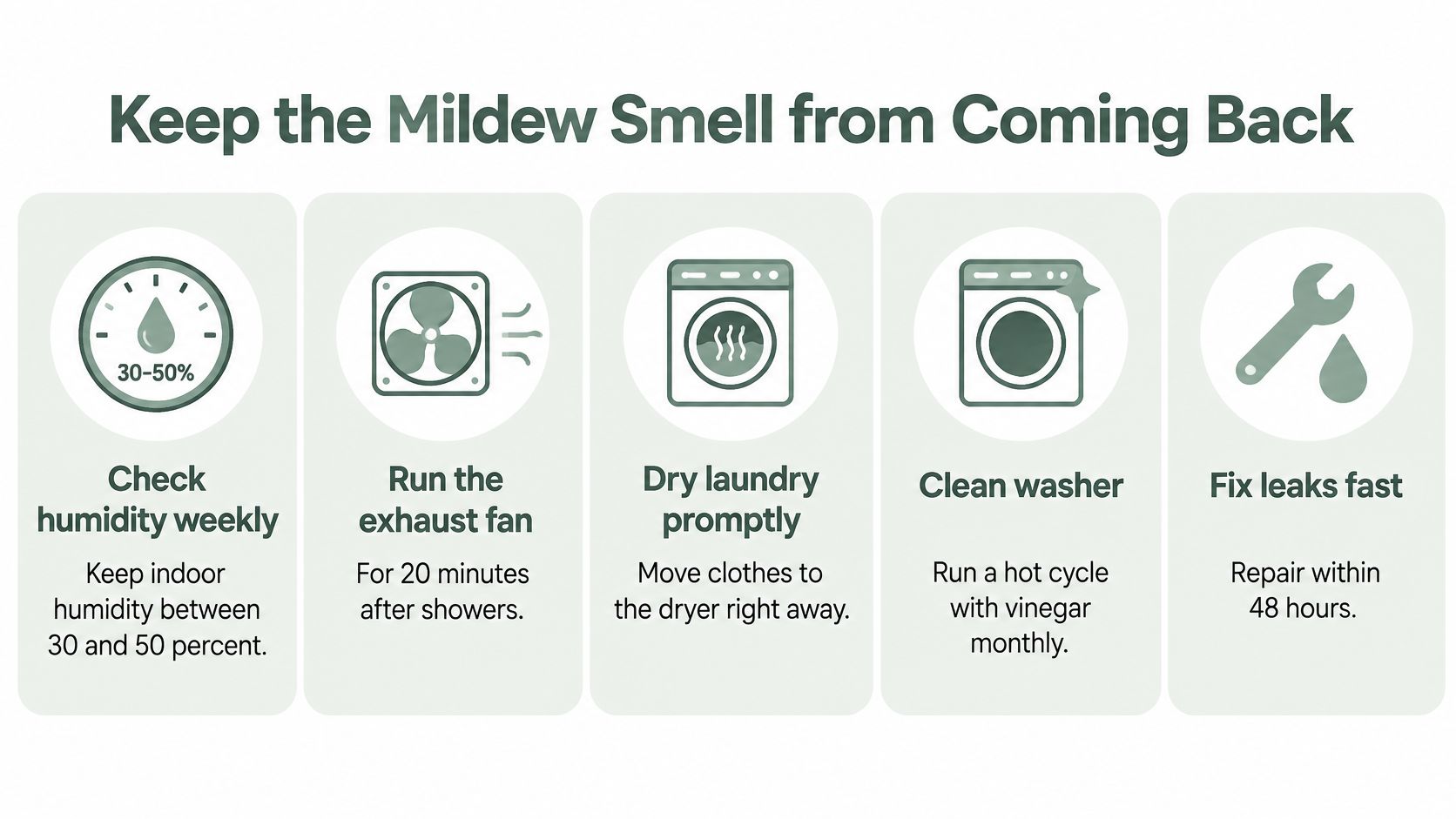
Prevention is a set of habits with frequencies attached, not a product you buy once. Hold indoor humidity between 30 and 50 percent, check the bathroom and laundry room gauges weekly, and treat any reading above 60% as a task for that day. Run bath and kitchen exhaust fans during showers and cooking and for about 20 minutes after, and confirm by feel at the exterior flap that the dryer vents outdoors. Fix any drip within 24 to 48 hours, before the material underneath has time to become a reservoir.
Storm season raises the stakes. FEMA advises drying homes and belongings as quickly as possible, within 24 to 48 hours if feasible, and removing and discarding items that can't be properly cleaned and dried in that window, using fans and dehumidifiers once the electricity is safe, per its guidance on preventing mold after a disaster. That's not theoretical on the Gulf Coast. In a 2025 study of 13 Hurricane Ian-affected homes, median indoor relative humidity measured 64.7%, well above the threshold that supports persistent dampness and mildew growth, according to the researchers publishing in Applied Sciences.
Free habits, the ones that cost nothing and do most of the work:
- Run the fan past the shower. Twenty minutes after you step out, not thirty seconds.
- Dry the load fully. Move laundry straight to the dryer, leave the washer door open between loads, and rewash anything that sat overnight.
- Give exterior walls breathing room. Pull furniture a few inches off the wall so air moves behind it.
- Wash and fully dry towels, bath mats, and shower curtains. A damp shower curtain liner is a mildew farm.
- Keep the system running in an empty rental. In Gulf Shores and Orange Beach, leaving the AC off between guests is the fastest way to walk into a musty unit.
One-time purchases worth planning for: a digital hygrometer for each problem room, a dehumidifier sized for the square footage, a HEPA-bag vacuum for carpet and upholstery, and a cheap moisture meter for checking suspect walls before you commit to a repair.
A recurring cleaning schedule on a weekly, biweekly, or monthly cadence does quiet work here too, because someone is opening closets, moving bath mats, and looking behind the toilet base often enough to catch a problem while it's still a smell rather than a repair.
Prevention costs less than replacing damaged materials. Every time.
Book Your Mildew-Smell Reset in Fairhope
A mildew smell is a prompt to check moisture, not to add fragrance. Track down the damp source, dry affected materials within 24 to 48 hours, clean suitable surfaces, and keep indoor humidity in the 30 to 50 percent range. Cleaning helps, but the odor can return if the source stays wet.
If the odor has spread across several rooms, Sweet Home Cleaning Service offers deep cleaning for hard-to-reach areas, including baseboards, doors, window sills, the inside of windows, light fixtures, wall hangings, ceiling fans, vents, switch plates, and accessible areas beneath beds and furniture. The service also includes the outside of kitchen and bathroom cabinets. Sweet Home Cleaning Service offers recurring cleaning weekly, biweekly, or every 3 weeks, along with move-in/move-out cleaning and customized cleaning plans. Its cleaning products are safe and eco-friendly.
Call (251) 586-4081 to book a cleaning. A fresh-smelling home starts with controlling the moisture that feeds the odor.
Sweet Home Cleaning Service provides cleaning in Fairhope, Daphne, Spanish Fort, Gulf Shores, Orange Beach, and neighboring communities on Alabama's Eastern Shore and in South Baldwin County. Choose deep cleaning for a detailed reset, or a recurring schedule to support routine upkeep. Visit Sweet Home Cleaning Service to book.

Let us handle the cleaning. Enjoy your home.

Sweet Home Cleaning Service
19940 State HWY 181, Suite E Fairhope, AL 36532
Phone: (251) 586-4081
sales@sweethomecleaningservice.com