Post Construction Cleaning Services Residential Guide

A kitchen remodel in Fairhope is finally finished, but the room still tells the story: grit sits in the window tracks, a pale film coats the cabinet tops, and dust shows inside the vent covers. A standard house cleaning can take care of visible dirt and everyday buildup, but fine renovation dust needs a different plan and a careful order of work.
Sweet Home Cleaning Service provides post-construction cleaning to remove dust, debris, and residue after construction or remodeling. For homeowners and renters in Fairhope, Daphne, Spanish Fort, Gulf Shores, and Orange Beach, the right scope depends on what the trades did, what surfaces need attention, and whether the home has any older-material concerns.
Table of Contents
Why Renovation Dust Needs More Than a Standard Clean
In a Fairhope kitchen remodel, the counters may look ready to use while dust remains along the cabinet tops and inside vent covers. That happens because renovation work can put dust and other pollutants into the home, even when the main work area is contained. The U.S. Environmental Protection Agency's remodeling guidance identifies demolition, sanding, scraping, casing removal, flooring installation, painting, and finishing as activities that can generate indoor contaminants. Fine dust can travel beyond the active work zone, then settle on trim, fixtures, cabinetry, floors, and other horizontal and vertical surfaces.
A routine clean is designed for household upkeep. It can address visible mess, but it isn't automatically scoped to capture fine particles across the room, clean vent covers, and wipe surfaces that construction dust has reached. The EPA recommends protective barriers over heating, cooling, and ventilation registers to help prevent contamination of duct systems. That makes vents part of the cleanup checklist, not an afterthought.
A thorough post-construction clean is staged: remove visible debris, capture loose dust from high and low surfaces, then wipe and wash surfaces to pick up residue. Painting, finishes, or flooring may also call for a ventilation and curing period before the final cleaning or return to normal use. The EPA advises maximum ventilation during installation and for at least 72 hours afterward for activities that may release odors or pollutants, including painting, finishes, and flooring.
Self-check: Did the project involve sanding, demolition, or flooring? Are dust-covered vents, trim, or fixtures still present?
If so, ask for a scoped post-construction clean rather than assuming a standard visit will cover the work. Sweet Home Cleaning Service offers both post-construction cleaning and move-in/move-out cleaning. Homeowners in Fairhope and nearby cities can request a job scoped to the work completed. For a practical guide to what can linger after remodeling, see how to deal with dust from construction.
Rough, Final and Detail Phases Explained
| Phase | When it happens | What it removes | Done when |
|---|---|---|---|
| Rough clean | After demolition and heavy trades, before finish work | Bulk debris, drywall dust, sawdust, packaging, and fragments | Floors are clear of debris and loose material is bagged out |
| Final clean | After painting, flooring, and fixture installation | Settled fine dust on ceilings, walls, trim, cabinets, and floors | Wet cloths come away clean and no dust shows on wiped surfaces |
| Detail clean | Just before move-in or handover | Residue on glass, fixture faces, door tracks, appliance interiors, and bathrooms | Surfaces pass a close walkthrough and vents are cleaned |
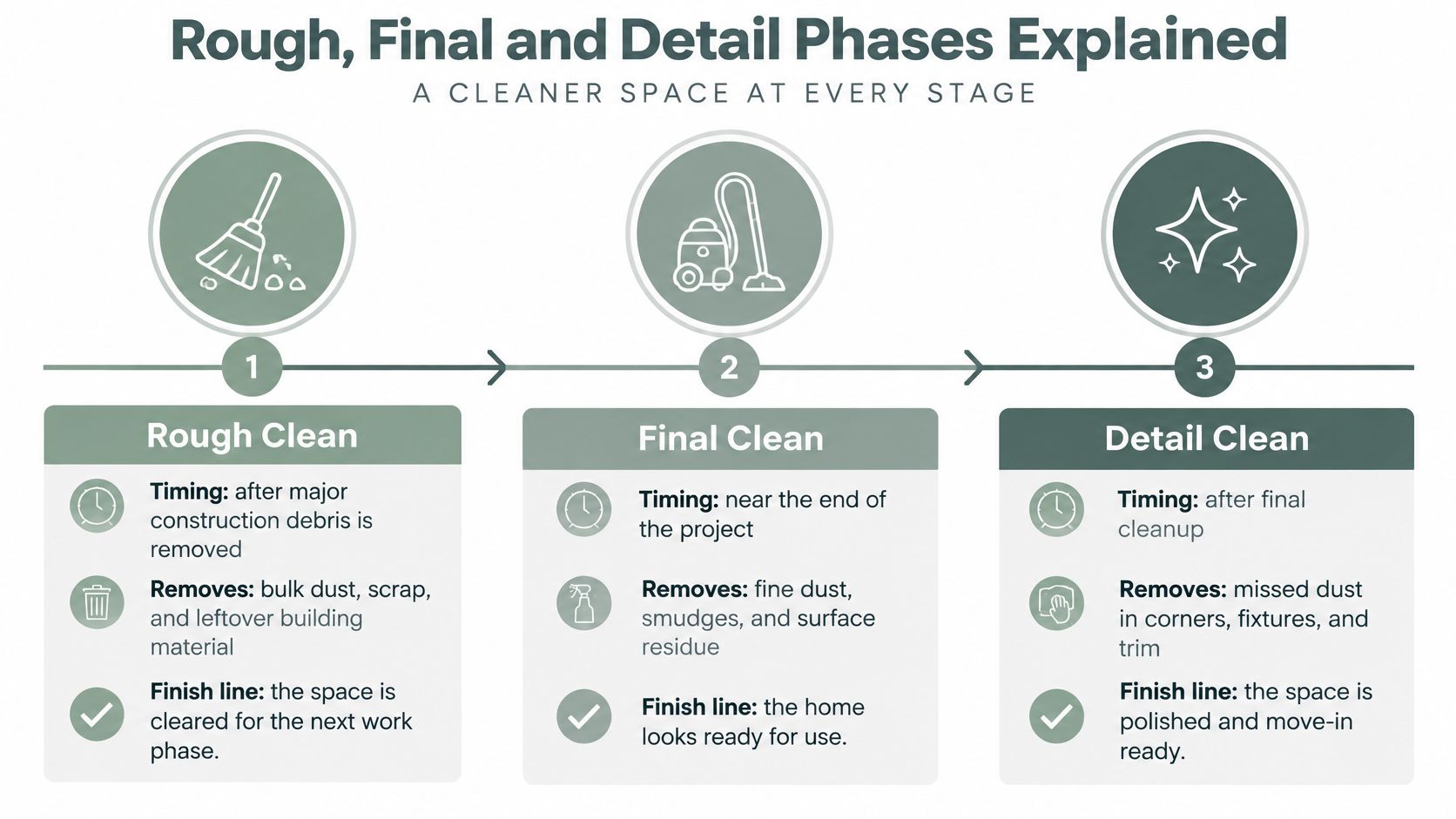
These phases follow the progress of the work. The rough clean comes after demolition and heavy trades, when crews can remove bulk debris, packaging, sawdust, drywall dust, and fragments without disturbing completed finishes. Its finish line is a cleared space ready for the next work phase, not a polished, move-in-ready home.
The final clean follows painting, flooring, and fixture installation. A HEPA-filtered vacuum is used from ceilings and high surfaces down, followed by damp wiping of cabinets, trim, sills, doors, and floors. The aim is to remove settled dust and surface residue after the main installation work is finished.
Detail cleaning is the last pass before handover or move-in. It covers close-up work on glass, fixture faces, door tracks, appliance interiors, bathrooms, and polished surfaces. The finish line is a clean walkthrough with no visible dust or residue on the agreed surfaces.
Why the phases work as a sequence
Each pass removes material that may be stirred up or left behind during the previous phase. If a crew tries to polish glass before dusty work is finished, new dust can land on it; if they mop before vacuuming, loose debris can be dragged across the floor. The stages are useful because they separate bulk removal from fine cleaning and final touch-ups.
A homeowner in Daphne or Spanish Fort who books only a final clean may still find that a later repair or move-in has left fingerprints and fresh dust that call for a detail pass. Sweet Home Cleaning Service's post-construction cleaning removes dust, debris, and residue after building or remodeling work, with the quote reflecting the requested scope.
Which phases does your project need, based on the work completed and whether the construction crew is still active?
Dust Removal Methods That Protect Finished Surfaces
| Method | Best for | Avoid | Why it matters |
|---|---|---|---|
| HEPA vacuum | Ceilings, vents, ledges, window tracks, and settled dust on floors | Unfiltered or leaking vacuums | A filter rated at 99.97 percent at 0.3 microns keeps fine dust out of the air |
| Damp microfiber wipe | Cabinets, trim, sills, doors, switch plates, and glass | Dry dusting on finished surfaces | Captures the film left after vacuuming without spreading it |
| Wet mop | Hard floors after HEPA vacuuming | Standing water on wood and laminate | Lifts residue from floors using fresh water and rinse changes |
| Polishing | Glass, stainless steel, and sealed counters after wiping | Surfaces still carrying grit | Restores shine only after grit is removed, reducing scratch risk |
| Dry sweeping or brushing | Not recommended | Any surface with settled renovation dust | Pushes fine particles back into the air to resettle |
A genuine HEPA vacuum is the starting point for fine settled dust, not an ordinary vacuum with a standard filter. OSHA's silica-control guidance defines a HEPA filter as at least 99.97 percent efficient against particles measuring 0.3 micrometers. The machine also needs sound seals, hoses, bags, and an exhaust path so collected dust doesn't bypass the filter and return to the room.
Vacuuming picks up loose particles. Damp microfiber wiping then captures the fine film that remains on cabinets, trim, sills, doors, and other finished surfaces. Dry dusting may look quick, but it can push residue from one surface into the air or onto another. Dry sweeping and dry brushing are poor choices for settled renovation dust for the same reason. Compressed air can also spread dust unless a capture-and-ventilation system controls the cloud.
Work from high surfaces down
Start with ceilings, vents, light fixtures, and other high surfaces, then move to walls, ledges, and window tracks before cleaning floors. Dust falls as you work, so cleaning the floor first means doing it again after particles settle. For homes where concrete, tile, stone, masonry, or similar work created dust, wet methods and HEPA-filtered vacuuming help avoid stirring the material back into the air.
In Gulf Shores and Orange Beach, beach sand tracked in on shoes can add grit, while Gulf Coast humidity can make dust cling to surfaces. A cloth may need rinsing or changing as it picks up residue; using a loaded cloth over several surfaces just transfers dirt around. Keep polishing for the last step, after vacuuming and wiping have removed grit.
After the clean, run a dry finger over a sill or cabinet top. If it leaves a mark, that surface needs another pass.
How a Crew Runs the Cleanup Room by Room
A reliable room-by-room process starts by keeping belongings out of the dust zone and ends with a visual check before the room is returned to use. The EPA's lead-safe renovation guidance calls for daily cleanup during work and thorough cleaning before containment barriers come down. Its recommended final sequence includes HEPA vacuuming followed by wet wiping and wet mopping, with no visible dust, paint chips, or debris left in the area.
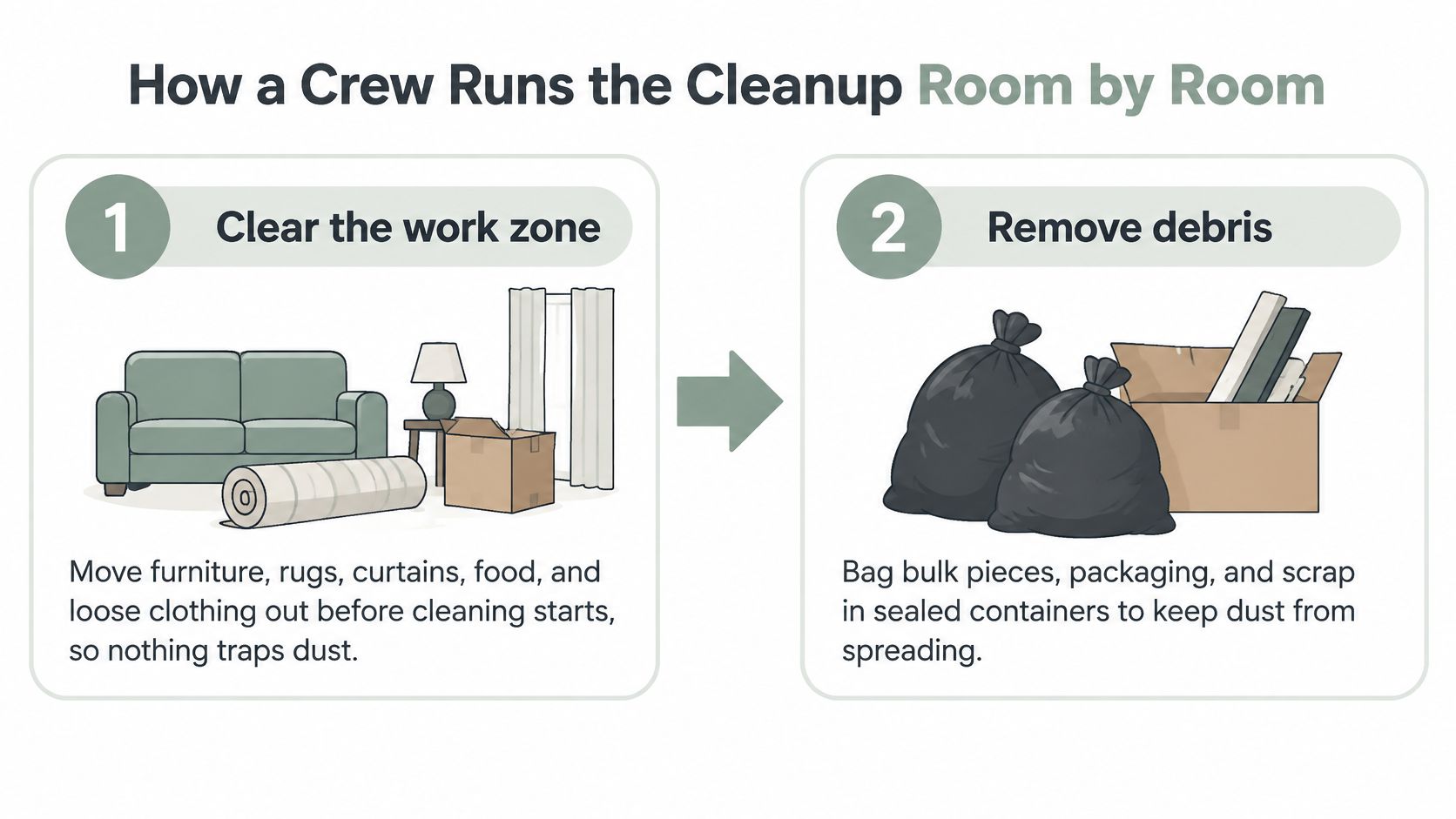
Clear the work zone. Move furniture, rugs, curtains, food, and loose clothing out before cleaning starts. Items left in the room can hold dust and require their own cleaning before they return.
Remove debris. Bag bulk pieces, packaging, and scrap in sealed containers. Don't dry sweep first, because that can launch fine dust from the floor into the air.
Vacuum overhead surfaces. Use a HEPA vacuum on ceilings, vent covers, and other high surfaces, then work down walls, ledges, and window tracks. This order catches dust where it settles and avoids redoing lower surfaces.
Wet-wipe fixed surfaces. Use clean cloths on cabinets, trim, doors, switch plates, and sills, changing cloths when they become visibly dirty. A clean cloth picks up residue; a loaded one spreads it.
Clean the floors. HEPA-vacuum floors before mopping, then use fresh water and change the rinse water often. That keeps loose grit from being dragged across finished flooring.
Finish fixtures and wet areas. Clean fixture faces, glass, appliance exteriors, and bathrooms after the dust-removal work. These surfaces are easier to check once the main dust is gone.
Check for haze. Hold a light at a low angle during the walkthrough to make film and missed dust easier to spot. Re-wipe any surface that shows a haze.
Confirm the room is ready. Check that no visible dust, paint chips, or debris remain before the room returns to normal use. A homeowner can follow the walkthrough with a clean, dry fingertip across a cabinet top or sill.
For a project that runs over multiple weeks, daily cleanup keeps debris from accumulating while trades continue. The thorough final pass still belongs after the work is complete and containment can be removed.
Safety, Older Homes and Insurance Questions to Ask
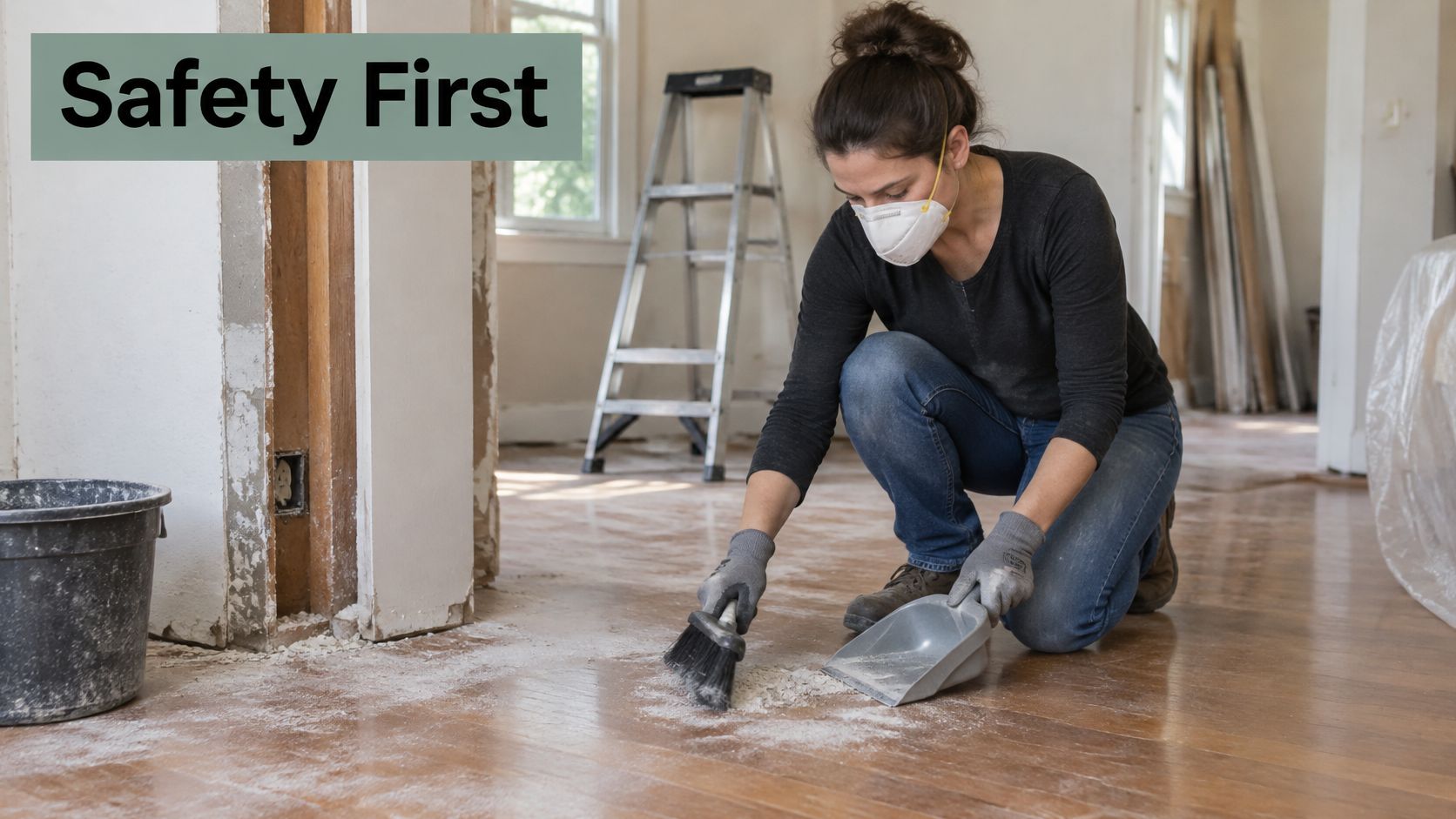
A routine post-construction clean handles ordinary dust and debris. It does not make a home safe when demolition has disturbed a suspected hazardous material. That work needs testing or certified remediation before cleaning starts.
Concrete, mortar, drywall compound, tile, stone, and masonry dust can irritate lungs, and enclosed rooms let fine particles build up fast. Older paint, old tile, pipe insulation, and worn insulation deserve extra caution in homes built before 1978. Renovation can disturb lead or asbestos containing materials, so pause work and get answers instead of sweeping up anything suspicious.
Post Construction Cleaning removes dust, debris, and residue after construction or remodeling. Hazardous material remediation is a separate job with different training and disposal rules. A cleaner who stops at a suspicious material is protecting the household and the finishes.
Before booking in Daphne, Spanish Fort, or Fairhope, ask the remodeler and the cleaning company for specifics:
- How old is the home? Share the construction date, especially for a pre-1978 property.
- What materials were disturbed? Ask about old paint, tile, insulation, and pipe insulation.
- Was testing done? Request available test results and disposal records.
- What credentials apply? Ask the remodeler for relevant certifications and the work practices used.
- Did containment stay in place? Confirm how the work area was separated from living areas.
- Does the cleaner carry insurance? Ask for proof of insurance before work starts.
I recommend getting those answers before accepting a fast or low cost booking. Families with children, buyers, and landlords need a clear boundary between ordinary cleaning and remediation before anyone brings a vacuum into the room.
What Shapes Your Timeline and Quote
Two identical floor plans can price differently. The difference comes down to how much fine dust is still in the air, how many high surfaces need hand work, and how many passes the home needs. Post Construction Cleaning removes dust, debris, and residue after construction or remodeling, and the quote should reflect that specific workload.
| Factor | Effect on timeline | Effect on quote |
|---|---|---|
| Home size and room count | More rooms add hours to each phase | Quote scales with the rooms and areas in scope |
| Phases requested | Each added phase is a full pass through the home | Each added phase adds scope to the quote |
| Dust level and debris volume | Heavy sanding or demolition adds removal time | Extra debris removal is included when requested |
| Ceilings, vents, and high surfaces | Added time for HEPA passes from top down | Quote lists these areas when included |
| Bathrooms and fixtures | More time for tubs, tile, tracks, and glass | Quote reflects each fixture and bathroom in scope |
| Ventilation window after painting or finishes | Final clean is booked after the ventilation period | Final clean is booked after the ventilation period; ask for the quote to confirm how timing affects scope |
| Coastal conditions | Sand and humidity mean extra wiping passes | Quote reflects the extra wiping in scope |
A useful quote describes the actual home and tasks. List rooms, phases, dust level, vents and high surfaces, fixtures, and access. Special requests, such as deep cleaning or post-construction cleanup, are included in the customer's quote. For another perspective on household cleaning estimates, see how much cleaners charge per hour.
Paint, finishes, and new flooring keep releasing odor and residue after the crew leaves. Plan the final clean after that ventilation period, not while the coating is still curing. A short wait protects the result and avoids rewiping the same film twice.
Storm season shapes timing on the coast. The Atlantic hurricane season runs from June 1 through November 30, although storms can occur outside those dates, according to NOAA's tropical cyclone climatology overview. That calendar matters in Gulf Shores and Orange Beach, where a repair between guests needs a fast detail pass on glass, fixtures, and bathrooms.
When requesting an estimate, send the home's square footage, the phases needed, and the construction end date. Name every room and task so nothing important drops off the scope.
What to Expect From a Professional Crew
A Daphne homeowner finishing a kitchen and bathroom remodel needs a final and detail clean. Before work begins, the crew walks through the home, checks the requested rooms and surfaces against the quote, identifies areas that need extra protection, and asks which belongings the homeowner has already moved.
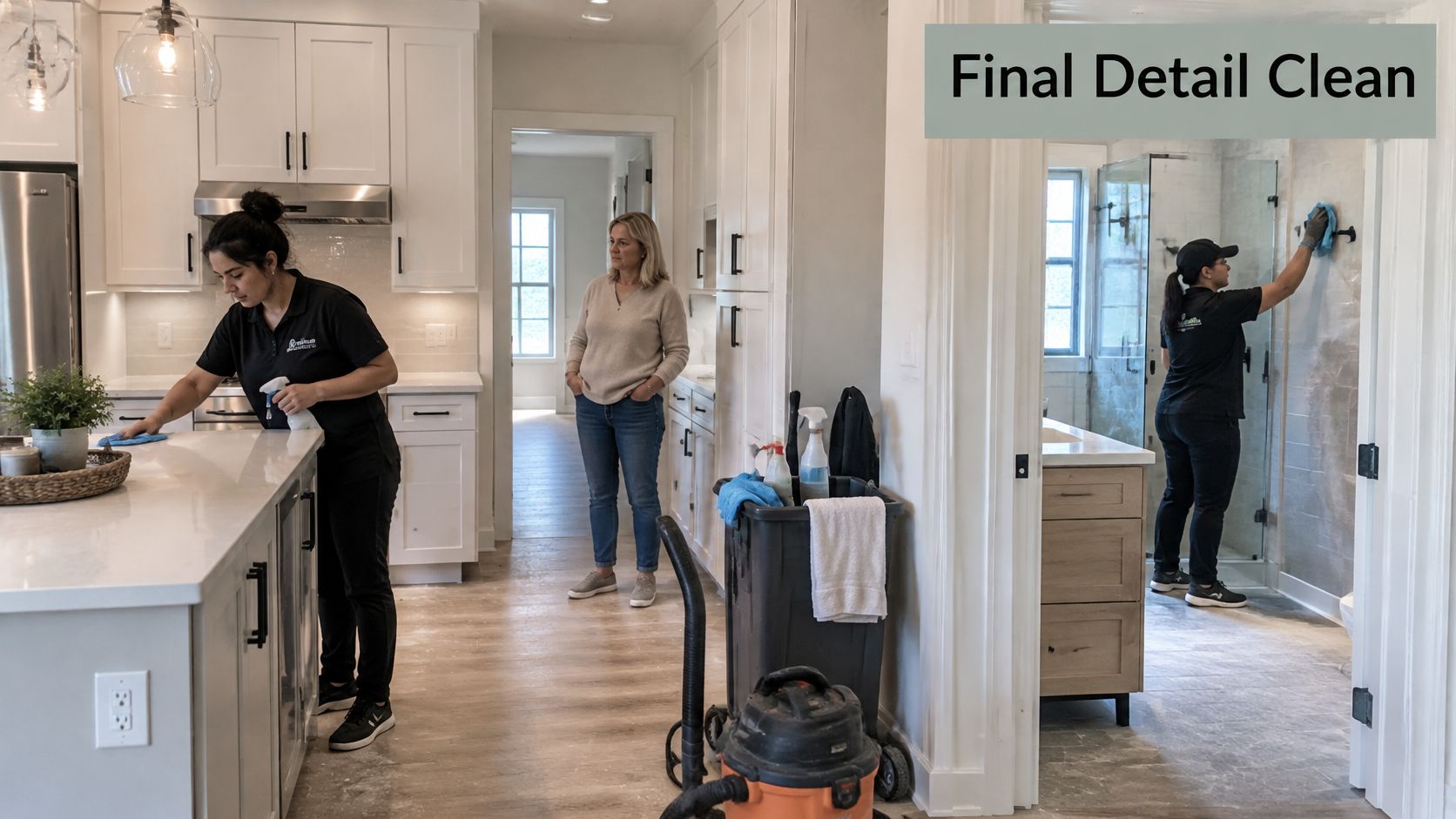
On arrival, the crew confirms before moving anything personal and keeps the work zone separated from living space. The team clears the room, removes debris, works from high surfaces down, and finishes with wet cleaning and a close check. That order helps keep dust from landing on surfaces that have already been cleaned.
At the end, the homeowner and crew walk the rooms together. They check vents, window tracks, fixtures, and bathrooms, then re-wipe any surface where a low-angle light shows haze. A final walkthrough is more useful than a quick glance from the doorway because dust often remains on edges and tucked-away surfaces.
A turnover after a repair
A Gulf Shores vacation rental may need a focused detail pass between guests after a repair. The scope can call out glass, fixtures, and bathrooms so the handover addresses the affected areas. Sweet Home Cleaning Service also provides vacation rental cleaning and has cleaned and helped manage a local Airbnb.
Before the crew arrives, clear the agreed work area, keep children and pets out, and share the contractor's schedule so the cleaning can be coordinated with the finished work. At the end, use a checklist to review the surfaces included in the scope rather than assuming every room or appliance interior was included.
Book Your Post-Construction Clean in Fairhope
First, decide whether the project needs a rough, final, or detail clean. Next, identify which surfaces need HEPA vacuuming and damp wiping. Then resolve any older-home or hazardous-material questions before routine cleaning begins.
To request a free quote from Sweet Home Cleaning Service, provide:
- The address and home size
- The construction end date
- The phases you need
- The rooms, surfaces, and fixtures in scope
- Any concerns about the home's age or materials disturbed
Sweet Home Cleaning Service serves Fairhope, Daphne, Spanish Fort, Gulf Shores, and Orange Beach. The company offers weekly, biweekly, monthly, and one-time cleaning services, so homeowners can move from a post-construction reset to recurring maid service when they want ongoing help. A deep cleaning can also suit a home that needs a broader refresh. For hosts in Gulf Shores and Orange Beach, vacation rental cleaning can help prepare a property for its next guests.
A clear scope helps the cleaning visit match the work the remodel left behind. For homeowners who want a closer look at service coverage in town, see detail-oriented house cleaning and maid service in Fairhope. If you're comparing ways to coordinate appointments and household tasks, software to manage cleaning appointments can offer useful scheduling ideas.
Send the square footage, phases, and construction end date when you request your quote. That gives the team a practical starting point for defining the rooms and surfaces to be cleaned.
Sweet Home Cleaning Service offers post-construction cleaning to remove dust, debris, and residue after remodeling, along with move-in/move-out and recurring home cleaning. Homeowners and renters in Fairhope and the surrounding Eastern Shore and Gulf Coast area can visit Sweet Home Cleaning Service to book or request a free quote.

Let us handle the cleaning. Enjoy your home.
Sweet Home Cleaning Service
19940 State HWY 181, Suite E Fairhope, AL 36532
Phone: (251) 586-4081
sales@sweethomecleaningservice.com