
Post Construction Clean Up Checklist: 8 Steps for 2026

A renovated room can look finished while fine dust still rests on trim, vents, floors, fixtures, and the tops of doors. If you're a Fairhope homeowner or renter preparing to move in, a dependable post construction clean up checklist needs to do more than list rooms to wipe. It should set the order of work, identify the right PPE, contain dust, account for each material, and end with a room-by-room inspection.
Sweet Home Cleaning Service provides a local option for post-construction cleaning, deep cleaning, and move-in or move-out cleaning in Fairhope, Daphne, Spanish Fort, Gulf Shores, and Orange Beach. The workflow below uses three phases: safety and rough removal, detailed cleaning, and final verification. Gulf Coast humidity can slow drying, spring pollen can settle on freshly cleaned surfaces, and beach sand can quickly reappear in homes near the coast. For another practical reference, review these Pine Country cleaning recommendations, then adapt the sequence to your home, renovation, and occupancy plans.
Table of Contents
1. Dust and Debris Removal from All Surfaces
Phase one, safety and rough removal
Start only after contractors have removed tools, leftover materials, and large debris. Wear task-appropriate PPE, including gloves, eye protection, sturdy footwear, and respiratory protection suitable for the conditions. If the renovation involved lead, asbestos, significant silica dust, mold, or unknown materials, stop and involve a qualified specialist rather than treating the project as ordinary house cleaning.
Containment comes before cleaning. Close interior doors, seal unaffected areas with plastic sheeting, and use ventilation or negative pressure where appropriate. Guidance for construction indoor air quality recommends containment and HEPA filtration, with cleaning that moves from ceilings and vents down to walls, fixtures, and floors. A true HEPA filter captures at least 99.97% of particles at 0.3 microns, the most penetrating particle size, according to NIOSH construction indoor-air guidance.
Practical rule: Don't start with the floor. Dust from a ceiling fan, crown molding, or vent will land on it again.
Use controlled passes
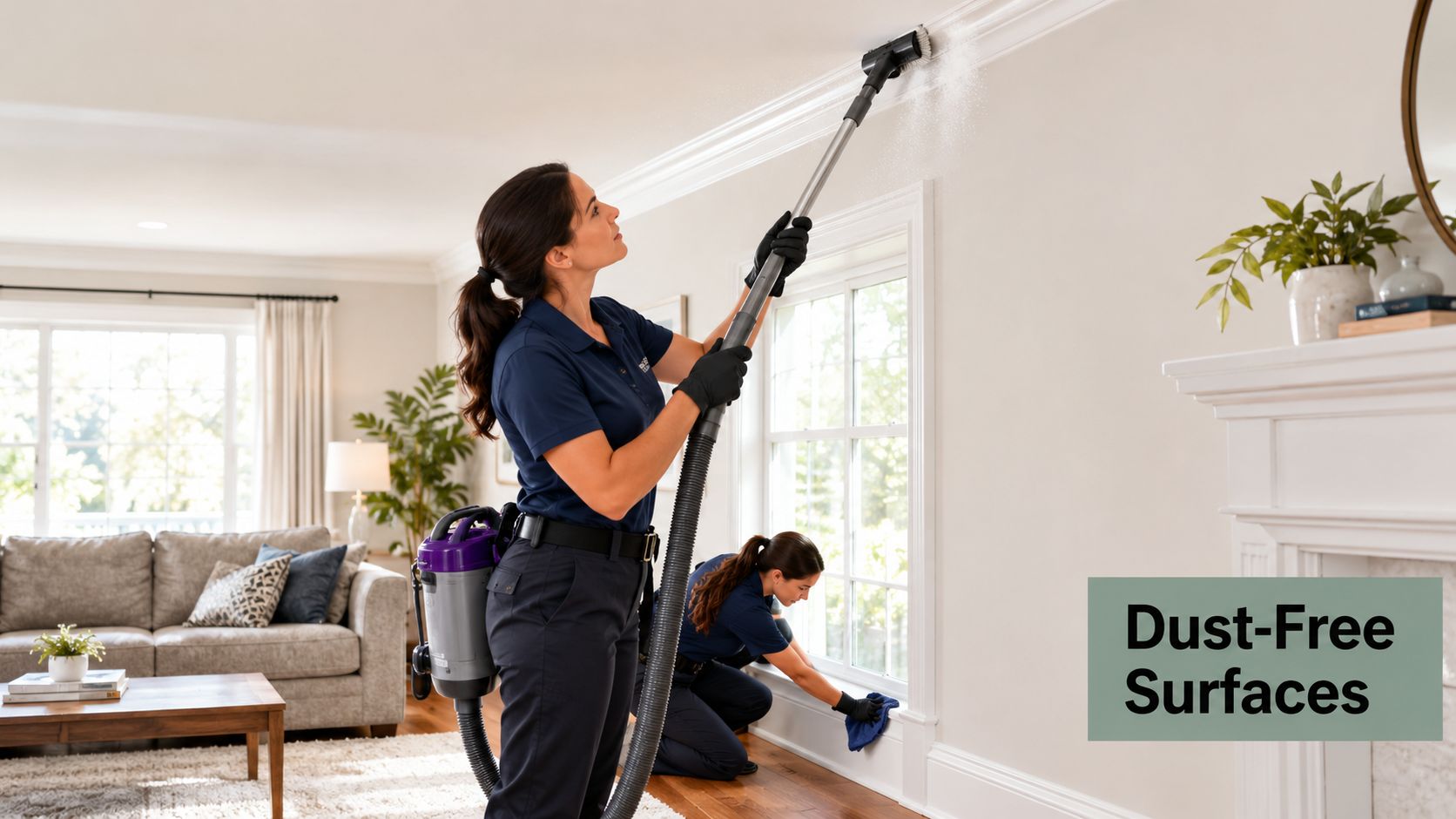
Work room by room, keeping doors closed between spaces. Use a HEPA-filtered vacuum on ceiling corners, light fixtures, fan blades, crown molding, door frames, baseboards, windowsills, and HVAC grilles. Follow with damp microfiber wiping and an appropriate cleaner for the surface. Dry dusting, feather dusters, and ordinary sweeping can put fine particles back into the air instead of removing them.
Give special attention to decorative trim and horizontal ledges. In a newly renovated Fairhope home, fine drywall dust can remain on upper cabinets and then mix with spring pollen. In Gulf Shores or Orange Beach, tracked beach sand adds a heavier abrasive residue that can scratch finished surfaces if it's dragged across them.
The EPA's renovation cleanup guidance recommends end-of-day cleaning during renovation, thorough cleaning at the end of the job, HEPA vacuuming, wet wiping, and careful removal of plastic sheeting. Finish all overhead and wall cleaning before vacuuming and washing floors, then repeat the floor pass if dust has resettled.
For additional planning around clearing site debris after construction, separate rough debris removal from fine-detail cleaning. A pile of packaging, scraps, and plaster pieces needs a different handling method from dust on a light fixture.
2. Window and Glass Cleaning
Phase two, detailed cleaning
Construction leaves more than dust on glass. Check windows, sliding doors, mirrors, shower enclosures, sidelights, and glass cabinet doors for paint drips, silicone, adhesive, fingerprints, and protective-film residue. Look at the frames and sills before cleaning the panes. If those areas remain dusty, they can contaminate the glass during the final wipe.
Dried residue needs a cautious approach. A suitable scraper may remove a paint spot from compatible glass, but use a clean blade, controlled pressure, and the correct angle. Don't use abrasive pads, rough paper, or an untested chemical on coated glass, tinted surfaces, acrylic, or nearby painted trim. Adhesive and silicone can require different products, and a small test area is safer than discovering a damaged finish across an entire door.
Match the method to the conditions
Clean frames and sills first, then wash the glass. On large panes, apply the solution evenly and use a squeegee with overlapping strokes. Wipe the blade between passes and detail the edges with a clean microfiber cloth. Working in early morning or on an overcast day helps prevent the solution from drying before you can squeegee it.
A Gulf Coast home may need an exterior inspection even when the interior looks clear. Humidity, pollen, and salt-laden residue can make streaks more visible in changing light. In Spanish Fort or Daphne, check both sides of each window from several angles, especially where remodeling dust has settled on screens, tracks, and lower corners.
Glass is not finished when the pane is clear. Tracks, frames, screens, handles, and sills are part of the same cleaning task.
Use a separate cloth for dirty frames and clean glass. Replace cloudy water rather than spreading construction residue across the next window. For shower enclosures, identify the surface before scraping. Some doors tolerate glass-safe tools, while specialty coatings can be damaged by aggressive treatment.

3. Floor Deep Cleaning and Protection
Phase two, detailed cleaning
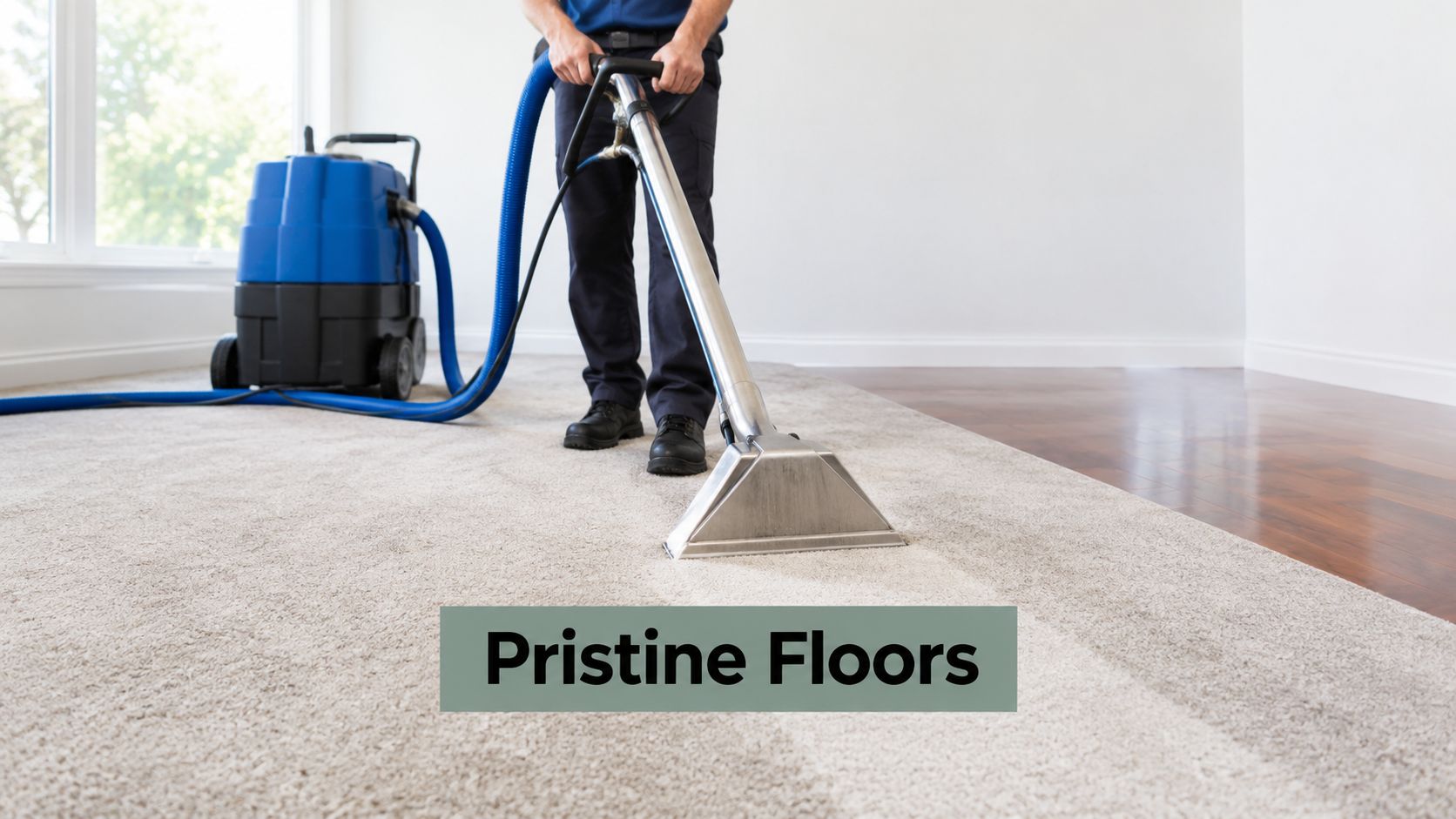
Floors should be cleaned after overhead dust is under control, but the method depends on the material. Identify hardwood, tile, laminate, vinyl, natural stone, and carpet before bringing in water or chemicals. A cleaner that works on tile may dull wood, damage a finish, or leave residue on resilient flooring.
Begin with dry HEPA vacuuming. Remove protective coverings and adhesive residue carefully, then inspect for footprints, plaster, grout haze, paint, spills, and tracked-in sand. Wet cleaning comes after loose dust is gone. Otherwise, water can turn fine dust into a film that spreads across the floor.
Adjust the pass for each surface
- Hardwood: Use minimal moisture and a pH-neutral product formulated for wood. Never leave standing water around seams, thresholds, or unfinished edges.
- Tile and grout: Vacuum first, then use a suitable grout cleaner and brush for embedded dust. Don't assume a uniform method is safe for glazed tile, unglazed tile, or natural stone.
- Laminate and vinyl: Use controlled moisture and follow the flooring manufacturer's care guidance. Keep water away from joints and edges.
- Carpet: Surface vacuuming may not remove construction dust that has reached the pile. Professional hot-water extraction can provide a deeper clean, but the carpet must dry fully.
- Transitions and edges: Detail baseboard lines, corners, closet thresholds, and areas beneath appliances where debris collects.
In Gulf Coast humidity, drying is part of the cleaning plan, not an afterthought. Increase appropriate airflow, keep foot traffic off damp flooring, and avoid closing a room while moisture remains. Walking across a wet floor brings back sand and residue, particularly in Gulf Shores and Orange Beach vacation rentals where guests may enter from outdoor areas.
For a broader deep cleaning service, consider whether the project needs more than a one-time floor pass. Newly renovated homes often need a second vacuuming and detailing pass after airborne particles settle. OSHA guidance also favors wet methods or HEPA-filtered vacuuming over dry sweeping where respirable silica exposure could occur, as explained in its silica housekeeping requirements.
4. Kitchen and Bathroom Fixture Polishing
Phase two, detailed cleaning
Fixtures often reveal whether a post-construction clean was careful or rushed. Inspect faucets, sinks, cabinet hardware, towel bars, light fixtures, switch plates, appliance handles, shower controls, and exposed plumbing for dust, fingerprints, water spots, paint splatter, silicone, and protective coatings.
Use microfiber cloths and match the product to the finish. Chrome, stainless steel, brushed metal, painted hardware, brass, and specialty finishes don't all respond to the same cleaner. A product labeled for stainless steel may be unsuitable for another metal. Test it in an inconspicuous location, particularly when you're removing adhesive or a stubborn coating.
Clean for appearance and operation
Remove protective film slowly rather than pulling it across a finished edge. If residue remains, soften it with a compatible product and use a non-damaging tool. Harsh chemicals and aggressive scraping can leave a bigger repair than the original mark.
Faucet aerators deserve practical attention. Remove and soak them when appropriate, then reinstall them correctly so construction sediment doesn't interfere with water flow. Wipe around faucet bases, drain collars, shower tracks, and backsplash edges, where dust and dried residue often remain hidden.
Use this order for a compact fixture pass:
- High surfaces first: Clean light fixtures and upper cabinet hardware before counters and sinks.
- Contact points next: Detail handles, switch plates, door pulls, and faucet levers.
- Wet areas after dust: Remove residue from sinks, tubs, shower walls, and counter edges.
- Dry finishing last: Buff metal and polished surfaces immediately so water spots don't form.
A bathroom in Fairhope may dry more slowly during humid weather, so leave surfaces open to air and inspect joints for remaining moisture. In a busy Eastern Shore household, fixtures also receive frequent contact as soon as the room is occupied. A careful final buff makes later maintenance easier without substituting polish for actual residue removal.
5. Appliance Interior and Exterior Cleaning
Phase two, detailed cleaning
Clean appliances after rough debris removal and before the final walkthrough. New or reinstalled refrigerators, ovens, microwaves, dishwashers, washers, and dryers may still carry packing residue, protective film, fingerprints, cabinet dust, and renovation debris. Gulf Coast humidity can keep interiors damp, while pollen and sand collect around doors, vents, and appliance gaps. Follow the manufacturer's instructions for stainless steel, glass cooktops, filters, interiors, and electronic controls.
Disconnect power when the manual requires it. Never spray liquid into controls, outlets, vents, or electrical openings. Use food-safe products on food-contact surfaces. Remove oven racks and soak them separately when suitable. Wipe refrigerator shelves and drawers individually instead of flooding the cabinet, then dry them fully before reinstalling.
Check working parts before handoff
Use a coil brush and vacuum on accessible refrigerator coils. Clean dishwasher filters and spray arms according to the manual, and inspect the drain area and door seal for plaster particles, labels, and packing material. Construction dust in these areas can restrict airflow, affect drainage, or transfer onto clean dishes.
Wipe stainless steel with the grain and dry it immediately. Lift protective film gently rather than scraping finished edges. For adhesive residue, test the recommended remover in a hidden spot first. Leave appliance doors open briefly so interiors can dry, but secure them when children or pets are present.
Use this deep-cleaning kitchen checklist alongside the appliance manuals. It helps separate ordinary kitchen buildup from post-construction residue and prompts checks of cabinet interiors, drawer boxes, vents, and spaces behind appliances.
Vacation rental turnovers require a final functional check after cleaning. Confirm that doors close, seals sit flat, filters and racks are correctly installed, and controls remain dry. Document scratches, dents, missing parts, and installation damage before use. Photograph the condition, notify the contractor, installer, or delivery company, and keep the appliance disconnected when safety requires it.
6. Wall and Ceiling Inspection and Touch-Up Cleaning
Phase two, detailed cleaning
Walls and ceilings need inspection under both natural and artificial light. Look for drywall dust, paint splatters, pencil marks, scuffs, adhesive, caulk smears, and areas where masking or construction traffic left residue. Textured ceilings and walls need a lighter touch because aggressive wiping can flatten texture or spread dust into the finish.
Start with a clean, dry microfiber cloth or a suitable HEPA vacuum attachment for loose dust. On painted walls, test any damp cleaner or melamine sponge in an inconspicuous area. A magic eraser can remove paint as well as a mark, especially on fresh or low-sheen finishes. Use adhesive remover sparingly and keep it away from vulnerable paint, trim, flooring, and caulk.
Cleaning removes residue. It doesn't replace a painter, drywall finisher, electrician, plumber, or builder when the surface itself is defective.
Separate cleaning from repair
Fresh paint splatters are generally easier to address than dried ones, but the surrounding finish still matters. Don't scrape aggressively near a new paint line. If a mark won't lift with a safe method, photograph it and identify it as a contractor touch-up rather than forcing the issue.
Minor cosmetic touch-ups may be appropriate when the correct paint is available and the surface is fully cured. Larger variations, visible seams, damaged drywall, chipped trim, uneven caulk, or incorrect paint color belong on a contractor punch list. Cleaning staff should not conceal construction defects under unapproved paint.
A post-construction cleaning service can help with dust, residue, walls, baseboards, doors, vents, glass, fixtures, and floors, while the builder handles repair work. This distinction is especially useful for older homes on the Eastern Shore, where existing surfaces may have different finishes from newly renovated rooms.
Take photos before and after touch-up cleaning. Record the room, surface, and issue so the homeowner, renter, property manager, or contractor can agree on what remains. In a vacation rental turnover, this documentation also helps separate renovation residue from ordinary guest damage.
7. HVAC System Cleaning and Duct Protection
Phase one continued, then verification
HVAC cleaning belongs near the transition between dust removal and occupancy verification because the system can redistribute fine particles after the visible mess is gone. Check whether supply registers, returns, air handlers, and accessible duct openings were protected during construction. Remove remaining plastic protection carefully so it doesn't release trapped dust into the room.
Vacuum accessible portions of returns and supply ducts with appropriate equipment, then clean grilles and registers. Replace the HVAC filter and mark the replacement date. If renovation dust was significant or the system ran without protection, arrange an inspection and ask an HVAC professional whether duct cleaning is warranted.
Treat air pathways as part of the home
Don't stop at floor registers. Check return cavities, filter housings, blower compartments where accessible to a qualified technician, and the areas around air handlers. Construction dust in these pathways can travel through the home after the walls and counters appear clean. EPA school construction guidance recommends controlling dust with vacuuming and related source-control methods rather than moving it around with brooms, as described in its indoor air quality construction guidance.
The system may need closer observation during the first weeks of occupancy if dust was substantial. Follow the equipment manufacturer's filter guidance and change filters as appropriate. Don't place an unapproved filter in a system that restricts airflow. If you see moisture, suspect mold, notice unusual odors, or find substantial debris inside ductwork, involve an HVAC or indoor-environment professional instead of reaching deep into the system yourself.
Gulf Coast humidity adds another reason to inspect accessible areas for moisture. Cleaning alone doesn't resolve a ventilation, drainage, or condensation problem. In Fairhope, Daphne, or Spanish Fort, schedule this check before moving furniture against returns or blocking registers with rugs and storage.
OSHA's technical guidance for dusty lead cleanup identifies HEPA-equipped vacuuming as the reliable method for dusty surfaces and warns that traffic, vibration, and air currents can re-entrain dust from ledges, floors, and equipment. That principle applies to the final HVAC check as well. A surface isn't finished if normal airflow can put settled dust back into circulation.
8. Final Walkthrough and Quality Verification
Phase three, verification
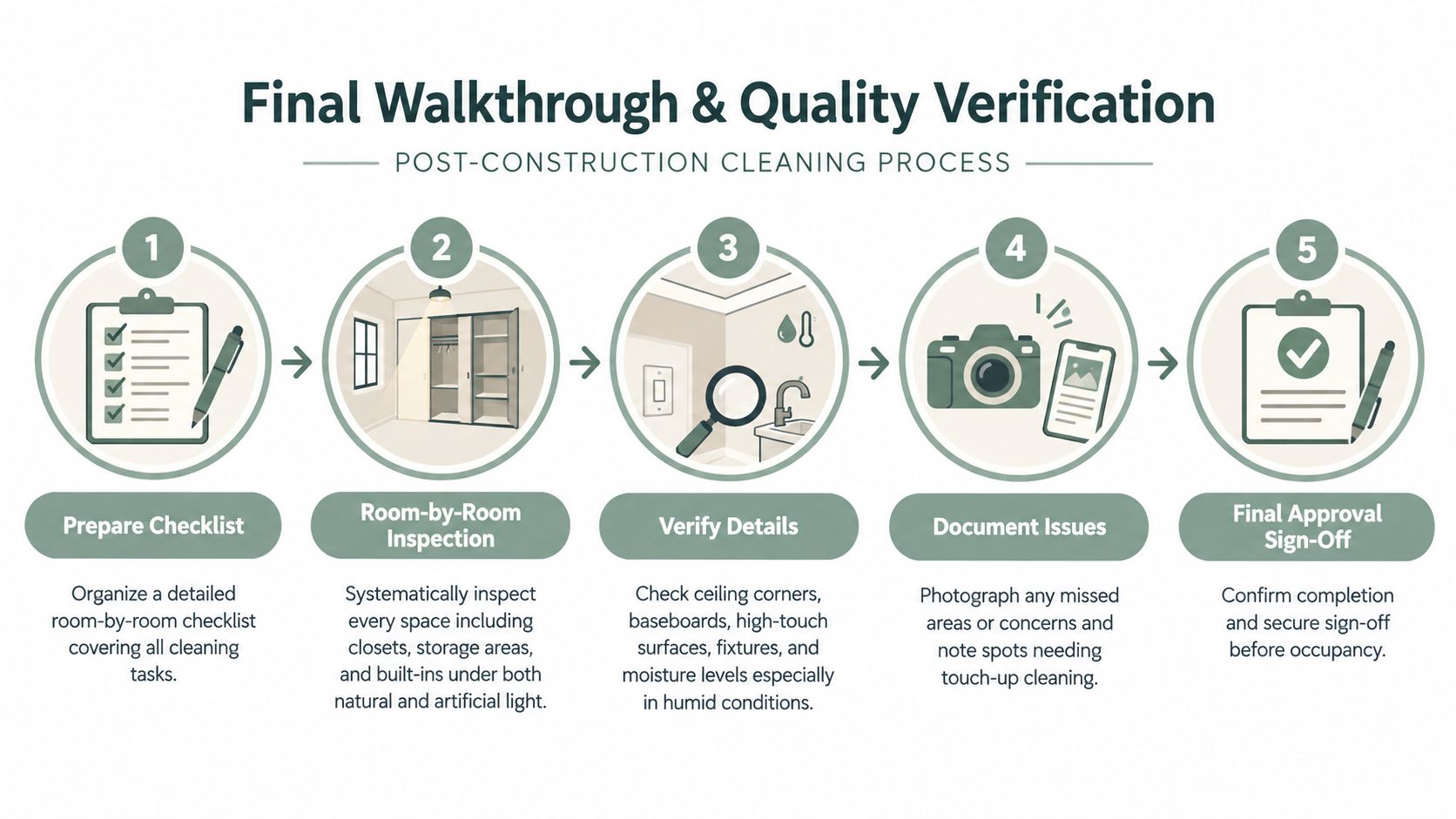
A home is ready for occupancy only after a consistent walkthrough confirms the work. Use a room-by-room checklist rather than relying on memory. Inspect each space in natural light and artificial light, because a surface that looks clean at noon may show residue under evening fixtures.
Walk the home in the same direction each time. Check ceilings, corners, fan blades, vents, walls, trim, windows, fixtures, cabinets, closets, storage shelves, appliances, floors, and thresholds. Open built-in cabinets and drawers. Dust often remains in enclosed spaces that weren't part of the visible construction mess.
Verify function, moisture, and documentation
- Look high and low: Inspect ceiling corners, ledges, baseboards, closet floors, and the tops of doors.
- Check hidden storage: Open cabinets, drawers, closets, pantries, and built-in compartments.
- Test fixtures: Confirm that faucets, handles, switches, doors, drawers, and appliances operate smoothly.
- Review moisture: Look for damp flooring, wet cabinet interiors, condensation, and areas that haven't dried.
- Document exceptions: Photograph residue, damage, incomplete repairs, and any area needing another cleaning pass.
Construction dust may settle again after the first detailed pass. Industry cleaning guidance recommends daily debris removal, repeated vacuuming over several days, and a second dusting or vacuuming pass after airborne particles resettle, as outlined in this renovation dust-control guide. That repeated workflow is more reliable than declaring the home finished after one sweep.
Schedule the final walkthrough when natural light is useful, but don't ignore the conditions in which the home will be occupied. Gulf Coast humidity can leave moisture behind, spring pollen can arrive after windows are opened, and beach sand can enter as soon as doors are used. For Gulf Shores and Orange Beach vacation rental turnovers, document completed rooms and unresolved contractor work before guests arrive.
8-Point Post-Construction Cleanup Comparison
| Service | 🔄 Implementation complexity | ⚡ Resource requirements | ⭐ Expected outcomes (quality) | 📊 Ideal use cases | 💡 Key advantages / tips |
|---|---|---|---|---|---|
| Dust and Debris Removal from All Surfaces | High, time‑intensive; multiple passes; hard‑to‑reach work | HEPA vacuum systems, ladders/scaffolding, microfiber, trained crew | ⭐⭐⭐⭐, thorough particulate removal; protects HVAC; reduces respiratory risk | Post‑construction homes; full renovations; pre‑move‑in deep clean | Work top→bottom; use HEPA vacuums; close doors to contain dust; complete before floors |
| Window and Glass Cleaning | Medium, careful paint/adhesive removal; exterior access/safety | Squeegees, scrapers, glass cleaners, ladders, safety gear | ⭐⭐⭐⭐, streak‑free clarity; restores natural light | Coastal properties, large glazing, vacation rentals where views matter | Remove paint promptly; use squeegee technique; clean on overcast/early morning |
| Floor Deep Cleaning and Protection | High, varied methods per material; drying time critical | Carpet extractor, grout brushes, sealers, drying fans, pH‑neutral cleaners | ⭐⭐⭐⭐, pristine floors; protected new finishes; prevents moisture damage | New hardwood/tile installs, rentals, allergy‑sensitive homes | Identify materials in advance; dry vacuum first; minimal moisture on wood; allow full drying |
| Kitchen and Bathroom Fixture Polishing | Medium, detailed work; finish‑specific care | Microfiber cloths, finish‑specific polishes, small tools, gentle solvents | ⭐⭐⭐, polished, functional fixtures; preserves finish appearance | High‑end finishes, final cosmetic touch for listings and rentals | Match cleaner to finish; test in inconspicuous spot; buff dry immediately |
| Appliance Interior and Exterior Cleaning | Medium, some appliances require technical care | Food‑safe cleaners, coil brush, oven cleaners, towels; manufacturer guides | ⭐⭐⭐, food‑safe interiors; appliances ready for first use; better performance | New kitchens, rental turnovers, move‑in readiness | Unplug before cleaning; follow manufacturer instructions; clean coils and filters |
| Wall and Ceiling Inspection and Touch‑Up Cleaning | Medium, careful to avoid paint damage; judgment required | Magic erasers (tested), touch‑up paint, adhesive removers, ladders | ⭐⭐⭐, minor marks removed; issues documented for contractor touch‑up | Fresh paint jobs, textured finishes, final quality control | Test cleaners first; use dry microfiber on texture; photograph issues for records |
| HVAC System Cleaning and Duct Protection | High, may require pro duct cleaning; technical inspection | Replacement filters, vacuums, inspection tools; possible professional duct service | ⭐⭐⭐⭐, improved indoor air quality; optimized HVAC efficiency; mold prevention | Homes with heavy construction dust, humid Gulf Coast climates | Change filters frequently after occupancy; remove register protection; inspect for moisture |
| Final Walkthrough and Quality Verification | Low–Medium, systematic and time‑consuming; trained eye needed | Detailed checklists, camera, consistent lighting, trained inspector | ⭐⭐⭐⭐, documented move‑in readiness; fewer missed issues; client sign‑off | Vacation rental turnovers, client handovers, pre‑occupancy inspections | Use room‑by‑room checklist; inspect in natural & artificial light; photograph and document any touch‑ups needed |
Make the Final Handoff Feel Finished
The best post construction clean up checklist follows the direction dust travels. Wear appropriate PPE, contain the work area, and remove larger debris before detailed cleaning begins. Then use HEPA-filtered vacuuming and damp wiping from high surfaces downward, clean walls and fixtures, address windows and material-specific flooring, and inspect HVAC pathways before occupancy.
Floors come late for a reason. If you wash them before cleaning ceiling corners, vents, trim, and fixtures, you may have to repeat the work. Dry sweeping isn't a dependable substitute for controlled vacuuming and wet methods where fine construction dust is present. OSHA's guidance limits when dry sweeping or dry brushing may be used for housekeeping that could create respirable silica exposure, and its HEPA vacuum guidance explains why HEPA filtration is used for fine particles.
Separate cleaning from repairs throughout the handoff. A cleaner can remove paint residue, dust, fingerprints, and adhesive when the surface can be treated safely. A contractor needs to address damaged drywall, uneven paint, cracked tile, poor caulking, installation defects, or anything that requires repair rather than cleaning. Take photos, keep a punch list, and get agreement on outstanding work before furniture, rugs, and personal belongings cover the evidence.
Follow-up care matters on Alabama's Eastern Shore and Gulf Coast. Gulf Coast humidity can slow floor and cabinet drying. Spring pollen can settle on newly cleaned windowsills and vents. Beach sand can return quickly in homes and vacation rentals near the coast. A post-renovation home may need an early maintenance visit before it settles into a standard house cleaning or recurring maid service schedule.
Sweet Home Cleaning Service serves homeowners and renters in Fairhope, Daphne, Spanish Fort, Gulf Shores, and Orange Beach with post-construction cleaning, deep cleaning, move-in/move-out cleaning, standard house cleaning, recurring maid service, and vacation rental cleaning. For busy families and working professionals, a reliable cleaning routine can give time back after the renovation crew leaves. For property managers and short-term rental hosts, a documented final check can make turnover work more consistent.
If you're in Fairhope and the surrounding Eastern Shore or Gulf Coast area, book or request a free quote from Sweet Home Cleaning Service for the level of cleaning your space needs. Whether the next step is a one-time post-construction clean, a deep clean before occupancy, a move-related appointment, recurring weekly, biweekly, or monthly service, or vacation rental cleaning, plan the handoff around dust control, material care, and a final inspection.
Sweet Home Cleaning Service provides post-construction cleaning, deep cleaning, move-in/move-out cleaning, standard house cleaning, recurring maid service, and vacation rental cleaning for homes in Fairhope and nearby Eastern Shore and Gulf Coast communities. Visit Sweet Home Cleaning Service to book or request a free quote and get your renovated space ready for occupancy.

Let us handle the cleaning. Enjoy your home.




Sweet Home Cleaning Service
19940 State HWY 181, Suite E Fairhope, AL 36532
Phone: (251) 586-4081
sales@sweethomecleaningservice.com