How to Dust Top to Bottom in Gulf Coast Homes


You dusted the living room yesterday, and there's already a gray film on the TV stand. The ceiling fan looks fuzzy again. In a coastal home, that doesn't mean you did it wrong. It usually means dust is entering and settling faster than a once in a while wipe can handle.
At Sweet Home Cleaning Service, we see this pattern across Fairhope and the Eastern Shore. Learning how to dust in the right order, with tools that trap particles, makes the result last longer and cuts the repeat work.
Table of Contents
Why Dust Keeps Coming Back in Gulf Coast Homes
In Gulf Coast homes, dust keeps arriving through open doors, on shoes and pets, and from people and fabrics indoors. Heating and cooling systems move particles around, while spring pollen, humid air, and beach sand add to what settles on shelves and floors.
In Fairhope, Daphne, and Spanish Fort, porches and garages often mean doors open throughout the year. In Gulf Shores and Orange Beach, beach bags and bare feet can bring grit onto tile and wood floors. The dust on a surface is only part of the problem. New particles keep entering and circulating.
What's Actually in That Film
Household dust can include dead skin cells, dust mite fragments and droppings, pollen, animal dander, fungal spores, hair, and insect material, according to the American Lung Association overview of household dust. Cooking and indoor combustion add fine particles. In the kitchen, these can mix with cooking residue, leaving surfaces dusty and slightly greasy.
A 2025 study of house dust in two Australian locations linked dust-associated environmentally persistent free radicals with traffic-related air pollution, ambient PM2.5, indoor combustion, seasonal variation, construction type, ventilation, and cleaning practices. The study also found consistent use of extractor fans during cooking was strongly associated with lower concentrations. Turn on the kitchen exhaust fan while cooking to help limit what settles on nearby surfaces.
Dusting removes what's settled. Source control slows what settles next.
Start with simple ways to reduce what comes inside and circulates: use entry mats, leave shoes by the door when practical, run kitchen and bathroom exhaust fans, and check your filters. These habits address different sources, so no single one will keep dust from returning.
Sweet Home Cleaning Service serves Fairhope, the Eastern Shore, and the Gulf Coast. For routine dusting, work top to bottom, capture settled particles, and finish with floors. Renovation debris needs a different approach; follow guidance for handling dust from construction rather than treating it like everyday household dust. Dust habits matter in other indoor spaces too, as this resource on healthier office air with Castus explains.
Choosing Tools That Trap Dust Instead of Spreading It
The wrong tool makes a room look better for an hour. It lifts visible dust off a shelf, sends fine particles into the air, and lets them land somewhere else. A good tool holds onto what it picks up until you rinse it or empty it outside the room.
A slightly damp microfiber cloth is the workhorse for most surfaces. Moisture helps the cloth grab settled particles instead of pushing them off an edge. Fold it into quarters so you have clean sides ready, and switch sides as each one loads up.
Dusting Tools Compared by How They Handle Dust
| Tool | How It Handles Dust | Best Used For |
|---|---|---|
| Damp microfiber cloth | Traps particles in the fibers and moisture | Shelves, furniture, trim, baseboards, frames |
| Dry feather duster | Loosens dust but can disperse it into the air | Very light touch ups only, not a main routine |
| HEPA filter vacuum | Pulls dust from floors and fabrics into a sealed filter system | Floors, carpets, upholstery, mattresses, pillows |
| Dry cotton rag | Pushes dust around and leaves streaks | Not recommended for regular dusting |
The American Lung Association recommends regular dusting with a damp cloth or microfiber cloth to trap particles and limit stirring, and weekly vacuuming of carpets and fabric surfaces with a HEPA filter vacuum, as explained in its guidance on dust mites and indoor dust control. HEPA filtration is designed to capture at least 99.97% of particles measuring 0.3 microns under relevant test conditions, according to that same guidance. That capture matters because a vacuum that exhausts fine dust back into the room undoes careful wiping.
Practical rule: If you can see dust puff into a sunbeam while you work, your tool is moving dust, not removing it.
Keep spray light. Excess product can damage wood finishes and electronics, and it leaves a film that attracts the next layer. Spray the cloth, not the surface, when you need product at all. For most routine dusting, water alone is enough.
A Small Kit That Covers a Whole House
- Microfiber cloths in a small bucket: Carry several so you're not rinsing one cloth every few minutes.
- Extendable microfiber duster: Use it lightly dampened where compatible, for fan blades, vents, and high trim.
- HEPA filter vacuum with brush and crevice tools: Use attachments for baseboards, upholstery seams, and under furniture.
- Step stool: Reach high surfaces safely instead of stretching and flicking dust downward.
Don't shake cloths indoors. Take them outside or rinse them in a sink, and let a loaded cloth go to the laundry pile. Reusing a full cloth just redeposits what you already removed.
Dusting Order from Ceilings to Floors
Order is where most home routines break down. People vacuum first because the floor looks worst, then wipe a fan and watch dust snow onto clean carpet. Work top to bottom and clean to dirty, and you only clean each surface once.
EPA guidance recommends frequent dusting with a damp cloth and vacuuming carpets and furnishings weekly or more often where needed, described in its page on sources of indoor particulate matter. It also notes HEPA filtered vacuums reduce dust exhausted back into the room. That sequence, wipe high and vacuum last, follows directly from how particles settle.
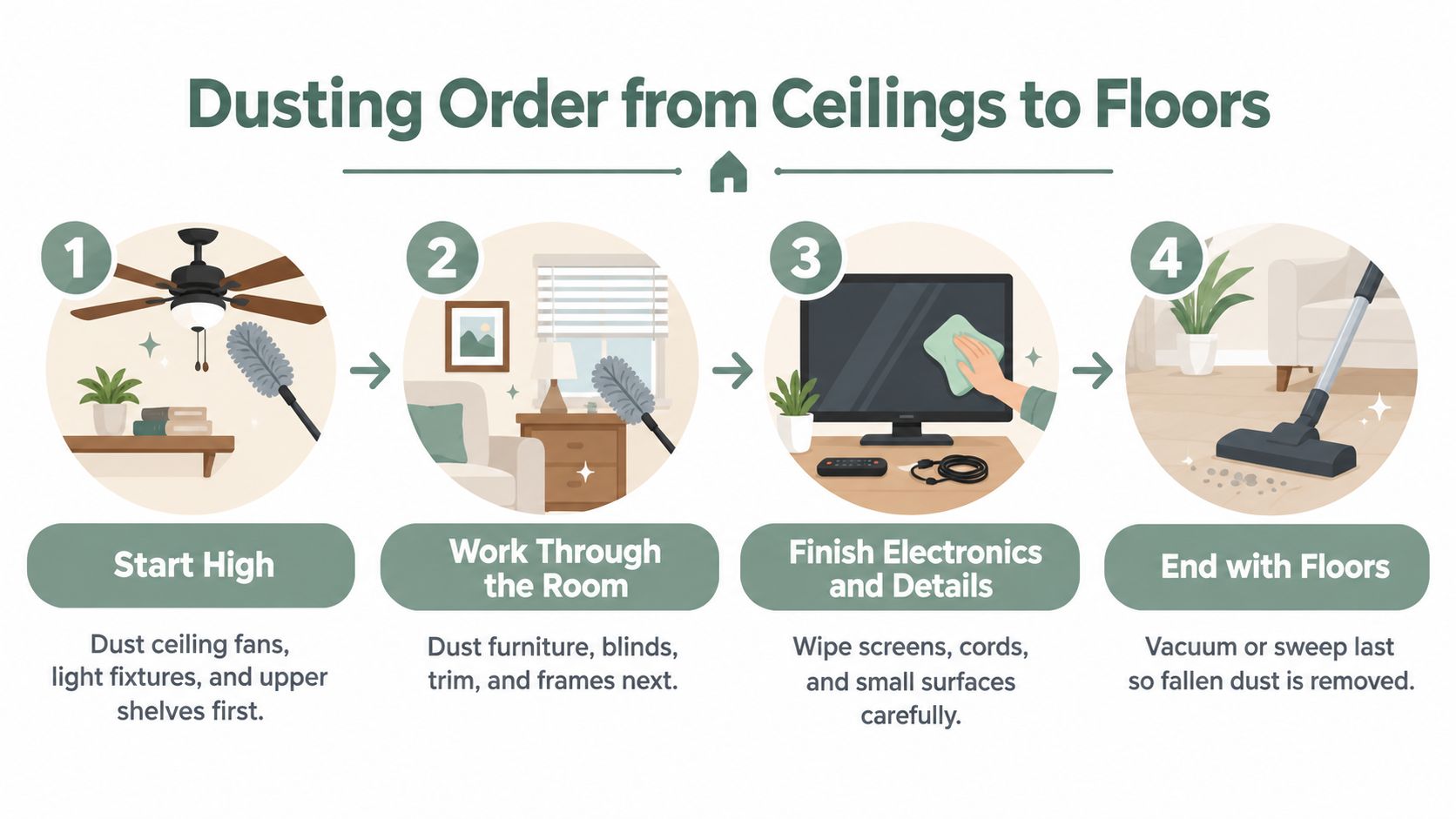
The Sequence Room by Room
- Clear movable items first: Pick up remotes, books, decor, and small objects so you can wipe the full surface.
- Start at the ceiling: Wipe corners, vents, light fixtures, and ceiling fan housings before anything below them.
- Move to upper walls and shelves: Dust high shelves, picture frames, door trim, and window blinds.
- Work through furniture: Wipe tables, desks, dressers, and electronics stands, then return items as you go.
- Finish low details: Do baseboards, chair legs, and lower trim last among the wipe down steps.
- Vacuum floors at the end: Cover floors, rugs, and fabric surfaces after overhead work is done.
Take a busy family living room as an example. Clear the coffee table and mantel, dust the fan and vents, then shelves and frames. Wipe the TV stand and side tables, vacuum the sofa cushions and seams, and finish with the rug and hard floor. Nothing you dislodge later lands on a surface you've already finished.
A bedroom runs the same way with one addition. Strip or straighten bedding before you dust nightstands, so fabric particles don't settle on clean wood. Dust lamps, headboards, and dressers, then vacuum the mattress surface, pillows where appropriate, and the floor under the bed.
The Quality Check Most People Skip
After your first pass, inspect surfaces under angled light. Stand to the side of a shelf or table and look across it toward a window or lamp. Missed streaks and thin patches show up immediately at that angle, even when the surface looked clean from above.
Wipe again with a clean section of cloth where you see residue. Don't press harder with a loaded side. That smears dust into a uniform film that looks fine until light hits it later.
If the cloth feels gritty or leaves a trail, fold it or swap it. A fresh surface costs seconds and saves a second full pass.
Common mistakes undo this order quickly. Starting with floors, vacuuming before overhead work, and dry sweeping instead of vacuuming all put particles back where you started. Keep allergy sensitive family members out of the room while you vacuum, since activity can temporarily resuspend particles even with careful technique.
Reaching Fans, Blinds, Trim, and Bedding
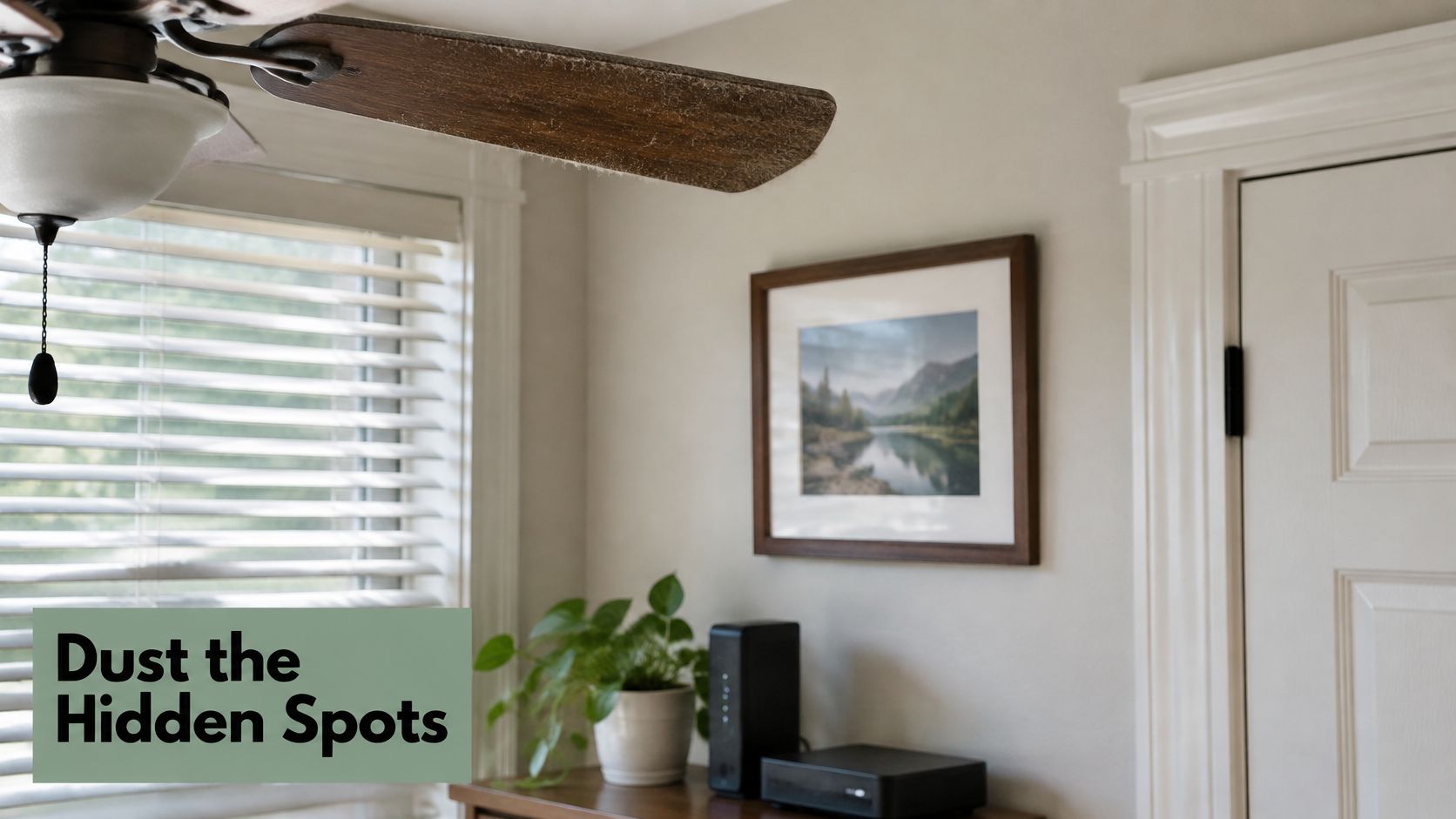
The surfaces people skip are usually the ones holding the most dust. A ceiling fan can run for months, building a thick edge on each blade, then throw that dust across the room the first warm week you switch it to high.
Turn the fan off and let it stop fully. Slip a damp microfiber cloth over each blade and pull gently from base to tip so dust stays in the cloth instead of falling. Wipe the motor housing and light fixture next, using light moisture only, then check the floor below before you move on.
Blinds, Trim, and Small Details
Blinds collect dust on every slat, and a dry swipe mostly moves it to the windowsill. Close the slats one direction and wipe with a damp cloth, then reverse and repeat. Finish the sill and frame so the dust you loosened doesn't sit at the bottom.
Door trim, picture frames, and baseboards need the same damp approach. Older Eastern Shore homes often have detailed trim and built in shelving where dust settles in grooves that a quick pass misses. Slow down on those edges, and use a vacuum brush attachment in corners before you wipe.
For electronics, use a dry or barely damp microfiber cloth and no heavy spray. Wipe screens gently, then dust stands, cords, and the surface underneath. Excess moisture and product are the risk here, not a lack of scrubbing.
Bedding and Soft Surfaces
Visible surface dust is only part of the picture. Dust mites commonly inhabit mattresses, pillows, carpets, upholstered furniture, curtains, blankets, clothing, and stuffed toys, and surveys cited by the American Lung Association indicate approximately 4 in 5 U.S. homes have detectable dust mite allergen in at least one bed, as noted earlier. The average person also sheds approximately 1.5 grams of skin flakes per day, enough to support roughly one million dust mites, according to the Lung Association source cited in the first section.
That makes bedrooms foundational, not optional. Wash bedding on your regular laundry cycle, vacuum upholstered headboards and chairs, and don't ignore stuffed toys in kids' rooms. Our room by room notes on how to clean a living room thoroughly apply the same fabric first thinking to sofas and rugs.
- Curtains and drapes: Vacuum with an upholstery tool or launder according to care labels.
- Throw blankets and pillows: Shake them outdoors, not over a clean bed or sofa.
- Closets: Dust shelves when you rotate seasonal clothing, since stored fabrics shed steadily.
Keep children and allergy sensitive occupants in another room while you vacuum bedding and upholstery. Even careful work stirs some particles, and there's no benefit to having anyone sitting in it.
Keeping Humidity in Check Between Dusting Sessions
Humidity control is part of dusting on the Gulf Coast, not a separate specialty chore. Warm, damp indoor air supports the biological side of household dust, including dust mites and mold. You can wipe every shelf perfectly and still fight a faster buildup if moisture stays high.
The EPA recommends maintaining indoor relative humidity between 30% and 50%, noting that controlling humidity can reduce growth of biological pollutants including dust mites and mold, in its Inside Story guide to indoor air quality. That range gives you a concrete target instead of guessing from how a room feels.
Simple Habits That Support Your Dusting
A small humidity gauge in a bedroom and bathroom tells you more than a thermostat does. Check it during humid stretches in Fairhope, Daphne, and Spanish Fort, when air conditioning runs but closed rooms still hold moisture. Bathrooms with weak ventilation and laundry areas deserve the closest attention.
Run air conditioning or a dehumidifier when levels climb above the recommended range. Use bathroom exhaust fans during and after showers, and kitchen exhaust while cooking. Wipe condensation from windows and tile instead of letting it sit, since standing moisture feeds the problems you're trying to dust away.
A dry home at the right humidity doesn't stop dust. It stops dust from becoming a habitat.
Hurricane season adds a specific risk. A home closed up during a storm or evacuation can retain moisture for days, and dusting over damp surfaces or visible mold doesn't address the source. Dry the space first, address leaks, and then clean.
Quick Moisture Checks After Dusting
- Check the gauge: Note bedroom and bathroom readings and compare them to the 30% to 50% range cited above.
- Look for condensation: Inspect windows, bathroom mirrors that stay fogged, and cool exterior walls.
- Sniff closed spaces: Check under sinks, closets, and laundry rooms for musty odors that suggest trapped moisture.
- Run the fans: Confirm kitchen and bathroom exhaust fans pull air, not just make noise.
- Feel soft furnishings: Note bedding or upholstery that feels damp, and dry the room before the next session.
Pairing these checks with routine damp dusting and vacuuming reduces the conditions that let dust build faster. It won't eliminate dust, and no routine will. It makes each session hold longer, which is the realistic goal in a humid coastal climate.
Deciding When to Hire a Professional Cleaner
Doing it yourself works well when dust stays light and you have time for a weekly or biweekly pass. It stops working when high shelves, fans, and baseboards keep sliding to next week, or when a home collects pollen and sand faster than one person wants to chase it.
The decision isn't only about effort. It's about frequency, reach, and consistency. A missed month turns light dusting into detail work on vents, trim, and neglected corners.
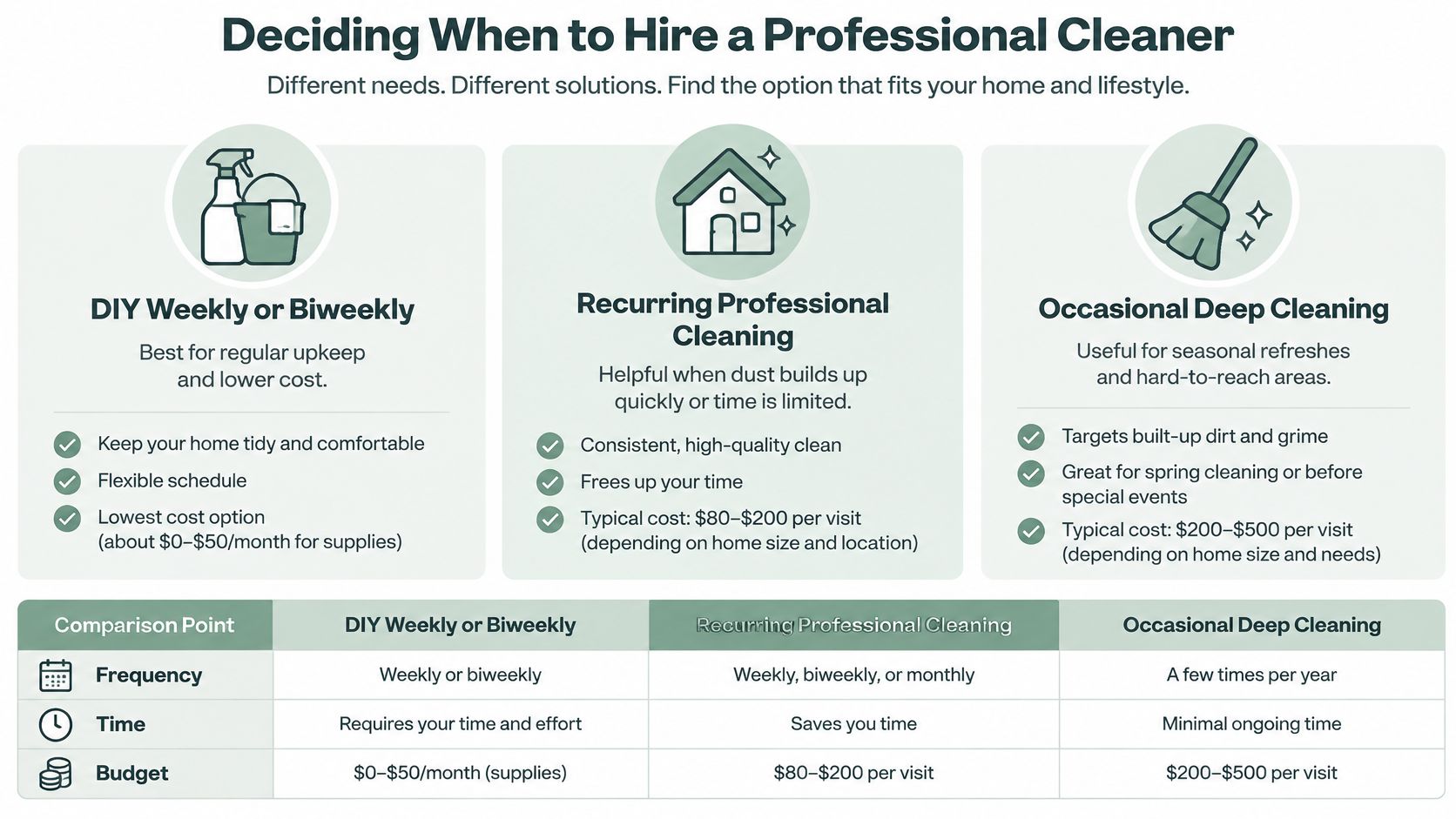
Your Main Options Side by Side
DIY weekly or biweekly suits smaller homes, lighter shedding households, and people who keep a routine. Your cost is mainly time and supplies. The trade off is that overlooked surfaces accumulate, especially fans and high trim.
Recurring maid service on a weekly, biweekly, or monthly schedule keeps the top to bottom order consistent. Sweet Home Cleaning Service dusts furniture, shelves, and decor as part of standard house cleaning, and recurring visits keep baseboards and fixtures from becoming projects. Our overview of recurring house cleaning services explains how schedules are typically structured.
Deep cleaning fits seasonal resets, allergy season preparation, and homes where dust has built up in vents and hard to reach areas. Sweet Home Cleaning Service includes dusting vents and hand washing ceiling fans in deep cleaning, along with detail work on neglected corners. Many families start here, then move to recurring visits to hold the result.
Move in and move out cleaning covers empty or transitioning homes, where dust sits on every shelf, closet, and fixture with no furniture hiding it. Vacation rental cleaning serves hosts in Gulf Shores and Orange Beach who need reliable turnovers between guests, including dusting, floors, kitchens, and bathrooms on a tight timeline.
Hire help when the gap between sessions is the problem, not when a single dirty room is the problem. One room you can reset yourself this weekend.
Ask any cleaner how they sequence dusting and floors, what they use on fans and blinds, and whether baseboards are included or an add on. Clear answers tell you more than a long checklist. Complementary help from carpet cleaners, professional organizers, or property managers can also reduce dust sources, since clutter and loaded carpets hold particles that wiping alone won't reach.
Getting Dust Under Control Starting This Week
Start with one full session, done properly, instead of partial wipes all week. Gather damp microfiber cloths and a HEPA filter vacuum, pick your dustiest room, and run the ceiling to floor order without skipping fans or baseboards. You'll learn more from that single pass than from a month of quick touch ups.
Then check humidity in the bedroom and bathroom, and note which rooms collect dust fastest over the following days. Entry areas, bedrooms, and rooms with lots of fabric usually lead. That pattern tells you whether a personal weekly routine is realistic or whether recurring help fits better.
For a Fairhope, Daphne, or Gulf Shores home that hasn't had a thorough dusting in a while, a one time deep cleaning can reset vents, fans, and trim before you maintain it yourself. Sweet Home Cleaning Service works with homeowners and renters across Fairhope and the surrounding Eastern Shore and Gulf Coast, and we're glad to help you decide which schedule makes sense. Book a visit or request a free quote when you're ready, and give your family the time back.
If dust keeps winning between your own sessions, Sweet Home Cleaning Service offers standard house cleaning, recurring maid service, deep cleaning, move in and move out cleaning, and vacation rental cleaning with careful top to bottom dusting built in. Homeowners and renters in Fairhope and across the Eastern Shore and Gulf Coast can visit Sweet Home Cleaning Service to book a cleaning or request a free quote.

Let us handle the cleaning. Enjoy your home.
Sweet Home Cleaning Service
19940 State HWY 181, Suite E Fairhope, AL 36532
Phone: (251) 586-4081
sales@sweethomecleaningservice.com