8 Essential Office Cleaning Duties for Every Space

You've finished the workday, but your workspace still needs attention. There's a coffee cup beside the keyboard, sand under the chair, a full wastebasket, and fingerprints around the door handle. In a home office, those small jobs compete with dinner, laundry, and family time. In a shared workspace, everyone may assume someone else will handle them.
A clean office starts with a repeatable routine, not an occasional wipe-down. Sweet Home Cleaning Service, a house cleaning and maid service based in Fairhope, AL, created this practical framework for homeowners, renters, home offices, and small workplaces throughout Fairhope, Daphne, Gulf Shores, and Orange Beach.
The U.S. Bureau of Labor Statistics description of cleaning responsibilities includes waste removal, floor care, restroom replenishment, spill response, supply management, repair reporting, and closing security. That's a useful reminder that office cleaning duties extend beyond what looks tidy.
A dependable routine tells each person what to clean, when to clean it, and what to report before leaving.
Use daily resets for waste, shared touchpoints, and busy rooms. Reserve weekly maintenance for less-used surfaces, then schedule deeper work separately. Gulf Coast humidity, spring pollen, beach sand, and hurricane preparation belong in that same operating rhythm, rather than becoming last-minute projects.
Table of Contents
1. Daily Trash, Recycling, and Waste Removal
Start with waste removal so you aren't cleaning around overflowing bins or yesterday's food packaging. Empty designated wastebaskets, replace liners, and carry bags to the approved outdoor collection point. Check beneath the bag for leaks before inserting a fresh liner.
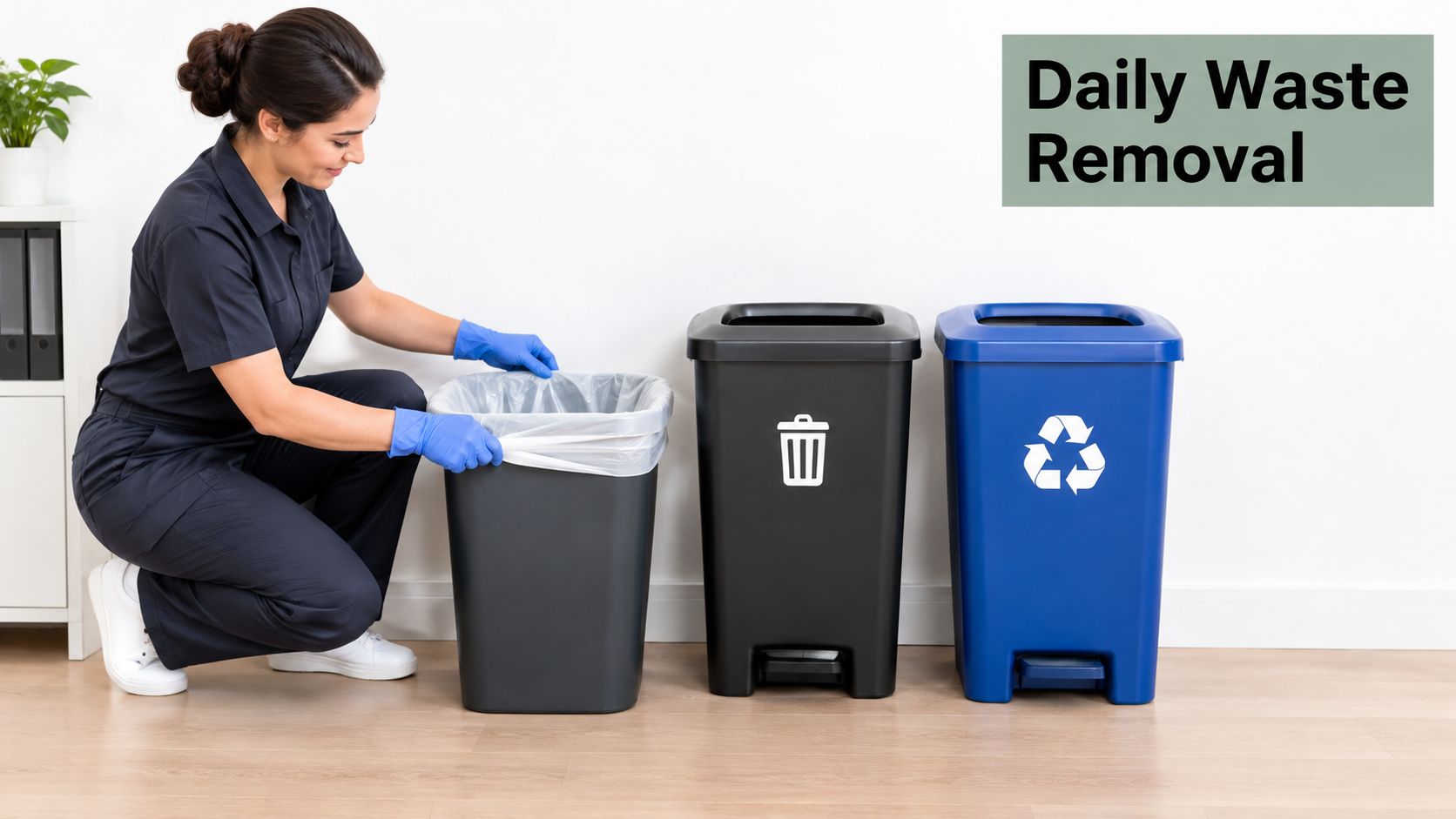
Food waste deserves priority over a lightly used paper bin. In a Daphne home office, make emptying the lunch bin part of the evening shutdown rather than leaving it for the next cleaning visit. For an Orange Beach rental host's workspace, designate a staging point for tied bags that won't obstruct the entrance during check-ins.
Make Disposal Instructions Clear
A cleaner shouldn't have to guess whether papers, boxes, or equipment are rubbish. Separate confidential documents for owner-approved shredding, and identify anything that must remain untouched. Don't put unknown chemicals or discarded electronics into ordinary bags.
- Label recycling bins: List the materials your collection service accepts instead of relying on a recycling symbol alone.
- Keep liners nearby: Store replacements where someone can find them without searching through private cabinets.
- Clean spills promptly: Wipe the bin's interior and surrounding floor when a bag leaks.
- Record exceptions: Note an inaccessible outdoor bin or an item that needs special disposal.
For broader household planning, explore ways to reduce landfill waste without assuming every material belongs in curbside recycling. The Sweet Home Cleaning Service office cleaning page also provides context for organizing workspace upkeep.
The useful trade-off is simple: remove messy waste daily, but don't automatically replace a clean liner in an almost-unused paper bin unless your agreed routine requires it.
2. Workstation and Desk Surface Cleaning
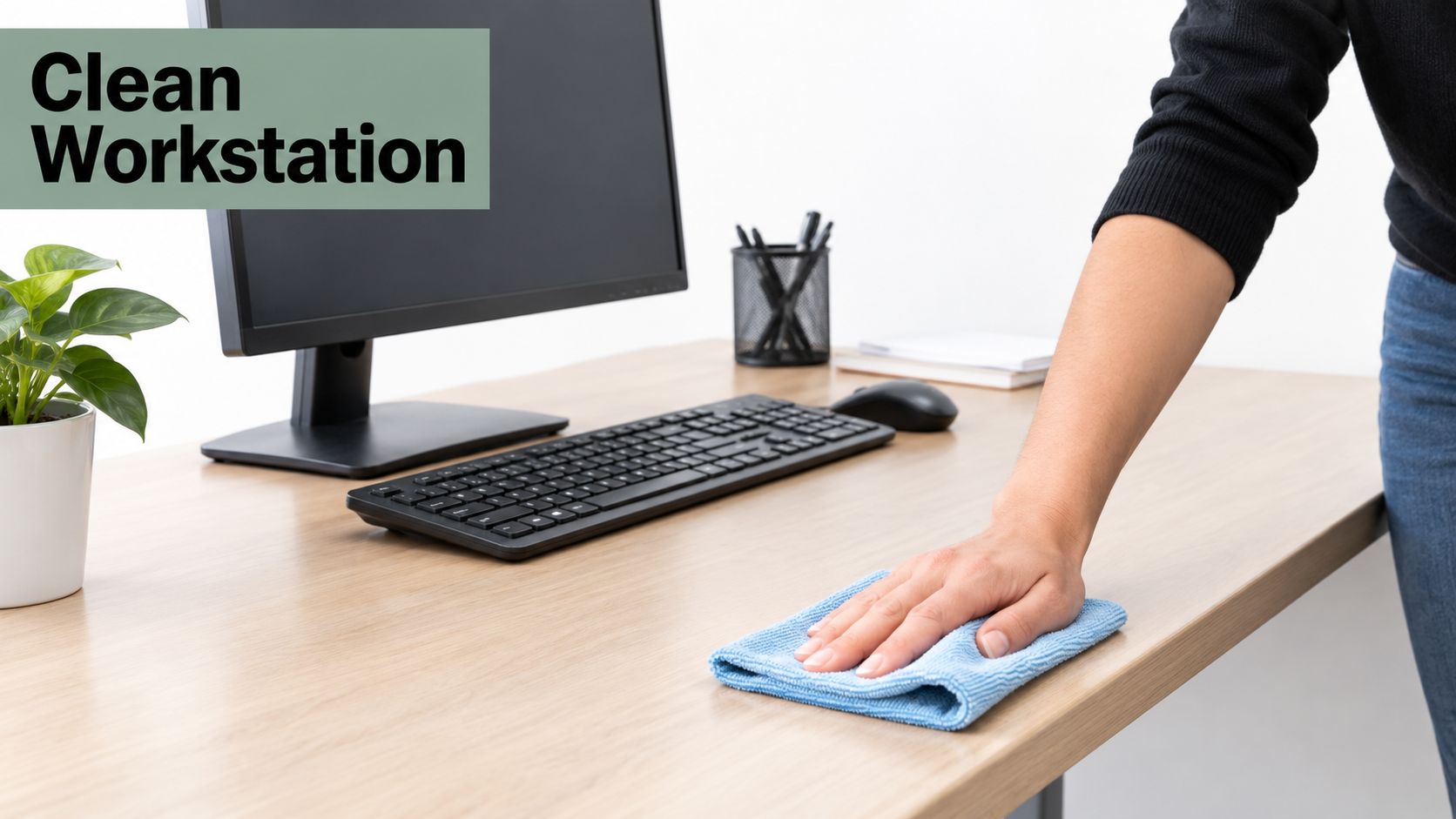
A desk can look organized while the keyboard, telephone, and chair arms still need cleaning. Separate daily contact-surface care from the more deliberate weekly reset that includes moving approved desktop items and cleaning underneath them. Don't disturb paperwork just to make the desk look empty.
For shared equipment, the traffic-based scheduling guidance from Cleaning Matters supports cleaning between users when practical, or at least daily. A personally used desk can follow a lighter reset between deeper visits, with extra attention whenever crumbs, spills, or visible residue appear.
Keep Moisture Away From Electronics
Power down equipment before cleaning when its care instructions call for it. Apply a compatible cleaner to the cloth, not directly to the screen, keyboard, ports, or vents. The cloth should be lightly damp, never dripping.
Use a soft brush for keyboard gaps, or manufacturer-approved compressed air where appropriate. Screens and specialty coatings may need a different product from the desktop, so keep their instructions with the cleaning supplies.
Practical rule: A general-purpose surface cleaner isn't automatically an electronics cleaner.
For a Fairhope couple sharing a home office, a labeled caddy can hold separate desk cloths and screen-cleaning supplies. A Gulf Shores remote worker might reserve the end of the workweek for lifting the desk accessories, wiping the mouse pad area, and checking beneath the chair.
Finish by returning approved items to their original positions. A clean workstation should still function as its owner expects, with cables connected correctly, documents undisturbed, and controls free of cleaning residue.
3. High-Touch Surface Cleaning
The worn patch beside a door handle often tells you where people touch the door. Clean that surrounding area, not just the handle itself. Apply the same attention to switch-plate edges, cabinet pulls, faucet handles, shared phones, copier controls, and the underside of accessible handrails.
Office evidence summarized by The Conversation identifies taps, microwaves, keyboards, and refrigerator doors as frequently contaminated surfaces. Use shared contact as a priority signal, not a reason to apply disinfectant indiscriminately across every surface.
Match the Task to the Situation
Cleaning and disinfection aren't interchangeable. Remove visible soil first, then use a suitable disinfectant where the agreed procedure calls for it. Follow its label for surface compatibility, ventilation, and the time the surface must remain wet.
The CDC's facility cleaning guidance states that once-daily cleaning is generally sufficient for removing surface virus when no person with confirmed or suspected COVID-19 is known to have occupied the facility. That specific guidance doesn't replace a site's procedures for reported illness or unusually heavy use.
- Map shared touchpoints: Include entrance hardware, kitchen controls, shared appliances, and frequently used cabinet handles.
- Protect finishes: Check care instructions before treating stone, wood, coated metal, or specialty surfaces.
- Use fresh cloth areas: Work from cleaner surfaces toward dirtier ones without carrying residue across rooms.
- Add trigger-based work: Record extra cleaning needed after reported illness, a busy meeting, or a messy visitor day.
In a Spanish Fort home workspace, the kitchen-side door may need more attention than a rarely opened storage cupboard. During vacation rental cleaning in Orange Beach, include thermostats and remote holders in the turnover record. Prioritize actual use rather than giving every surface identical treatment.
4. Restroom and Break Room Cleaning
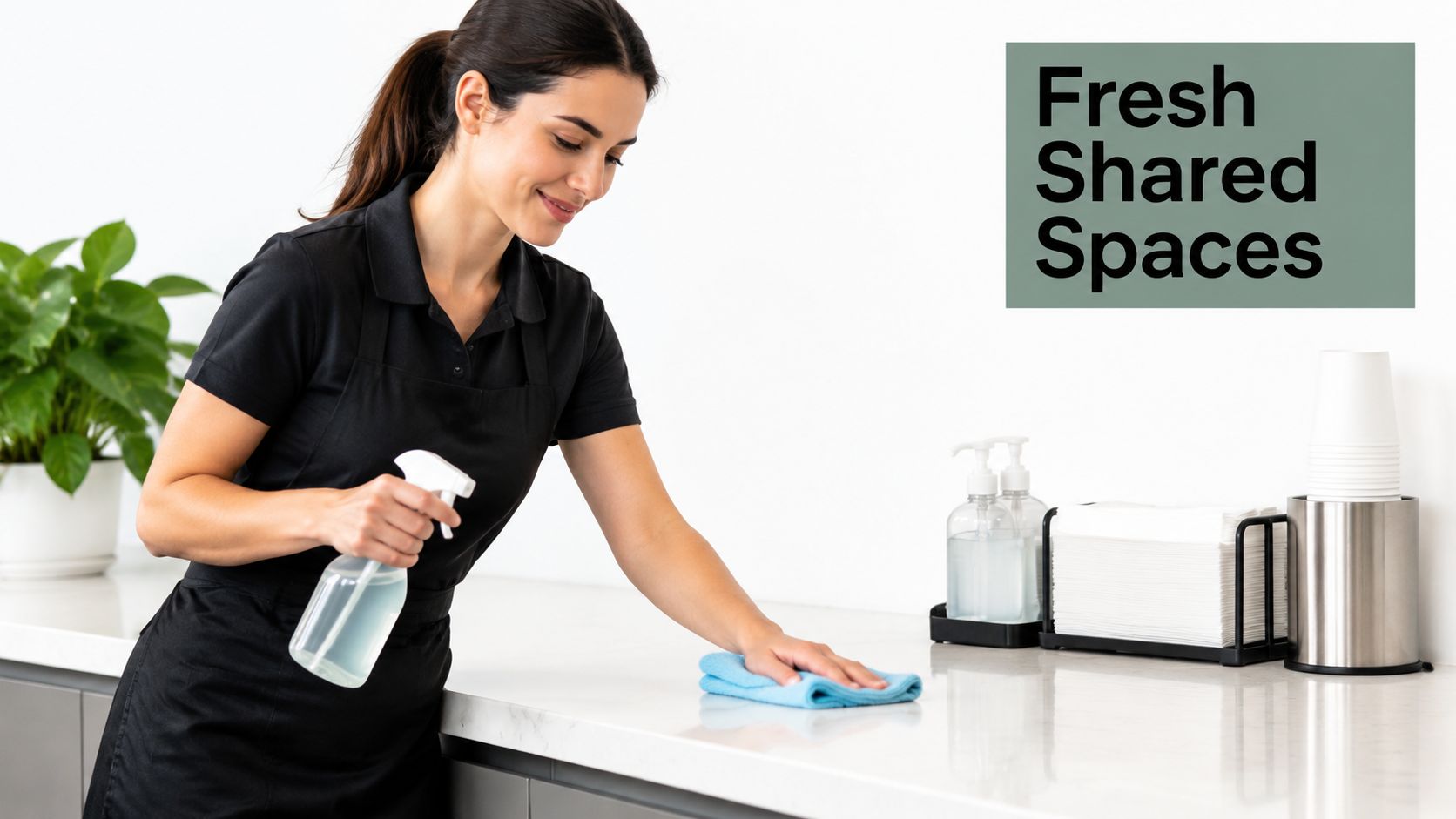
Clean, restock, and inspect belong together in bathrooms and kitchenettes. A wiped sink isn't a completed task if the soap dispenser is empty, and a clean counter doesn't excuse food residue inside the microwave. These rooms need both surface work and a practical supply check.
OSHA's restroom sanitation requirements call for sanitary workplace restrooms, running water, soap or an equivalent cleansing agent, and an approved hand-drying option. Waterless hand cleaner doesn't replace the required soap-and-water facilities, so record problems with water supply or dispensers promptly.
Keep Bathroom and Food-Area Tools Separate
Use dedicated restroom cloths and equipment. Clean mirrors and less-soiled surfaces before toilets, and don't carry bathroom tools into the kitchenette. Follow product instructions for any disinfection step and for food-contact surfaces.
- Restrooms: Clean fixtures, counters, mirrors, handles, floors, and sanitary bins, then replenish soap and drying supplies.
- Break rooms: Wipe counters and appliance handles, address dishes as agreed, and remove microwave splashes.
- Refrigerators: Obtain permission before discarding food, and document whether interior cleaning is included.
- Moisture checks: Look at damp corners, grout, caulk, and accessible vent covers without treating persistent discoloration as merely cosmetic.
For a Fairhope household using a guest bathroom beside the office, check supplies during the daily reset and inspect damp areas during weekly maintenance. In Gulf Shores, include ventilation and moisture observations in the same record.
Never mix bleach with ammonia or acidic cleaners. Keep products separate and follow label instructions, including any required rinsing. Use the Sweet Home Cleaning Service commercial cleaning checklist as a reference for defining room-by-room duties rather than recording only “bathroom done.”
5. Floor Care, Vacuuming, Mopping, and Sand Management
Deal with the entrance before spending time on the far corner of the room. In Gulf Shores and Orange Beach, check mats, thresholds, and the path from the exterior door for tracked-in sand. A Fairhope home office may also need attention along the route family members take through the house.
Remove loose grit before damp-mopping. Vacuum carpet, rugs, edges, and chair tracks with settings suited to the material, then clean hard floors using the manufacturer's recommended moisture level and product.
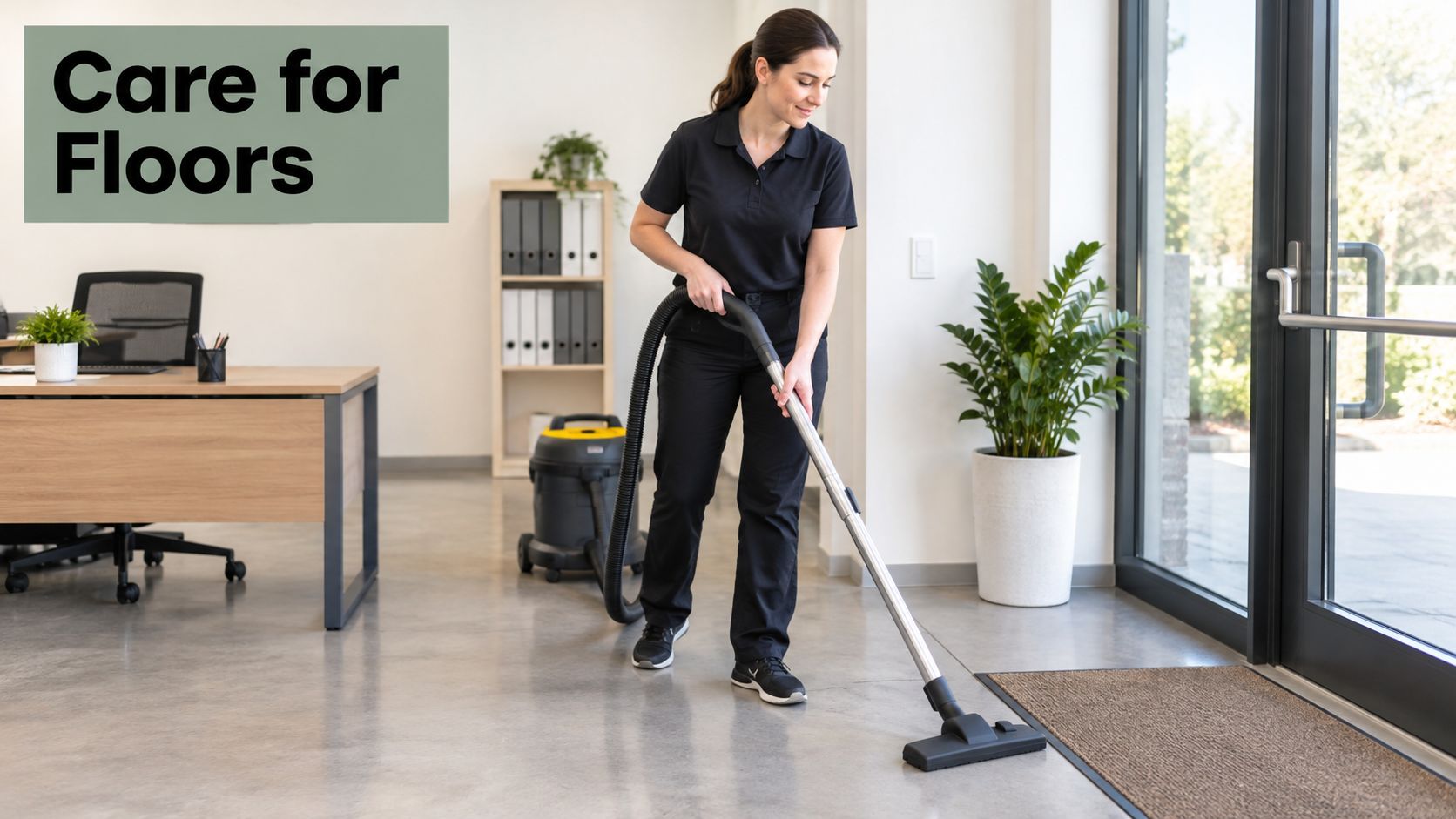
An office particle study published in Aerosol and Air Quality Research found that sweeping increased airborne PM10 during the activity, while vacuuming produced a smaller fine-particle increase. The practical response is to avoid dry broom sweeping around occupied desks and use well-maintained vacuum equipment, preferably with high-efficiency filtration.
Adjust Effort by Traffic
A Daphne workspace might need frequent vacuuming along its entrance and chair lanes while quieter corners follow the weekly routine. Don't spend equal time everywhere merely because the room has a single floor type.
- Use entrance mats: Place suitable mats outside and inside where the layout allows, keeping them flat and clear of door movement.
- Control water: Wring mop heads thoroughly and avoid soaking seams, edges, or wood surfaces.
- Maintain equipment: Inspect vacuum filters, seals, brush rolls, and collection compartments.
- Protect walking routes: Keep people away from wet sections and use warning signs in shared spaces.
A floor isn't ready for handoff just because it looks clean. Check for remaining grit, sticky residue, and wet walking areas.
Schedule disruptive floor work when fewer people are present, and record any inaccessible area rather than moving heavy furniture without permission.
6. Dusting, Glass, and Surface Maintenance
Dust the upper surfaces before cleaning the floor. Begin with safely accessible shelves, ledges, door frames, and cabinet tops, then work down toward desks and baseboards. Capture dust with microfiber or a lightly damp cloth rather than flicking it from one surface onto another.
During spring pollen season, Fairhope and Spanish Fort homeowners can add a quick inspection of window ledges and nearby furniture to their routine. If visible film returns, adjust that area's schedule instead of automatically expanding every cleaning task.
Give Glass Its Own Method
Glass partitions, mirrors, and interior door panes need clean tools and controlled product use. Spray compatible glass cleaner onto the cloth, wipe systematically, and buff with a dry cloth if needed. Check the result from an angle, where streaks and missed fingerprints are easier to see.
- Blinds: Follow material-specific instructions and clean accessible slats individually with a suitable microfiber tool.
- Baseboards: Wipe dust and marks carefully without oversaturating painted surfaces.
- Decorative items: Agree on what may be moved, and leave fragile or valuable pieces for the owner if handling isn't authorized.
- Windows: Keep them closed during dusting if outdoor pollen is entering, while still following ventilation requirements for the products in use.
For a Fairhope home office with an interior glass door, combine fingerprint removal with the desk reset. In a Spanish Fort room with blinds and display shelves, reserve the detailed slat and shelf work for weekly maintenance rather than rushing it during every daily visit.
The Sweet Home Cleaning Service cleaning tips library offers additional household upkeep topics. For a separate look at window-work scope, consult window care from Aloha Window Bros and clarify which surfaces require specialist access.
Routine interior wiping shouldn't turn into ladder work or an unplanned exterior-window assignment.
7. Periodic Deep Tasks, Vents, Upholstery, Windows, and Humidity Checks
Some jobs need their own appointment or a clearly allocated maintenance window. Accessible vent covers, upholstered chairs, ceiling fans, window frames, and neglected edges shouldn't depend on whatever time remains after the daily reset. Schedule monthly inspections, then assign cleaning according to condition and scope.
For older homes and busy families on the Eastern Shore, a deep cleaning visit can address accumulated surface grime before recurring maintenance begins. An Orange Beach home office closet, for example, deserves a moisture check before someone wipes a discolored shelf and closes the door again.
Inspect Without Overstepping
Clean accessible supply and return covers as agreed, but don't treat that as internal duct cleaning or HVAC maintenance. The EPA's office indoor-air-quality guide identifies source control, ventilation, and filtration as coordinated measures. Surface cleaning can support that approach, but it can't replace building-system work.
- Upholstery: Check the care tag, including W, S, WS, or X markings, before applying any product.
- Fans and fixtures: Turn equipment off and use safe access methods; don't balance on office chairs.
- Window frames: Include accessible tracks and sills while noting staining, failed seals, or dampness.
- Storage areas: Inspect under sinks, near exterior walls, and behind safely accessible stored items.
Avoid packing belongings tightly against exterior walls where inspection becomes impossible. If you find a damp patch, record its location and notify the homeowner rather than promising that wiping will solve the cause.
A whole house dehumidifier guide can be background reading for homeowners exploring moisture-management options. Equipment selection and persistent moisture concerns belong with an appropriate building or HVAC professional.
Deep work should finish with a written record of what was cleaned, what remained inaccessible, and what needs follow-up.
8. Supply Management, Closing Checks, and Storm Readiness
Before leaving, check whether the workspace is usable tomorrow. Refill agreed supplies, return cleaning tools to their storage location, and record missing items or damage. Security tasks must be explicit: know who checks windows, who locks doors, and which equipment may be switched off.
Safe supply management includes chemicals, not just paper towels. OSHA's cleaning-chemical safety guidance calls for safety data sheets, correct dilution, labeled containers, appropriate protection, ventilation when needed, and measures preventing chemical mixing. Don't transfer products into unmarked bottles or assume a stronger concentration means better cleaning.
Keep Storm Preparation Separate but Connected
For hurricane-season preparation, review the household's plan before conditions deteriorate. Assign someone to secure loose outdoor items, protect documents, and move electronics off the floor where appropriate. Cleaners shouldn't guess which belongings may be moved or enter a storm-damaged property without clearance.
- Supplies: Record low stock and identify who orders replacements.
- Closing: Check agreed doors, windows, equipment, and access arrangements.
- Storm readiness: Keep trash bags and approved cleaning supplies in a dry, accessible place.
- After-storm observations: Report water entry, unusual odors, visible damage, and blocked access before routine cleaning resumes.
A Fairhope homeowner can keep the supply list beside the closing record so an empty dispenser leads to an assigned purchase. A Gulf Shores vacation rental host can attach a separate storm-preparation sheet identifying who handles patio items and who confirms the property is ready for entry afterward.
Handoff standard: Record the task, the exception, and the person responsible for the next action.
Across Daphne, Spanish Fort, Gulf Shores, and Orange Beach, that written finish matters more than a vague message saying everything is done.
8-Point Office Cleaning Duties Comparison
| Cleaning Task | 🔄 Complexity & Frequency | ⚡ Resources | 📊 Expected Outcome | ⭐ Key Advantage | 💡 Ideal Use Case |
|---|---|---|---|---|---|
| Daily Trash, Recycling, and Waste Removal | Low; typically daily | Liners, bins, recycling guidance | Fewer odors, pests, and waste buildup | Quick, visible upkeep | Offices and shared spaces with daily waste |
| Workstation and Desk Surface Cleaning | Low to moderate; typically weekly | Microfiber cloths, electronics-safe cleaner | Cleaner desks and less dust or residue on equipment | Helps protect electronics and supports an organized workspace | Home offices and shared workstations |
| High-Touch Surface Cleaning | Low; daily in shared spaces, weekly in private homes | Surface-appropriate cleaner, cloths | Cleaner handles, switches, and shared equipment | Addresses frequently touched areas efficiently | Shared offices, kitchens, and rental turnovers |
| Restroom and Break Room Cleaning | High; schedule based on use | Cleaning products, PPE, soap and paper supplies | Cleaner, stocked shared spaces; earlier notice of mildew or leaks | Keeps essential facilities functional and welcoming | Offices and households with shared kitchens or bathrooms |
| Floor Care: Vacuuming, Mopping, and Sand Management | Moderate; frequent in high-traffic areas | Vacuum, mop, floor-appropriate cleaner, entry mats | Less grit and dirt; reduced wear on flooring | Entry mats and regular cleaning help limit sand damage | Coastal offices, homes, and rental properties |
| Dusting, Glass, and Surface Maintenance | Low to moderate; weekly or more often during pollen season | Microfiber cloths, glass cleaner | Less visible dust, pollen, and fingerprints | Top-to-bottom cleaning captures particles systematically | Offices and homes with glass, blinds, or seasonal pollen |
| Periodic Deep Tasks: Vents, Upholstery, Windows, and Humidity Checks | High; monthly or quarterly | Vacuum, suitable upholstery tools, step ladder as needed | Removes accumulated grime and helps identify moisture issues | Reaches areas routine cleaning may miss | Older homes and spaces needing periodic maintenance |
| Supply Management, Closing Checks, and Storm Readiness | Low to moderate; daily checks and seasonal storm review | Shared checklist, supplies, secure storage | Fewer shortages, documented issues, and improved storm preparation | Standardizes handoffs and closing routines | Small offices, households, and Gulf Coast properties |
Turn the Checklist Into a Reliable Handoff
The strongest office cleaning duties are specific enough that someone else can continue the routine without starting over. Distinguish daily resets, weekly maintenance, and monthly inspections, then record unfinished work before the cleaner leaves. A completed checklist should tell the homeowner what happened, not merely show that someone ticked a box.
Keep the daily record short enough to use consistently. Waste removal, shared touchpoints, restroom supplies, busy floor areas, and closing checks belong together. Weekly and deeper tasks can sit alongside that record with their own completion status, so a skipped shelf-cleaning task doesn't disappear beneath a general “room cleaned” note.
Record Exceptions That Need Action
A useful handoff separates cleaning work from problems requiring permission, purchasing, or repairs. Write “soap refill unavailable” rather than “bathroom incomplete,” and identify where an inaccessible area remains. Specific language lets the next person act without retracing the entire visit.
- Unfinished work: Name the room or surface and explain why it wasn't completed.
- Missing supplies: List what needs replenishing and who will obtain it.
- Damage: Note the location and avoid attempting repairs outside the agreed scope.
- Moisture concerns: Record dampness, persistent odors, or recurring discoloration for follow-up.
- Security: Confirm the agreed closing checks or document anything that couldn't be verified.
For vacation rental turnover in Gulf Shores or Orange Beach, add linen, appliance, restocking, and final walk-through status. Distinguish “linens changed” from “replacement linens unavailable,” and confirm whether appliance interiors were inspected or cleaned. A property manager needs those details before approving the next arrival.
For a Fairhope home office, the handoff can be simpler, but privacy still matters. Identify papers that weren't moved, equipment that needs special care, and supplies stored elsewhere in the house. Busy families benefit when the routine answers those questions without another round of messages.
Sweet Home Cleaning Service helps Fairhope homeowners, renters, and local workplaces maintain dependable routines with attention to detail and respect for their time. When arranging standard house cleaning, recurring maid service, deep cleaning, move-in/move-out cleaning, or vacation rental cleaning, explain how the workspace fits into the property's priorities. Agree on the scope first, then use the handoff to keep that agreement clear from visit to visit.
Sweet Home Cleaning Service offers standard house cleaning, recurring maid service, deep cleaning, move-in/move-out cleaning, and vacation rental cleaning, with your workspace priorities included in the agreed scope. Visit Sweet Home Cleaning Service to book a visit or request a free quote in Fairhope, Daphne, Spanish Fort, Gulf Shores, or Orange Beach, and make room for a dependable routine that gives your family time back.

Let us handle the cleaning. Enjoy your home.
Sweet Home Cleaning Service
19940 State HWY 181, Suite E Fairhope, AL 36532
Phone: (251) 586-4081
sales@sweethomecleaningservice.com