
Commercial Cleaning Checklist: 10 Essential Tasks

Build a Commercial Cleaning Routine That Holds Up
A business can look tidy at closing time while grease sits above the range, moisture lingers around restroom grout, spring pollen rests on ledges, beach sand works into entry mats, and high-touch residue remains on shared surfaces. These overlooked conditions are why a written commercial cleaning checklist needs to separate visible daily upkeep from weekly detail work, monthly buildup control, and specialty cleaning.
Sweet Home Cleaning Service serves Fairhope and surrounding Eastern Shore and Gulf Coast communities, including Daphne, Spanish Fort, Gulf Shores, and Orange Beach. The checklist below helps homeowners, renters, property managers, vacation-rental hosts, and small-business operators organize ten practical cleaning areas, from workspaces and restrooms to break rooms, floors, windows, turnover needs, and compliance-minded documentation.
Use each task according to the surface label, manufacturer guidance, and applicable workplace requirements. Product selection, ventilation, protective equipment, and contact time matter just as much as the motion of wiping or mopping. For teams comparing supplies, this guide to stocking cleaning chemicals for venues can help organize custodial storage without replacing product-specific safety instructions.
Table of Contents
1. Kitchen Deep Cleaning and Degreasing
Kitchen buildup rarely appears all at once. A stovetop gets wiped, a cabinet front gets spot-cleaned, and a range hood receives attention only when grease becomes obvious. In humid Gulf Coast conditions, that residue can become sticky and harder to remove, especially in busy family kitchens, office break rooms, and vacation properties.
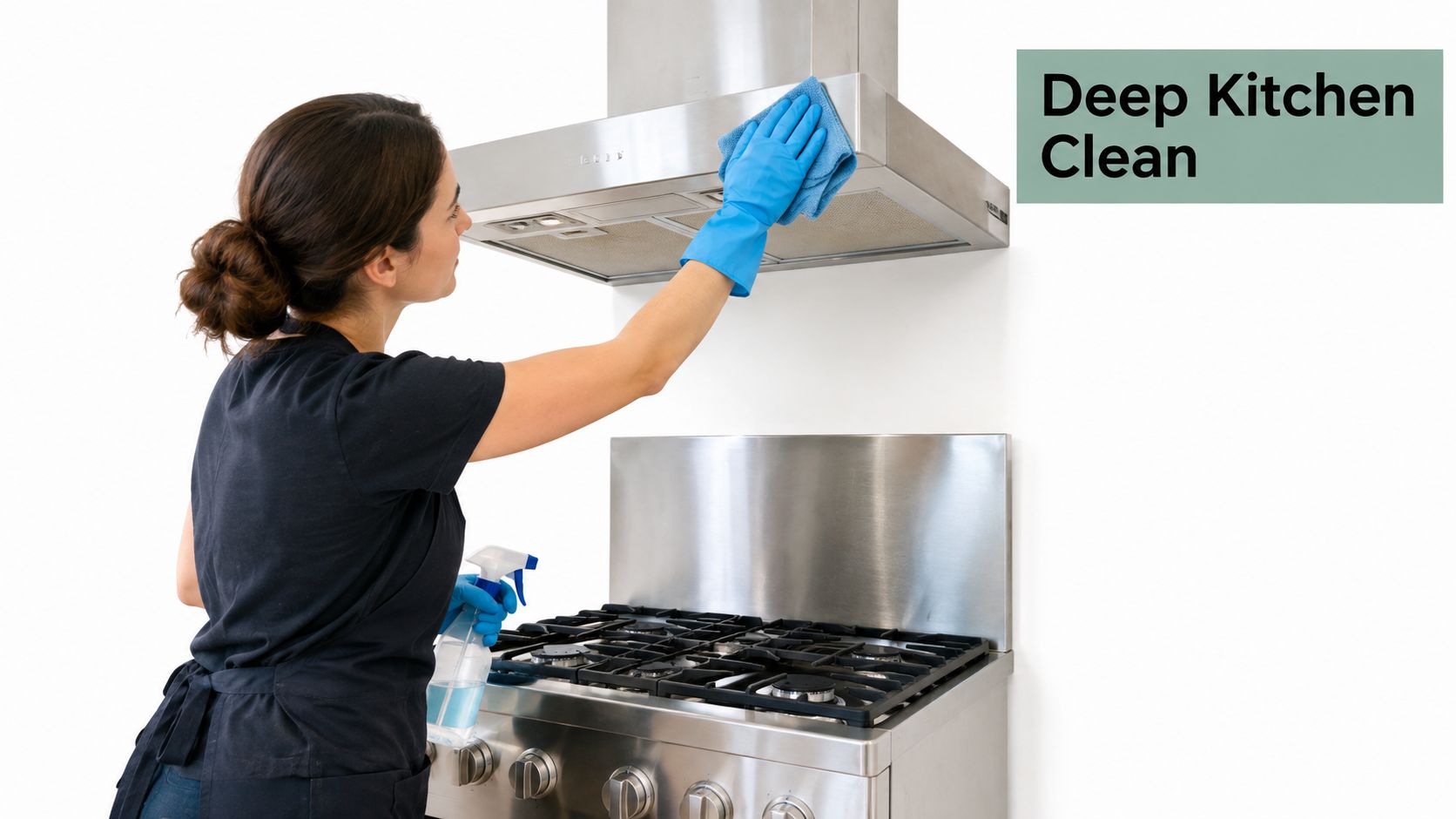
A thorough kitchen reset should include countertops, backsplashes, cabinet fronts, appliance exteriors, sinks, faucets, and accessible fixtures. Deep work goes further by cleaning inside and behind appliances where safe, wiping cabinet interiors, degreasing exhaust fans, and removing food residue from corners and seams. Each product should match the surface, and food-contact areas should be handled according to the cleaner and manufacturer's directions.
Separate routine wiping from deep degreasing
Daily or visit-by-visit work should address counters, sinks, appliance handles, tables, and visible spills. Schedule a deeper kitchen service quarterly, or sooner when the exhaust fan, cabinet fronts, or appliance interiors show buildup. That distinction keeps routine service realistic instead of expecting every visit to become a restoration project.
Clear counters and remove items from shelves before the crew arrives. Tell the team about sticky cabinet fronts, a grimy exhaust fan, or an appliance that needs special attention. For a detailed home-focused process, use this deep kitchen cleaning checklist.
For vacation rentals in Gulf Shores and Orange Beach, inspect the kitchen between guest turnovers. A clean counter isn't enough if the microwave interior, refrigerator shelves, cabinet handles, and trash area still show the previous stay.
2. Bathroom Sanitization and Mold Prevention
A bathroom can look clean while humidity keeps grout, caulk, floors, and poorly ventilated corners damp. In Fairhope, Daphne, Gulf Shores, and Orange Beach, that moisture can support mildew. Older Eastern Shore homes deserve closer inspection, especially around ventilation points and areas that stay wet between visits.
Assign routine service to toilets, flush handles, sinks, faucets, counters, mirrors, dispensers, floors, trash, and soap and paper restocking. Detail cleaning should cover tile, grout, stall partitions, corners, baseboards, soap scum, hard-water deposits, and accessible areas inside toilet tanks. Report visible mold promptly. Extensive or recurring mold conditions may call for a qualified remediation specialist instead of ordinary cleaning.
Moisture control matters: Keep exhaust vents clear, run bathroom fans during use and after showers, and report persistent condensation rather than treating it as surface dirt.
The EPA's guidance on indoor mold conditions recommends keeping indoor humidity below 60%, with 30% to 50% described as an ideal range when possible. Record condensation, damp surfaces, ventilation concerns, and visible mold observations on the checklist. This gives homeowners, renters, and property managers a useful record of conditions that cleaning alone may not resolve.
Clean first, disinfect when required
Cleaning and disinfection require different steps. The CDC's facility-cleaning guidance says to clean surfaces before disinfection and keep disinfectants visibly wet for the product's stated contact time when disinfection is required. Record the product used, required protective equipment, ventilation action, and completion time.
Set bathroom tasks by risk and cadence. Handle high-touch fixtures and visible soil during every service, then schedule detail work quarterly or sooner when mildew, buildup, or moisture damage appears. Vacation rentals in Gulf Shores and Orange Beach need bathroom sanitization between guests. Homes in Spanish Fort or Fairhope can use quarterly detail cleaning to identify moisture problems before they become larger property concerns.
3. Bedroom and Living Area Dusting and Allergen Reduction
Dusting isn't just a quick pass over coffee tables. In living rooms and bedrooms, dust collects on ceiling fan blades, baseboards, furniture edges, picture frames, door trim, vents, and ceiling corners. Spring pollen can add another layer to homes around Fairhope, while children, pets, and open windows increase the amount of material settling indoors.
Start high and work downward. Dust ceiling fan blades with a tool that captures debris instead of scattering it, then clean ledges, furniture, baseboards, and accessible horizontal surfaces. Vacuum upholstery, rugs, and floor edges after dusting so loosened particles don't remain on the floor. A vacuum with a HEPA filter, when available, can help capture fine material rather than recirculating it.
Adjust the cadence to the household
A home with pets, young children, or heavy foot traffic needs more frequent dusting than a lightly occupied property. Biweekly attention can suit busy families in Daphne and Spanish Fort, while a monthly visit may be enough for a smaller household with less soil accumulation. Spring is a useful time to add detailed fan, trim, and ledge cleaning, then reassess before seasonal changes.
Declutter shelves and surfaces before service. This lets the cleaner reach the actual surface instead of working around stacks, décor, and personal items. Keep medication, sensitive papers, and fragile objects secured by the homeowner or occupant.
A good checklist should name the room and surface, rather than merely say “dust entire house.” Record whether fans, baseboards, vents, corners, and furniture were addressed. That level of detail helps distinguish a missed task from an area that needs a deeper cleaning method.
4. Floor and Carpet Cleaning for Sand and Debris Removal
Sand is abrasive, persistent, and easy to spread. In Gulf Shores and Orange Beach, it may enter on shoes, towels, beach bags, and pet paws. Spanish Fort and Fairhope homes also deal with tracked dirt, outdoor debris, and seasonal increases in activity. A floor plan that treats every surface the same will either damage a finish or leave soil behind.
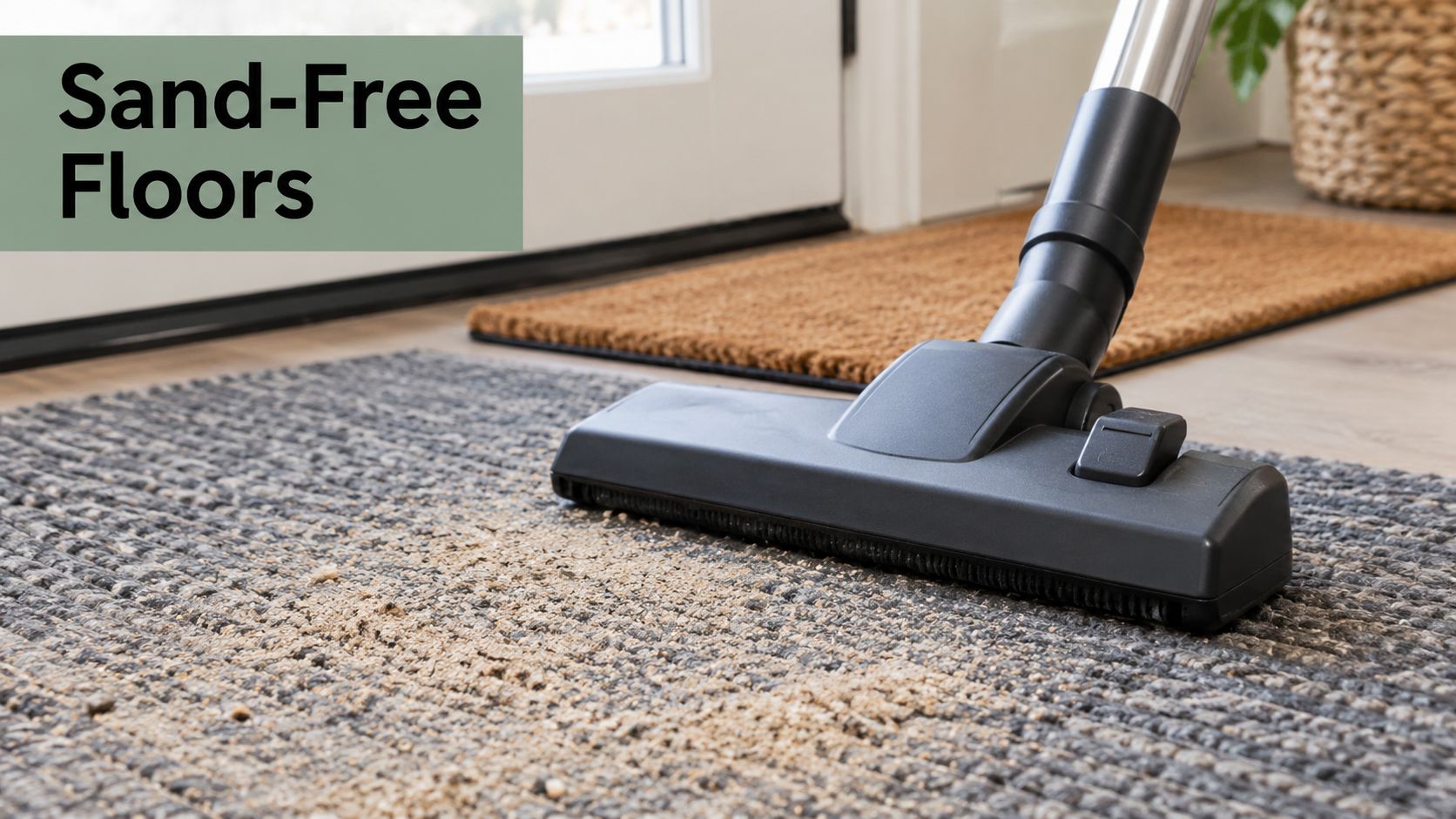
Use entry mats outside and inside doors, then vacuum or sweep entryways before sand travels into the rest of the property. Carpet requires thorough vacuuming along edges and traffic lanes, followed by spot treatment when needed. Tile, laminate, hardwood, and other hard surfaces need products and moisture levels suited to their finish. Don't flood a floor that cannot tolerate standing water.

Match floor care to traffic and soil
Daily attention makes sense for beach-home entryways and heavy traffic paths. Weekly work can include edge vacuuming, detailed mopping, stair areas, and spot treatment. Periodic carpet cleaning or machine floor care should be scheduled separately from ordinary vacuuming and mopping, especially when stains, odors, or worn traffic lanes remain after routine service.
For vacation rentals in Gulf Shores and Orange Beach, inspect floors after every guest stay. Prioritize entry areas, bedrooms, bathrooms, and spaces where wet towels or sandy belongings may have been left. Allow cleaned carpets and damp-mopped floors to dry with appropriate ventilation before occupancy.
In Fairhope and Spanish Fort, increase entryway and floor attention during summer activity or after outdoor gatherings. Area rugs can protect high-use thresholds, but they also need regular vacuuming and occasional cleaning. If a floor finish is peeling, badly scratched, or reacting to a product, stop routine treatment and consult a flooring specialist.
5. Move-In and Move-Out Cleaning for Property Preparation
A property can be empty without being ready. After furniture leaves, dust lines, cabinet residue, appliance grime, window tracks, and floor buildup become easier to see. Renters, buyers, sellers, and property managers in Fairhope, Daphne, Gulf Shores, and Orange Beach benefit from scheduling this work between occupants rather than trying to clean around moving boxes.
A move-related checklist should include inside and behind accessible appliances, oven and microwave interiors, cabinet interiors, countertops, sinks, fixtures, windows, tracks, doors, baseboards, floors, and closets. Document any damage or permanent staining separately from cleaning results. Cleaning removes soil, but it won't repair damaged flooring, failed caulk, broken fixtures, or structural moisture problems.
Time the service around access
Schedule the cleaning immediately after move-out or before move-in, with enough time for surfaces and floors to dry. Spanish Fort and Daphne homebuyers may prefer cleaning before the final walkthrough when access allows, so visible issues can be identified before personal belongings arrive.
Provide the crew with a list of problem areas. An oven with baked-on residue, a refrigerator that needs interior cleaning, or a dusty garage may require different time and equipment than routine rooms. Take photos after cleaning for rental documentation, particularly when a property manager is handing a space to a new occupant.
Use a practical moving house checklist alongside the cleaning scope, but keep the two records separate. The moving list tracks belongings and logistics. The cleaning record confirms which surfaces were serviced, which areas were inaccessible, and which conditions need a specialist.
6. Post-Construction and Renovation Cleanup
Renovation dust travels farther than the work area suggests. Fine residue can settle on walls, ceilings, trim, fixtures, appliances, shelves, floors, and accessible HVAC components. A newly remodeled room may look finished while a dry cloth still collects dust from ledges and door frames.
Post-construction cleanup should happen after construction is substantially complete and before furniture or personal items return. Ask contractors to use dust barriers and keep interior doors closed where practical during heavy work. Those controls won't eliminate cleanup, but they can limit how far residue spreads.
Use a phased inspection
Begin with a walkthrough. Identify paint or adhesive residue, construction debris, cabinet dust, fixture film, floor protection marks, and areas where the contractor still needs to finish work. Remove debris safely, then work from high surfaces down to floors. Replace HVAC filters when appropriate, and for older systems in Fairhope or Spanish Fort, ask whether ducts require a qualified inspection or cleaning.
The post-construction clean-up checklist can help organize the handoff between contractor, homeowner, and cleaning team. It shouldn't be used to bypass product labels, ventilation needs, or protective equipment requirements.
Humidity adds a local consideration. Dust that remains on damp surfaces becomes harder to remove and can contribute to persistent residue. Don't occupy the space until floors, surfaces, and any products used during cleaning have dried according to their instructions.
Some renovation projects involve heavy debris, high-level work, hazardous materials, or specialized HVAC contamination. In those situations, coordinate with the contractor or an appropriately qualified specialist instead of treating the work as ordinary house cleaning.
7. Vacation Rental Turnover Cleaning
A vacation rental in Gulf Shores or Orange Beach has a narrow window between checkout and the next arrival. Sand may be spread from the entry to the bedrooms, bathrooms may show heavy moisture use, kitchen surfaces may carry grease, and wet towels can leave odors if not handled promptly. A reliable turnover routine needs both cleaning tasks and a condition report.
Start with the entry, then move through bedrooms, bathrooms, kitchen, living areas, laundry, outdoor-access points, and floors. Replace linens and towels according to the property's operating plan, remove waste, clean high-touch surfaces, inspect appliances, replenish agreed supplies, and check for damage or missing items. The checklist should reflect the actual layout, not a generic house.
A turnover is complete only when the property is clean, dry, supplied, and ready for the next arrival, not merely when the visible rooms have been wiped.
Record condition while cleaning
Coordinate checkout and check-in access with the owner or property manager. Photograph cleaned areas and document damage, unusual stains, broken fixtures, or missing items before they become a dispute. Keep the condition record distinct from the cleaning sign-off so the cleaner isn't asked to decide who caused damage.
Prioritize entry areas and bathrooms in Orange Beach and Gulf Shores because sand and moisture often concentrate there. Check shower surfaces, bathroom floors, faucets, toilet areas, door hardware, and ventilation. In the kitchen, look beyond the counters to appliance handles, microwave interiors, cabinet pulls, refrigerator shelves, and the trash area.
A property with frequent turnovers may need separate periodic deep cleaning. Schedule appliance interiors, grout detail, window tracks, upholstery, and less-visible floor edges outside the standard turnover when their condition requires more time.
8. Office and Commercial Space Cleaning
A written operating standard keeps small offices, retail spaces, and other commercial facilities from relying on assumptions. The U.S. janitorial-services industry recorded approximately $74.03 billion in receipts in 2022, with 1.067 million payroll workers, 62,970 firms, and 67,295 establishments. The same source reports that 89.0% of firms employed fewer than 20 people, showing why smaller operators need a checklist that works across multiple locations and clients. These figures appear in industry coverage of the 2022 janitorial-services sector.
For offices in Fairhope, Daphne, or Spanish Fort, assign reception, workstations, conference rooms, break rooms, restrooms, floors, waste, and access procedures separately. Each visit should cover trash removal, restroom service, break-room counters and sinks, entry areas, high-touch surfaces, and high-traffic floors. Humidity can support mildew in damp areas, while pollen and tracked sand require extra attention at entrances and on hard floors. Weekly detail work can include baseboards, interior glass, appliance interiors, floor edges, and surfaces that daily cleaning misses.
Vacation-rental offices and properties with frequent turnovers may need a separate reset between guests, while routine office service should remain focused on daily business use.
Build accountability into the scope
Every checklist line should name the area, task, frequency, assigned worker, inspection result, corrective action, and verification time. That structure exposes missed desks, empty restroom supplies, spills, and unclear handoffs before they become recurring problems.
The APPA framework for observable cleanliness levels describes five levels, from near-pristine to unacceptable neglect. Set one appearance target for general office areas and stricter targets for reception spaces, restrooms, and meeting rooms. Agree on the expected condition before service begins.
Safety belongs on the same document. Follow applicable OSHA requirements, including the Hazard Communication Standard, 29 CFR 1910.1200, and personal protective equipment requirements under 29 CFR 1910 Subpart I. Record product identification, label and Safety Data Sheet review, dilution, PPE, ventilation, wet-floor signage, equipment condition, waste handling, and incident reporting.
For employees with sensitivities, discuss fragrance-free or lower-impact products. An “eco-friendly” label still requires ventilation, correct dilution, and no-mixing controls. The sustainable cleaning product criteria can guide that product review.
9. Window and Glass Cleaning
Windows and glass doors collect fingerprints, pollen, sand, hard-water spots, and coastal residue. In Gulf Shores and Orange Beach, salt air can make exterior glass look cloudy. Fairhope and Spanish Fort properties may see visible pollen buildup during spring, while window tracks collect grit even when the glass itself looks acceptable.
Routine service can spot-clean fingerprints on entry glass, doors, mirrors, and other client-facing surfaces. Periodic window cleaning should include interior and exterior glass where safely accessible, frames, sills, tracks, sliding doors, mirrors, and hard-water deposits. Use a method appropriate to the glass, frame, seal, and height. Don't ask an ordinary cleaning crew to perform unsafe ladder or work at height without the right equipment and training.
Schedule around local conditions
Quarterly window cleaning is a useful planning point for many properties, with more frequent exterior attention for beach homes exposed to salt air. After storms, inspect glass, tracks, screens, frames, and seals for residue or debris. In Fairhope and Spanish Fort, late spring can be a practical time to address pollen buildup before hosting guests or events.
Remove curtains, blinds, and personal items from the work area when possible. Tell the cleaner about hard-water spotting, damaged screens, oxidized frames, or windows that don't open safely. A protective treatment may reduce future spotting in some situations, but it should be selected for the glass and applied according to the product instructions.
Clear glass improves the appearance of a space, but window cleaning also provides an opportunity to find failed seals, trapped moisture, damaged screens, and neglected tracks. Document those conditions rather than promising that cleaning alone will correct them.
10. Recurring Maintenance Cleaning Programs
Recurring service prevents small cleaning problems from becoming deep-cleaning projects. Sweet Home Cleaning Service offers recurring maid service on weekly, biweekly, or monthly schedules for households and can also organize ongoing commercial maintenance around access windows and occupancy.
A recurring plan should identify what happens on every visit and what rotates into periodic detail work. Standard visits may cover kitchens, bathrooms, living areas, bedrooms, floors, waste, and agreed high-touch surfaces. Deep cleaning can then address appliance interiors, baseboards, vents, windows, buildup, and hard-to-reach areas without forcing every maintenance visit to run beyond its intended scope.
Choose frequency by soil, not habit
Weekly cleaning suits families with young children, pets, or heavy foot traffic. Biweekly service can work for many busy families in Fairhope and Daphne, while monthly service may suit smaller households with lower soil accumulation. Start with the cadence that matches the property, then adjust after reviewing missed areas, recurring buildup, occupancy, pollen, sand, and moisture.
Vacation rentals in Gulf Shores and Orange Beach need cleaning between guests, even when a separate weekly maintenance visit handles deeper prevention. A turnover service protects readiness for the next arrival, while periodic detail cleaning handles grout, appliance interiors, windows, upholstery, and other slower-building conditions.
Use this recurring house cleaning services guide to think through routine priorities. Give the crew a short list of current concerns at the start of each program, such as sand at the entry, mildew-prone bathroom corners, pollen on fans, or a kitchen area that needs extra attention.
Commercial Cleaning Checklist: 10-Point Comparison
| Service | Implementation Complexity 🔄 | Resources & Time Requirements ⚡ | Expected Outcomes ⭐📊 | Ideal Use Cases 📊 | Key Advantages & Tips 💡 |
|---|---|---|---|---|---|
| Kitchen Deep Cleaning and Degreasing | High, intensive degreasing, multi-surface access 🔄 | Significant, specialized degreasers, several hours, experienced crew ⚡ | Very high ⭐⭐⭐, grease removal, sanitized surfaces, odor reduction 📊 | Quarterly deep cleans; humid Gulf Coast kitchens; rental turnover 📊 | Prevents pests & appliance corrosion; tip: schedule quarterly, clear counters 💡 |
| Bathroom Sanitization and Mold Prevention | High, grout/mold treatment and ventilation attention 🔄 | Moderate–High, mold products, grout tools, exhaust checks ⚡ | Very high ⭐⭐⭐, mold control, improved indoor air quality 📊 | Older/mold-prone bathrooms; coastal rentals; humid seasons 📊 | Protects health & tile integrity; tip: run exhaust fan 20–30 min after showers 💡 |
| Bedroom & Living Dusting and Allergen Reduction | Medium, detailed dusting, high areas, delicate items 🔄 | Moderate, HEPA vacuum, ladders, cloths; regular visits ⚡ | High ⭐⭐, lower allergens, brighter rooms, furniture protection 📊 | Allergy-prone households; spring pollen season; pet homes 📊 | Improves air quality; tip: use HEPA vacuums and declutter before crew 💡 |
| Floor & Carpet Cleaning (Sand & Debris Removal) | Medium–High, surface-specific techniques, sand removal 🔄 | Moderate–High, HEPA vacuums, wood-safe solutions, stain treatments ⚡ | High ⭐⭐, prevents floor damage, removes odors and salt 📊 | Beach homes, high-traffic entryways, rentals after guests 📊 | Protects finishes and extends lifespan; tip: use entry mats, ventilate after cleaning 💡 |
| Move-In/Move-Out Cleaning & Preparation | High, comprehensive ceiling-to-baseboard work 🔄 | Very significant, full-day crews, deep cleaning, trash disposal ⚡ | Very high ⭐⭐⭐, move-ready property, higher appeal and documentation 📊 | Home sales/closings, tenant turnovers, rental turnovers 📊 | Ensures fresh start and protects deposits; tip: schedule around move dates, photograph results 💡 |
| Post-Construction & Renovation Cleanup | Very High, fine construction dust, HVAC attention 🔄 | Very significant, high-powered equipment, multiple passes, filter replacement ⚡ | Very high ⭐⭐⭐, safe occupancy, protected new finishes, improved air quality 📊 | Post-renovation or new construction prior to occupancy 📊 | Removes hazardous particulates; tip: replace HVAC filters and clean before moving furniture 💡 |
| Vacation Rental Turnover Cleaning | High, fast, thorough checks under tight windows 🔄 | High, quick full-home clean, linen changes, inspections ⚡ | High ⭐⭐, consistent guest-ready condition, reduced complaints 📊 | Short-term rentals in Gulf Shores/Orange Beach; back-to-back bookings 📊 | Maintains reviews & revenue; tip: use a checklist, take post-clean photos, coordinate times 💡 |
| Office & Commercial Space Cleaning | Medium, scheduling and compliance with business needs 🔄 | Moderate, regular commercial-grade supplies, off-hours scheduling ⚡ | High ⭐⭐, professional appearance, reduced illness spread 📊 | Small offices, retail, shared commercial spaces on Eastern Shore 📊 | Boosts productivity and compliance; tip: schedule off-hours and request eco options 💡 |
| Window & Glass Cleaning | Medium, safe exterior access, specialized treatments 🔄 | Moderate, ladders/equipment, weather-dependent timing ⚡ | High ⭐⭐, clearer views, more light, protects seals from salt 📊 | Coastal properties, event prep, homes with water views 📊 | Enhances curb appeal; tip: schedule quarterly and remove coverings beforehand 💡 |
| Recurring Maintenance Cleaning Programs | Low–Medium, coordination and consistent execution 🔄 | Ongoing, predictable periodic visits (weekly/biweekly/monthly) ⚡ | High ⭐⭐, prevents buildup, cost-effective long-term maintenance 📊 | Busy families, property managers, ongoing rentals, seasonal homes 📊 | Saves time and reduces deep-clean frequency; tip: start biweekly and add seasonal deep cleans 💡 |
Turn the Checklist Into Reliable Coverage
A useful commercial cleaning checklist turns cleaning from a general promise into an assigned workflow. Each entry should identify the area, exact task, frequency, responsible person, access requirements, product or method, inspection result, and any follow-up. That record helps a homeowner, renter, property manager, or office lead understand whether a problem came from missed work, an inadequate frequency, a surface that needs a different method, or a condition outside ordinary cleaning.
Give daily attention to high-touch surfaces, restrooms, break rooms, spills, waste, and entry areas. Restrooms deserve their own completion fields for fixtures, odor control, soap and paper products, floor dryness, touchpoints, and supervisor sign-off. The workplace survey findings on restroom perceptions report that 86% of office employees considered cleanliness the most important element of a good work environment, 85% believed restroom cleanliness reflected the condition of the entire building, and 67% were more likely to complain about a restroom than another office feature. The same cited findings report that restrooms accounted for more than 45% of office-building complaints. Those figures support treating restroom service as a priority zone, not one small line on a general room list.
Weekly work can cover detailed floors, fixtures, dusting, interior glass, floor edges, break-room appliances, grout, and shared spaces that accumulate residue more slowly. Monthly or quarterly planning can address windows, appliance interiors, vents, high dusting, carpet or floor projects, buildup, and other less-visible areas. Deep cleaning, post-construction cleanup, move-in/move-out cleaning, and vacation-rental turnovers should remain distinct from recurring maintenance so they receive enough time and the right equipment.
Safety documentation should include product names, label and Safety Data Sheet review, dilution or application instructions, required gloves or eye protection, ventilation, wet-floor signage, equipment inspection, waste handling, and incident reporting. For disinfection, clean the surface first, choose an EPA-registered product appropriate to the known germ when that level of control is needed, and keep the surface visibly wet for the label-specified contact time. The CDC's home-cleaning guidance also emphasizes reading the label, using recommended protective equipment, providing ventilation, and never mixing chemicals.
Adjust the schedule to real conditions. Gulf Coast humidity may require closer moisture checks and faster drying. Spring pollen may call for more detailed dusting. Beach sand may increase entry and floor service in Gulf Shores and Orange Beach. Hurricane season preparation and cleanup may require separate debris, moisture, and damage assessments. Older homes on the Eastern Shore may need specialist attention when ventilation, HVAC, mold, or structural moisture problems exceed ordinary cleaning.
For homeowners and renters in Fairhope, Daphne, Spanish Fort, Gulf Shores, and Orange Beach, Sweet Home Cleaning Service provides standard house cleaning, recurring maid service, deep cleaning, move-in/move-out cleaning, and vacation rental cleaning. A clear checklist gives every visit a practical starting point and gives families, occupants, and property managers more reliable coverage.
Sweet Home Cleaning Service can organize standard house cleaning, recurring maid service, deep cleaning, move-in/move-out cleaning, and vacation rental cleaning around the needs of homes and properties in Fairhope and the surrounding Eastern Shore and Gulf Coast area. Visit Sweet Home Cleaning Service to book service or request a free quote, then discuss the rooms, cadence, moisture, sand, pollen, and turnover priorities that belong on your cleaning checklist.

Let us handle the cleaning. Enjoy your home.



Sweet Home Cleaning Service
19940 State HWY 181, Suite E Fairhope, AL 36532
Phone: (251) 586-4081
sales@sweethomecleaningservice.com