Best Way to Mop Linoleum Floors Without Damage

You've mopped the kitchen, but the floor still feels sticky, and damp streaks linger beside the cabinets. Adding more cleaner probably won't fix it. The best way to mop linoleum floors is to remove grit first, use a barely damp mop with a neutral cleaner, and dry the surface promptly. Sweet Home Cleaning Service, a house cleaning and maid service based in Fairhope, AL, recommends this practical approach for homeowners and renters in Daphne, Spanish Fort, Gulf Shores, and Orange Beach, too.
Table of Contents
- Linoleum Mopping Settings at a Glance
- Choosing a Cleaner That Protects Linoleum
- How to Mop Linoleum Floors Step by Step
- When to Disinfect and When Regular Mopping Is Enough
- Drying Linoleum Fast in Humid Gulf Coast Homes
- Pick a Mopping Schedule and Book Your Next Clean
Linoleum Mopping Settings at a Glance
Mop linoleum with less water and a compatible neutral cleaner; extra solution and a wetter mop leave film. Beach sand needs to come off before anything gets wet, and the finished floor should not stay glossy with cleaning solution.
Use these settings to check your supplies before starting. Treat them as reference values while the product label stays in charge.
| Setting | Recommended value | Why it matters |
|---|---|---|
| Cleaner pH | About 7.0–8.5, the manufacturer-approved neutral range described in the linoleum maintenance guidance | Staying within the approved range avoids unsuitable acidic or strongly alkaline chemistry. |
| Dilution | 0.5–1 fl oz per gallon of water for compatible linoleum care products, or the product label under that maintenance guidance | Too much cleaner can leave haze and film instead of a clean finish. |
| Water temperature | Cool or lukewarm | Gentle cleaning doesn't require a bucket of hot water. |
| Dry-time benchmark | Virtually dry within 15–20 seconds after damp mopping, under that guidance | Rapid drying indicates that you've wrung the mop adequately rather than flooded the floor. |
| Indoor relative humidity | Below 60%, ideally 30–50%, according to the EPA's moisture-control guidance | Controlling indoor humidity supports drying and limits conditions favorable to mold. |
| Drying window after water exposure | 24–48 hours, an EPA guideline for wet materials, not a normal mopping dry time | Water exposure requires prompt drying of affected materials, not just the visible surface. |
| Wait before wet cleaning new linoleum | 3 days minimum; 5 days on some products, under Forbo's installation-specific care guidance | Adhesive needs time to cure, and the installer's warranty controls. |
Judge the water left behind
A mop can feel well wrung in your hands yet still release too much solution when you press down. Test it on a small, open patch before tackling the room. You want a thin trace of moisture, not beads, puddles, or water collecting beside the baseboards.
Practical rule: If you need to step around standing water, stop mopping and pick it up before continuing.
A flat microfiber mop makes moisture easier to control, but the tool alone doesn't solve the problem. A saturated microfiber pad can still overwet a floor, while a carefully wrung conventional mop can work adequately.
For an older Fairhope kitchen, pay particular attention to seams, worn areas, and edges around appliances. An intact-looking surface can still have joints that let water through. The product label, flooring manufacturer's care instructions, and installer's warranty override these defaults.
Choosing a Cleaner That Protects Linoleum
The common mistake is treating linoleum and vinyl as interchangeable. Before choosing a bottle, check the original flooring invoice, installer paperwork, or product records for the material name. Renters can ask their landlord for those records rather than experimenting with an unfamiliar surface.
Genuine linoleum contains oxidized linseed oil, cork or wood flour, pigments, and resins, while vinyl is plastic-based, a distinction documented in Hagley's history of linoleum. A product intended for vinyl therefore isn't automatically suitable for linoleum. If the records are missing, get the material identified by a flooring professional before choosing aggressive treatments.
| Cleaner type | Safe for routine mopping? | Reason |
|---|---|---|
| Neutral linoleum cleaner, about pH 7.0–8.5 | Yes | Matches the manufacturer-approved range for compatible linoleum products. |
| Acidic products, such as vinegar | No | Manufacturer guidance advises against acidic products. |
| Highly alkaline cleaners | No | Can cause surface damage and color change that may be irreversible. |
| Solvents and degreasers | No | Can damage linoleum or alter its finish. |
| Bleach as a routine floor cleaner | No | Ordinary cleaning doesn't require it, and unsuitable use can alter color. |
| Ceramic-tile or all-purpose chemicals | No | Don't assume these formulations are suitable for linoleum surfaces. |
Shop for compatibility, not cleaning strength
Choose a cleaner whose label specifically names linoleum, preferably with a neutral pH stated in its technical information. A neutral label is a useful screening tool, but it doesn't replace checking surface compatibility. Set aside bottles marketed primarily for heavy degreasing.
Keep the bottle or photograph its directions so you can measure accurately next time. Don't pour cleaner into an unmarked container and rely on memory. A stronger smell, extra foam, or a larger capful doesn't tell you whether the solution is appropriate.
Sweet Home Cleaning Service uses safe, eco-friendly products. If you want specific products used, let us know in advance, or leave them on the kitchen countertop with a note for the cleaning techs. Include the flooring care instructions when you have them.
For households in Fairhope, Daphne, and Spanish Fort, the useful question isn't whether a bottle sounds gentle. It's whether the product is compatible with the actual floor and mixed correctly.
How to Mop Linoleum Floors Step by Step
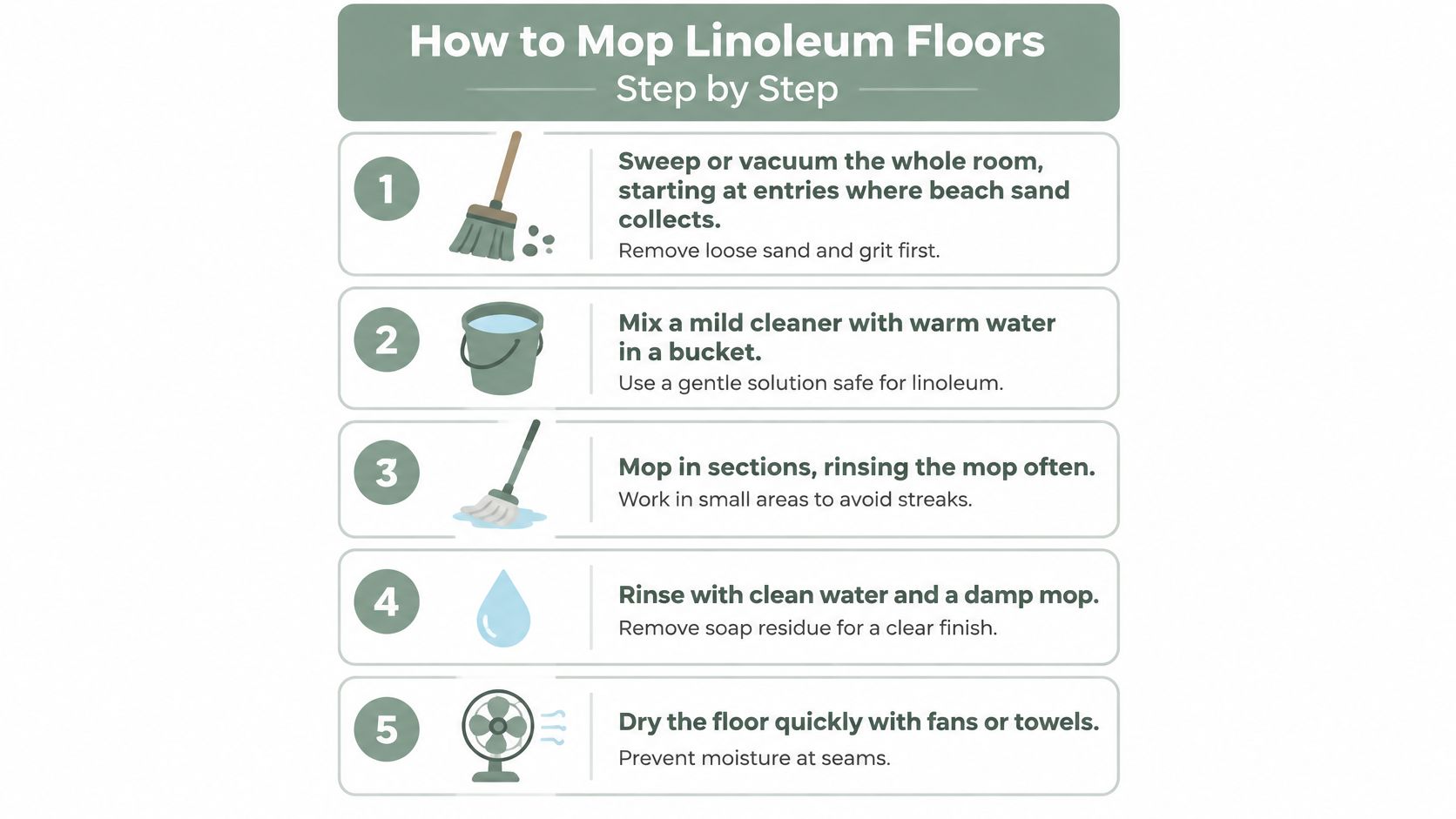
Sweep or vacuum the whole room. Start at Fairhope entryways and the doors where beach sand collects in Gulf Shores and Orange Beach homes. Use a soft broom, dry dust mop, or vacuum set for hard flooring, and reach beneath accessible furniture edges before wet cleaning.
Measure the neutral cleaner. Use cool or lukewarm water and the product's stated dilution. Don't add an extra splash for a dirty kitchen. Give a stubborn spot attention locally instead of increasing the chemical concentration across the room.
Prepare separate cleaning and rinse water. Keep the cleaning solution in one bucket and clean rinse water in another. This lets you remove soil from the mop without immediately returning all of it to your detergent solution.
Wring the microfiber mop until it doesn't drip. Hold it over the bucket and check before setting it on the floor. If pressing the mop produces a stream of water, it's too wet for this routine.
Work in manageable sections with overlapping strokes. Begin at the far side and retreat toward the exit so you don't walk across freshly cleaned flooring. Don't spread solution across the entire room before returning to collect it.
Rinse whenever the mop looks dirty. Replace gray rinse water and visibly soiled cleaning solution rather than stretching either through the rest of the house. A dirty pad needs rinsing or replacement, not another dose of detergent.
Collect leftover solution promptly. Use a clean second mop, suitable squeegee, or wet vacuum where appropriate. Don't leave dirty liquid to evaporate into a film, especially along cabinet bases.
Finish with a tightly wrung clean-water pass. Rinse the section without soaking it again. The goal is to remove remaining cleaner, not restart the wet-cleaning process.
Let the floor dry fully and inspect it under angled light. Haze or tackiness calls for checking your measuring, dirty-water pickup, and rinsing. If you over-concentrated the solution, use less concentrate next time, not less dilution water.
This sequence follows Forbo's technical maintenance guidance: remove debris, clean with a neutral product, collect dirty water, rinse, and dry. Its new-installation guidance specifies a minimum wet-cleaning delay of three days, with five days required on several product pages; follow the stricter applicable installation instructions.
The visual below summarizes the basic workflow.
Make the final inspection useful
Test a new cleaner in an inconspicuous closet area before using it throughout the room. Check the test after it dries, not just while it's wet.
A dull-looking patch isn't automatically dirt. If gentle cleaning doesn't change it, don't keep adding stronger chemicals.
For cooking spills and the surrounding kitchen routine, use our guide to cleaning the kitchen floor. On humid days, schedule mopping when you can keep air-conditioning and air movement running through the drying period. Morning can be convenient, but indoor conditions matter more than the clock.
When to Disinfect and When Regular Mopping Is Enough
Most routine floor cleaning doesn't need a disinfectant. The EPA's greener-cleaning guidance explains that floors generally have minimal hand contact, while likely contaminated, frequently touched surfaces deserve more targeted attention.
That distinction matters in a family kitchen or vacation rental: removing dirt and disinfecting are different jobs. A disinfectant isn't a substitute for removing sand, food residue, or dirty cleaning solution.
| Situation | Approach | Ventilation and notes |
|---|---|---|
| Routine clean with normal foot traffic | Vacuum, then damp-mop with a neutral cleaner. | Open a window when outdoor conditions permit, or run a fan while mopping. |
| Visible soil, sand, or spills | Remove grit, clean with a neutral cleaner, rinse, and dry. | Scrub only where needed; ventilate. |
| After illness in the household | Clean first, then use an EPA-registered disinfectant per label dilution and contact time on likely contaminated surfaces. | Confirm linoleum compatibility, ventilate, and never mix products. |
| Mold on a hard surface | Clean with water and mild detergent, then dry completely. | Ventilate; bleach is not the default, and investigate the moisture source. |
The EPA's mold and moisture guidance supports cleaning hard surfaces with water and detergent, followed by complete drying. Don't treat recurring growth as a reason to keep applying stronger floor chemicals.
Resolve the compatibility problem before disinfecting
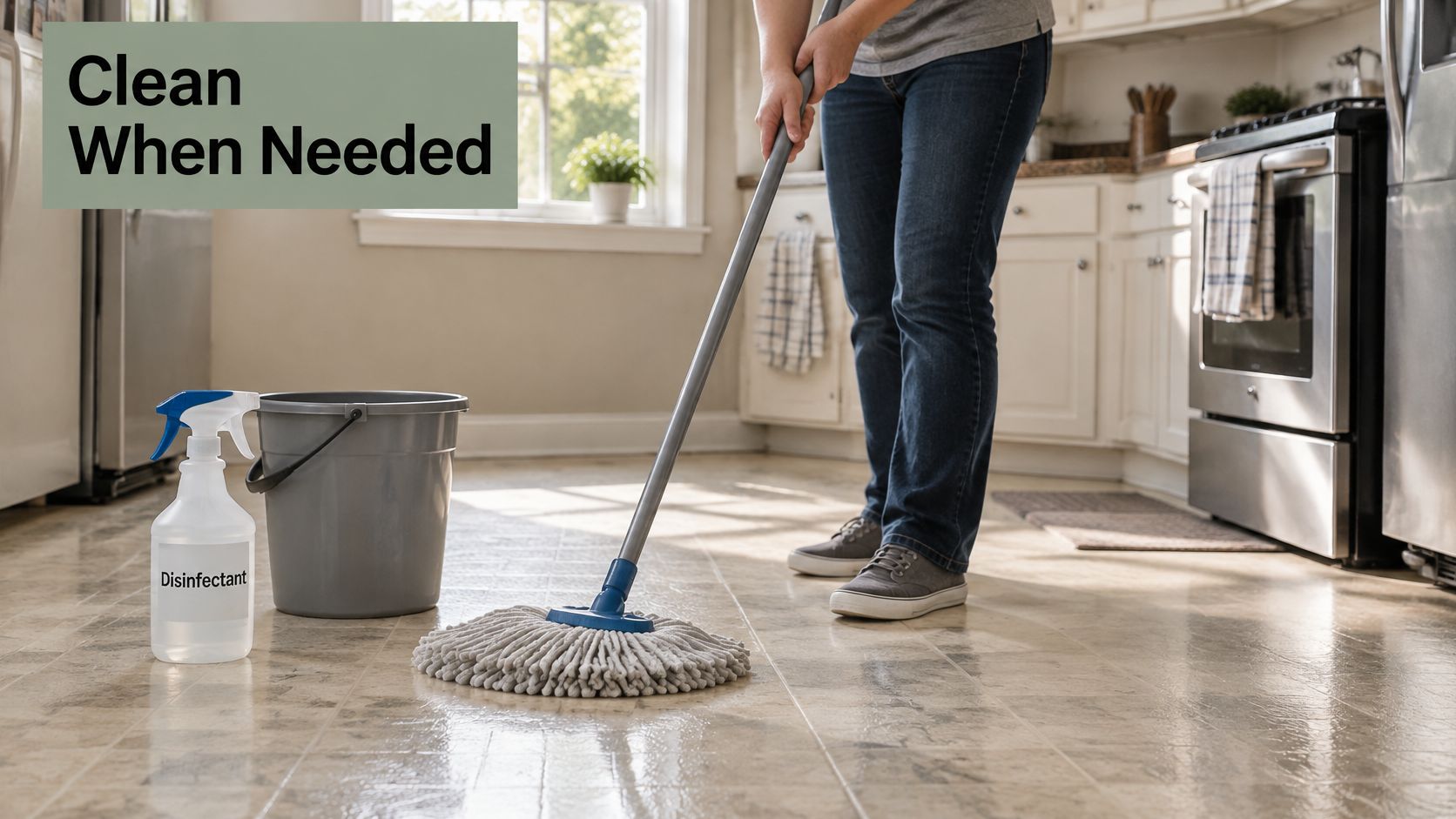
A disinfectant label may require the surface to stay wet for its stated contact time. That can conflict with linoleum's low-moisture care requirements. Don't shorten the disinfectant's contact time or soak an incompatible floor; choose a product and method approved for both the task and the surface.
Cleaning supplies can release volatile organic compounds, and concentrations can remain high after use. Ventilate according to the label, particularly in closed Gulf Shores and Orange Beach rentals. A fan moves air, but it doesn't replace fresh-air exchange when a product requires ventilation.
Never mix products. Separate bottles don't become a better cleaner when combined.
Families in Spanish Fort and Daphne can identify the actual concern before cleaning begins: ordinary dirt, a spill, or likely contamination. Our explanation of whether vinegar disinfects surfaces can also help separate homemade-cleaner claims from appropriate disinfection decisions.
Drying Linoleum Fast in Humid Gulf Coast Homes
In humid Gulf Coast weather, a freshly mopped floor can stay damp around seams even when the middle looks dry. Salt air doesn't justify stronger detergent, and tracked-in beach sand still needs dry removal. Control the room's moisture rather than leaving extra water to evaporate on its own.
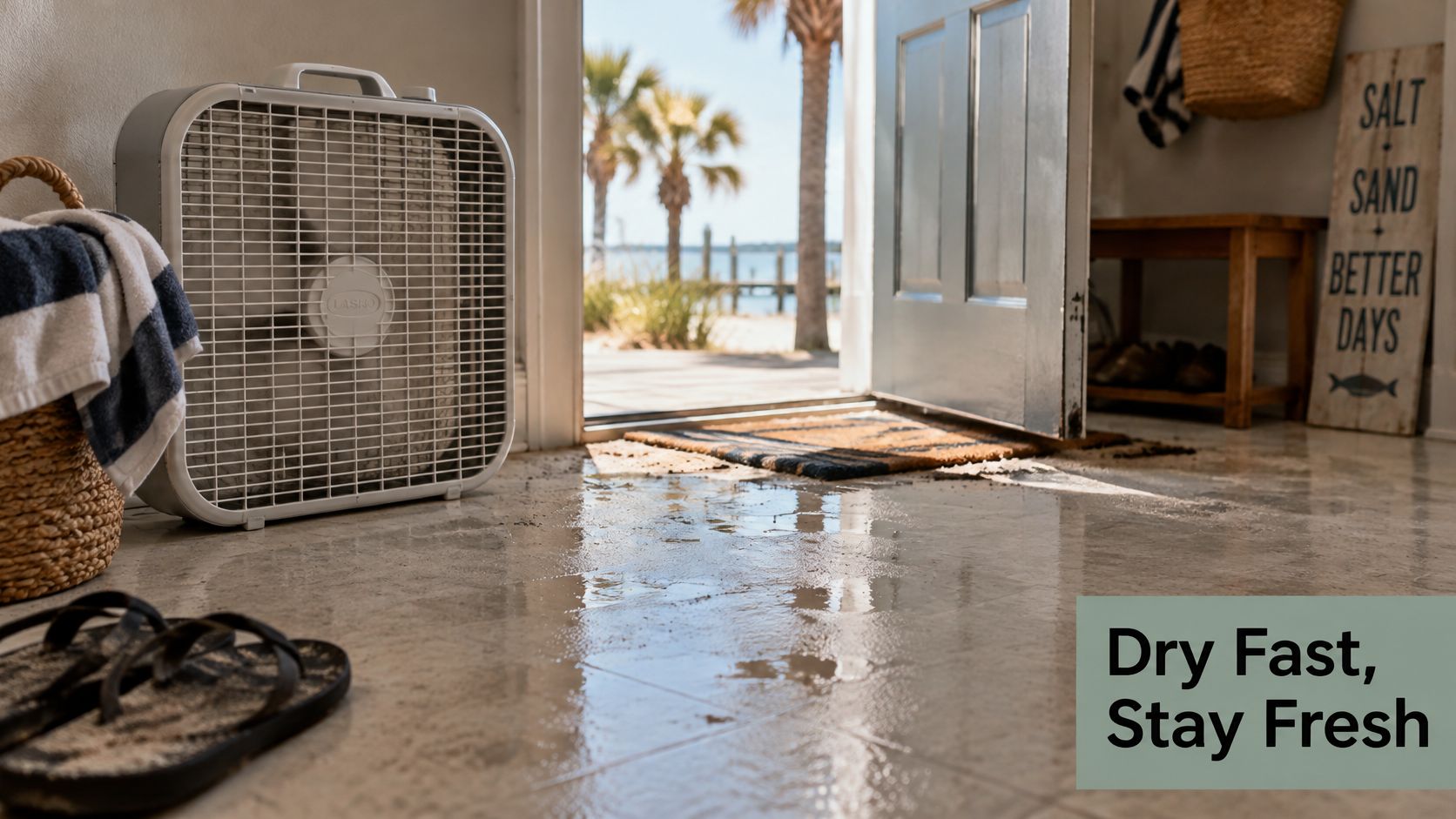
Run the air-conditioning during and after mopping. Use ceiling fans or a box fan to move air across the surface, and open windows only when the outdoor air is drier. If the room remains humid, a dehumidifier is more useful than opening the door to muggy air.
Everyday drying checks
- Edges and seams: Wipe away collected water with a clean, dry microfiber cloth.
- Closed rooms: Keep air circulating instead of shutting a damp bathroom or kitchen off from conditioned air.
- Rental handover: Check flooring before guests arrive, particularly when a Gulf Shores or Orange Beach property has been closed between stays.
A leak needs more than surface mopping
After a plumbing leak or hurricane-season water intrusion in Daphne or Fairhope, stop the water source and arrange inspection of the affected flooring layers. Don't pry up older flooring yourself when you don't know its composition or installation system.
The EPA's water-damage guidance treats drying within 24–48 hours as a guideline, not a guarantee that mold will or won't develop; materials wet longer than 48 hours call for additional water-damage guidance. Someone qualified should check beneath the linoleum and dry affected layers rather than wiping the top.
Watch for a musty smell, a lifted edge, or dark staining at seams. These aren't proof of a particular problem, but they're reasons to investigate instead of repeatedly mopping. Renters should notify the landlord promptly and describe where the moisture appeared.
Pick a Mopping Schedule and Book Your Next Clean
Match your routine to what comes through the door. A quiet bedroom needs far less attention than a kitchen entry used by children, pets, and sandy shoes, and every extra pass with a wet mop adds moisture the floor has to shed. Start with this household checklist, then adjust it to the soil you find.
- Weekly: Lightly damp-mop bedrooms and living areas that need it.
- Twice weekly: Check kitchens and entryways for tracked-in dirt and cooking residue.
- Daily during sandy periods: Sweep beach-facing entries before grit spreads.
- Monthly: Give accessible corners, edges, and neglected areas more detailed attention without turning the job into a soak.
Treat these as scheduling recommendations, not fixed requirements. A small spill needs prompt cleanup even if mopping day is tomorrow, because standing liquid does more harm to seams and edges than a missed session. Our house cleaning schedule guide can help fit floor care around the rest of the home.
Choose help around your busiest areas
Sweet Home Cleaning Service offers recurring cleaning every week, every two weeks, or every three weeks, with plans customized for high-traffic areas or detailed cleaning. Standard house cleaning includes dusting furniture, shelves, and décor; sweeping, vacuuming, and mopping floors; cleaning bathroom sinks, toilets, tubs, and mirrors; wiping kitchen counters, stovetops, and appliances; emptying and relining trash bins; and tidying bedrooms and living areas. Deep cleaning and move-in/move-out cleaning are also available when a home needs a fuller reset.
For your own routine, prioritize dry grit removal at entries and measured, low-moisture cleaning where the floor needs it. That is more manageable than saving everything for one oversized wet-cleaning session.
Sweet Home Cleaning Service offers standard house cleaning, deep cleaning, move-in/move-out cleaning, and customized cleaning plans, with attention to busy floors and high-traffic rooms. If you're in Fairhope or the surrounding Eastern Shore and Gulf Coast area, including Daphne, Spanish Fort, Gulf Shores, and Orange Beach, visit Sweet Home Cleaning Service to book a recurring or one-time clean and give more of your time back to your family.

Let us handle the cleaning. Enjoy your home.
Sweet Home Cleaning Service
19940 State HWY 181, Suite E Fairhope, AL 36532
Phone: (251) 586-4081
sales@sweethomecleaningservice.com