
Clean Laminate Countertops: A Fairhaven Guide

Laminate countertops are naturally low-maintenance because their non-porous melamine wear layer helps spills wipe clean, especially when you remove them within about 1–2 hours. Their biggest enemy is water seeping into seams and edges, where the particleboard core can swell and fail, not ordinary coffee, crumbs, or daily kitchen use.
That matters in a Fairhope kitchen after a stormy evening, in a Daphne rental between guests, or in a Spanish Fort home where spring pollen and beach sand find their way indoors. Laminate handles ordinary messes well, but it responds poorly to standing water, abrasive scrubbing, and rushed cleaning around the sink.
Sweet Home Cleaning Service works around the practical realities of Eastern Shore homes, from busy family kitchens to move-related cleanings. The right approach isn't to attack laminate with the strongest product in the cabinet. It's to remove spills promptly, use enough moisture to lift grime without flooding the surface, and dry the vulnerable areas before water can reach the seams.
Table of Contents
- Is vinegar safe for laminate countertops?
- Can baking soda remove sticky residue?
- What should I do if a spill reaches the edge seam?
- Are laminate counters practical in rental properties?
- When is professional cleaning useful?
Why Laminate Countertops Belong in a Gulf Coast Home
A cup of coffee beside the newspaper is a familiar Fairhope morning scene. Add a little flour from weekend baking, a sticky ring beneath a water bottle, or sand carried home after a day near Orange Beach, and the counter becomes a work surface rather than a showroom display. Laminate is well suited to that kind of life because the melamine wear layer is non-porous and designed for straightforward maintenance.

Fresh coffee, wine, and tomato sauce generally wipe away more easily when they aren't left sitting for long. That doesn't mean the counter is indestructible. The surface layer can resist routine messes while the material underneath remains vulnerable where two pieces meet, where the counter meets the backsplash, and around cutouts for a sink or cooktop.
The surface is tough, the edges need attention
Laminate countertops commonly serve a normal kitchen for 10–20 years with reasonable care, according to guidance on laminate countertop cleaning and durability. That expected service life depends less on dramatic restoration than on small habits, especially keeping water from working into seams and edges.
The particleboard substrate beneath the decorative surface can swell when moisture gets through an unprotected edge. In coastal Alabama, where humidity and damp conditions are part of household life, a slow leak beneath a dish rack or a wet cloth left against the backsplash deserves more attention than a harmless dry crumb.
Stone and solid-surface materials have different strengths and limitations, but laminate remains a practical choice for homeowners who want a broad range of patterns without a demanding care routine. It also suits renters, older Eastern Shore homes, and vacation properties where counters need to look orderly after ordinary use rather than receive delicate treatment every hour.
Practical rule: Treat the center of the counter gently, and treat every seam, edge, and sink junction as a place where water must be removed quickly.
For homeowners and property managers in Gulf Shores, careful kitchen work is part of maintaining the whole property between visits. A detail-oriented cleaning service in Gulf Shores can handle routine kitchen surfaces without turning a simple laminate counter into a wet, over-scrubbed project.
Daily and Weekly Cleaning Routines That Actually Work
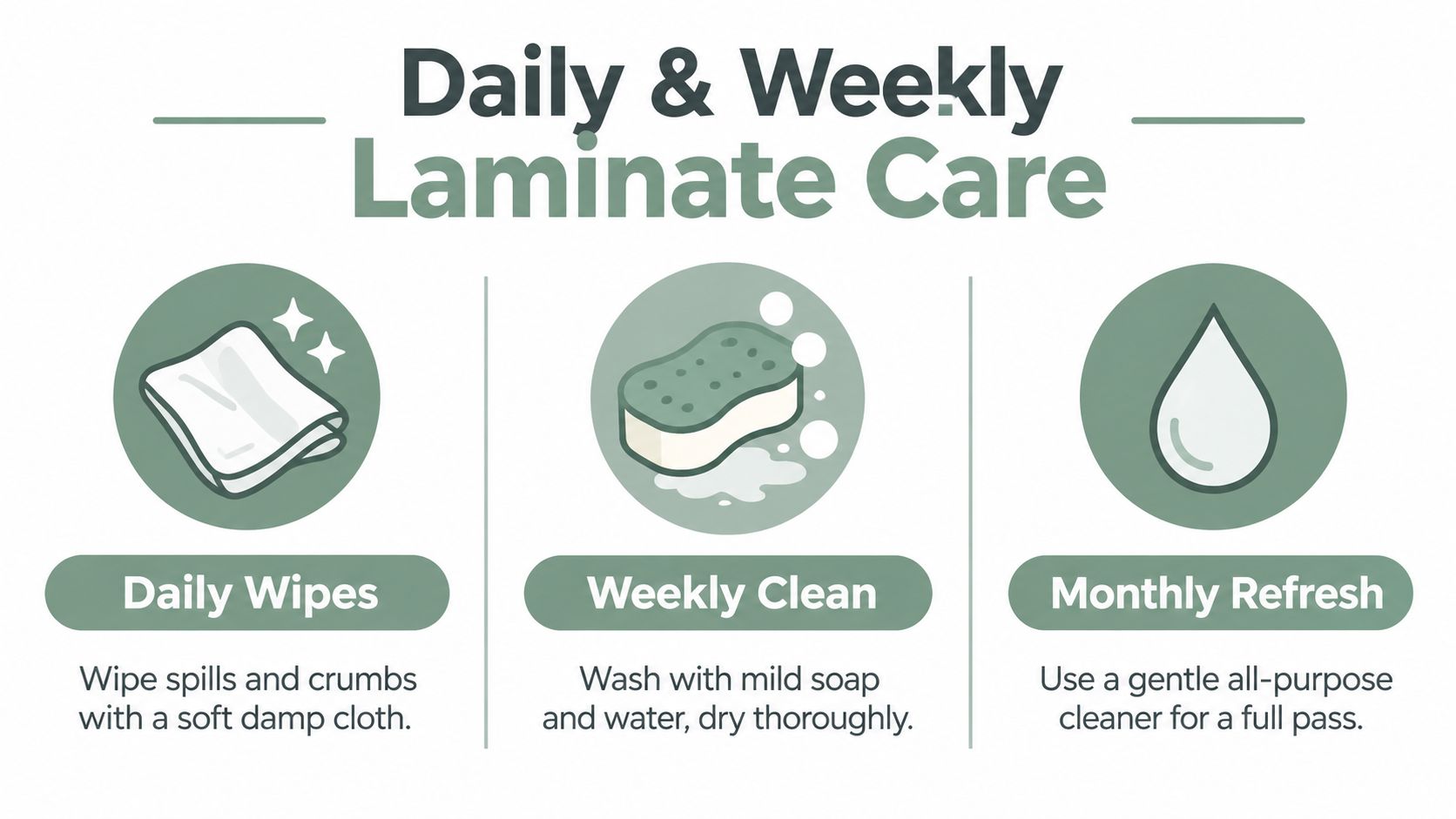
The most reliable way to clean laminate countertops is also the least complicated. Clear the surface, remove loose grit, wipe with a mildly soapy cloth, and dry the counter completely. A damp cloth with warm water and mild detergent handles most daily residue, while a pH-neutral cleaner can help when the entire surface needs a more thorough pass.
A simple daily sequence
Clear the counter first. Move appliances, mail, containers, and drying dishes so crumbs and sticky spots aren't hidden beneath them.
Remove dry grit before adding water. Brush away sand, flour, and crumbs with a soft cloth. Grinding beach sand across the surface while wiping can create unnecessary friction.
Use a damp, not dripping, cloth. Warm water and a small amount of mild detergent are usually enough for grease from breakfast, fingerprints, and food residue.
Wipe in manageable sections. Rinse the cloth as it picks up grime rather than spreading the same residue across the counter.
Dry immediately. Pay particular attention to the sink edge, backsplash caulk, and cabinet seams. Manufacturer-style guidance recommends clearing the surface, cleaning gently, rinsing, and drying while keeping moisture away from seams and caulk, as described in this laminate countertop cleaning sequence.
For a high-use kitchen, a care guide recommends daily cleaning and disinfection twice a week. Those frequencies come from laminate countertop care guidance, and the practical point is consistency, not soaking the surface with disinfectant.
A weekly reset for busy kitchens
Once a week, lift items that usually stay in place and clean beneath them. Wipe the counter, backsplash area, appliance sides, and the narrow strip behind the faucet. Don't push a wet cloth into the seam. Fold it so you can control the moisture, then follow with a dry microfiber cloth.
If a residue needs more dwell time, apply a small amount of cleaner to the cloth or spot rather than pouring it across the counter. For a baking-soda paste, a 5–10 minute wait can help loosen a stubborn mark before gentle wiping, as noted in the same laminate cleaning guidance. Rinse away the residue and dry afterward.
Property managers handling Gulf Shores or Orange Beach turnovers can use this order between guests, but the counter should be part of a wider reset that includes linens, inspections, and documented condition checks. For homeowners who need help with the kitchen beyond routine wiping, this deep-cleaning kitchen checklist offers a useful way to identify overlooked areas.
Removing Stains Without Ruining the Finish
Speed gives you the safest stain-removal advantage. A fresh coffee, wine, or tomato mark usually needs a gentle wipe, not a chemical escalation. Blot or lift the spill, use a damp cloth with mild detergent, rinse the area, and dry it before deciding whether anything stronger is necessary.
Match the method to the mark
Grease and everyday food film respond well to warm water and mild detergent. Sticky residue from syrup, a child's snack, or a label can often be softened with a damp cloth and patient wiping. Pressing harder doesn't make the cleaner work better. It only increases the chance of dulling the finish.
For a dried food stain, baking soda paste is a reasonable gentle option. Spread a small amount over the spot, allow it to sit for 5–10 minutes, and wipe without aggressive pressure. Baking soda can help lift residue, but it isn't a reason to scrub with a rough sponge or leave gritty powder across the entire counter.
| Mark or residue | Start with | If it remains |
|---|---|---|
| Coffee, wine, or tomato residue | Damp cloth and mild detergent | Repeat gently after rinsing and drying |
| Grease or food film | Warm water and mild detergent | Use a pH-neutral cleaner on the cloth |
| Dried sticky spot | Baking-soda paste for 5–10 minutes | Wipe gently, then rinse and dry |
| Persistent dye or residue | A manufacturer-approved spot treatment | Test in a hidden area first |
Laminate manufacturers may recommend rubbing alcohol or acetone for particularly stubborn stains, but those products deserve restraint. Follow the product guidance, test an inconspicuous area first, use the smallest practical amount, and rinse and dry the surface immediately. The Formica care and maintenance guidance reflects the important trade-off: a stronger spot treatment can address persistent residue, but careless or repeated use can put the finish at risk.
Hard-water marks can look like a countertop-material problem even when the issue is mineral residue. A resource describing the best approach from Varun Marbles is written for marble, not laminate, but it reinforces a useful cleaning principle: identify the deposit before choosing a treatment. Don't automatically reach for vinegar, abrasive powder, or a strong solvent just because a mark is visible.
Stop if the finish changes: If a spot becomes dull, hazy, or lighter while you're cleaning, remove the product, rinse the area, and dry it. More scrubbing won't restore a finish you've just damaged.
Cleaning Habits That Damage Laminate Over Time
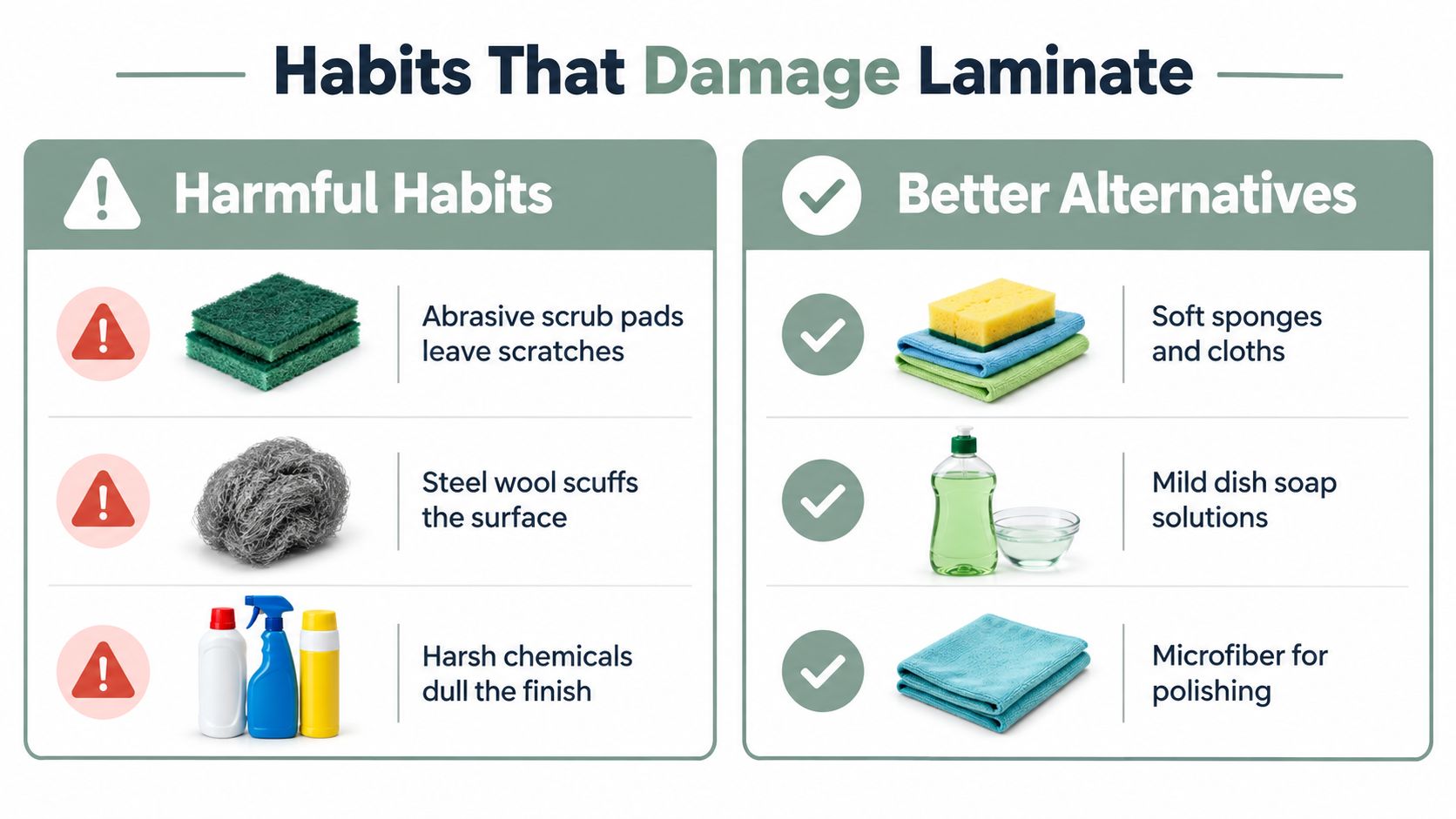
A stronger cleaner isn't automatically a better cleaner. Laminate often suffers from the method used to remove grime, especially when someone attacks a small mark with a scouring pad, steel wool, or repeated heavy pressure.
Abrasive tools can dull the melamine wear layer and leave a surface that catches residue more readily. Harsh scouring powders create the same problem in a different form. Manufacturer and cleaning guidance consistently warns against abrasive pads, steel wool, and harsh powders because they can scratch the finish and increase the risk of staining.
Replace these habits
Scrubbing with steel wool: Use a soft cloth or non-abrasive sponge instead. Steel fibers can scuff the surface even when the original mark would have lifted with mild detergent.
Using abrasive pads for every job: Reserve patience for dried residue. A damp cloth, a short dwell time, and gentle passes are safer than grinding at the counter.
Flooding the surface: Spray the cloth rather than soaking the counter. Water that reaches the seam beside the sink or backsplash can create a more serious problem than the spill you're trying to remove.
Leaving puddles near edges: Wipe standing water as soon as you notice it, especially around a faucet, dish rack, or countertop appliance.
Applying strong chemicals without a final rinse: Product residue can affect the finish over repeated use. Rinse according to the product directions, then dry the surface thoroughly.
Why coastal homes need a lighter touch
Humidity doesn't make every laminate counter fail, but it makes moisture control a sensible priority. In a home near Fairhope, Daphne, or Spanish Fort, a wet cloth tossed beside the sink can stay damp longer than expected, and a small opening at an edge deserves prompt attention.
The same principle applies to mildew-related buildup in damp areas. A Fairhope exterior-cleaning service describes soft washing as a way to eliminate algae, mold, and mildew rather than just rinse visible staining, as outlined in its coastal moisture and mildew cleaning information. Countertops aren't exterior siding, but the comparison is useful: rinsing a problem away isn't the same as removing residue while controlling moisture.
Gentle cleaning protects the surface because it removes the need for aggressive correction later. Consistent wiping, careful drying, and sensible product selection do more for laminate than an occasional deep scrub with whatever looks strongest under the sink.
Protecting Countertops Through Coastal Living and Seasonal Routines
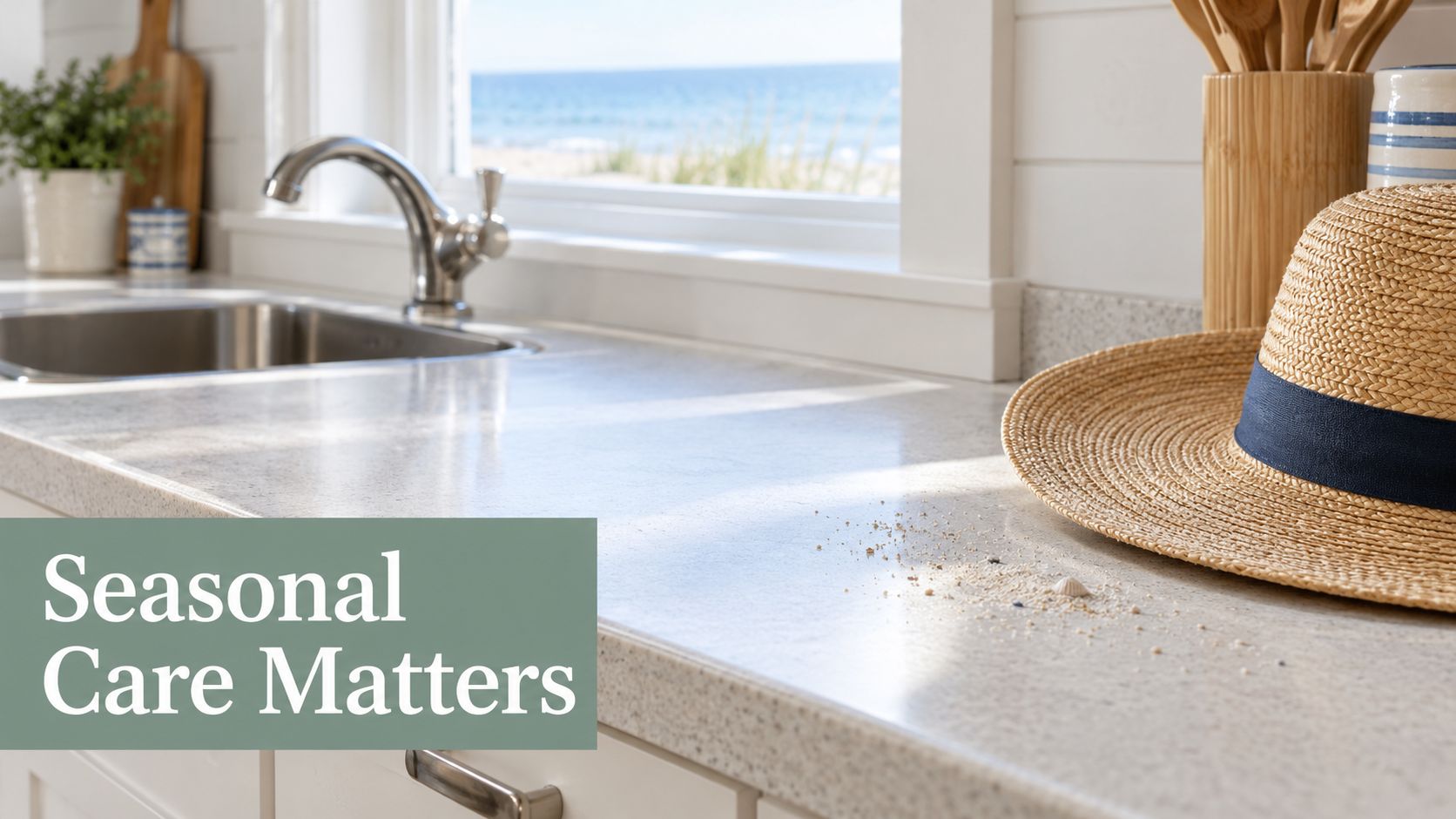
Coastal homes collect more than food crumbs. Spring pollen settles on open windowsills and counters, beach sand arrives in pockets and bags, and humid weather encourages families to leave damp dishcloths near the sink. The countertop routine needs to account for those conditions without becoming a daily production.
Sand deserves special handling. Brush or lift it away before wiping, particularly around a kitchen island where people set beach bags, towels, or sun hats. A cutting board creates a clean work zone for food preparation, while trivets or heat-safe pads help protect laminate from direct heat. Keep hot cookware off the surface rather than testing what it can tolerate.
Adjust the routine to the household
Busy families in Fairhope may need a short daily reset that focuses on crumbs, coffee rings, and the sink edge. During spring pollen season, a dry pass before wet cleaning keeps fine particles from turning into a paste. During hurricane season preparation or cleanup, inspect around appliances and stored supplies for moisture, grit, and residue rather than pushing a dirty cloth across the surface.
Vacation rentals in Gulf Shores and Orange Beach face a different rhythm. Turnover cleaning may include a complete clean, linen resets, property inspections, and photo reports, and one Gulf Coast service says a standard turnover can usually take 2–4 hours depending on property size in its vacation-rental cleaning checklist. A laminate counter needs quick, repeatable care during that window, particularly around the sink and food-preparation areas.
Move-in and move-out cleaning also creates a good opportunity to inspect seams. Look for swelling, lifted edges, softened caulk, or discoloration near plumbing. Cleaning won't reverse a swollen particleboard core, but finding moisture damage early can help the homeowner, renter, property manager, or realtor address the underlying issue before the next occupant moves in.
Build protection into recurring service
A recurring maid service can keep the routine manageable when a household has school schedules, work demands, or frequent guests. The useful cadence might be weekly, biweekly, or monthly, depending on how the home is used, with a deeper reset reserved for neglected buildup or a move.
For families who want support with that ongoing pattern, recurring house cleaning services can include attention to kitchen counters as part of broader home maintenance. The aim is practical. Regular care gives families more time while reducing the temptation to wait until residue requires harsh treatment.
Frequently Asked Questions About Laminate Countertop Care
Is vinegar safe for laminate countertops?
Advice varies. Some cleaning guidance suggests diluted vinegar for certain stains, while manufacturer guidance may favor other spot treatments. Because repeated acidic or overly wet applications can create finish and moisture concerns, start with warm water and mild detergent, use a pH-neutral cleaner when appropriate, and test any alternative on a hidden area first.
Can baking soda remove sticky residue?
Yes, a small baking-soda paste can help with some dried food marks. Let it sit for 5–10 minutes, wipe gently, rinse away the residue, and dry the counter. Don't use dry baking soda as a substitute for a soft cleaner, and don't scrub it with an abrasive pad.
What should I do if a spill reaches the edge seam?
Blot it immediately, wipe with a barely damp cloth, and dry the seam thoroughly. If the edge feels soft, looks swollen, or keeps darkening, cleaning won't solve the underlying moisture problem. Have the area assessed before continued water exposure worsens it.
Are laminate counters practical in rental properties?
They can be, because routine wiping is simple and the surface suits fast turnover work. Hosts in Gulf Shores and Orange Beach should still include seam checks, sink-edge drying, and gentle stain removal in every turnover rather than relying on aggressive cleaning.
When is professional cleaning useful?
Deep cleaning can help when buildup has collected around appliances, backsplash lines, cabinet edges, or neglected parts of the kitchen. Move-in and move-out cleaning is also useful for renters, buyers, and sellers in Fairhope and Daphne who need the home prepared without abusing the countertop finish.
Sweet Home Cleaning Service provides standard house cleaning, recurring maid service, deep cleaning, move-in and move-out cleaning, and vacation rental cleaning for homes across Fairhope and the surrounding Eastern Shore and Gulf Coast area. If your laminate counters need careful routine attention before buildup becomes a bigger task, visit Sweet Home Cleaning Service to book service or request a free quote.

Let us handle the cleaning. Enjoy your home.


Sweet Home Cleaning Service
19940 State HWY 181, Suite E Fairhope, AL 36532
Phone: (251) 586-4081
sales@sweethomecleaningservice.com