
Clean Living Room

A clean living room is usually the first place a Fairhope homeowner notices the difference between a quick tidy and a real reset. The coffee table is clear, but the sofa arms still hold dust, the TV stand has a gray film, and beach sand has worked its way into the rug along with a little rain-tracked grit from the front entry. Sweet Home Cleaning Service handles this kind of room often in Fairhope, Daphne, Spanish Fort, Gulf Shores, and Orange Beach, where humidity, pollen, and busy family traffic keep the main gathering space from staying fresh for long.
The living room matters because it collects what the rest of the house sheds, dust from upholstery, hair from pets, particles from electronics, and whatever gets carried in on shoes and hands. A true reset deals with the room in the right order, so you're not just moving dust around or making the air smell stronger for an hour. The goal is a room that looks orderly and feels ready for family time, guests, and the kind of everyday use that happens in Eastern Shore and Gulf Coast homes.
If your living room tends to collect clutter near the windows and the couch, a simple system helps more than a frantic Saturday sweep. This home organization guide pairs well with a room reset because fewer loose items means fewer places for dust and pet hair to hide.
Table of Contents
Why a Living Room Reset Is Different from a Weekly Tidy
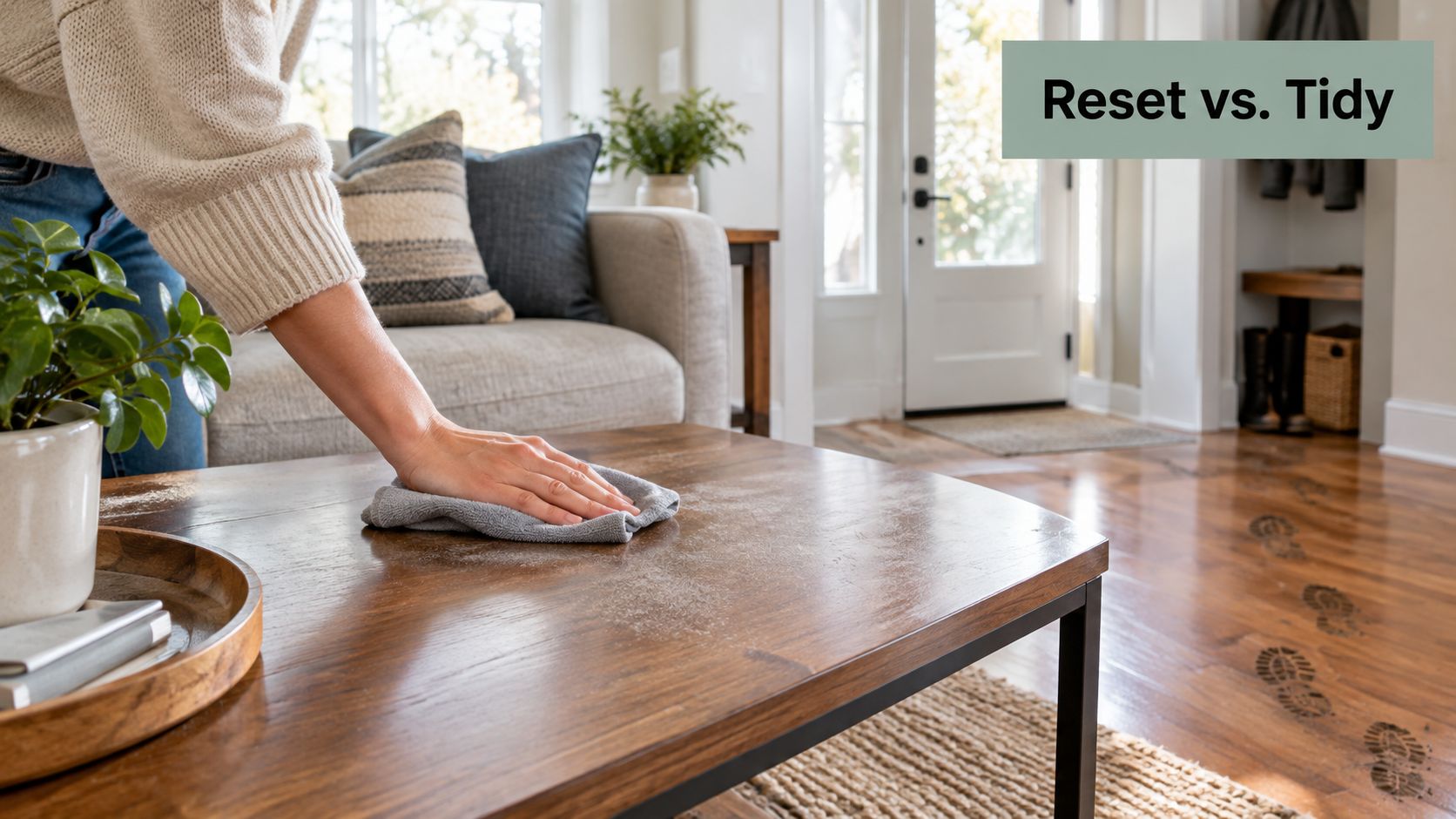
A weekly tidy can make a living room look presentable. A reset reaches the surfaces people don't notice until they've been ignored for a while, which is why the room can still feel heavy even after the pillows are straightened and the magazines are stacked. That difference shows up fast in Fairhope after a rainy spell, when damp shoes leave marks at the entry and the air carries a little more grit than usual.
What makes this room different
The living room isn't just another stop on the cleaning route. It sits at the center of daily life, so it gathers dust from shelves, electronics, curtains, and upholstery, then holds onto it on soft surfaces and along baseboards. The room also has a long domestic history as a shared space for sitting, socializing, and receiving guests, so visible order has always mattered there, and that's still true in modern homes (BBC Culture).
That history is part of why the space feels off when the floor edges are dusty or the sofa cushions look dull. It's not only clutter that changes the impression, it's the buildup on surfaces people touch and see every day.
Why Gulf Coast homes notice it fast
Humidity makes the room feel stale sooner, and pollen or beach sand makes the difference even more obvious in Daphne, Spanish Fort, and Gulf Shores. Upholstery traps what the air carries, while electronics gather fine dust that shows up in bright light. A tidy surface can hide that for a little while, but a real reset clears the room from top to bottom so the whole space feels lighter.
A living room feels clean when the visible surfaces and the hidden edges agree with each other.
The point of the reset is simple, restore the room as a shared space, not just a pass-through. Once that's clear, the cleaning order makes sense.
The Top-Down Cleaning Order That Prevents Recontamination
Start with the air, not the floor. Open windows if the weather and outdoor air make sense for it, then remove anything that doesn't belong in the room before dust starts moving. In humid Gulf Coast homes, dust clings longer, so a top-down pass keeps you from pushing the same particles from a shelf to a sofa to the rug.
The sequence that holds up
Work from the highest surfaces down. Dust ceiling fans, picture frames, shelves, and vents first, then move to tables, electronics, and other hard surfaces. After that, damp-wipe what can take moisture, vacuum upholstery and rugs with a HEPA-equipped machine, and finish with the hard floor.
That order lines up with EPA indoor air guidance, which favors damp cloth dusting, HEPA filtration, and weekly vacuuming or more often for carpets and furniture. It also warns that people with asthma or allergies should avoid the room during vacuuming because cleaning can temporarily stir up dust (EPA). Dry feather dusting and fast sweeping are poor defaults because they tend to move particulate matter around instead of capturing it.
For fans, a separate step saves time and mess. If you want a practical walkthrough, the how to clean dusty fan blades guide is useful because ceiling fans are one of the easiest places to miss.
A simple decision table
| Step | Why It Comes First |
|---|---|
| Ventilate | Fresh air helps clear loosened dust before it settles again |
| Declutter | Open surfaces are easier to clean without moving debris twice |
| High surfaces first | Dust falls downward, so starting high prevents rework |
| Damp-wipe | Moisture traps dust instead of sending it back into the air |
| HEPA vacuum | Upholstery and floor edges need captured particles, not redistribution |
| Mop last | Wet flooring should be cleaned after all settling is done |
That sequence becomes the habit. Once it's in place, you can run the room on autopilot without wondering what to touch first.
Fabric and Upholstery Care for Sofas, Curtains, and Rugs
Soft surfaces are where a living room stores most of its wear. Sofas hold skin oils, crumbs, pet hair, and dust in the seams. Curtains catch what comes through the windows, which matters in Fairhope when spring pollen gets in as soon as fresh air feels welcome.
Match the method to the material
Microfiber upholstery usually responds well to a careful vacuum pass with the upholstery attachment, then a lightly damp cloth on safe spots. Woven fabric needs a gentler hand, especially around seams and stitched edges, because aggressive brushing can rough up the fibers. Slipcovers are simpler when they're machine-washable, but dry-clean-only covers shouldn't be treated like laundry just because they look removable.
A useful fabric resource is the upholstery cleaning guide from Lewis and Sheron Textiles, especially if you're unsure how one piece of furniture will react to moisture or a cleaner. The main rule is still the same, vacuum slowly with the right attachment so the nozzle can lift debris from the weave and seams instead of skimming the surface.
Clean spots while they're fresh. Once a spill sets, you usually need more effort and more caution to remove it.
Rugs and drapes need different attention
Area rugs catch beach sand better than hard floors do, which is why a quick pass often isn't enough in Gulf Shores or Orange Beach homes. Vacuum both sides if the rug is movable, and pay attention to the edges where grit collects. Curtains should be dusted or vacuumed with a brush attachment so you're not dragging pollen deeper into the fibers.
For pet hair, the upholstery tool usually works better than a stiff brush. For tracked-in sand, slower passes beat fast ones every time. The point is to remove what's embedded, not to churn the fabric until it looks fuzzy.
Dusting Electronics, Screens, and High-Touch Surfaces
A living room can look finished until the TV is off and the remotes are back in place. Then the dust shows. Screens, sound bars, game controllers, and charging cords all collect a thin film that catches light and makes the setup look worn. In a family room, the items people touch matter as much as the ones they see.
Clean the screen the safe way
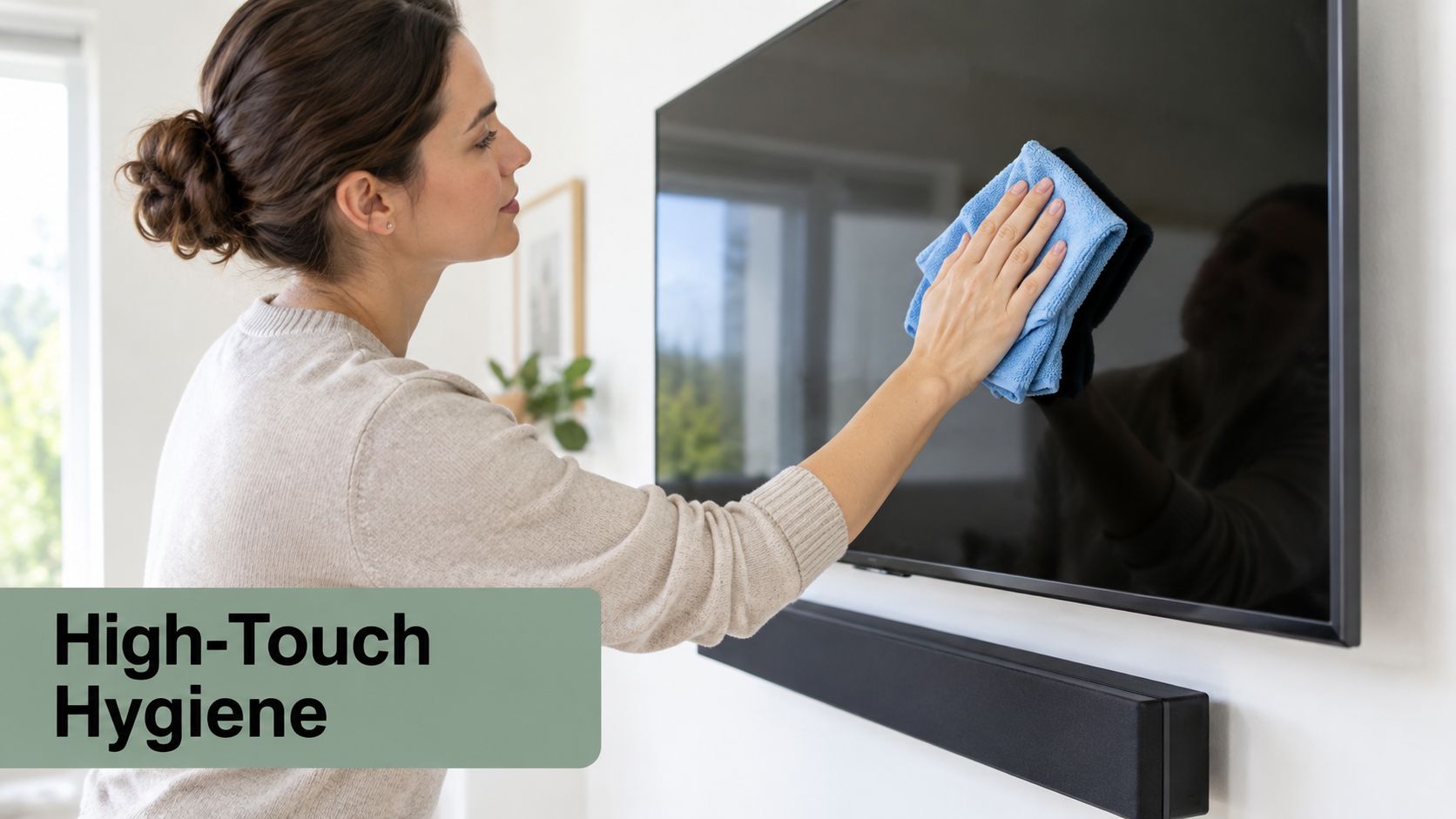
Use a dry or barely damp microfiber cloth on the TV screen, and never spray cleaner directly onto the display. Move next to the sound bar, media shelf, and remote controls, then finish with light switches, door handles, and table edges. Dusting removes loose particles, and high-touch spots that get handled a lot also need disinfecting.
The CDC recommends removing soil first, then applying an EPA-registered disinfectant for the label-specified contact time, at least 1 minute for a properly diluted household bleach solution (CDC). That sequence matters because residue can interfere with the disinfectant if you skip the cleaning step.
A quick order for stacked media setups
Dust the top shelf first.
Work downward so loose dust does not land on cleaned gear.Wipe the screen last in the electronics zone.
That keeps fingerprints and cloth fibers from moving back onto it.Use a separate cloth for remotes and controllers.
They get touched often, so they deserve their own pass.Finish with switches and handles.
These are the places people reach without thinking.
Keep liquids off fabrics, unfinished wood, leather, and screens unless the product label clearly allows it. In humid Gulf Coast and Eastern Shore homes, a careful finish matters because moisture lingers, so a light final wipe and dry-down help the room stay clean longer. A fragrance-light reset here does more than any scented spray ever will.
Floor Care Decisions for Wood, Tile, and Carpet
Floors show the truth about a living room faster than almost anything else. Hardwood reveals dust at the edges, tile collects soil in grout lines, and carpet hides both crumbs and fine particles until you step on them. The right tool depends on the surface, and the wrong one can leave moisture or grit behind.
Match the floor to the method
For hardwood and laminate, a lightly damp mop is the safer choice, not a wet one. Standing water can damage finish or seep where it shouldn't, and Gulf Coast humidity makes that mistake more likely to linger. Tile can handle more moisture, but grout lines need attention because they trap soil that a quick pass will miss.
For carpet and area rugs, vacuuming with HEPA filtration is the baseline. That keeps the dust from escaping back into the room, which is especially important when the floor has beach sand, pet hair, or fine household dust. If a spill hits carpet, blot first, then spot-clean rather than scrubbing in circles.
A helpful flooring reference for laminate and wood care is Flacks Flooring cleaning advice, especially if you want a reminder about keeping moisture controlled on finished surfaces. For a larger route that includes connected rooms, this floor cleaning guide can help you keep the same logic across the house.
Never leave standing water on wood or unsealed grout. In humid weather, that's how a small cleaning job turns into a moisture problem.
Floor care by surface type
| Surface | Best Tool | Watch Out For |
|---|---|---|
| Hardwood | Lightly damp microfiber mop | Too much water, dragging grit |
| Laminate | Barely damp mop | Excess moisture at seams |
| Tile | Damp mop and grout brush | Neglecting grout lines |
| Carpet | HEPA vacuum and spot treatment | Standard vacuums that blow dust back |
| Area rugs | Vacuum with upholstery or rug setting | Edge buildup and sand near entry paths |
The right vacuum depends on the room, but for most living rooms with rugs or wall-to-wall carpet, a HEPA-capable machine is the safer default. If the space has renovation dust or smoky residue, ordinary vacuuming can make things worse, so that calls for more controlled cleanup or specialized help instead of a casual pass.
A Fresh-Smelling Room Without Adding Fragrance
A room can smell “clean” without being filled with scented residue. That matters in homes with pets, kids, or anyone sensitive to strong products, because the finishing step too often becomes a cloud of spray or a plug-in running in the corner. In practice, odor masking and odor removal are not the same thing.
Source removal beats perfume every time
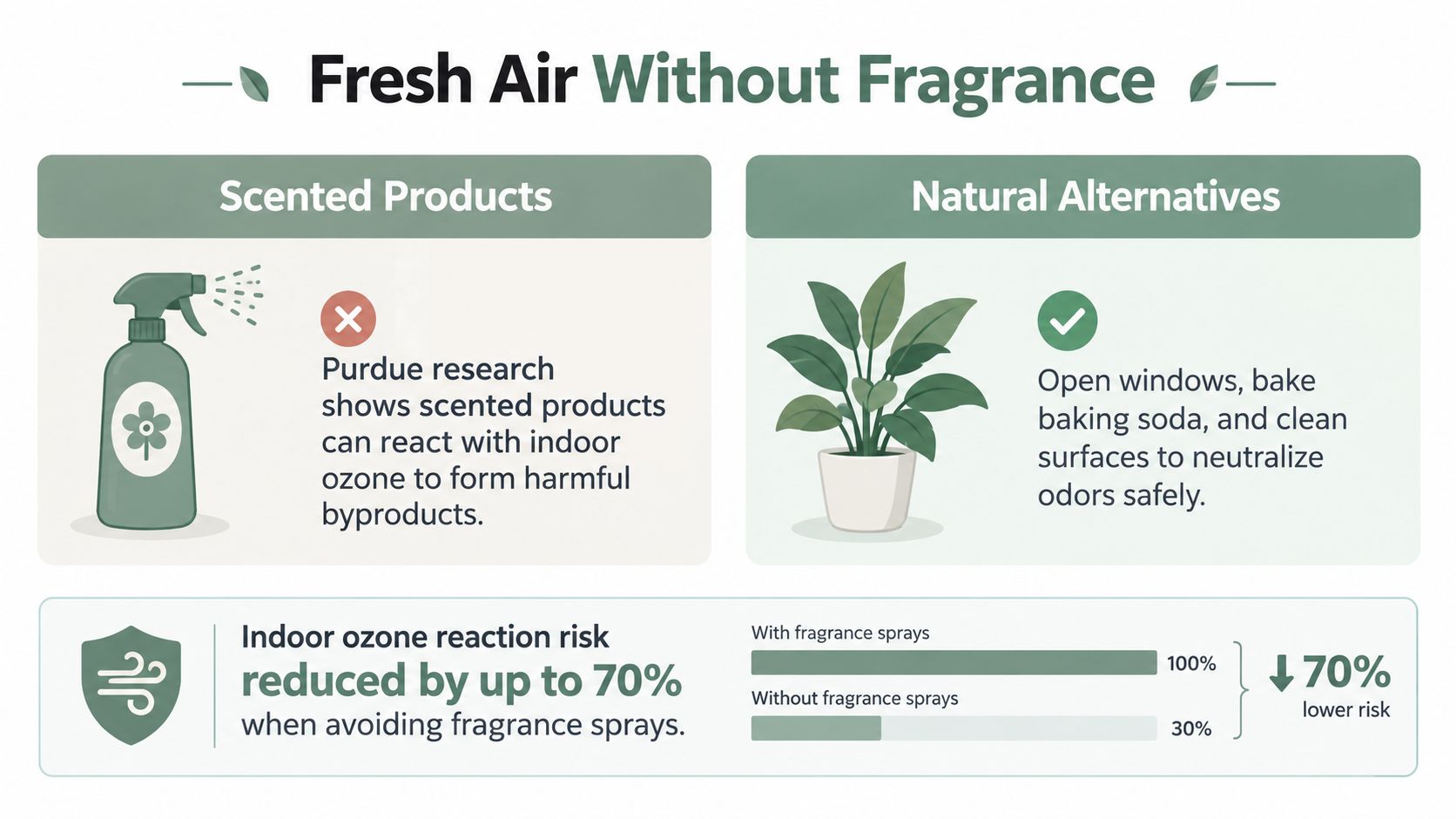
Purdue University engineers found that fragrances can react with indoor ozone and rapidly generate nanoscale particles, and that scented wax melts produced indoor pollution at least comparable to candles, while diffusers, disinfectants, air fresheners, and scented sprays also generated substantial particles (Purdue University). That's why a fresh-smelling living room starts with removing the source of the smell, then ventilating when outdoor conditions allow. Cleaning the sofa, trashing stale debris, and airing out the room do more than layering on fragrance.
The safest practical habit is simple. Clean the soft surfaces, empty the trash, wash anything washable, and let the room breathe before you decide whether you even want a scent product. A fragrance-free or low-emission cleaner is usually the better choice if the goal is a room that smells neutral instead of decorated.
Get rid of the source first, ventilate second, and only consider fragrance if the household still wants it.
What not to assume
“Natural” doesn't automatically mean harmless. Essential-oil diffusers still add emissions, and a heavily scented room can feel clean while the air is still loaded with leftover product. If someone in the home has asthma or strong sensitivity, a scent-light routine is usually easier to live with than a room that smells like a cleaner aisle.
For a more complete indoor-air picture, keep ventilation, damp microfiber cleaning, and residue removal at the center. That gives you a room that feels fresh without leaning on product smell to do the work.
Humidity, Recurring Service, and Your Next Steps
A clean living room doesn't stay that way on its own in Fairhope, Spanish Fort, or Gulf Shores if humidity keeps running high. The EPA recommends keeping indoor relative humidity below 60%, with an ideal range of 30% to 50% when possible (EPA). When a hygrometer climbs above 60%, that's a sign to use ventilation, air-conditioning, or dehumidification along with routine cleaning.
What keeps the reset from fading
Start with the basics, dry damp surfaces, check windows and exterior doors for condensation, and don't leave moisture sitting on floors or in fabric corners. The CDC also lists mold, pollen, and pet dander among common indoor air pollutants and recommends cleaning dust and pet fur, opening windows when appropriate, and using air-conditioning or ventilation to bring in fresh air (CDC). That's especially relevant in older homes on the Eastern Shore and in busy family houses where the living room gets used constantly.
A useful cadence is straightforward. Weekly dust-and-vacuum work is the baseline, then more frequent attention makes sense when pets, allergy-sensitive occupants, or short-term rental turnovers add extra wear. If the room serves guests in Gulf Shores or Orange Beach, turnover cleaning needs to be tighter because every soft surface shows the last stay faster than the family may realize.
Recurring house cleaning services are often what keep that rhythm from falling apart. A recurring maid service handles the same dust, floor edges, and fabric buildup before they turn into a full weekend project again.
A clean living room is a system, not a Saturday.
Sweet Home Cleaning Service offers standard house cleaning, deep cleaning, and recurring maid service for homes in Fairhope and the surrounding Eastern Shore and Gulf Coast area, which makes it easier to keep the room ready between family visits and everyday use. For homeowners and renters who want the reset handled on a schedule, a one-time deep clean or a recurring plan keeps the living room from slipping back into clutter, dust, and humidity-fed buildup.
If you're in Fairhope, Daphne, Spanish Fort, Gulf Shores, or Orange Beach and your living room needs a proper reset, Sweet Home Cleaning Service can help with standard house cleaning, deep cleaning, move-in/move-out cleaning, and recurring maid service. Visit Sweet Home Cleaning Service to request a free quote and book the living room cleaning support that fits your home and schedule.

Let us handle the cleaning. Enjoy your home.

Sweet Home Cleaning Service
19940 State HWY 181, Suite E Fairhope, AL 36532
Phone: (251) 586-4081
sales@sweethomecleaningservice.com