Best Home Organization Books: Curated Reading for Systems

The absolute best home organization books are the ones that turn decluttering into a repeatable habit system, especially Marie Kondo's KonMari method and The Home Edit's zone-based approach, because those systems still work when the professional deep cleaning or move-in/move-out cleaning happens later. That matters in Fairhope, where Sweet Home Cleaning Service sees homes fight back with Gulf Coast humidity, spring pollen, beach sand, and the chaos of a busy week.
Table of Contents
Why Organization Books Alone Are Not Enough
A good organizing book can give you a plan, but it can't haul bags, wipe shelves, or reset a pantry after a family has lived in it for six straight days. That gap is why so many homes look motivated for a weekend and then drift back into clutter once real life starts again.
Philosophy is not labor
Books teach decision-making. They don't remove the hidden grime behind a dresser, the dust that settles on open shelves, or the pile of items that never had a true home in the first place.
On the Gulf Coast, that difference matters even more. Humidity makes crowded storage feel heavier, spring pollen rides in through doors and windows, and beach sand ends up in entryways, laundry rooms, and the corners of tile floors. A system that looks good on a page can still fail if it doesn't survive a normal week in Fairhope, Daphne, or Spanish Fort.
Practical rule: Read organizing books for strategy, then treat cleaning as the physical work that lets the strategy hold.
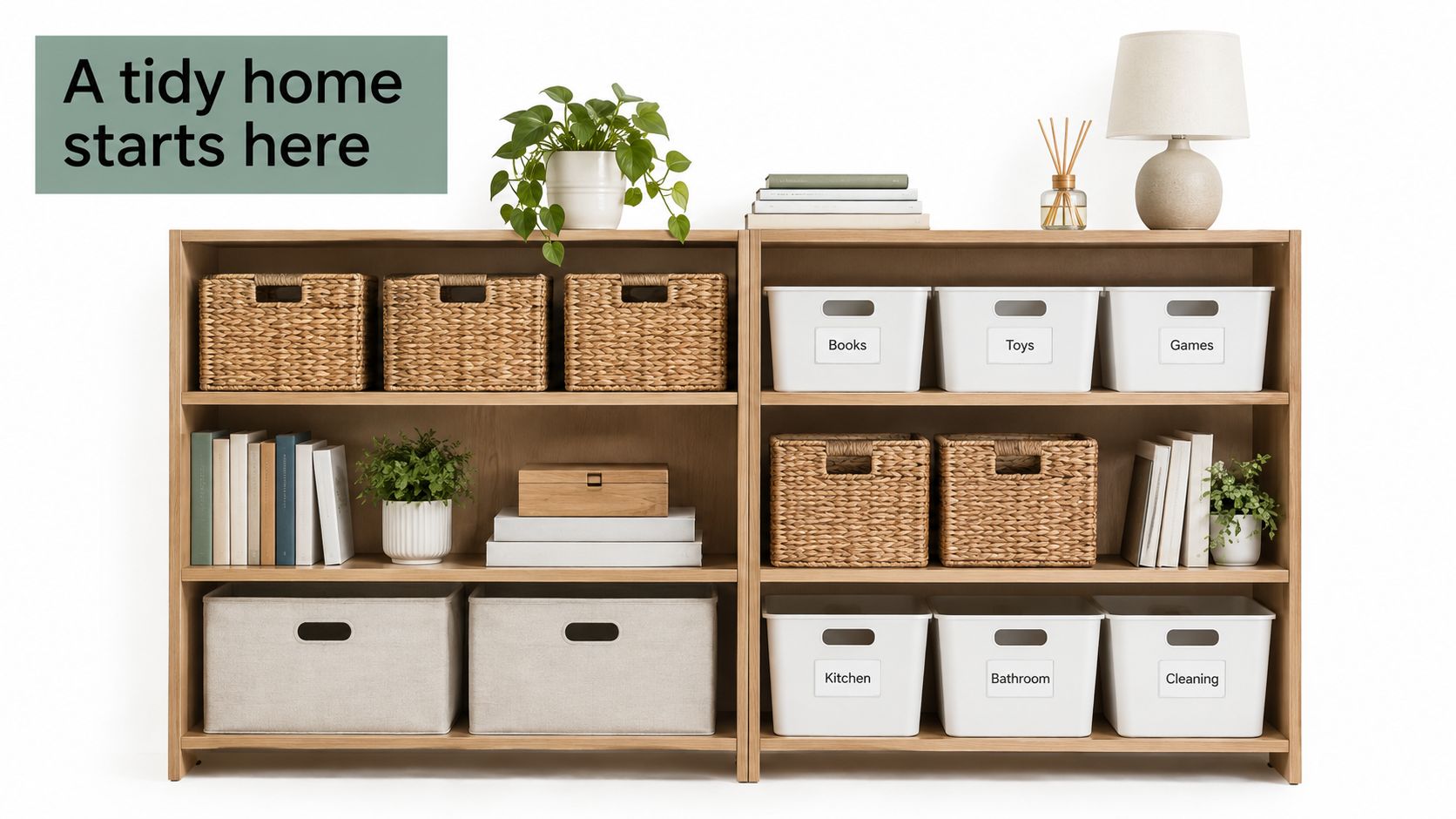
That's also why labels matter more than decoration. A label is not about making a shelf pretty, it's about reducing friction so everyone knows where something belongs. For a useful side read on that principle, see why clothing labels matter, which explains how clear identification changes how people handle items.
The real test is maintenance
The best home organization books don't just tell you to purge. They help you build a routine that still functions after school drop-off, after a rainy week, or after a vacation rental turnover in Gulf Shores or Orange Beach. If a system only works on a quiet Sunday, it's not a system.
Professional cleaning fits here because it handles the load that organization books leave behind. Book shelves, storage bins, and closet zones stay useful only when the home itself stays clean enough for the system to remain visible and easy to use.
The KonMari Method and the Power of a Purge
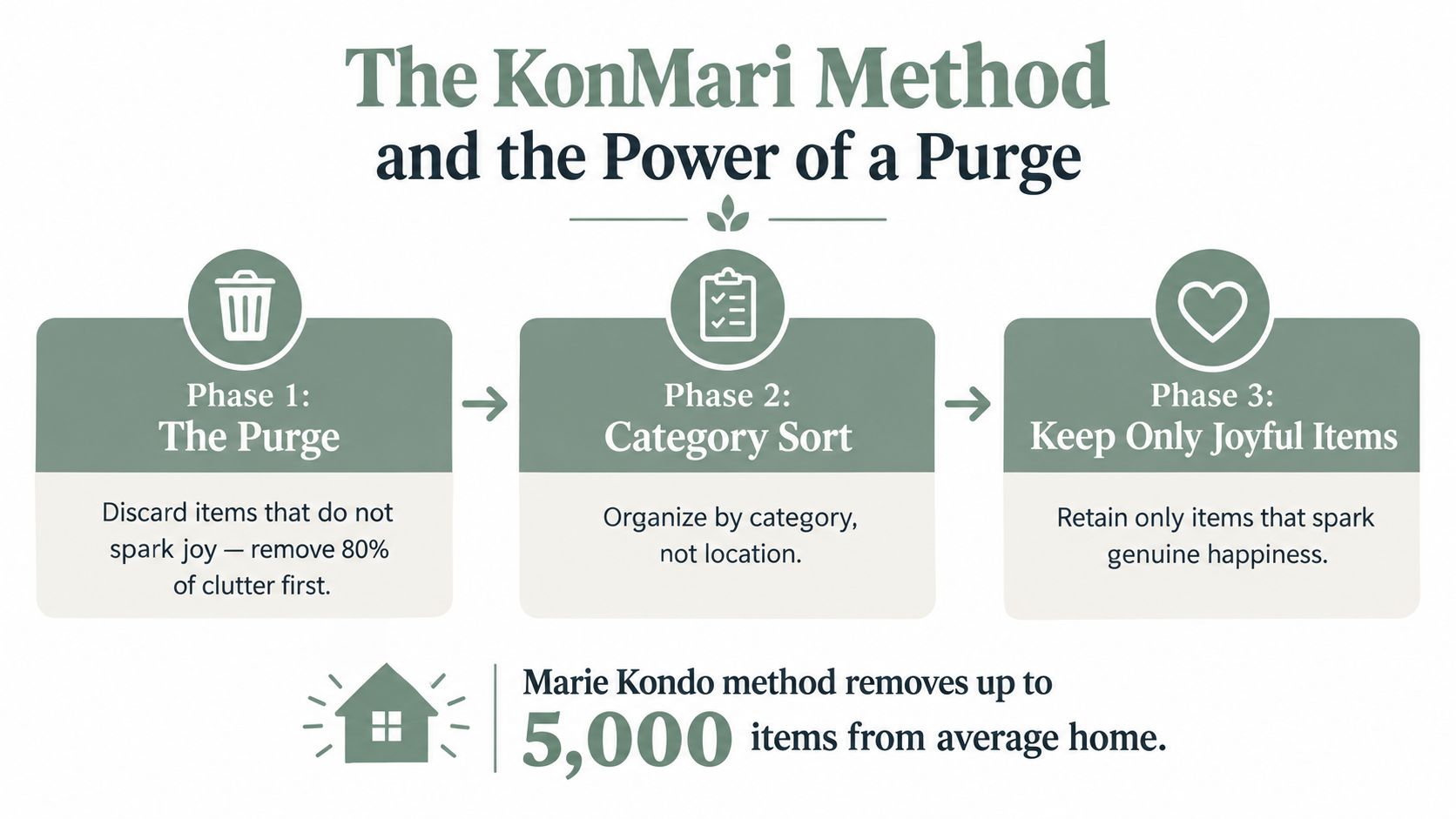
Marie Kondo's KonMari method remains the clearest example of a book that changes behavior instead of just rearranging stuff. It starts with discarding, then moves to category sorting, and only later turns to storage, which is why it still stands out among the best home organization books for people who need a true reset.
Why category-first beats room-by-room
Room-by-room decluttering feels manageable, but it often just shifts clutter around the house. Kondo's category-first approach forces a person to see the full volume of clothes, books, papers, and miscellaneous items at once, which makes it harder to ignore overbuying or duplicate storage.
That order matters for homeowners preparing for a deep clean or move-out cleaning. When clutter is sorted by category first, cleaners can focus on surfaces, detail work, and finishing touches instead of working around stacks that still need decisions.
The KonMari method also fits how habits stick. Research on implementation intentions shows that if-then plans strengthen repeated behavior in stable contexts, which is exactly why a repeatable routine beats a one-time purge. Kondo's sequence is valuable because it turns tidying into a decision process, not a mood.
The method works best when it creates a clear next action, not just a feeling of inspiration.
Where KonMari helps, and where it doesn't
KonMari is strongest at the front end. It helps families in Daphne and Spanish Fort stop moving clutter from one room to another and decide what deserves space in the home. The weaker point is that the method can feel demanding if someone expects the whole house to become neat without follow-through.
Some readers love the discipline. Others find the folding rules or joy test too rigid for everyday life. Even then, the core idea still holds up, keep what you use, respect what you keep, and make the discard decision before you buy another storage solution.
The Home Edit for Creating Lasting Systems
If KonMari is the purge, The Home Edit is the maintenance playbook. Its strength is simple, it tells you how to keep order once you've already let go of what doesn't belong, and that's why it works well for busy homes that need systems, not just motivation.
Start small, then scale
The Home Edit's zone-based logic is useful because it begins with one drawer or one cabinet, not the whole house at once. That makes the method easier to complete, especially for people who are juggling work, kids, guests, or vacation rental turnovers in Gulf Shores and Orange Beach.
Its real value is in the mechanics. Group like items together, assign each category a container, and label where everything lives so the reset becomes obvious. In practice, that can mean a pantry shelf, a bathroom drawer, a linen closet, or a home office bin that anyone in the household can read and use.
For a broader logistics mindset, storage boxes for fulfilment teams is a useful comparison point because it shows how well-designed containers support fast retrieval and refilling, which is exactly what a household system needs too.
The system matters more than the container
People often get distracted by matching bins and overlook the point of the method. The container is only useful if it fits the space, matches the inventory, and makes it easier to put things back in the same place every time.
That's why The Home Edit pairs well with recurring maid service. A cleaner can keep the room clear and resettable, while the household follows the labels and zones that keep chaos from spreading again. If you want the visual calm to last, the labels have to be readable and the categories have to make sense to everyone using the space.
Evaluating Organization Methods for Constraint-Based Homes
A book can be excellent and still be wrong for your house. That's the part most best-home-organization-books roundups skip, they judge methods by style, not by whether they work in compact rentals, older homes, or beach houses where storage is limited.

Match the book to the house, not the other way around
Reader feedback on popular organizing books often circles the same problem, premium bins, color-coded systems, and big open storage areas aren't realistic for every home. That criticism is valid in places like Fairhope's older houses, compact condos near the coast, and rentals where permanent changes aren't allowed.
A more useful filter is constraint-based. Ask whether the book works for renters, for small kitchens, for shared bedrooms, for limited closet space, and for households that need to reuse what they already own. If the answer depends on buying a lot more containers, the book may be selling an aesthetic instead of a solution.
If the method needs the home to be bigger, richer, or less lived-in than yours, it's the wrong method.
Choose by maintenance load
The other question is who has to keep the system going. A method that depends on one highly disciplined adult but ignores kids, partners, or guests is fragile. That's especially true in busy Eastern Shore households, where beach gear, school items, work bags, and seasonal storage all compete for space.
Books that define one place per item category, set a simple reset habit, and make the storage easy to understand usually age better than books built around visual perfection. The right choice isn't the prettiest system. It's the one you can still follow after a long week and a full laundry basket.
Synergizing Organization with Professional Cleaning
Organization books work best when they reduce the job of cleaning, and cleaning works best when it protects the organization system you've built. The overlap is where the payoff happens, because clutter, dust, and visual noise all make it harder to keep a room functional.
Decluttering methods in leading home-organization books have a plausible stress-reduction mechanism, reducing visual and decision-related environmental noise. Research summarized by the Australian College of General Practitioners reports that clutter can impair focus, affect anxiety and sleep, while homes described as restful and organized showed opposite patterns associated with chronic stress. That's a strong reason to keep the system simple and maintainable instead of overcomplicated.
Why cleaning and organizing should be sequenced
First the surplus goes. Then the storage gets assigned. Then the room gets cleaned thoroughly enough that the new system can breathe.
That sequence matters in humid climates because overloaded storage traps dust and makes surfaces harder to keep clear. It also matters for homes that are being turned over, sold, or prepared for guests, because professional cleaning can only do so much if the room is still packed with items that haven't earned their place.
For a practical service overview, see Sweet Home Cleaning Service's home organization support, which fits naturally alongside recurring cleaning, deep cleaning, and move-related cleanups.
What a low-friction home feels like
A low-friction home doesn't look staged. It feels easy to reset, easier to clean, and easier to hand off to the next person who needs to use it.
When the categories make sense and the cleaning is consistent, families spend less time searching for things and less time undoing yesterday's mess. That is the true benefit of pairing books with professional upkeep in Fairhope, Daphne, Spanish Fort, Gulf Shores, and Orange Beach.
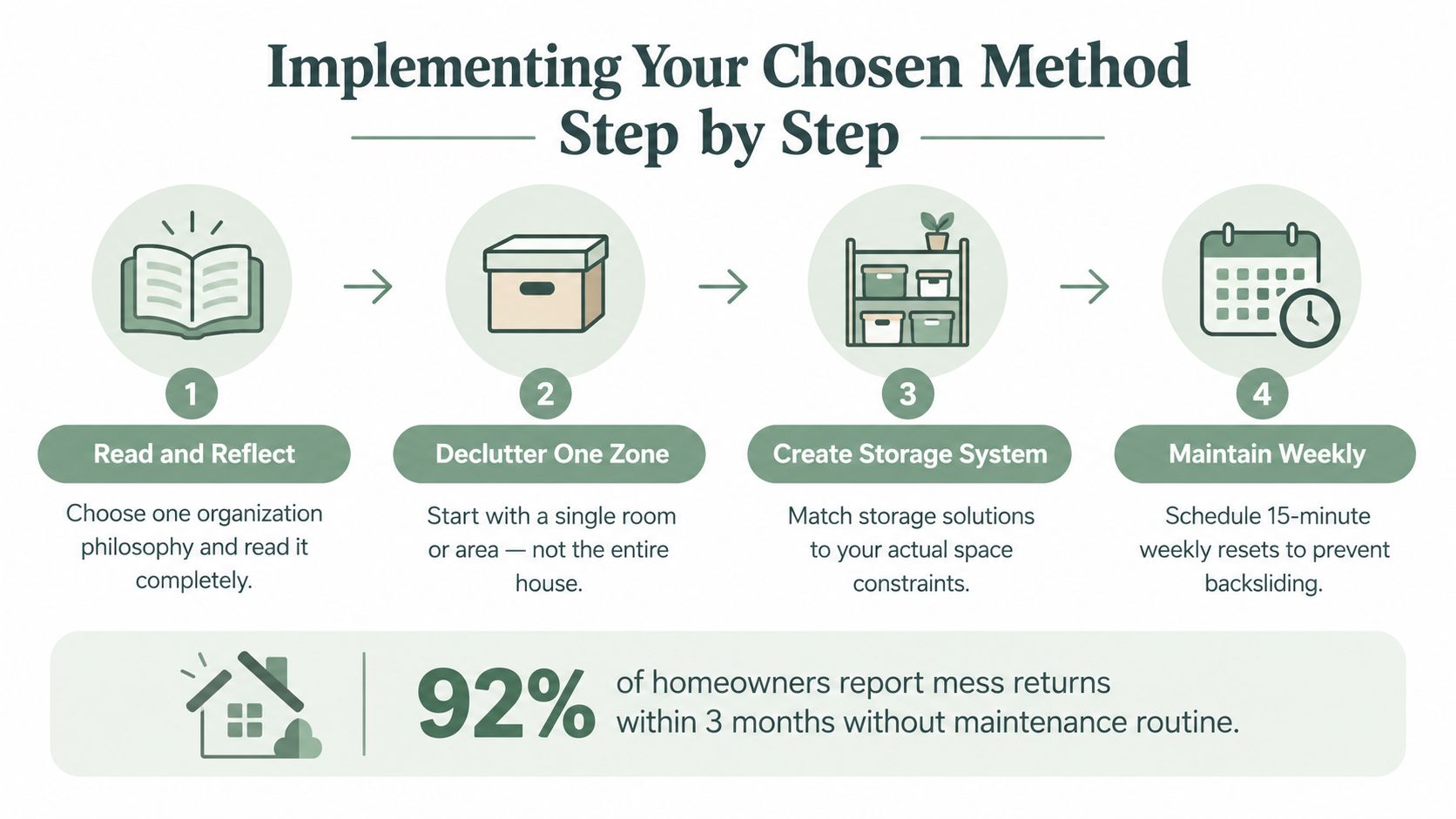
Implementing Your Chosen Method Step by Step
Reading the book is the easy part. The hard part is doing the work in a way that survives school schedules, workdays, and the usual Gulf Coast mess that comes in through every door.
Use one method, one zone, one reset
Start with one organizing philosophy and stay with it long enough to see whether it fits your home. A book like KonMari works well for a big purge. A book like The Home Edit works better once you need everyday structure.
Then choose one zone, not the whole house. A junk drawer, pantry shelf, bathroom cabinet, or closet corner is enough to show whether the method makes sense for your family. For a practical family-centered approach, InchBug's family organization guide is a useful reminder that systems have to work for more than one person.
Build the maintenance habit early
After the zone is set, schedule a weekly reset. That's the part people skip, and it's usually the reason order slips away again. A home that gets organized once but never maintained eventually starts looking like the before photo.
If the purge is large, book a move-out cleaning or deep cleaning once the decluttered space is ready. If you're getting a Gulf Coast rental ready for guests, the turnover should happen after the storage system is in place, not before. For more practical home-care routines, Sweet Home Cleaning Service's organizing tips offer a good companion to the book approach.
A simple system beats a perfect one, because simple systems actually get repeated.
The goal is not a magazine house. The goal is a home that can handle a busy week and still look orderly on Friday night.
Creating a Home That Stays Organized All Year
The homes that stay organized are rarely the ones with the most expensive bins. They're the ones built on clear rules, realistic habits, and regular upkeep that keeps clutter from reclaiming the corners.
That shows up every day on the Eastern Shore. A Fairhope family may use KonMari to clear out excess clothes, then switch to a zone system in the hall closet so school bags have one landing spot. A Gulf Shores host may organize turnover supplies by category and label them so each guest reset goes faster. A homeowner in Daphne may keep the pantry workable by limiting categories and making the weekly restock simple enough to follow during a crowded week.
What lasts through a busy season
The methods that last are the ones that don't demand perfect behavior. They allow for bad weather, travel, holidays, and the ordinary mess that comes with kids, guests, and humid air. That's why the strongest best home organization books are the ones that teach decisions first and storage second.
If the system still works after a deep clean, after a move, or after a vacation-rental turnover, it's doing its job. If it falls apart as soon as people stop paying attention, it was never a real system.
For a helpful product-oriented complement, Sweet Home Cleaning Service's best home organization products guide can help you think about tools without overbuying them.
In Fairhope and across the surrounding Gulf Coast, the best result comes from pairing the right book with reliable cleaning. That combination gives you a home that's easier to live in, easier to maintain, and easier to hand over when life gets busy.
Sweet Home Cleaning Service helps homeowners and renters in Fairhope, Daphne, Spanish Fort, Gulf Shores, and Orange Beach keep organized homes from sliding back into clutter. If you're ready for a cleaner reset, book a service or request a free quote from Sweet Home Cleaning Service, and let us help you keep the systems you've built working all year.

Let us handle the cleaning. Enjoy your home.

Sweet Home Cleaning Service
19940 State HWY 181, Suite E Fairhope, AL 36532
Phone: (251) 586-4081
sales@sweethomecleaningservice.com