How to Clean a Garbage Disposal: Step-by-Step Guide

A sour smell has settled over the kitchen sink again. Saturday's dinner left onion skins, coffee grounds and a scrape of rice behind, and by Monday the drain has that wet, stale edge that makes you rinse your mug somewhere else. Nothing is broken. The unit still growls through a lemon peel on command, the water still goes down, and that's exactly why the smell keeps returning: the fix isn't a stronger product, it's a routine aimed at the right parts of the machine.
That routine is what follows. Sweet Home Cleaning Service is a house cleaning service based in Fairhope, AL, and we work in kitchens across Daphne, Spanish Fort, Gulf Shores and Orange Beach, where warm Gulf air and a full house speed up anything that grows in a dark, damp place. This is the version of how to clean a garbage disposal that holds up in a humid climate: mechanical, specific about amounts and timing, and honest about the point where cleaning stops and a repair begins.
Table of Contents
- Why Disposals Smell and What Cleaning Actually Fixes
- How to Clean the Grinding Chamber Step by Step
- Deodorizing Methods Compared Side by Side
- Daily and Monthly Routine That Prevents Odors
- Symptoms That Mean Stop Cleaning and Call a Pro
- Responsible Disposal for Septic and Coastal Homes
- Schedule Kitchen Maintenance With Sweet Home Cleaning Service
Why Disposals Smell and What Cleaning Actually Fixes
A disposal is a grinder, not a drain cleaner. The University of Arkansas Extension describes it as a motor-driven device that reduces food scraps to particles small enough to travel through household plumbing, and that single distinction is the basis for cleaning it properly (UAEX publication MP492). The design has been in American kitchens since John W. Hammes received the first U.S. patent in 1935, and by 2007, 50% of U.S. households with complete kitchens had one, according to the same extension guidance. Widespread adoption hasn't changed where the problem sits.
Odor lives in the residue that survives the grind: film on the grinding chamber walls, paste packed under the rubber splash guard, the underside of the baffle, and the lip of the drain opening. Along the Eastern Shore, summer humidity gives that residue a head start, so a kitchen that would stay neutral for a week in a dry climate can turn sour here in two days. A warm, wet chamber full of food particles is a fermentation vessel with a drain attached.
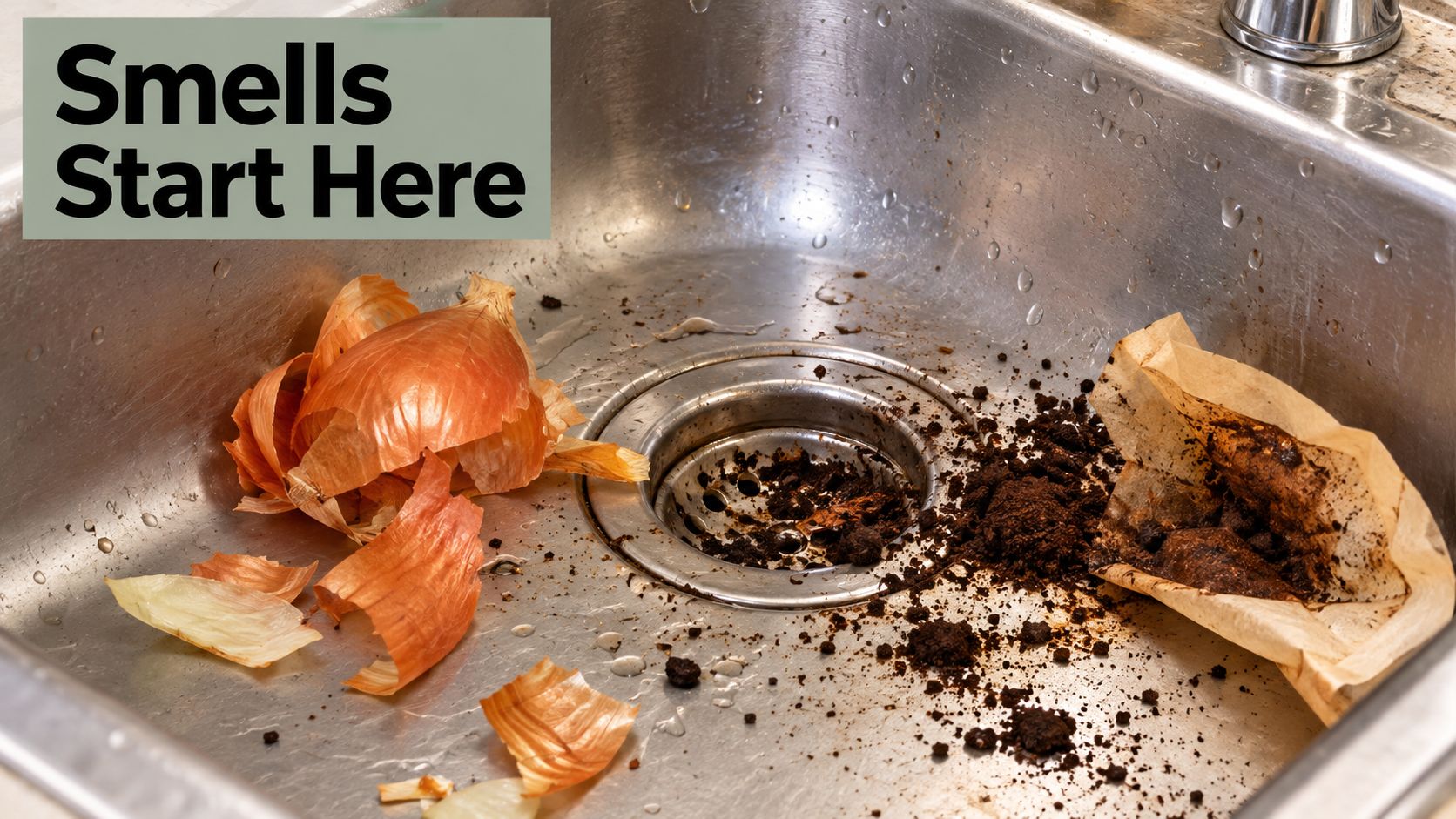
This is the scene that starts most odor problems:
Have these on the counter before you start:
- Dish soap and a stiff brush. An old toothbrush reaches under the baffle where a sponge can't.
- Baking soda and white vinegar. For the deodorizing reaction, never for a clog.
- Ice and kosher or rock salt. The monthly abrasive cycle.
- A flashlight and tongs or pliers. For looking and lifting, never fingers.
- A dry towel. For the cabinet floor, which is where you'll spot a leak early.
The line this guide follows throughout is that cleaning handles residue and odor, and diagnosis handles everything else. Slow drainage, water pooling in the sink, a leak at the housing, or a grinding noise that wasn't there last month are not odor problems, and no amount of baking soda will touch them.
How to Clean the Grinding Chamber Step by Step
Power is the first tool, not the brush. Manufacturer guidance for disposal cleaning puts disconnection ahead of everything else: switch the unit off at the wall, unplug it under the sink if the cord reaches, or trip the breaker (GE Appliances). Then confirm it can't start. A grinder that spins up while a hand is inside the opening causes damage no cleaning routine can undo, and the grinding assembly doesn't care that the switch looked off.
The steps that matter most fit on one card:
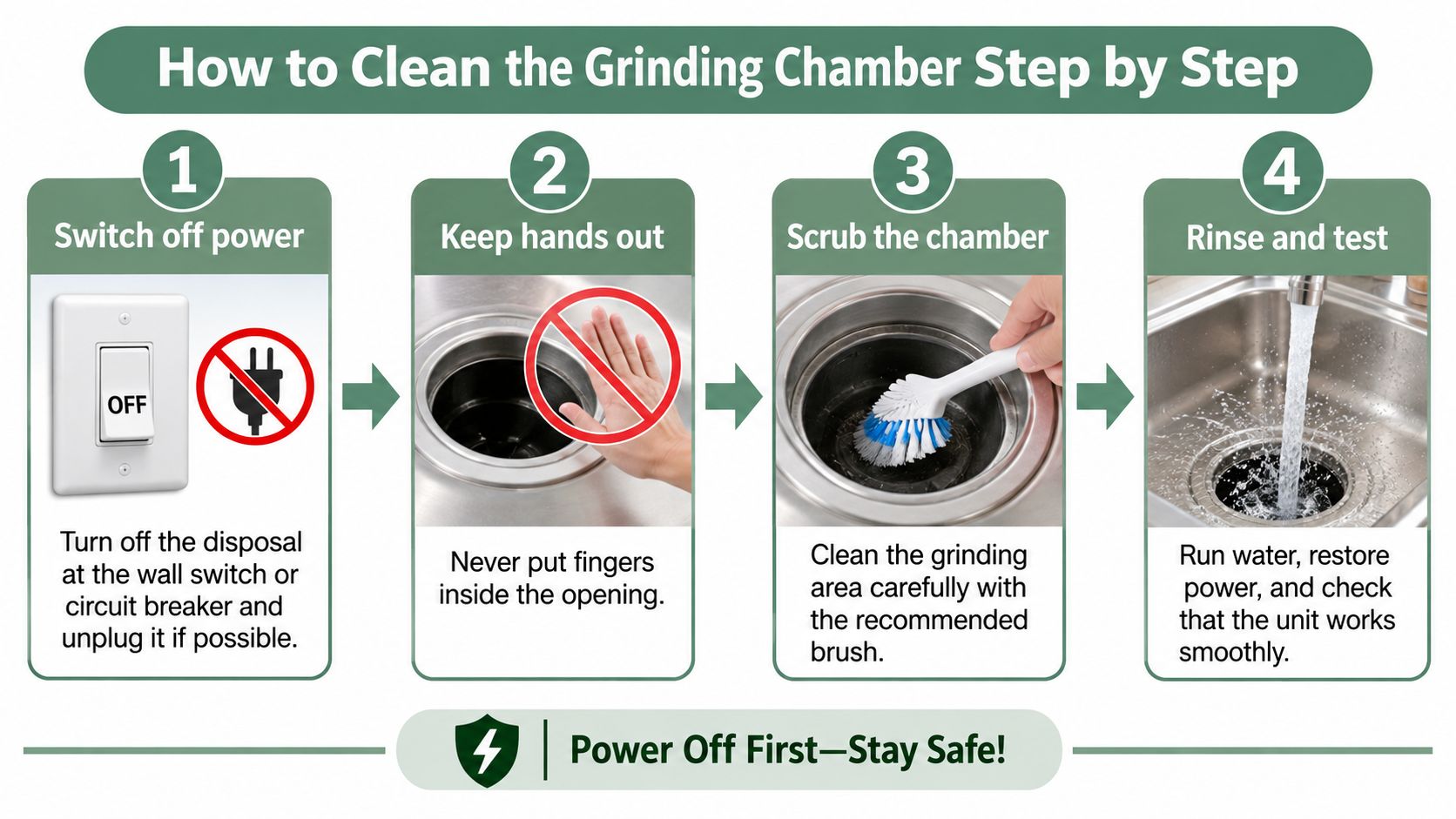
1. Isolate the power. Wall switch off, cord unplugged if reachable, breaker off if the switch is shared or unreliable. Verify the unit won't start before anything else happens.
2. Look before you reach. Shine a flashlight into the chamber and lift out visible objects with tongs or pliers. A bottle cap, a bone fragment or a piece of cutlery stops the plate from turning, and the only tool rated for retrieval is metal, not fingers.
3. Scrub the baffle and the upper lip. Pull the splash guard back and wash its underside plus the chamber lip with a dish soap solution and a brush or sponge. Those are the two spots where residue stays put even when the grind looks clean.
4. Run the deodorizing reaction. Add 1/2 cup of baking soda, then 1 cup of white vinegar. Cover the opening without sealing it and let it work for 10 to 15 minutes. A loose cover keeps some fizz against the film; sealing it turns the sink into a pressure vessel, which is why you leave a gap.
5. Restore power and flush. Once the reaction has finished, turn the power back on and run cold water through the chamber for 1 to 2 minutes, with the unit running briefly to carry loosened residue out of the trap.
6. Check the drain, not the smell. Water should pull down without pooling. If it stands, stop and read the symptom list below before the disposal runs again.
The mistake that turns a cleaning into an emergency
The most common error is combining methods. Baking soda and vinegar are harmless on their own; the same two ingredients meeting a chemical drain opener that's still sitting in standing water are a different story, and manufacturer guidance warns specifically that the reaction can cause hazardous exposure or damage to the unit.
The line I hold: if a chemical opener has already gone down the drain and the sink is holding water, add nothing else. Flush with cold water only and let a plumber take it from there.
A jam is a separate problem from a dirty chamber. If the unit hums and the plate won't turn, you're past cleaning, and the walkthrough on fix a jammed garbage disposal covers the safe sequence for freeing the plate.
What a clean unit looks and sounds like
Success isn't a perfume smell. A properly cleaned disposal has three tells: no sour note when you run cold water through it a day later, a steady grind without rattle or a high whine, and water that leaves the sink without a gurgle or a pause. If all three hold, the residue is gone and the unit is healthy. If one fails, you're looking at a repair question rather than a cleaning one.
Deodorizing Methods Compared Side by Side
A sour smell at the drain opening usually calls for a gentle wipe. Odor that lingers inside the chamber may need scrubbing instead. Choose a method for the residue you're treating; stronger cleaners do not fix a mechanical problem.
| Method | Ingredients and amount | Time | Best for |
|---|---|---|---|
| Baking soda and white vinegar | 1/2 cup baking soda, then 1 cup white vinegar | 10 to 15 minutes, then 1 to 2 minutes of running water | Odor and light buildup inside the chamber |
| Ice and kosher or rock salt | About 2 cups ice cubes and 1 cup salt, with cold water | Run until ice is shredded, then 15 to 20 seconds of cold water | Scrubbing the chamber walls on a monthly reset |
| Warm baking soda wipe | 2 tablespoons baking soda in 1 quart warm water | Wipe only, no soaking | Splash guard and rubber baffle |
| Citrus rinds with ice | Used citrus rinds and a handful of ice, with cold water | Run with cold water until the ice is gone | Light freshening between cleanings |
| Dish soap and brush | Dish soap solution | Scrub by hand with power off | Underside of the baffle and upper chamber lip |
| Chemical drain opener | Not part of this routine | Not used | Avoid, and never mix with baking soda or vinegar |
For chamber residue, use about 2 cups of ice cubes and 1 cup of kosher or rock salt. Run cold water and the disposal until the ice is shredded, then leave the cold tap on for another 15 to 20 seconds. The ice and salt scour the chamber; the water carries loosened particles away. The same amounts and sequence appear in CLR Brands' disposal-cleaning guide.
For a mild smell around the drain opening, wipe the splash guard and rubber baffle with 2 tablespoons of baking soda dissolved in 1 quart of warm water. Don't soak the rubber. Vinegar may be useful for some household cleaning, but it does not disinfect every surface; see which surfaces vinegar disinfects.
Citrus rinds can briefly freshen the disposal, but they do not replace scrubbing. A dish-soap solution and brush can clean the baffle's underside and the chamber's upper lip by hand, with the power off. Chemical drain openers are not part of this routine, and never combine one with baking soda or vinegar.
Recommended order: wipe the splash guard for odor at the opening, use ice and salt for chamber residue, and reserve citrus rinds for light freshening. A smell that persists despite cleaning, or a disposal that hums without grinding, points beyond deodorizing.
Daily and Monthly Routine That Prevents Odors
Most disposal odor starts between cleanings, not during them. A unit scrubbed twice a year but left full of residue on ordinary weeknights will smell worse than one that's rinsed properly every day and deep cleaned once a month.
The daily habit carries the rest. Run cold water while the unit grinds and leave the tap going for a few seconds after you switch it off, and work in 10 to 15 second bursts instead of leaving the motor running while you load the sink. That timing comes from a plumbing expert quoted in The Spruce's guide to running a disposal, and the reason is practical: cold water keeps fats congealed so they travel down the line instead of cooling onto the chamber wall, and the extra seconds push the last particles past the trap.
| Frequency | Task | Time needed |
|---|---|---|
| Every day | Run cold water while grinding, and let it run a few seconds after use | About 1 minute |
| Every day | Run the unit in 10 to 15 second bursts with water on | About 1 minute |
| Every week | Wipe the splash guard and visible opening with the warm baking soda solution | About 5 minutes |
| Every month | Run the ice and salt cycle to scrub the chamber | About 10 minutes |
| Every 3 months | Check the baffle underside, listen for grinding changes, and test drainage | About 10 minutes |
Kitchen habits that do half the work
- Scrape before you rinse. Plate scrapings go in the trash or the compost bucket, not down the throat of the grinder.
- Keep fat out of the drain. Liquid fat cools into a coating on the chamber wall and the pipe behind it. Pour it into a jar.
- Skip the fibrous peels. Onion skins, celery strings and potato peels wrap around the plate instead of grinding through it.
A household of four cooking most nights in Fairhope or Daphne can usually hold the line with the daily rinse and a monthly ice cycle. An older unit, or a rental with heavy turnover, does better with the weekly wipe on a fixed day, say Sunday evening before the trash goes out. The point of the schedule isn't perfection. It's that small, timed actions keep residue from layering into something that needs a technician.
What keeps a cleaning from becoming a repair is the boring part: water, timing and a scrape.
If you host short-term guests, the disposal do's and don'ts for rentals is worth printing for the kitchen, because a guest who doesn't know the rules can undo a month of good habits in one meal. When the rest of the room needs attention too, our deep cleaning kitchen checklist covers the surfaces the sink routine never reaches.
Symptoms That Mean Stop Cleaning and Call a Pro
A clean chamber should fix ordinary food residue. It cannot clear a blocked drain line, stop a leak, or repair an electrical fault. If a symptom remains after one thorough cleaning, stop running the disposal and stop adding products to the drain.
| Symptom | Likely cause | Next step |
|---|---|---|
| Odor returns within days of cleaning | Residue on the baffle or grease in the drain line | Clean the baffle underside and monitor whether the smell returns |
| Slow drainage or standing water | Clog in the drain line or trap | Stop using the disposal, add no chemicals, and call a plumber |
| Hum without grinding | Jammed grinding components or a motor fault | Switch off power, check for an object with tongs, and call a technician if it still will not turn |
| Leak from the unit or its connections | Worn seals or loose fittings | Stop using it and call a plumber or appliance technician |
| Will not start after the breaker is reset | Electrical or motor fault | Leave it off and call an appliance technician |
| Smell after using a chemical product in the sink | Possible reaction between products | Avoid adding anything else and seek professional advice |
Slow drainage or standing water points to a blockage in the drain line or P-trap. Leave the sink alone, skip chemical drain openers, and call a plumber. Running the disposal against standing water will not clear the blockage.
A leak at the unit or its connections calls for repair, not more cleaning. Switch off the disposal at the breaker and arrange service. Even a slow drip can damage the cabinet floor.
If the disposal hums but does not grind, switch off power before checking for an obstruction. Use tongs, never your hand. If the obstruction is removed and the unit still will not turn, leave it off and call a technician. If it will not start after the breaker is reset, the fault may be electrical or in the motor. A guide to disposal reset and motor checks can help you understand what those checks involve, but persistent trouble needs professional attention.
An odor that returns within days may come from residue beneath the baffle or grease farther along the drain. Clean the baffle and monitor the smell. If it keeps returning despite cleaning, further scrubbing is unlikely to solve the underlying drain problem.
What to log if you host guests
For a short-term rental, record the symptom, date, and steps taken at each turnover. A recurring hum or slow drain is easier to address when it is logged promptly, rather than reported after a guest has tried to use the disposal.
Odor that responds to cleaning is a maintenance issue. Leaks, standing water, and a disposal that hums or will not start are reasons to stop using it and arrange a repair.
Responsible Disposal for Septic and Coastal Homes
A disposal is a grinder, not a waste-removal shortcut. In a septic home, ground food still enters the tank as additional solids. The EPA's septic system guidance advises limiting disposal use in septic households and warns that fats and grease can increase the risk of a clogged drainfield.
Food scraps sent through a disposal enter the wastewater system; scraps put in the trash may end up in a landfill. The EPA's Wasted Food Scale ranks disposal options and places sending food down the drain among the less-preferred pathways. Neither route makes food waste disappear, so choose based on your home's system and local collection options.
In Fairhope, Daphne, Spanish Fort, Gulf Shores and Orange Beach, properties may use municipal sewer or septic systems, and local collection options vary. Check with your wastewater utility or septic service before making the disposal a routine destination for food scraps. Scrape plates into the trash or an organics bin where available. Use the grinder for small, unavoidable scraps, with cold water running, and clean it to maintain the mechanism rather than to manage household waste.
Schedule Kitchen Maintenance With Sweet Home Cleaning Service
A clean sink and a fresh-smelling disposal start with regular care, but kitchen upkeep can slip when floors, bathrooms, and counters also need attention. Sweet Home Cleaning Service offers standard cleaning for routine maintenance and deep cleaning for homes that need a top-to-bottom refresh.
Recurring cleaning is available weekly, every 2 weeks, or every 3 weeks. Deep cleaning targets hidden dirt, buildup, and neglected areas, including the outside of kitchen cabinets. For a kitchen that needs more attention, explore the deep cleaning service.
Booking takes three steps: choose the service, share the details, and confirm. The cleaning team brings the necessary supplies and equipment. If you want specific products used, let the company know in advance or leave them on the kitchen countertop with a note.
A lingering drain odor can point to a plumbing issue rather than a cleaning problem. Mention recurring smells when arranging service, and stop using the disposal if you notice symptoms such as a leak or unusual grinding noise.
Sweet Home Cleaning Service serves Fairhope, Daphne, Spanish Fort, Gulf Shores, Orange Beach, and neighboring communities on Alabama's Eastern Shore and in South Baldwin County. Choose a recurring schedule for ongoing household upkeep, or book a one-time cleaning for a kitchen that needs a reset.

Let us handle the cleaning. Enjoy your home.



Sweet Home Cleaning Service
19940 State HWY 181, Suite E Fairhope, AL 36532
Phone: (251) 586-4081
sales@sweethomecleaningservice.com